

A seed is a tournament-specific number that protects the best players in the draw. It is not a score for talent, and it is not a promise of wins. In fantasy tennis, a seed tells you who is likely to get an easier path early. It does not tell you who is going to score the most points. This guide shows how to read seeds, where they help your roster, and where they mislead you.
TL;DR
- A seed is a placement in one tournament's draw, based on ranking. Ranking is the tour-wide measure. Seed is the event-level result of it.
- Seeds keep top players apart until the later rounds, so they usually get softer early matchups. That helps your fantasy floor.
- Seeds are not safe by default. Injury returns, surface preferences and upsets can sink a high seed fast.
- Unseeded players are placed at random. A low-ranked player can land in a brutal quarter, or a dream one. Check the actual draw.
- Build rosters from the draw, not the seed list: path, surface, form and head-to-head records together.
Table of Contents
- What a seed actually is
- How seeds are placed in the draw
- Seed versus ranking: why the gap matters
- How seeds should shape your fantasy picks
- Are seeded players safer picks?
- Seeds across tournament types
- A seed-aware routine before every lock
- Common mistakes with seeded players
- Put seeds to work in Tweener
- FAQ
- Sources
What a seed actually is
A seed is a preferential position in a tournament draw. According to the Australian Open, citing the Grand Slam rule book, seeds are players given preferential positions to ensure balance and structure. Think of it as a bracket-protection tool rather than a rating.
That distinction matters for fantasy. A player's ranking is their overall position on the pro tour. A seed is a number assigned for one event, based on where that player sits among the entrants. The AO makes this difference between rankings and seeds explicit. If the No. 3 player in the world skips a tournament, the seed numbers shuffle. The ranking does not change at all.
If you want the longer background, our guide on how tennis seeds are determined walks through the mechanics step by step.

How seeds are placed in the draw
The placement logic is simple, and fantasy players should know it by heart.
- Seeds go to the highest-ranked entrants.
- Seed No. 1 sits at the top of the draw and seed No. 2 at the bottom.
- Seeds No. 3 and No. 4 go into opposite halves.
That is the structure the Australian Open describes in its explanation of seeding and rankings. The remaining seeds are slotted into other sections of the draw so the best players are spread out.
At the US Open, the seeding is based directly on the ATP and WTA rankings published shortly before the event, and the 32 highest-ranked entrants in each singles draw are seeded. Everyone else is unseeded.
The point of all this is that top-ranked players are kept from meeting until the later rounds. For your roster, that means the highest seeds are structurally steered toward easier early matches. A seed-one player in round one faces an unseeded or lower-ranked opponent by design.
What happens when a seed withdraws
If a seeded player pulls out before the draw is made, seedings are adjusted so the next eligible player moves into a seeded position, as JudgeMate's seeding explainer notes. This matters for fantasy because the last seed in the group can change right before the draw. A player you assumed was unseeded might suddenly be protected.
Withdrawals after the draw are a different story. They create lucky losers and open paths, and they are one reason you should check rosters close to lock time. Our piece on special exempt rules that can flip fantasy picks covers how late entries enter the field.
Byes go to the top
When a field does not fill the draw, empty lines become byes. Byes are given to the highest seeds first. In smaller events, that is a real fantasy edge for the top seeds. A player with a bye skips a round, which in many scoring systems means a skipped chance to score. Check how your game handles it before you assume a bye is pure upside.
Seed versus ranking: why the gap matters
Most of the time seed and ranking line up. A world No. 5 is often seed 5. But there are cases where they drift apart, and these are where fantasy value hides.
- Withdrawals shift numbers. One star missing moves everybody up a seed line.
- Entry rules differ by event. Tournaments apply their own rules. Some national events seed fewer players than usual and weigh criteria beyond rankings. At the top level, Grand Slams follow the rankings closely.
- Protected rankings and special entries change the field. A returning star may be in the main draw with no seed at all. We break this down in our guide to protected rankings on the ATP and WTA tours.
The takeaway: do not treat the seed number as a skill rating. Treat it as a map reference. It says where a player sits in the draw and who they can meet when.
How seeds should shape your fantasy picks
The US Open's own fantasy game advice points to the draw as a key tool: users can use the draw to choose their roster and avoid early-round collisions. That is the heart of seed-aware drafting.
1. Reward the soft path
A high seed in a section full of unseeded or struggling players has a clear path to the second week. That is worth real fantasy value, because in most scoring systems every round won adds points. Our breakdown of how fantasy tennis points are calculated shows why extra rounds compound.
2. Watch for early collisions
Seeds are separated, but not everyone is. Two of your picks can sit in the same quarter and knock each other out. Two seeded players who are far apart in seed number can still be drawn near each other if one is unseeded and strong. Fantasy managers who draft by ranking list alone walk into this all the time.
Before you lock, map each of your players to a draw section and ask:
- Who is the most dangerous opponent in the first two rounds?
- Does any of my other picks share this quarter?
- Where does my best player first meet a likely seed?
Our tennis draw explainer helps you read a bracket quickly, and draw-impact analysis shows how a few lines of a bracket can swing a whole roster.
3. Hunt for the dangerous unseeded player
Unseeded players have no protection. They are placed at random into the remaining lines. That randomness is where the best fantasy value appears. A strong player returning from injury, or a rising player ranked just outside the seeded group, can land in a seed's section. That is bad for the seed. For you, it is a signal to avoid the seed or to take the dangerous floater as a contrarian pick.
4. Do not pay for the number
In salary-style or draft formats, popular seeds are the most owned and often the most expensive in terms of opportunity cost. If everyone drafts the top seed because it is the top seed, the edge disappears. The edge is in matching a player to a path, not matching a name to a number.
Are seeded players safer picks?
Seeded players are safer than average in the first rounds. They are not safe overall. The US Open's fantasy guidance is blunt on this: don't rely on seedings and results alone, and consider injury recoveries and surface preferences while watching for major upsets.
Let's turn that into a checklist you can use before every lock.
| Factor | What to check | Why it beats the seed number |
|---|---|---|
| Surface | Results on clay, grass or hard courts over recent seasons | A hard-court No. 4 seed can be a risky pick on clay |
| Injury status | Recent retirements, withdrawals, lengthy layoffs | A seed reflects ranking points earned earlier, not today's body |
| Form | Last few tournaments, match length, sets dropped | Long matches drain legs for later rounds |
| Head-to-head | Record against likely second- and third-round opponents | Some players simply have a rival's number |
| Draw path | The two or three players between your pick and the quarterfinals | A seed with a hard quarter is worth less than a lower seed with an open one |
This is where analytical fans get their edge. The seed gives you a baseline, and the factors above adjust it.
A worked example of seed-aware thinking
Imagine you are drafting for a hard-court major and you are choosing between two players. Player A is the No. 3 seed in a half with another top-eight seed plus a dangerous unseeded former top-ten player. Player B is a No. 7 seed, with the other seeds in the quarter ranked well below. By seed number, Player A looks like the pick. By path, Player B has a clearly better chance of reaching the second week, and in most scoring systems that means more points. If Player A also has a recent injury layoff, the gap widens.

That is a hypothetical, not a prediction about any real player. The method is the point: path first, then surface and form, then seed as the tiebreaker.
Seeds across tournament types
Not every event works like a Grand Slam. The size of the field, the number of seeds and the format all change how much a seed is worth.
- Grand Slams: 32 seeds in a 128-player singles draw. Protection is broad, so upsets in rounds one and two are rarer for seeds than in smaller fields.
- Smaller tour events: Fewer seeds and sometimes byes for the top few. The first-round bye can be a big advantage in real life, but check your fantasy format's scoring.
- Season-ending and round-robin formats: Seeds work differently, because players are split into groups. Our overview of tennis tournament formats explains the variations, and the piece on ATP points distribution shows why the stakes at the Finals are different.
- Other sports: If you also play fantasy in team sports, how sports tournaments are seeded is a useful comparison.
The broader principle holds in all of them: a seed is a structural advantage, and structural advantages are worth the most in the early rounds.
A seed-aware routine before every lock
Here is a repeatable process you can run in about ten minutes once the draw comes out.
- Open the draw and find your top targets. Note each player's seed or unseeded status.
- Mark the quarters. Write down who else in each quarter could beat your player.
- Check for protected-ranking and special-exempt players. These are unseeded names who can play above their entry status.
- Filter by surface. Drop anyone whose record on this surface is clearly weaker than their ranking suggests.
- Check injury news. Look for recent withdrawals, medical timeouts and retirements.
- Compare head-to-heads for the likeliest first three opponents.
- Diversify. Avoid stacking players who can meet each other before the quarterfinals.
- Lock a roster with a reason for every pick. If your reason is only "he is seeded high," keep looking.
Women's and men's events behave a little differently in depth. Early upsets can be more frequent in some draws than others, so read our guide to ATP and WTA leagues before you assume the same strategy fits both tours.
Common mistakes with seeded players
- Treating seed as skill. A No. 12 seed can be a better pick than a No. 8 seed on a given surface.
- Ignoring the first-round opponent. Unseeded does not mean weak. Some of the most dangerous players in round one are unseeded because of a long layoff.
- Overloading one quarter. Three seeded picks in one section means two of them face each other at some point.
- Forgetting late changes. Withdrawals and replacements can change a path overnight.
- Chasing last week's winner. A title run can mean fatigue, and fantasy points are about the next tournament.
Our perspective
Tennis fans have always read the draw like a puzzle, but until recently there was no good game that rewarded it. Most fantasy products were built for team sports and bolted tennis on as an afterthought. We built Tweener only for tennis, so the things that matter to tennis analysis, like seeds, surfaces, form and head-to-head records, sit at the center of how you play.
Seeds are the perfect example. A casual fan sees a number and picks the biggest name. An analytical fan sees a number as the start of a question: who is in this quarter, what is the surface, how healthy is this player? That is the skill we want our game to reward, and it is why we see fantasy tennis as a strategy contest rather than a coin flip.
It is also why we like private leagues for the majors. Up to ten of you, one tournament, one draw. Everyone sees the same bracket, so the only thing that separates rosters is judgment. We think that is the best way to watch a Grand Slam.
Nathan
Put seeds to work in Tweener
Tweener is a mobile fantasy app built only for professional tennis. You build teams from real ATP and WTA players and earn points from their results in actual matches. There are two main ways to play: Draft Mode and Pick'em Mode, so you can use seed-aware thinking whether you like building a roster or making match-by-match calls.
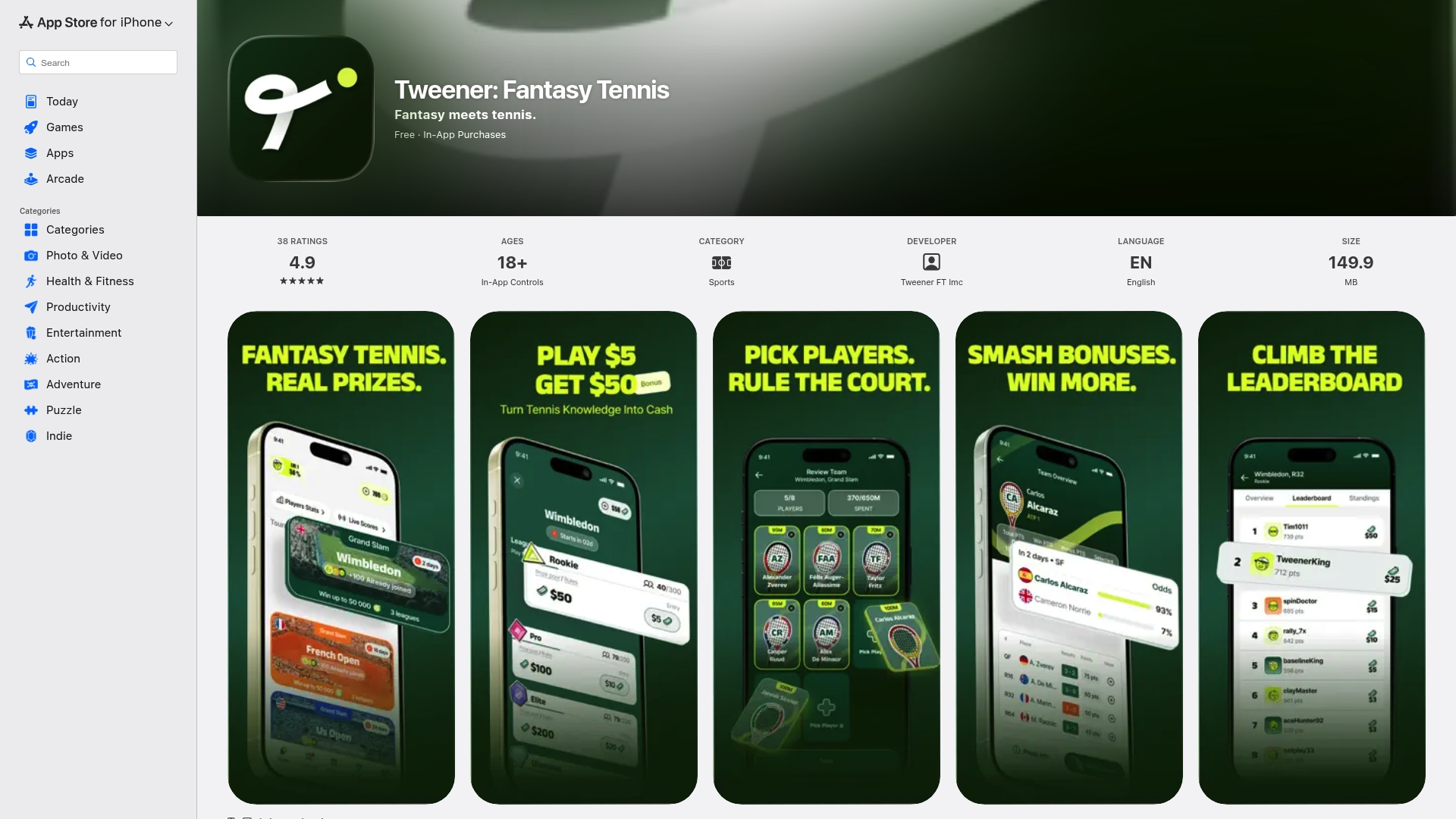
In the free mode, you compete with virtual coins that you can earn through gameplay and other in-app activities, and the coins can be redeemed for rewards such as gift cards. A cash mode is also available, where you can deposit money to enter paid contests for real-money payouts, where legally permitted. Cash play is available only in select US states, so check eligibility before you deposit. You can also start a private league with friends for a Grand Slam. Head to Tweener to see the modes, or download the app to start with a free league.
FAQ
Does a higher seed always mean more fantasy points?
No. A higher seed usually means an easier early path, which can help your floor. But points come from actual match results, so injuries, surface and form can outweigh the number. The US Open's fantasy guidance itself says not to rely on seedings alone.
What is the difference between a seed and a ranking?
A ranking is a player's overall position on the tour. A seed is a number assigned for one tournament, based on how that player ranks among that event's entrants. Per the Australian Open's explanation, the two often match but are not the same thing.
How many players are seeded at a Grand Slam?
At the US Open, the 32 highest-ranked entrants in each singles draw are seeded, based on the ATP and WTA rankings published shortly before the event. Smaller tournaments seed fewer players, so check the event's own rules.
Are unseeded players worth drafting?
Sometimes, yes. Unseeded players are placed at random into the open lines, so a strong one can get a great or awful path. Check the draw first. A dangerous unseeded player in a weak quarter can be a smart, low-owned pick.
What should I check besides seeding?
Look at rankings and recent results, injury recoveries, and surface preferences, and keep in mind that upsets happen. Then add head-to-head records and the specific path through the draw. Our guide to draw swings and fantasy wins shows how to combine them.
Sources
- How seeds are different from rankings | AO
- How US Open seedings work & top seeds
- How does seeding work in a tennis draw?
- Five Things to Know: US Open Fantasy Tennis