

TL;DR:
- Tournament seeding ranks competitors to prevent top players from meeting early, shaping tournament narratives. It uses mathematical formulas, official rankings, and manual adjustments for fairness and logistics, especially when the field size is irregular. Seeding influences matchups, upsets, fan engagement, and prediction strategies by controlling when top players face each other.
Tournament seeding is the process of ranking competitors and placing them in a bracket so the strongest players or teams avoid each other until the later rounds. Understanding how sports tournaments are seeded matters far beyond logistics. It shapes which matchups fans watch, which upsets feel shocking, and how analysts predict outcomes. From the NCAA March Madness bracket to ATP and WTA Grand Slams, the tournament seeding process follows a consistent logic with meaningful variations. This guide breaks down the math, the methods, and the real competitive stakes.
How are sports tournaments seeded mathematically?
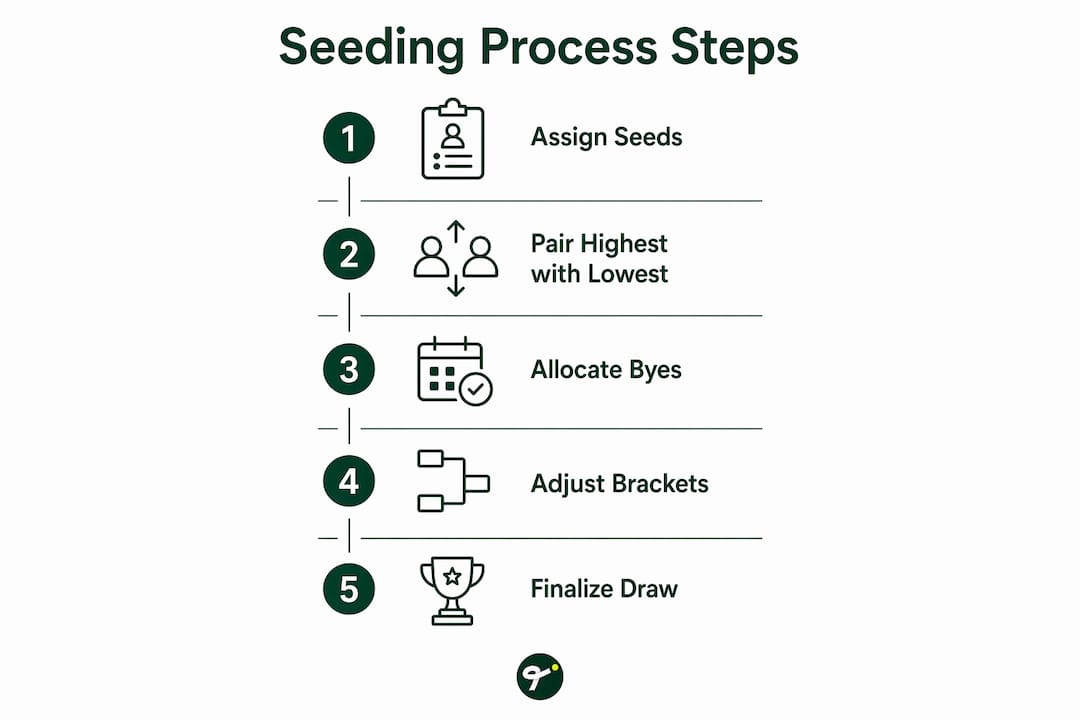
The standard seeding formula is built on one rule: pair the highest seed against the lowest seed in each round. In an 8-team bracket, the constant sum matchups always equal 9. Seed 1 plays Seed 8, Seed 2 plays Seed 7, Seed 3 plays Seed 6, and Seed 4 plays Seed 5. That math guarantees top seeds never face each other in round one.
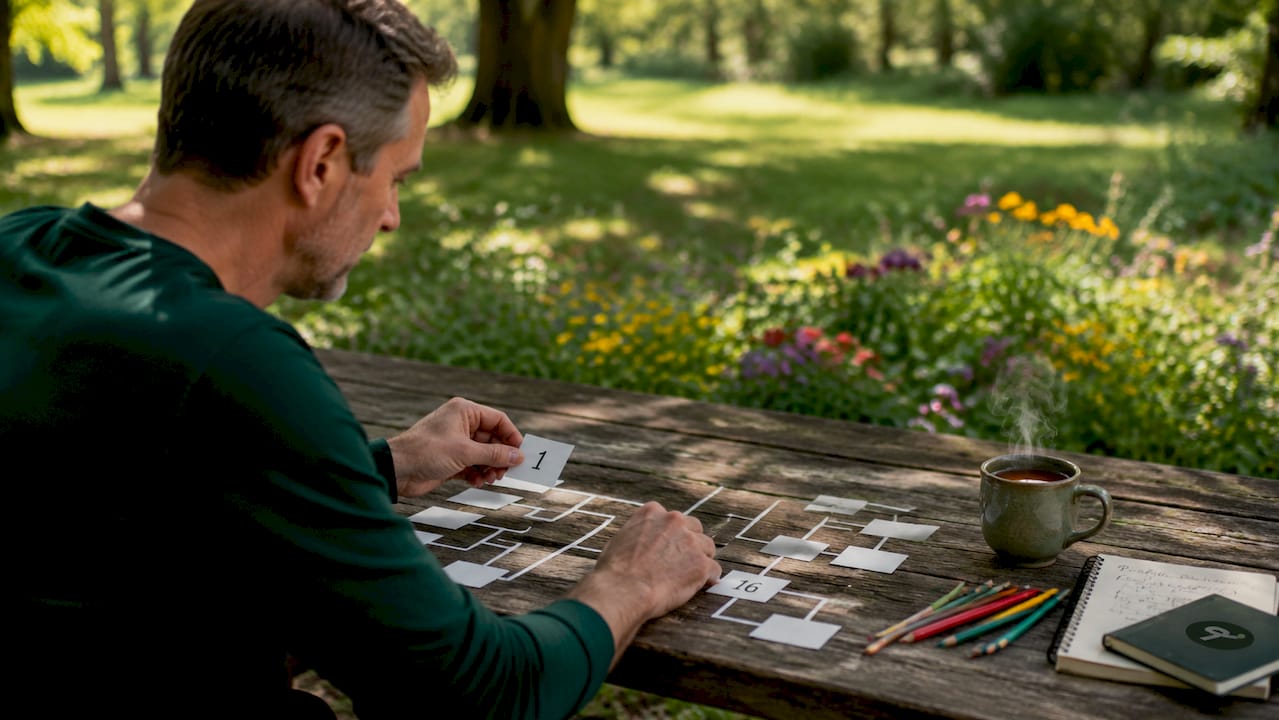
The same principle scales to 16-team and 32-team brackets. In a 16-team draw, every first-round pairing sums to 17. Seed 1 plays Seed 16, Seed 2 plays Seed 15, and so on. The bracket is then structured so Seeds 1 and 2 land in opposite halves, meaning they can only meet in the final. Seeds 3 and 4 go into separate quarters, so the earliest they can meet is the semifinals.
This structure is not accidental. It protects the integrity of the tournament's climax. Fans and broadcasters want the best players in the final, not eliminated in round two.
How byes work when the field is not a perfect power of two
Real tournaments rarely have exactly 8, 16, or 32 participants. When the count is irregular, byes fill the gap. A bye means a team skips the first round and advances automatically. Byes go to the highest seeds first, rewarding their ranking and keeping the bracket balanced. If 10 teams enter a bracket built for 16, the top 6 seeds receive byes into round two. The bottom 4 seeds play in round one. This approach prevents bracket imbalance and avoids punishing top-ranked competitors for an uneven field size.
Pro Tip: When organizing an amateur tournament with an odd number of participants, always assign byes starting from Seed 1 downward. Assigning byes randomly or to lower seeds creates an uneven path to the final and undermines the entire point of seeding.
| Bracket size | Sum of seeds per matchup | Example first-round pairing |
|---|---|---|
| 8-team | 9 | Seed 1 vs. Seed 8 |
| 16-team | 17 | Seed 1 vs. Seed 16 |
| 32-team | 33 | Seed 1 vs. Seed 32 |
| 64-team | 65 | Seed 1 vs. Seed 64 |
What methods determine seed rankings before bracket placement?
Bracket math only works if the seeds themselves are accurate. The methods for assigning seed numbers vary significantly across sports and competition levels.
The most data-driven approach uses official ranking systems. In professional tennis, ATP and WTA rankings directly determine seeding for Grand Slams. A 128-player draw seeds 32 players. Seeds 1 and 2 go to opposite ends of the draw. Seeds 3 and 4 are placed in separate quarters. This structure guarantees that the top two players can only meet in the final, and the top four can only meet in the semifinals. The ranking points system, which accumulates results over a rolling 52-week period, provides an objective foundation that removes guesswork.
Committee-based selection adds a human layer. The NCAA uses a committee-driven process for its 68-team men's basketball tournament. The committee evaluates strength of schedule, conference performance, and head-to-head results before assigning seeds. The seed list is fixed after selection, but bracket placement can still be adjusted for fairness.
Other common seeding methods include:
- Round robin or pool results. Teams play a preliminary stage, and final standings determine seeds for the knockout bracket. This method is common in soccer World Cups and rugby tournaments.
- Prior season performance. Some leagues seed teams based on where they finished the previous season, particularly when a new season begins before enough current data exists.
- Random draws. When no reliable ranking data exists, a blind draw is the fairest option. Random seeding prevents bias and preserves participant morale in recreational events. Guessing at seeds without data creates unfair paths and can damage trust in the competition.
- Hybrid systems. Many tournaments combine objective rankings with committee judgment, using data as a baseline and human review to handle edge cases.
The key distinction is between professional events, where ranking data is deep and reliable, and recreational events, where data is thin or nonexistent. Organizers must match the seeding method to the quality of available information.
How do organizers handle byes, geography, and fairness adjustments?
Placing seeds into a bracket is not purely mechanical. Organizers face real constraints that require manual adjustments beyond the math.
-
Assigning byes correctly. As covered above, byes go to the top seeds first. In amateur tournaments, incorrect bye assignment is one of the most common mistakes. It can hand a lower-ranked team an easier path while forcing a top seed into an extra match.
-
Avoiding early regional or conference matchups. The NCAA actively prevents teams from the same conference from meeting in the first two rounds when possible. This practice, called bracket scrubbing, ensures geographic and conference diversity in early rounds. It also makes the tournament feel more national rather than a series of conference rematches.
-
Geographic placement for travel fairness. Organizers try to place teams in regional pods close to their home markets in the early rounds. This reduces travel burden and boosts attendance. The NCAA adjusts bracket placement manually after the initial seeding to account for these logistics.
-
Protecting competitive integrity. Manual tweaks must not compromise the core seeding structure. A Seed 1 team should never face a Seed 2 team before the final, regardless of geographic convenience. The math sets the ceiling; logistics work within it.
-
Handling late withdrawals. When a seeded player or team withdraws before the tournament starts, organizers must decide whether to reseed the entire bracket or promote the next-ranked participant into the vacant slot. Grand Slams typically use a lucky loser system for the qualifying draw and promote the next-ranked player into the main draw.
Pro Tip: In tennis Grand Slams, the draw ceremony is not purely random for seeded players. Seeds 1 and 2 are placed in their respective halves first, then Seeds 3 and 4 are drawn into the remaining two quarters. Only after that are the remaining seeds distributed. Watch a draw ceremony with this in mind and the structure becomes immediately clear.
How does seeding impact competition and the fan experience?
Seeding's primary purpose is draw protection, not outcome prediction. It keeps top players apart to ensure the tournament's best matchups happen in the later rounds, where they generate the most attention and competitive drama.
The downstream effects on fan experience are significant. When Novak Djokovic and Carlos Alcaraz are seeded 1 and 2 at Wimbledon, fans know they will not meet until the final, assuming both advance. That knowledge builds anticipation across two weeks of play. Every match either player wins carries narrative weight because it moves them closer to an inevitable collision.
"Seeding helps maintain competitive balance and viewer interest by controlling when top players can meet, enriching the tournament narrative." — Global Tennis News
Seeding also shapes prediction and fantasy sports strategies. Analysts who understand seed distributions and bracket paths can forecast which players face easier or harder draws. A Seed 5 player placed in the same quarter as Seed 1 faces a much harder road than a Seed 5 in the opposite quarter. That asymmetry creates real analytical value for fans who track these details.
Upsets carry more weight in a seeded bracket too. When a Seed 15 beats a Seed 2 in the first round, the shock registers precisely because the seeding system told everyone it should not happen. Without seeds, there is no reference point for surprise.
Key takeaways
Tournament seeding is the foundational structure that separates a fair, exciting competition from a chaotic draw where the best players eliminate each other in round one.
| Point | Details |
|---|---|
| Core seeding formula | Pair highest seed with lowest seed so matchup sums stay constant across all rounds. |
| Byes go to top seeds | When the field is not a power of two, highest seeds receive byes to keep the bracket balanced. |
| Methods vary by level | Professional events use official rankings; recreational events should use random draws when data is unreliable. |
| Manual adjustments are normal | Committee scrubbing for geography and conference diversity is standard practice, not a flaw. |
| Seeding drives fan engagement | Seed placement determines narrative arcs, prediction strategies, and the weight of every upset. |
Why seeding is more art than algorithm
The biggest misconception I see from fans is treating seeding as a purely objective process. The math is clean. The committee decisions are not. I have watched NCAA bracket debates where two teams with nearly identical records end up seeded four spots apart because of subjective strength-of-schedule interpretations. That gap changes their entire path through the bracket.
In tennis, the ATP ranking system is more transparent, but it still has quirks. A player who peaks at a Grand Slam but loses early at smaller events can hold a ranking that does not reflect their current form. The tennis draw structure protects seeds based on ranking points, not recent form. That creates genuine analytical opportunities for fans who dig deeper than the seed number.
The future of seeding will involve more analytics. Expected value models, surface-specific performance data, and head-to-head records are already influencing how sophisticated fans evaluate bracket paths. Official seeding bodies will eventually incorporate more of this data. Until then, the gap between the official seed and the true competitive strength of a player is where smart analysis lives.
Understanding seeding does not just make you a better viewer. It makes every match more meaningful.
— Nathan
Tweener turns seeding knowledge into a competitive edge
For tennis fans who want to put their bracket knowledge to work, Tweener is built exactly for that. Tweener is a fantasy tennis app that uses real ATP and WTA tournament draws, seedings, and live match results as the foundation for skill-based competition.
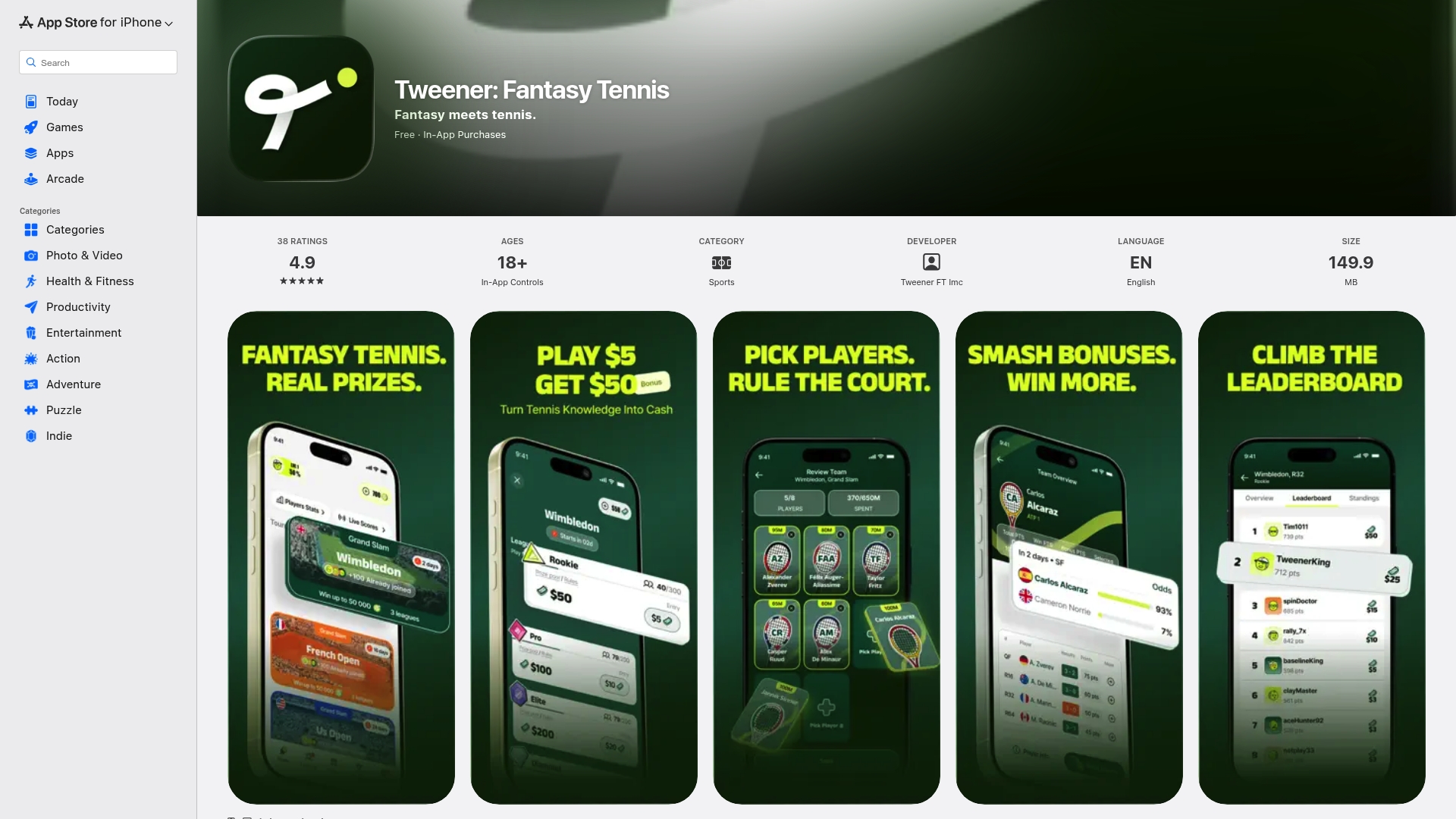
When a Grand Slam draw drops, Tweener players analyze seed placements, surface form, and head-to-head records to build fantasy teams. You pick real players, earn points based on their actual match results, and compete in public leagues or private leagues with friends. The free mode lets you play with virtual coins redeemable for gift cards. The cash mode offers real-money contests where legally permitted. If you follow seedings closely, Tweener gives you a real arena to use that knowledge.
FAQ
What is tournament seeding?
Tournament seeding is the process of ranking competitors and placing them in a bracket so the strongest participants avoid each other until the later rounds. The goal is to preserve competitive balance and ensure the best matchups happen when they matter most.
How is a seed number assigned?
Seed numbers are assigned based on official rankings, committee evaluations, or prior results depending on the sport and level of competition. In professional tennis, ATP and WTA ranking points determine seeding directly.
What happens when the number of participants is not a power of two?
Byes are awarded to the highest seeds first to balance the bracket. This means top-ranked competitors skip the first round and advance automatically, which rewards their ranking and keeps the draw fair.
Why do organizers adjust brackets manually after seeding?
Manual adjustments handle geographic constraints, conference diversity, and travel logistics without changing the core seed order. The NCAA uses bracket scrubbing to prevent same-conference teams from meeting in early rounds.
How does seeding affect fantasy sports and predictions?
Seed placement determines which players face easier or harder paths through a bracket. Analysts who understand seed distributions can identify favorable draws and make more informed picks in fantasy competitions and prediction contests.