

TL;DR:
- Tennis seeding assigns ranked positions to players in a tournament based on ATP or WTA rankings at a set cutoff date. Seedings structure matchups, protect top players early, and vary across Grand Slams, with Wimbledon uniquely incorporating grass court performance. Understanding seed volatility and draw positions can give players and fantasy fans a competitive edge before the tournament begins.
Tennis seeding is defined as the process of assigning ranked positions to players in a tournament draw, based on their official ATP or WTA rankings at a specific cutoff date before the event. Understanding how tennis seeds are determined matters far beyond casual curiosity. Seeds shape every matchup from round one onward, protect the sport's top talent from early elimination, and directly influence which players you should target in fantasy tennis. The system is more nuanced than most fans realize, and the details reward anyone willing to dig in.
How are tennis seeds determined by ATP and WTA rankings?
Tennis seeds are assigned using a player's ATP or WTA ranking at a fixed cutoff date set by each tournament. That snapshot date, typically one to two weeks before the draw ceremony, determines who gets seeded and at what number. The ranking in place on that date is what counts. Nothing that happens after the cutoff moves your seed.
The ATP and WTA ranking systems operate on a rolling 52-week calendar, counting a player's best 18 tournament results. Points expire exactly 52 weeks after they were earned. That means a player who won a Masters 1000 title last year must reach at least the same round this year to hold that ranking position. Failing to defend points is the most common reason seeds drop between seasons.
This creates a critical dynamic for tournament seedings. A player who peaked mid-season last year may enter a Grand Slam with a lower seed than their current form suggests, simply because their best results are aging off the calendar. Conversely, a player on a hot streak who just earned a large points haul can jump several seed positions before a major.
Pro Tip: Watch the ATP and WTA live rankings in the two weeks before a Grand Slam draw. Late-season results can shift seed positions by three to five spots, which changes draw paths significantly.
There is also an important distinction between the entry list and the final seed list. Entry lists and seed lists are not the same document. The entry list is published weeks earlier and reflects rankings at that earlier date. The seed list is finalized closer to the draw and can look different if ranking changes occur in between. A player who climbs the rankings after the entry deadline can still receive a higher seed than their entry position suggested.
- Rankings use a rolling 52-week window counting best 18 results.
- Points expire exactly one year after they are earned.
- The seed cutoff date is separate from the entry list deadline.
- Late ranking surges between entry and draw can change seed assignments.
- Defending points annually is the core pressure every ranked player faces.
How does the seeding structure work in Grand Slam draws?
A standard 128-player Grand Slam draw features 32 seeds, placed to prevent top players from meeting in early rounds. The placement is not fully random. It follows a tiered protection system that determines which part of the draw each seed occupies.

Seeds 1 and 2 are fixed on opposite halves of the draw. They cannot meet before the final. Seeds 3 and 4 are placed randomly into the two quarters that do not contain seeds 1 and 2. This guarantees a potential semifinal between a top-four seed and another top-four seed, but prevents a 1 vs. 2 clash before the final. Seeds 5 through 8 are drawn randomly into the four quarters, one per quarter, so each quarter of the draw contains exactly one top-eight seed.
| Seed tier | Placement rule | Earliest possible meeting |
|---|---|---|
| Seeds 1 and 2 | Fixed on opposite draw halves | Final |
| Seeds 3 and 4 | Randomly placed in opposite quarters from 1 and 2 | Semifinals |
| Seeds 5–8 | One per quarter, randomly drawn | Quarterfinals |
| Seeds 9–16 | Two per quarter, randomly drawn | Fourth round |
| Seeds 17–32 | Four per quarter, randomly drawn | Third round |
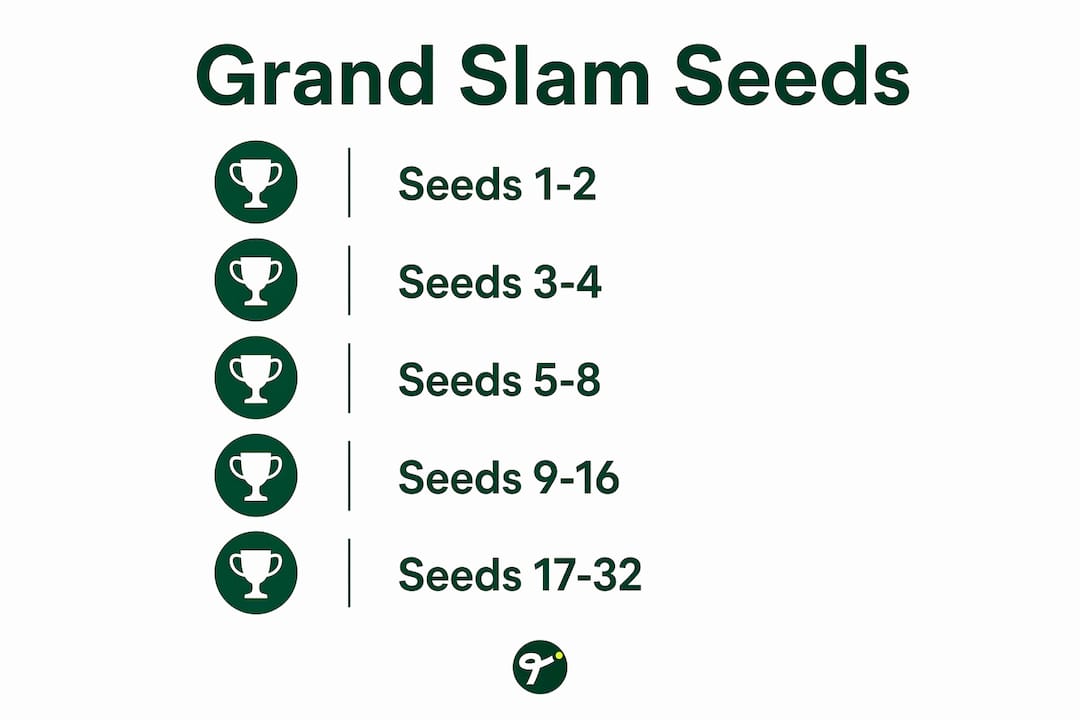
Seeds 9 through 16 are distributed two per quarter, and seeds 17 through 32 are spread four per quarter. Within each tier, the draw ceremony uses randomized assignments to determine exact positions. The protection is structural, but the specific slot within a protected zone is left to chance.
This structure means the bracket a player lands in matters enormously. A seed 9 player drawn into the same quarter as Novak Djokovic faces a very different path than one drawn opposite him. The randomized element within tiers keeps the draw ceremony genuinely suspenseful, even for analysts who know the rules cold.
Pro Tip: When a Grand Slam draw drops, map out which seeds landed in which quarter before making any fantasy picks. A seed 12 player in an open quarter is a far better value than a seed 8 player sharing a quarter with the world number one.
The 128-player draw is made up of 104 direct entries by ranking, 16 qualifiers from a three-round qualifying tournament, and 8 wildcard entries. Seeding applies only to the direct entries and wildcards who qualify by ranking. Qualifiers enter the draw after the seeded positions are set and fill the remaining slots.
Does Wimbledon seed players differently than other Grand Slams?
Wimbledon uses a specialized seeding formula that goes beyond pure rankings. The All England Club incorporates grass court performance into its seeding calculation, making it the only Grand Slam that adjusts seeds based on surface. Points from grass court tournaments count at 100%, and the best grass results from the prior 12 months receive a 75% weighting in the formula. A player who dominates on clay but struggles on grass can drop several seed positions at Wimbledon compared to their ATP ranking.
The U.S. Open and Australian Open rely strictly on rankings at the cutoff date, with no surface adjustments. The French Open follows the same approach. This makes Wimbledon the clear outlier among the four Grand Slams.
- Wimbledon adds grass court results to the standard ranking formula.
- Grass tournament points count at 100% in the Wimbledon calculation.
- Best grass results from the prior 12 months receive a 75% weighting.
- Australian Open, French Open, and U.S. Open use pure rankings at cutoff.
- Tournament organizers generally avoid altering seeds beyond the official formula to prevent controversy.
The practical effect is real. A player like Rafael Nadal, dominant on clay but with a modest grass record in a given year, could be seeded lower at Wimbledon than his ATP ranking would suggest. Conversely, a grass specialist who performs well at Queen's Club and Halle can earn a higher Wimbledon seed than their overall ranking justifies. For fantasy players and analysts, Wimbledon seedings require a separate calculation, not just a ranking lookup.
What is the practical impact of seeding on tournament outcomes?
Seeding functions as a draw-protection mechanism, not a talent guarantee. Its primary purpose is to keep the best players in the tournament long enough for their matchups to matter. Without seeding, the world's top two players could theoretically meet in round one and eliminate each other before most fans have tuned in.
The concept of the "quarter of the draw" is central to how analysts read a tournament before it starts. Each quarter contains one top-eight seed, two seeds from the 9–16 tier, and four seeds from the 17–32 tier. An "open quarter" is one where the top seed in that section is ranked lower or has a weaker record, creating a clearer path to the semifinals for unseeded or lower-seeded players.
How seedings shape competition outcomes:
- Top players are guaranteed to avoid each other until at least the quarterfinals.
- Unseeded players can face a seeded opponent as early as round one.
- The draw ceremony's randomized element creates legitimate variation within the structure.
- A player's draw path can be dramatically easier or harder depending on which quarter they land in.
- Seed changes between the entry list and draw cutoff can shift a player's entire bracket position.
For fantasy tennis, seedings are one of the most useful filters available. A seed 24 player drawn into a quarter without a top-eight seed has a realistic path to the quarterfinals. That same player drawn opposite Jannik Sinner or Carlos Alcaraz is likely a first-week exit. Seedings tell you the structure. The draw tells you the path. Together, they define value.
| Scenario | Impact on player path |
|---|---|
| Top seed in open quarter | Clear path to semifinals |
| Mid-seed in loaded quarter | Early exit likely |
| Seed change before draw | New bracket position, altered matchups |
| Unseeded player vs. seed 32 | Round one challenge, no protection |
Key takeaways
Tennis seeds are determined by official ATP and WTA rankings at a cutoff date, structured into tiers that protect top players from meeting early, with Wimbledon as the only Grand Slam that adjusts for surface performance.
| Point | Details |
|---|---|
| Rankings drive seedings | ATP and WTA rankings at the cutoff date determine seed order for every tournament. |
| 52-week rolling points | Players must defend prior year results or their ranking and seed position will drop. |
| 32 seeds in Grand Slams | Seeds are placed in protected tiers, with seeds 1 and 2 fixed on opposite halves. |
| Wimbledon is the exception | Wimbledon adds grass court results to the ranking formula, unlike the other three Grand Slams. |
| Entry list vs. seed list | Ranking changes between the entry deadline and draw cutoff can shift final seed assignments. |
Why seedings matter more than most fans think
Seedings look like administrative housekeeping. They are not. They are the single biggest structural factor shaping a tournament before a ball is struck.
What I find underappreciated is how volatile seeds actually are. A player defending a deep run from the prior year faces enormous pressure to repeat that result, or watch their ranking and seed position erode in real time. Carlos Alcaraz and Jannik Sinner have traded the top two seeds at multiple Grand Slams in recent years, and those swaps changed draw paths for every other player in the field. The ripple effect is massive.
The Wimbledon formula is where things get genuinely interesting for analysts. Most fans assume Wimbledon seeds mirror the ATP rankings. They do not. A player who won Queen's Club and reached the Wimbledon quarterfinals the prior year can carry a meaningfully higher seed than their overall ranking suggests. That is a real edge if you know to look for it, and most casual fans miss it entirely.
The future of seeding likely involves more surface-specific adjustments, not fewer. The gap between clay and grass specialists has always been wide, but the data to quantify it is better than ever. I would not be surprised to see the French Open experiment with a clay-weighted formula within the next decade. The ATP and WTA already have the data to support it.
For anyone building fantasy lineups or running tournament predictions, seedings are the starting point, not the finish line. They tell you the structure of the competition. Your job is to find the players whose seed understates their actual form.
— Nathan
Put your seeding knowledge to work with Tweener
Understanding the tennis seed ranking system is only useful if you act on it. Tweener is the only fantasy tennis app built for fans who think analytically about the sport. You pick real ATP and WTA players, earn points based on their live match results, and compete in public or private leagues throughout each tournament.
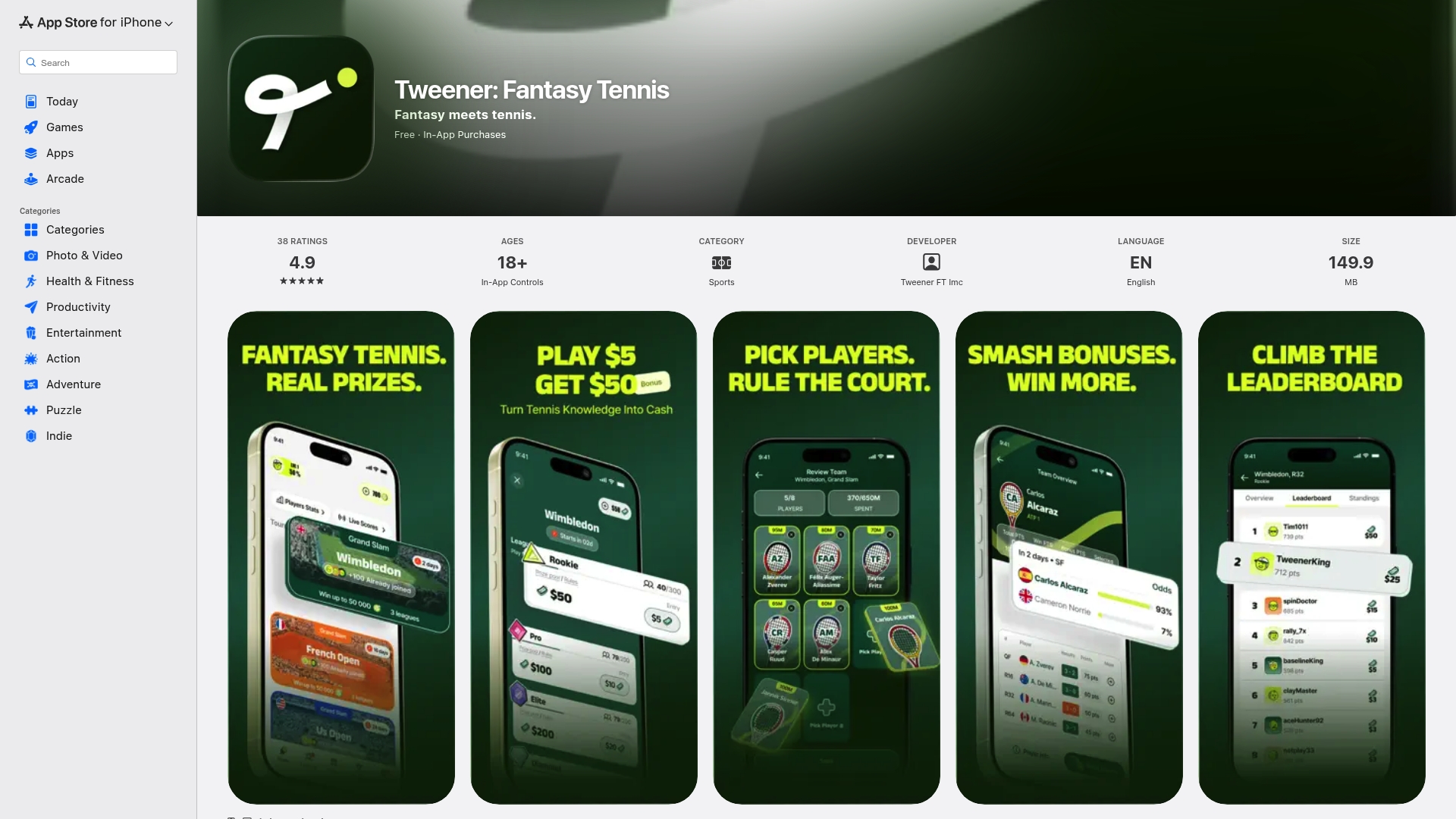
The strategic layer is real. Knowing which seeds landed in open quarters, which players are defending heavy points loads, and how surface adjustments shift Wimbledon seedings gives you a genuine edge over opponents who just pick by name recognition. Download Tweener and build your first Grand Slam lineup using everything you just learned. Private leagues hold up to nine friends, making every draw ceremony a competition before the first match even starts.
FAQ
How are tennis seeds assigned in Grand Slams?
Seeds in Grand Slams are assigned based on ATP and WTA rankings at a cutoff date set by each tournament. The top 32 ranked players in the draw receive seeds, placed in protected tiers to avoid early matchups.
Can a player's seed change after the entry list is published?
Yes. Seed assignments can change between the entry list and the draw ceremony if rankings shift in that window. A late-season result can move a player up or down several seed positions before the draw is set.
Why does Wimbledon seed players differently?
Wimbledon incorporates grass court performance into its seeding formula alongside ATP rankings. Points from grass tournaments receive full weighting, and the best grass results from the prior 12 months receive a 75% weighting in the calculation.
What is the difference between a seed and a ranking?
A ranking is a player's position on the ATP or WTA tour based on points earned over 52 weeks. A seed is a tournament-specific designation assigned from that ranking at a cutoff date, used to structure the draw. Not every ranked player receives a seed.
How does seeding affect fantasy tennis picks?
Seedings define a player's draw path through a tournament. A lower seed in an open quarter often has better value than a higher seed in a loaded bracket, making seeding analysis a core part of any fantasy tennis strategy.