
TL;DR:
- Choosing players for fantasy tennis requires understanding ATP and WTA differences, as their match formats and upset tendencies vary significantly. Proper preparation involves analyzing surface, recent form, head-to-head data, draw difficulty, injuries, conditions, and balancing safe bets with high-upside dark horses. In-play adjustments depend on momentum signals, injury updates, and real-time statistics, with strategies tailored to each tour's unique dynamics to optimize success.
Picking the right players for a fantasy tennis contest sounds straightforward until you're staring at a draw sheet packed with 128 names, a surface you're not sure about, and a deadline ticking down. ATP and WTA tournaments move fast, rosters change overnight, and one injury news item can flip your entire strategy. A structured checklist is the difference between making decisions based on real insight and making them based on gut feeling. This guide walks you through every critical step, from reading the tour calendar to adjusting your lineup mid-match, so you can compete with confidence every time you open your fantasy app.
Table of Contents
- Understand ATP vs WTA differences
- Checklist: What to analyze before you play
- Key factors for in-play strategy success
- Comparison: ATP vs WTA strategies at a glance
- Why most tennis gaming checklists miss the mark
- Elevate your strategy with Tweener
- Frequently asked questions
Key Takeaways
| Point | Details |
|---|---|
| ATP and WTA differ | Understanding circuit differences helps you optimize your picks and strategy. |
| Use a structured checklist | A pre-game checklist improves your odds by ensuring complete preparation. |
| Adapt during play | Real-time adjustments give you an edge in dynamic matches. |
| Compare strategies | Reference comparison tables to choose tactical options fast. |
Understand ATP vs WTA differences
Let's begin by mapping the main differences between the ATP (men's) and WTA (women's) circuits so you can fine-tune your gaming approach.
Most casual players treat ATP and WTA contests as interchangeable. They are not. The two tours reward completely different strategic thinking, and confusing them is one of the fastest ways to lose ground in a competitive fantasy league.
On the ATP side, matches are defined by serve dominance. Top servers like Novak Djokovic or Carlos Alcaraz can hold serve under enormous pressure, which means matches often stay predictable in terms of who breaks whom. Upsets at major ATP events are relatively rare, and the ATP fantasy picks that consistently score well tend to center on top seeds who carry that advantage deep into draws.
The WTA circuit plays out very differently. More frequent breaks of serve mean more momentum swings, which means more upsets. A player ranked 40th in the world can and does defeat a top-5 seed in straight sets at a Grand Slam. That unpredictability is both the challenge and the opportunity for smart fantasy players. As tennis betting research shows, ATP events feature fewer upsets and serve dominance with best-of-5 formats at Slams, while WTA events produce more parity, more breaks, and decisive swings in momentum within a best-of-3 format.
Match format matters enormously for fantasy scoring. A best-of-5 ATP Slam match can last five hours and generate huge point totals for a dominant winner. A WTA Slam match can end in 55 minutes or stretch to a three-set marathon. When building winning tennis lineups, understanding that format difference shapes everything from which rounds you target to how much risk you take with lesser-known players.
Here's a quick comparison to keep handy:
| Factor | ATP | WTA |
|---|---|---|
| Serve dominance | Very high | Moderate |
| Upset frequency | Low to moderate | Moderate to high |
| Slam format | Best-of-5 sets | Best-of-3 sets |
| Break of serve rate | Low | High |
| Fantasy risk level | Lower on top seeds | Higher variance overall |
Key takeaways for your gaming strategy:
- ATP: Back top seeds confidently, especially on fast surfaces like grass or indoor hard courts
- WTA: Diversify your picks, and don't be afraid to include unseeded players with strong recent form
- Both tours: Surface matters more than ranking when a player is clearly in peak form
"Knowing whether you're gaming ATP or WTA isn't just trivia. It's the single biggest factor in how you set your risk tolerance for the week."
Checklist: What to analyze before you play
Knowing ATP and WTA formats is just the start. Here's your step-by-step checklist to prep like a pro before every online gaming session.
Preparation separates the players who finish in the money from those who wonder what went wrong. Use this checklist before entering any contest, whether it's a free-coin league or a cash entry.
1. Check the surface
Clay, grass, and hard court each favor distinct playing styles. Rafael Nadal's dominance on clay is the most famous example, but the principle applies across the tour. Players with heavy topspin excel on clay, big servers dominate grass, and all-rounders tend to perform consistently on hard courts. Check the tournament's surface and cross-reference it with each player's historical win rates on that surface before making any picks.
2. Review recent form over the last four weeks
A player's ranking tells you their historical performance. Their last four tournaments tell you where they are right now. A top-10 player returning from a month off carries completely different value than one who just won back-to-back titles. Look for players who are trending upward, not those coasting on reputation.

3. Dig into head-to-head records
Head-to-head data is especially useful in later tournament rounds when you're predicting specific matchups. Some players simply own certain opponents regardless of ranking. For example, a player with a 7-1 head-to-head record against an opponent is a very different pick than one who is 2-6 in the same matchup, even if their current rankings are similar.
4. Check the draw and projected path
Entering a player whose projected path to the quarterfinals runs through three top-20 seeds is a very different gamble than one who has a favorable opening week. Spend five minutes mapping out the draw before you finalize your roster. This is especially useful for fantasy match prediction strategies where you're scoring points across multiple rounds.
5. Monitor injury and withdrawal news
This step is non-negotiable. A player who limped through their previous tournament is a liability. Fantasy platforms update rosters quickly, but last-minute scratches can catch you flat-footed if you're not checking right up until the deadline. Set alerts on tennis news apps and cross-check official ATP and WTA social accounts.
6. Evaluate weather and conditions
Outdoor tournaments are heavily affected by wind and heat. Wind neutralizes serve advantage and can turn a reliable ATP match into a chaotic, upset-friendly affair. High heat at Australian Open-style events drains physical players faster. These factors become even more critical when you're working with live tennis predictions during the event itself.
7. Balance favorites and dark horses
Building a team entirely of top seeds feels safe but leaves very little upside. A well-built lineup mixes reliable point scorers with one or two high-upside picks who can outperform their ranking. For real money fantasy tips, this balance is especially critical because the highest cash payouts typically go to lineups that include at least one surprise performer.
As research confirms, ATP tournaments have fewer upsets and serve-dominant matches, while WTA matches feature more parity and frequent breaks. Adjust your risk tolerance accordingly for each tour.
Pro Tip: Build two draft lineups before finalizing. One conservative, one bold. Then compare their projected point ceilings and decide how much risk fits your current standing in the league.
Key factors for in-play strategy success
Pre-match prep is vital, but in-play adjustments set top players apart. Here's how to handle match-day surprises.
The best fantasy tennis players think of match day as a second chance to get it right. Static lineups leave points on the table. Platforms that allow in-play changes reward players who stay engaged and react quickly to what's actually happening on court.
Tracking momentum shifts in real time
Tennis momentum is visible in the data. A player who has won the last six points, broken serve twice in a row, or just taken a decisive first set is playing differently than their season averages suggest. The live prediction accuracy guide framework applies here: you're not predicting outcomes, you're reading what's already happening and responding to it faster than other players.
Watch for these momentum signals:
- Consecutive break points won or saved
- First-serve percentage dropping sharply mid-set
- Visible signs of physical distress or reduced movement
- A player winning more than 65% of second-serve points in a set
- Rapid shifts in unforced error counts
Adjusting for injuries during play
A turned ankle or a pulled thigh muscle can change a match's outcome completely. If a player in your lineup is visibly struggling midway through a set, treat that as a red flag. Most platforms allow roster changes between sets or during delays. Don't wait to see if the player "pushes through." Move fast.
ATP vs WTA in-play dynamics
Because ATP matches typically present fewer upsets and see serve dominance, in-play momentum shifts tend to be gradual. A top-ranked ATP player going down a break in the second set is rarely a crisis. Their serve usually brings them back. In WTA matches, one break can cascade into a completely reversed result within 20 minutes. React faster in WTA in-play situations.
Understanding tennis analytics for gaming gives you an edge here. Stats like serve speed, rally length, and winners-to-errors ratio are available in near real time during most major tournaments and paint a clear picture of who has the momentum.
Pro Tip: During WTA matches especially, check second-set statistics before finalizing any in-play changes. A player who dominated the first set but is losing the second by a wide margin may be hitting a physical or mental wall.
Comparison: ATP vs WTA strategies at a glance
Now that you know how to approach different stages, let's put ATP vs WTA strategy side-by-side for easy reference.
Use this table before you finalize any lineup or prediction. It distills the key decision points for each tour into a format you can scan in under two minutes. The core principle, confirmed by ATP and WTA match data, is that ATP is serve dominated with fewer upsets while WTA sees more parity and break opportunities.
| Strategy area | ATP approach | WTA approach |
|---|---|---|
| Top seed picks | High confidence, especially on hard/grass | Moderate confidence, verify recent form |
| Dark horse picks | Use sparingly, target clay specialists | Use more freely, especially on clay |
| Injury monitoring | Standard pre-match checks | Daily checks, more frequent rotation |
| In-play adjustments | Slower, more calculated | Faster, momentum-driven |
| Surface weighting | Grass and hard court favor big servers | Clay produces more upsets across rankings |
| Slam match length | Best-of-5 rewards physical players | Best-of-3 favors hot streaks |
| Break of serve impact | Low, rarely changes match trajectory | High, can flip matches quickly |
For ATP team selection strategies, the safest consistent approach is building around the top three seeds in any draw and using one wildcard pick in the middle rounds. For WTA, rotate your wildcard slots more frequently and pay extra attention to which players have historically performed well on the specific surface of the tournament you're targeting.
The table also highlights why a one-size-fits-all checklist doesn't work. Your ATP checklist and your WTA checklist should look different. The risk weighting, the in-play speed of response, and the value of surface data all shift depending on which tour you're playing.
Why most tennis gaming checklists miss the mark
Here's an uncomfortable truth about most online gaming guides: they hand you a clean list of steps and assume you'll follow them mechanically. Real tournament play is messier. The checklist is a starting point, not a script.
Most guides focus exclusively on pre-match data and completely ignore two factors that consistently separate high performers from average players: late-breaking developments and emotional bias.
Late-breaking developments include everything that happens in the 12 hours before a match. Practice session reports, player press conference comments about fatigue or confidence, locker room atmosphere, and even social media posts can signal something the stats don't. Serious players treat this window as prime research time, not a period to coast until match time.
Emotional bias is trickier. If you've been backing a player all tournament and they've just been beaten badly, your instinct might be to stick with them because "they're due." That's not strategy. That's hope. The data on player bounce-back rates is clear: a player who just took a heavy loss in three sets is not automatically in line for a strong result next week. Your decisions need to be based on form, fitness, and draw, not on what you wish would happen.
We've seen this play out repeatedly in fantasy leagues. Players who review live stats, assess surface nuances after each round, and check in on player energy between matches consistently outperform those who set their lineup on Monday and don't look again until Friday. Understanding fantasy tennis risks means acknowledging that the biggest losses come not from bad initial picks but from failing to update your thinking as the tournament evolves.
Smart decisions require you to treat each match day as its own story, with its own context, pressure, and variables that no static checklist can fully anticipate.
Elevate your strategy with Tweener
Knowing the checklist is one thing. Having a platform built to help you act on it in real time is something else entirely.
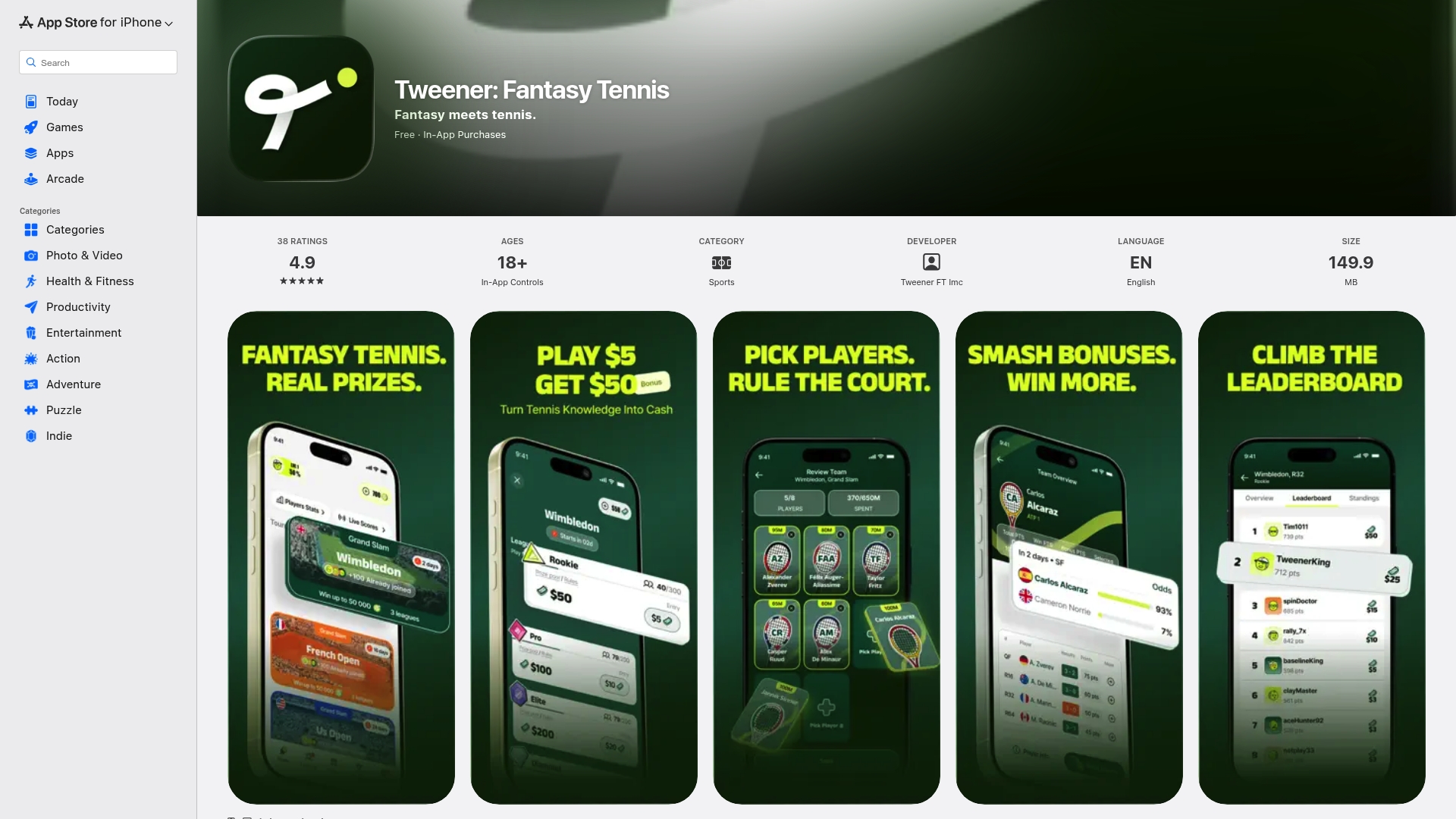
Tweener is designed specifically for tennis fans who want to turn this kind of strategic thinking into actual results during live ATP and WTA tournaments. You can build fantasy teams from real professional players, join public leagues, or compete against friends in private contests. Every scoring decision reflects what's actually happening on court, so your pre-match research and in-play instincts both pay off directly. Whether you prefer to compete in free-coin mode or enter cash contests for real payouts, Tweener gives you the tools to apply everything from this checklist in one focused, mobile-first experience. Download the Tweener app and put your strategy to work before the next tournament starts.
Frequently asked questions
What is the main difference between ATP and WTA for online gaming picks?
ATP events have fewer upsets and emphasize serve dominance, making top seeds safer picks, while WTA matches see more parity and frequent breaks of serve, which opens the door to more surprise outcomes.
How do I adapt my lineup during a live tennis match?
Monitor momentum shifts like consecutive breaks and dropping serve percentages, watch closely for signs of injury, and make roster changes based on in-play stats rather than waiting to see how a struggling player performs.
What data should I always review before entering fantasy tennis games?
At minimum, check player form over the last four weeks, head-to-head history in similar conditions, surface preference, and any recent injury reports before finalizing your roster.
Are upset picks riskier in ATP or WTA?
Upset picks carry more risk in ATP due to serve dominance and fewer breaks, while WTA matches offer more parity, making surprise winners a realistic and often rewarding part of a balanced fantasy strategy.