

TL;DR:
- Interactive tennis apps transform fans into active participants through predictions, fantasy leagues, and real-time data.
- Features like AI tracking, community challenges, and rewards enhance understanding and motivation.
- Limitations include data inaccuracies and device setup challenges, but embracing imperfections deepens sport engagement.
Most tennis fans think their role is simple: watch the match, cheer for their favorite player, and move on. But that passive relationship with the sport leaves a lot of enjoyment on the table. Interactive sports apps are changing what it means to be a tennis fan, turning every tournament into a personal competition where your knowledge, instincts, and strategy actually matter. This article walks through the real benefits of these apps, the features that drive motivation, the smart ways to play, and the honest limitations you should know before diving in.
Table of Contents
- How interactive sports apps amplify tennis engagement
- Key features that boost motivation and skill development
- Strategic gameplay: Making the most of fantasy and prediction apps
- Limitations and expert tips for getting optimal experience
- Why embracing imperfection in sports apps makes you a better fan
- Enhance your tennis experience with Tweener
- Frequently asked questions
Key Takeaways
| Point | Details |
|---|---|
| Boosts engagement | Interactive sports apps transform following tennis into an active, social experience. |
| Motivates improvement | Features like AI tracking and goal setting help fans and players develop skills. |
| Community matters | App leaderboards and challenges make tennis more fun and competitive among friends. |
| Strategy adds value | Using analytics and smart predictions enhances both learning and excitement. |
| Know limitations | Be aware of common app quirks and focus on enjoyment, not just technical perfection. |
How interactive sports apps amplify tennis engagement
There is a fundamental difference between watching tennis and being in it. Interactive apps close that gap by giving you a stake in every match. When you have a fantasy team built around real ATP and WTA players, a tight Djokovic service game suddenly feels personal. You are not just watching. You are competing.
The shift from passive viewer to active participant is powered by gamification. Points, leaderboards, streaks, and rewards create a feedback loop that keeps you coming back. Research backs this up: gamified fantasy sports apps drove 36.73 average sessions compared to just 22.46 in non-gamified formats, along with higher competence satisfaction scores. That gap is not a coincidence. It reflects how much motivation increases when your decisions have visible consequences.
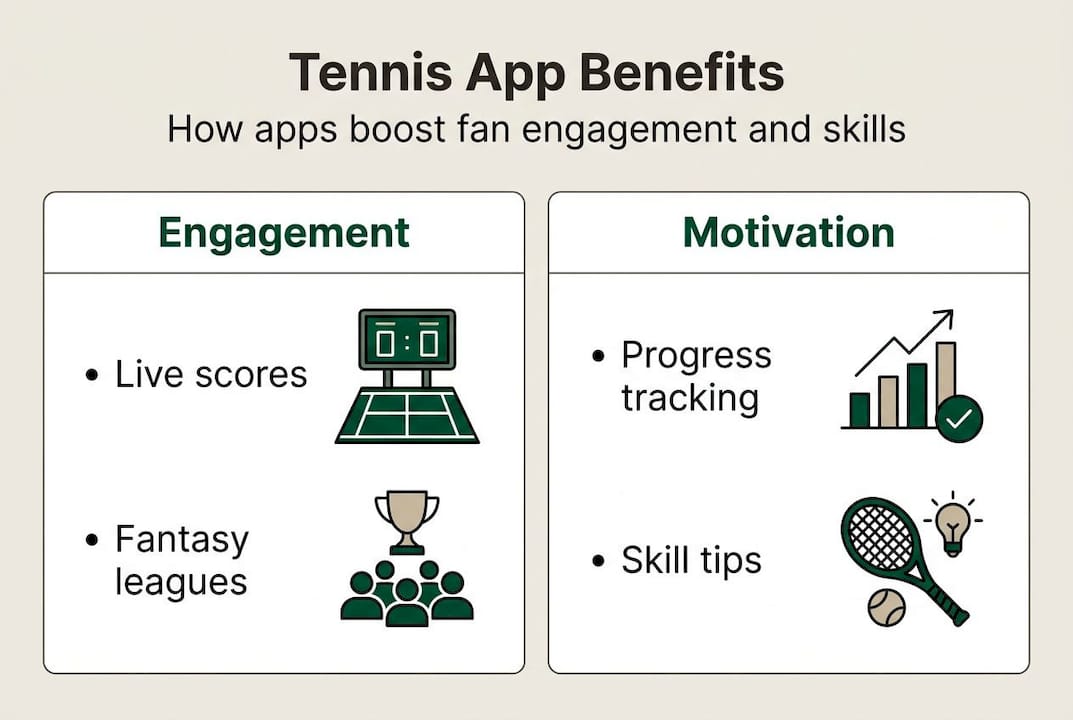
Here is a quick look at how traditional fandom compares to app-powered engagement:
| Experience | Traditional fandom | App-powered fandom |
|---|---|---|
| Match involvement | Passive viewing | Active prediction and scoring |
| Player knowledge | General awareness | Stat-driven decision making |
| Social interaction | Talking with friends | Competing in real-time leagues |
| Rewards | None | Coins, gift cards, cash prizes |
| Motivation to follow matches | Interest | Personal stakes |
The features that make this work include live scoring updates, social challenges, custom private leagues, and tennis prediction game benefits that reward you for reading the game well. Apps also build in fantasy tennis rewards that give you something tangible for your effort, whether that is virtual coins or real money.
Key engagement features to look for in any interactive tennis app:
- Live scoring and real-time data feeds tied directly to match play
- Fantasy league creation for both public and private groups
- Prediction challenges that reward accuracy across tournaments
- Leaderboards that track your rank against other fans globally
- In-app rewards redeemable for real-world value
The role of live data in fantasy sports cannot be overstated. When your app updates the moment a player breaks serve, your strategy shifts in real time. That responsiveness is what separates a genuinely engaging platform from a static game.
Key features that boost motivation and skill development
Engagement is the first hook, but the best interactive apps go further by helping you actually understand tennis better. That is where motivation turns into something more lasting.

AI-powered tools like SwingVision offer shot tracking and automated line calling, giving players and fans data that was once only available to professional coaching teams. Apps like Evolve provide interactive drills and remote coaching sessions, letting users set goals and measure progress over time. Even if you are a fan rather than a player, understanding this kind of data makes you sharper at tracking player performance in your fantasy leagues.
Here is how leading tennis apps compare on key features:
| Feature | SwingVision | Evolve | Fantasy apps (e.g., Tweener) |
|---|---|---|---|
| AI shot tracking | Yes | No | No |
| Remote coaching | No | Yes | No |
| Fantasy leagues | No | No | Yes |
| Real-time match data | Limited | No | Yes |
| Community challenges | No | Yes | Yes |
| Rewards system | No | No | Yes |
Community is another underrated motivator. App-based leagues create accountability. When your friends can see your weekly rank, you pay closer attention to player form, injury updates, and tournament draws. That social layer turns solo interest into shared investment.
Here are the top ways interactive apps develop your tennis knowledge:
- Progress tracking shows you which players you pick consistently well and where your instincts miss.
- Goal setting within apps gives you short-term targets that keep engagement high between Grand Slams.
- Stat breakdowns after each round help you understand why a player won or lost beyond just the score.
- Community forums and chat expose you to analysis from other fans who notice things you might miss.
- Coaching content in apps like Evolve gives context that makes watching professional matches more meaningful.
Pro Tip: Use your app's progress tracking dashboard to review your player picks after each tournament. Identifying patterns in your hits and misses is the fastest way to sharpen your tennis analytics improvement instincts over time.
Strategic gameplay: Making the most of fantasy and prediction apps
Knowing the features is one thing. Using them strategically is where the real fun starts.
The best fantasy tennis players treat their team selection like a coach treats a lineup. They look at surface performance, recent form, head-to-head records, and draw difficulty before committing to picks. Predictive analytics tools built into modern apps make this easier. Instead of guessing, you can look at data-driven probability scores before each round.
Fantasy sports apps boost perceived competence and motivation, meaning the more you engage with the strategic layer, the more satisfying the experience becomes.
Here is a practical framework for playing smarter:
- Study the draw early. Players in favorable halves of the bracket carry less risk for fantasy points.
- Prioritize consistent performers over high-risk stars. A player who reliably reaches the quarterfinals scores more than one who wins one match and exits.
- Use fantasy sports analytics tools to compare head-to-head stats before making picks.
- Monitor injury and withdrawal news in real time. One late scratch can change your entire strategy.
- Diversify your team across surfaces and playing styles to reduce variance across different tournament types.
- Review your league standings weekly to adjust your approach based on what is and is not working.
Pro Tip: Set automated alerts for player news inside your app before each tournament's draw is finalized. Last-minute withdrawals and wildcard entries can shift live prediction accuracy significantly, and being first to react gives you a real edge.
The strategic layer is also what makes losses educational rather than just frustrating. When a pick does not pan out, you have data to explain why. That feedback loop is what keeps serious fantasy players improving tournament after tournament.
Limitations and expert tips for getting optimal experience
No app is perfect, and being honest about that upfront saves a lot of frustration.
Setup is the first hurdle. Placement of devices for shot tracking, battery drain during long matches, and occasional scoring mismatches between the app and live match data are common complaints. These are not dealbreakers, but they are real friction points that new users often do not expect.
Accuracy is the bigger conversation. Hawk-Eye technology carries a 2.2mm error margin that can affect close line calls, and AI-powered scoring tools in consumer apps are generally less precise than professional-grade systems. For casual use, this is fine. For high-stakes decisions in paid fantasy contests, it is worth keeping in mind.
Some users report frustration with demotion for inactivity and mismatched opponents in competitive modes, which can reduce enjoyment if the app's matchmaking is not well calibrated.
Common pitfalls and how to avoid them:
- Scoring delays: Cross-check your app's live scores against a secondary source during important matches.
- Inaccurate AI line calls: Choose apps that offer manual override options so you can correct errors.
- Battery drain: Keep your device plugged in or fully charged before long tournament sessions.
- Unfair matchmaking: Read community ratings and reviews before entering paid leagues to gauge fairness.
- Over-reliance on AI picks: Use analytics as a guide, not a replacement for your own judgment.
The tennis scoring accuracy of any app depends heavily on the quality of the data feed it uses. Apps connected to official ATP and WTA data sources tend to be more reliable than those pulling from third-party aggregators. Always check the data source before committing to a platform for serious play.
Why embracing imperfection in sports apps makes you a better fan
Here is something the app store reviews will not tell you: the imperfections in interactive sports apps are part of what makes them valuable.
Chasing a perfectly accurate, frictionless experience misses the point. When an AI line call is slightly off or your fantasy pick gets derailed by an unexpected retirement, you are forced to adapt. That adaptability sharpens your understanding of the sport in ways that passive watching never could.
The fans who get the most from these platforms are not the ones demanding flawless tech. They are the ones who stay curious, engage with the community, and treat every error as a reason to learn more. Fantasy team competition benefits go beyond the leaderboard. They build a deeper, more personal relationship with professional tennis.
Being flexible with technology leads to a richer appreciation of the sport itself. You start noticing things you never paid attention to before: surface conditions, player fatigue patterns, the mental pressure of a tiebreak. The app is just the door. What you find on the other side is a version of tennis fandom that is genuinely more rewarding.
Enhance your tennis experience with Tweener
Ready to experience the benefits firsthand? Tweener brings together everything covered in this article: real-time fantasy leagues, player tracking, prediction challenges, and a community of tennis fans who take the sport as seriously as you do.
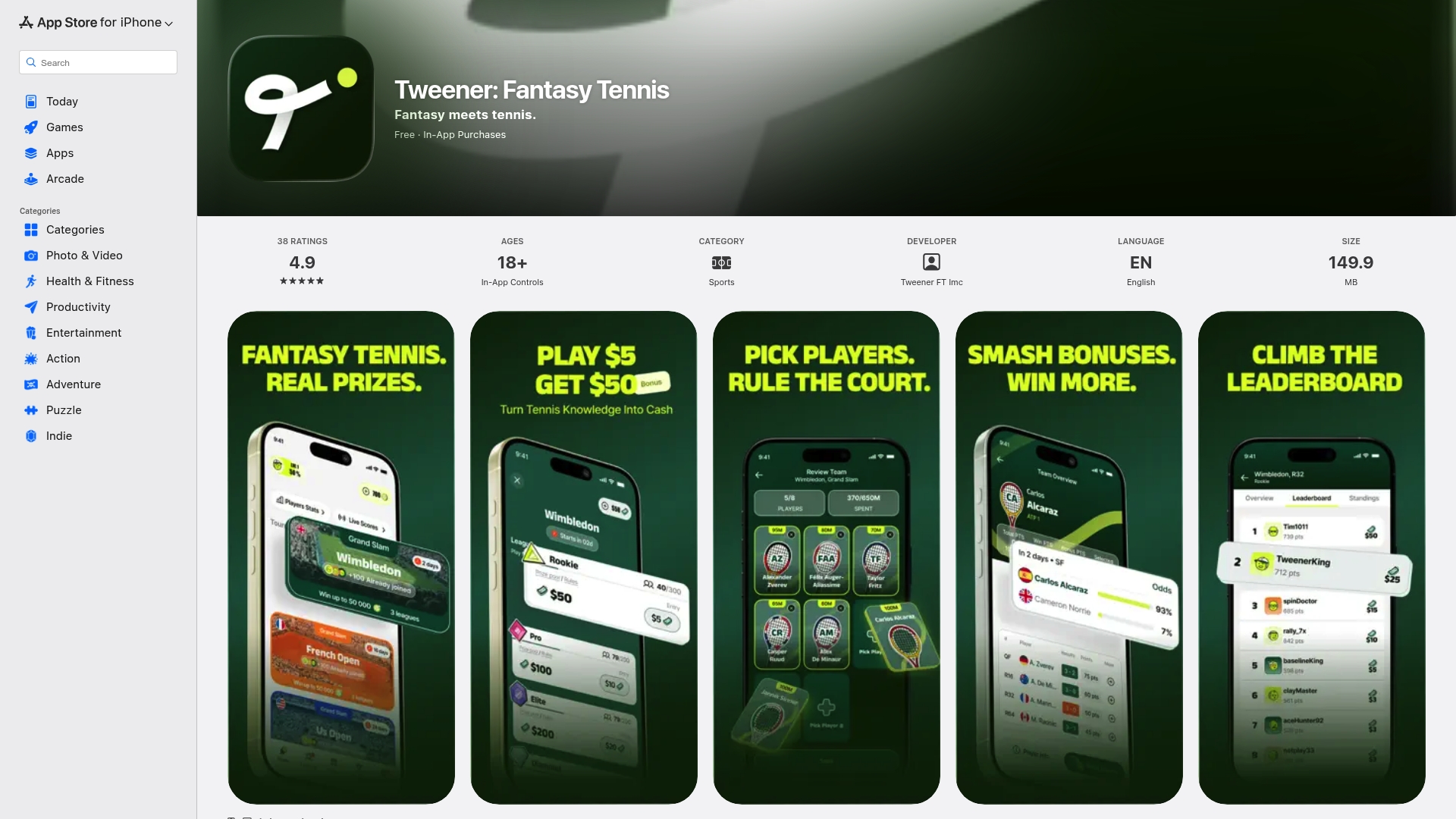
With the Tweener platform, you can build fantasy teams from real ATP and WTA players, compete in public or private leagues, and earn rewards through gameplay. Whether you prefer the free coin-based mode or want to enter cash contests, there is a way to play that fits your style. Download the Tweener app and turn your next tournament into a competition you are actually part of.
Frequently asked questions
What are the main benefits of using interactive sports apps for tennis?
Interactive sports apps boost engagement and motivation by turning tennis from a passive viewing experience into an active competition with fantasy leagues, real-time tracking, and community challenges.
Are sports apps accurate in tracking tennis performance?
Most apps use AI and sensor data but can have small errors, particularly with automated scoring and line calls. Hawk-Eye's 2.2mm error margin is a known limitation even at the professional level.
How do I get the most from a tennis app?
Use goal tracking, join leagues, and stay active in the community. Progress tracking and community building are the two features most consistently linked to long-term motivation and improvement.
What drawbacks should I watch out for with interactive tennis apps?
Some users experience frustration with demotion for inactivity, mismatched opponents, and occasional scoring inaccuracies. Choosing apps with strong community ratings and manual override options reduces these issues significantly.
Recommended
- 5 advantages of tennis prediction games for fans
- Advantages of fantasy team competitions for tennis fans
- Boost Your Tennis Experience with Real Money Fantasy
- What are in-app rewards? A guide for fantasy tennis fans
- Arccos Game Tracking Sensors: AI Caddie & Strokes Gained Analytics – Aiming Fluid Golf