

TL;DR:
- Live data provides real-time updates on injuries, scores, and tournament changes, crucial for quick decision-making.
- Data sources use push feeds or polling, with push feeds being faster but sometimes less verified.
- Combining live data with projections enhances fantasy strategy, especially for in-tournament and DFS decisions.
Most fantasy sports players spend hours studying projections, historical stats, and matchup data before making picks. That preparation matters, but it only gets you so far. The real edge in 2026 comes from something faster: live data. When a player gets injured 20 minutes before a match, or a surface change shifts the odds on a tennis draw, the players who react first win. This article breaks down what live data actually is, how it reaches your phone, and how to blend it with smart projections to make decisions that most of your opponents will miss entirely.
Table of Contents
- What live data means for fantasy sports
- How live data flows: sources, speed, and accuracy
- Impact of live data on fantasy decision-making
- Winning strategies: blending projections with live data
- The myth of 'set it and forget it': Why live data matters even more in 2026
- Take your fantasy sports experience to the next level
- Frequently asked questions
Key Takeaways
| Point | Details |
|---|---|
| Live data drives fast decisions | Real-time updates help you react instantly to injuries and lineup changes during fantasy play. |
| Speed vs. accuracy matters | Quick data is critical in DFS, while season-long games can tolerate short delays for verification. |
| Mobile apps give competitive edge | Using push alerts and live scores on fantasy apps lets you act before the competition. |
| Blend projections with live info | Combining model projections and live stats boosts win rates, especially in tennis fantasy. |
What live data means for fantasy sports
The term "live data" gets thrown around loosely, so let's pin it down. In fantasy sports, live data enables real-time updates for player availability, injuries, lineups, in-game stats, and transactions. It's the difference between knowing a player is questionable yesterday versus knowing they just withdrew from a match 45 minutes ago.
For tennis fantasy specifically, live data covers a wide range of signals:
- Match scores and set results updated as points are played
- Player withdrawal and retirement notices during a tournament
- Draw updates when a seeded player exits and reshuffles the bracket
- Surface and scheduling changes that affect player form
- Head-to-head momentum shifts visible through live point-by-point feeds
Why does immediacy matter so much? Because fantasy decisions like start/sit choices, waiver pickups, and Daily Fantasy Sports (DFS) lineup locks all have hard deadlines. Miss the window and you're stuck with a player who retired in the first set. In DFS formats especially, where you're building a fresh lineup every contest, a single piece of late injury news can be worth several points before anyone else adjusts.
Mobile push notifications have changed this game significantly. Instead of refreshing a browser tab, you get an alert the moment something changes. Apps that integrate live feeds give you a genuine head start over players who rely on static projections alone. This is why predictive analytics in fantasy sports are most powerful when they run alongside live feeds rather than replacing them.
Think of it this way: projections tell you who should win. Live data tells you who can win right now, given what just happened. Both signals together are far stronger than either one alone.
Stat to know: In tennis, a single late withdrawal before a round can shift the expected value of an entire bracket section, affecting multiple fantasy rosters simultaneously.
The players who treat live data as a background noise problem are the ones who lose close contests by one or two points. The players who build systems around it consistently finish near the top.
How live data flows: sources, speed, and accuracy
Understanding where live data comes from helps you evaluate which apps are actually giving you an edge versus which ones are just showing you old news with a "live" label on it.
Data pipelines use push feeds from official league sources or pull polling at intervals ranging from 30 seconds to 15 minutes. Push feeds are faster because the data source sends updates the moment something changes. Pull feeds check for updates on a schedule, which introduces lag. Here's how the two compare:
| Method | Speed | Latency | Best use case |
|---|---|---|---|
| Push feed | Very fast | Under 10 seconds | DFS lineup locks, injury alerts |
| Pull polling (30s) | Fast | 30 to 60 seconds | Live scoring, in-match stats |
| Pull polling (15min) | Moderate | Up to 15 minutes | Season-long waivers, weekly picks |
| Delayed feed | Slow | 15 to 60 minutes | Drafts, historical research |
The tradeoff between speed and accuracy is real. Push feeds deliver data fast, but they can carry unverified information. A player listed as "retired" might actually be a data entry error that gets corrected within two minutes. This is why good platforms build normalization layers that cross-check conflicting data before pushing it to users.
For DFS players, under 60 seconds is the threshold for what counts as genuinely real-time. For season-long games, you have more breathing room, but anything over 15 minutes can still cost you a waiver pickup if a competitor's app is faster.
Pro Tip: Before committing to any fantasy app, check whether they disclose their data source and latency window. Apps that are transparent about this are usually the ones investing in better infrastructure. Vague answers like "we update frequently" are a red flag.
For tennis fans, official ATP and WTA data feeds are the gold standard. Commercial providers like Sportradar and Genius Sports license these feeds and distribute them to apps. The quality of your fantasy experience often depends directly on which tier of data feed the platform has paid for.
If you're playing for real money fantasy tennis, the data tier your app uses is not a minor detail. It's a competitive factor.
Impact of live data on fantasy decision-making
Knowing the tech is useful. Knowing how to act on it is what actually wins contests. Here's how live data changes your decision-making in practical terms.
- Pre-match injury alerts: A player listed as healthy at draw time can withdraw hours later. Live alerts let you swap them out before lineup lock.
- Surface and scheduling shifts: Outdoor matches moved indoors, or day sessions pushed to night, can dramatically change player performance expectations.
- Live scoring for weekly picks: Watching a player struggle in a first set can inform whether you want them in your lineup for later rounds.
- Waiver priority decisions: When a top seed exits a tournament, the players they would have faced become more valuable. Live bracket updates let you act on this immediately.
- DFS lock management: DFS contests lock individual players at match start. Knowing the exact start time from a live schedule feed prevents you from missing the window.
"Acceptable latency for DFS is under 5 minutes; for season-long formats, up to 60 minutes is workable. But late scratches and in-game injuries affecting waivers and DFS locks require the fastest possible verification."
Fantasy tennis apps like WETENNIX and TNNS use live score APIs to provide real-time player performance updates, helping users make weekly starter selections based on draws, surfaces, and live results. This kind of integration is what separates a genuinely useful app from one that just looks good.

For deeper context on managing your roster through a tournament, fantasy team management in tennis covers the structural decisions that live data feeds directly into. And if you're still deciding whether competitive play is worth it, fantasy team competitions for tennis fans lays out the case clearly.
The bottom line: live data doesn't just inform decisions. It creates decision windows that don't exist without it.
Winning strategies: blending projections with live data
Projections are built on historical patterns, surface stats, head-to-head records, and ranking data. They're valuable. But they're also static. The moment a player's draw changes or a key opponent withdraws, that projection is working with outdated assumptions.
Here's how projections and live data compare across common fantasy decisions:
| Decision type | Projections alone | With live data |
|---|---|---|
| Weekly starter pick | Based on historical form | Adjusted for current draw and injuries |
| DFS lineup build | Pre-set value rankings | Updated for late scratches and surface news |
| Waiver pickup | Based on season averages | Triggered by real-time bracket changes |
| Trade evaluation | Historical output | Reflects current tournament position |
Projection benchmarks show that a competitive weekly model runs a Mean Absolute Error (MAE, the average difference between predicted and actual scores) of under 5.0 points. Vegas lines from top sites land between MAE 4.76 and 5.05. That's solid, but it's a starting point, not a finish line.
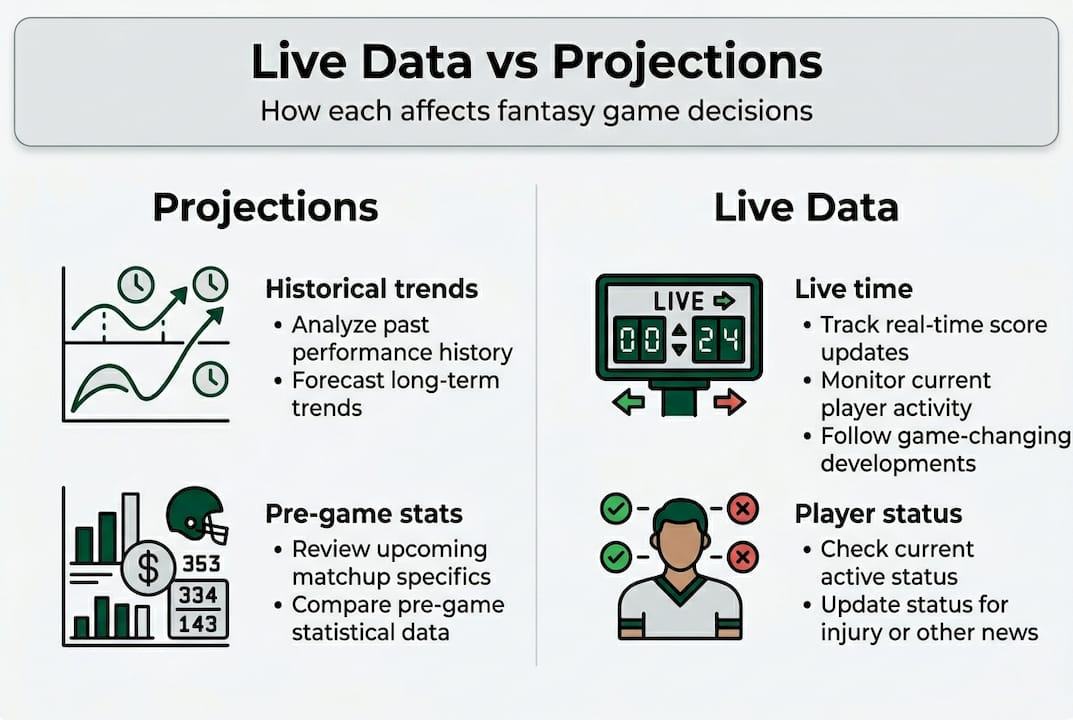
The real jump comes when you layer live signals on top. High-confidence live projections at 70% or above hit 88% or better accuracy. That's a meaningful gap over static models, and it's accessible to everyday players using the right mobile apps.
Here's how to put this into practice:
- Set push alerts for your active roster players so you catch injury news the moment it breaks
- Cross-check projections against live draw updates before finalizing any lineup
- Use live scoring during matches to evaluate players for upcoming rounds in multi-round formats
- Treat projections as your baseline and live data as your final filter before locking picks
Pro Tip: Prioritize apps that show you when their data was last updated. A timestamp on a player's stats tells you whether you're looking at live information or something from two hours ago.
For specific lineup tactics, fantasy tennis tips for 2026 and mastering live tennis predictions are worth bookmarking alongside this article.
The myth of 'set it and forget it': Why live data matters even more in 2026
Here's what most players still get wrong: they treat projections as the final word and live data as a bonus feature. It's actually the other way around.
Projections are conservative by design. They're built to be defensible across a large sample, which means they understate confidence in individual matchups. Real-time data is essential for DFS and waivers but genuinely overkill for drafts where 24-hour-old data is fine. The mistake is applying draft-level thinking to in-tournament decisions.
For amateur players especially, live data is a genuine equalizer. You don't need a proprietary model to act on a withdrawal alert faster than your league opponent. You just need the right app and a habit of checking it. Blending 70% or higher confidence signals with fast injury news gives everyday players accuracy that used to require professional tools. That's the real opportunity in winning fantasy tennis leagues right now.
Take your fantasy sports experience to the next level
If you've been relying on gut feel and static projections, live data is the upgrade your strategy needs. Tweener is built specifically for tennis fans who want that edge on mobile.
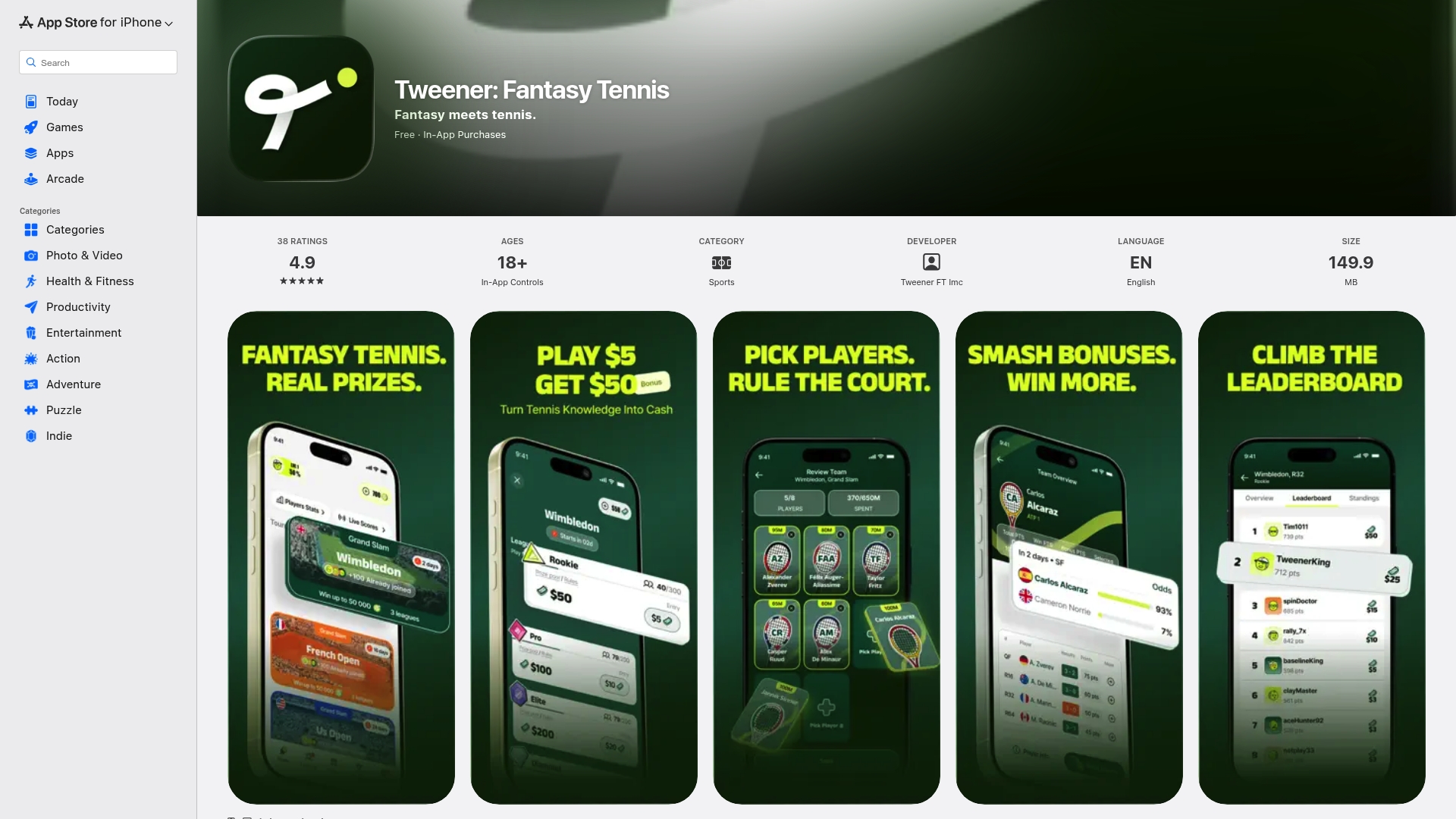
Tweener fantasy tennis integrates live match data so your scores update in real time as ATP and WTA players compete. You can join public leagues, create private ones with friends, and compete in both free coin-based and real-money contests where available. Every tournament becomes an active, data-driven competition instead of a passive viewing experience. Download the Tweener app and start building lineups backed by the live feeds that actually move the needle.
Frequently asked questions
What is live data in fantasy sports?
Live data refers to real-time updates on player stats, availability, and game events that impact fantasy team decisions as the action happens. It includes injuries, lineup changes, in-game scores, and transaction news.
How fast does live data need to be for DFS?
For Daily Fantasy Sports, data latency under 5 minutes is ideal to make winning lineup decisions before player lock. Slower updates risk missing late scratches that change contest value entirely.
Can I use live data on a mobile fantasy tennis app?
Yes. Apps like WETENNIX and Tweener integrate live score data to help you manage fantasy teams with instant updates tied directly to real match results.
Is live data needed for fantasy drafts?
No. Delayed data is usually sufficient for drafts since roster decisions happen well before matches begin. Live data matters most for waivers, DFS locks, and in-game decisions during active tournaments.
How accurate are live projections compared to normal projections?
High-confidence live projections at 70% or above can reach 88% or better accuracy, meaningfully outperforming static models when combined with real-time injury and lineup news.