

Many tennis fans believe match outcomes are too unpredictable to forecast reliably, citing upsets and variance as proof that predictions are futile. Yet recent advances in prediction models demonstrate accuracy rates reaching 85%, far exceeding simple ranking-based forecasts. Understanding why predictions matter and how modern technologies generate these forecasts gives fantasy tennis players a decisive edge. By leveraging predictive insights, you can optimize lineups, avoid common pitfalls, and make smarter picks during live tournaments. This guide explains the science behind tennis outcome prediction and shows you how to translate that knowledge into winning fantasy tennis strategies in 2026.
Table of Contents
- Why accurate tennis outcome prediction matters for fantasy tennis
- How modern data models predict tennis match outcomes
- Limits and nuances in predicting tennis outcomes
- Applying prediction insights to fantasy tennis strategy in 2026
- Enhance your fantasy tennis game with Tweener
- Frequently asked questions about predicting tennis outcomes
Key takeaways
| Point | Details |
|---|---|
| Prediction models outperform rankings alone | Advanced models reach up to 85% accuracy by analyzing multiple performance factors. |
| Surface and fatigue strongly influence outcomes | Court type, player rest, and psychological momentum significantly impact match results. |
| Fantasy players gain a competitive edge | Leveraging predictions helps optimize lineups and make informed live adjustments. |
| Hybrid models provide the best results | Combining statistical analysis with machine learning delivers superior predictive power. |
| Qualitative judgment enhances data analysis | Blending quantitative models with expert intuition improves overall decision quality. |
Why accurate tennis outcome prediction matters for fantasy tennis
Predicting tennis outcomes enhances fantasy gameplay by enabling informed player selections based on expected performance metrics like wins, aces, breaks, and games won, crucial for scoring in Pick'em and DFS formats. Fantasy tennis scoring depends on detailed stats beyond simple match wins. Players earn points for service holds, break points converted, and total games won, making accurate predictions essential for maximizing your lineup's potential. When you understand which players are likely to perform well in specific matchups, you can construct rosters that outperform competitors who rely solely on rankings or gut instinct.
Using prediction data reduces reliance on rankings and gut feeling alone. Rankings reflect cumulative season performance but don't account for current form, surface preferences, or fatigue levels. A top-ranked player recovering from injury or competing on an unfavorable surface may underperform expectations, while a lower-ranked specialist could deliver exceptional fantasy value. Following tennis analytics helps you identify these opportunities before they become obvious to the broader fantasy community.
Pro Tip: Prioritize players with strong recent form and favorable tournament schedules to maximize fantasy points while avoiding overpriced chalk selections.
Informed picks improve your chances of avoiding low-value chalk players often selected by many fans. In fantasy contests, winning requires differentiation. When 60% of competitors select the same obvious favorites, you need contrarian picks that deliver similar or better production at lower ownership. Prediction models help identify undervalued players likely to outperform their projected ownership, giving you a mathematical edge. Consider these key benefits:
- Identify surface specialists before the public catches on
- Spot players with favorable draw paths in tournament brackets
- Avoid popular players facing difficult early-round matchups
- Capitalize on recency bias when the market overreacts to recent results
Accurate predictions transform tennis knowledge into actionable fantasy strategy, turning spectating into strategic competition.
How modern data models predict tennis match outcomes
Key methodologies include hybrid statistical-ML models analyzing 15+ features like form, head-to-head records, surface type, fatigue, and Elo ratings, using ensemble methods such as Logistic Regression, Gradient Boosting, Random Forest, CatBoost, and XGBoost. These approaches combine the interpretability of traditional statistics with the pattern recognition capabilities of machine learning, producing forecasts that consistently outperform simpler ranking-based predictions. Understanding how these models work helps you evaluate their outputs critically and apply them effectively to your fantasy strategy.
Ensemble methods aggregate predictions from multiple algorithms to reduce individual model weaknesses. Each algorithm brings different strengths to the analysis. Logistic Regression excels at identifying linear relationships between variables, while Random Forest handles non-linear interactions effectively. XGBoost and CatBoost optimize for specific prediction scenarios, and combining their outputs through weighted averaging or stacking produces more robust forecasts. This approach mirrors how expert analysts synthesize multiple information sources to form judgments.
Modern prediction systems consider a comprehensive feature set beyond basic player statistics:
- Recent form metrics including win-loss records over the past 30, 60, and 90 days
- Surface-specific performance history on hard courts, clay, and grass
- Head-to-head records weighted by recency and surface similarity
- Tournament schedule and travel fatigue based on days since last match
- Elo ratings that dynamically adjust based on opponent quality and match importance
- Serve and return statistics that predict game-level outcomes
- Psychological momentum factors including winning and losing streaks
Mid-match real-time prediction models leverage psychological momentum to improve outcome forecasts as matches progress. These systems update probabilities after each game or set, incorporating information about player performance trends, momentum shifts, and situational pressure. A player who wins the first set often gains a psychological advantage that traditional pre-match models can't capture. Real-time models quantify these effects, enabling more accurate in-play predictions.

Pro Tip: Real-time predictions allow fantasy managers to adjust captain picks and live selections during matches for a significant competitive edge.
The following table illustrates typical feature importance in modern tennis prediction models:
| Feature Category | Importance Weight | Primary Use Case |
|---|---|---|
| Recent Form | 25-30% | Identifying hot and cold streaks |
| Surface Performance | 20-25% | Matching players to tournament conditions |
| Head-to-Head | 15-20% | Evaluating psychological matchup advantages |
| Elo Rating | 15-20% | Assessing overall player quality |
| Fatigue/Schedule | 10-15% | Predicting physical readiness |
| Serve/Return Stats | 5-10% | Forecasting game-level outcomes |
By understanding these methodologies, you can better interpret model outputs and combine them with your own qualitative insights for superior live tennis predictions.
Limits and nuances in predicting tennis outcomes
Edge cases include surface-specific playstyles, fatigue from scheduling, head-to-head psychology, injuries, ball and court conditions, motivation levels, and momentum shifts, with best-of-3 versus best-of-5 formats requiring different prediction approaches. Even sophisticated machine learning models struggle with these complexities because they introduce variance that historical data can't fully capture. A player nursing an undisclosed injury may perform below expectations, while another competing in their home country might exceed typical output due to crowd support. These factors require qualitative judgment to complement quantitative analysis.
Comparison of best-of-3 versus best-of-5 set formats reveals important prediction differences. Best-of-5 matches reduce randomness by allowing superior players more opportunities to assert their quality over longer durations. A single bad service game matters less across five sets than three. This format benefits consistent baseliners over volatile serve-and-volley players. Best-of-3 matches amplify the impact of hot starts and momentum swings, making them more susceptible to upsets. Fantasy players should adjust their risk tolerance based on tournament format, favoring safer picks in best-of-5 Grand Slams and embracing calculated risks in best-of-3 Masters events.
Importance of considering qualitative elements like player mentality and psychological momentum cannot be overstated. Some players thrive under pressure while others crumble in decisive moments. A competitor facing elimination may elevate their performance beyond statistical expectations, while another already qualified for the next round might play conservatively. These psychological nuances rarely appear in structured datasets but significantly influence outcomes. Successful prediction requires blending data-driven forecasts with contextual understanding of player personalities and situational factors.
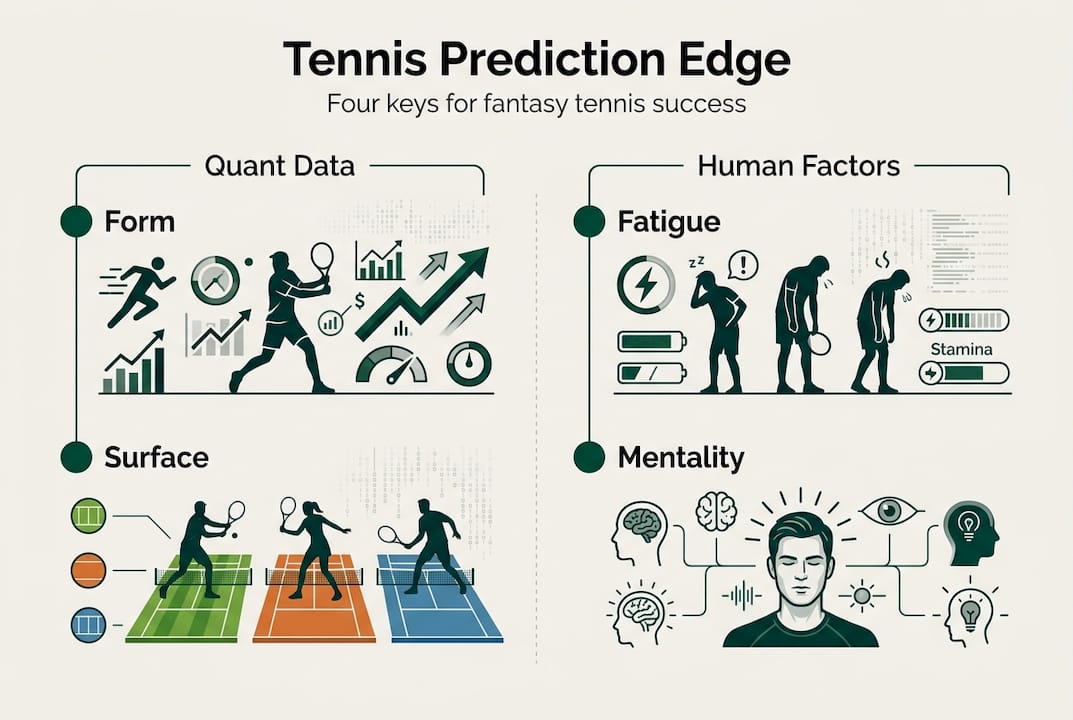
Pure statistics and machine learning prove superior to rankings alone but remain limited by data quality and unexpected upsets, with blending quantitative models and qualitative judgment producing improved results. Even models achieving 85% accuracy still miss 15% of matches, often the most consequential upsets. Data quality issues arise from incomplete injury reports, unreported personal issues, and measurement errors in tracking statistics. The best prediction approach combines algorithmic outputs with expert intuition about current player states and matchup dynamics.
The following factors introduce unpredictability that models struggle to capture:
- Undisclosed injuries or illness affecting physical capability
- Motivation differences between must-win and less important matches
- Unexpected weather conditions like wind or extreme heat
- Court speed variations between tournaments on the same surface
- Personal life events impacting focus and preparation
| Approach | Strengths | Weaknesses |
|---|---|---|
| Quantitative Models | Objective, scalable, identifies hidden patterns | Misses context, struggles with rare events |
| Qualitative Judgment | Captures nuance, adapts to new information | Subjective, not scalable, prone to bias |
| Hybrid Method | Combines best of both, most accurate | Requires expertise in both domains |
Pro Tip: Use predictions probabilistically rather than deterministically to manage variance and avoid overconfidence in any single forecast.
By acknowledging these limitations and developing tournament prediction strategies that account for both quantitative and qualitative factors, you position yourself to make better-informed fantasy decisions.
Applying prediction insights to fantasy tennis strategy in 2026
For fantasy players, accurate predictions turn knowledge into edges via stat-optimized lineups, such as selecting big servers on grass courts while avoiding chalk plays in favor of value selections. Constructing a fantasy lineup informed by predicted player stats and surface fit requires systematic analysis of multiple factors. Start by identifying the tournament surface and historical performance patterns. Grass courts favor serve-dominant players with strong net skills, while clay rewards defensive baseliners with superior endurance. Hard courts typically produce more balanced outcomes but still show surface speed variations between tournaments.
Steps to monitor fatigue, form, and in-tournament momentum help you adjust picks throughout competitions. Players competing in multiple events during the same week face accumulated physical stress that impacts later-round performance. A semifinalist in a previous tournament may arrive fatigued compared to a first-round loser who had extra rest days. Track these patterns by monitoring tournament schedules and match durations. Long three-set battles drain energy more than quick straight-set wins, creating predictable performance degradation in subsequent matches.
Common mistakes fantasy players make include picking popular players without evaluating value potential:
- Selecting top-ranked players regardless of recent form or surface fit
- Ignoring ownership projections and failing to differentiate from the field
- Overweighting Grand Slam results when evaluating Masters 1000 potential
- Neglecting head-to-head matchup history in early tournament rounds
- Failing to adjust lineups based on draw reveals and bracket positioning
Numbered list for live fantasy strategy maximizes your competitive advantage:
- Monitor live match statistics including first serve percentage and break point conversion
- Re-optimize captain choices based on updated win probabilities as matches progress
- Take advantage of mid-match prediction updates to identify momentum shifts
- Adjust remaining lineup slots to fade players facing difficult upcoming matchups
- Capitalize on injury or performance concerns that emerge during early matches
Benefits of blending data-driven picks with expert intuition include spotting overlooked players before the market adjusts. Prediction models identify statistical value, but human judgment recognizes intangible factors like improved fitness, coaching changes, or renewed motivation. A player returning from injury might show declining statistical trends that models interpret negatively, while informed observers recognize improving physical condition that will soon translate to better results. Combining both perspectives produces superior fantasy captain picks and overall fantasy team management decisions.
By systematically applying prediction insights to your fantasy strategy, you transform tennis knowledge into measurable competitive advantages that compound over the course of a season.
Enhance your fantasy tennis game with Tweener
Ready to put these prediction strategies into action? Tweener offers state-of-the-art fantasy tennis leagues that integrate advanced prediction data with intuitive gameplay, helping you make smarter picks and compete more effectively. Whether you prefer free-to-play leagues using virtual coins or cash contests with real-money payouts, the platform provides the tools you need to optimize your fantasy tennis experience throughout 2026.
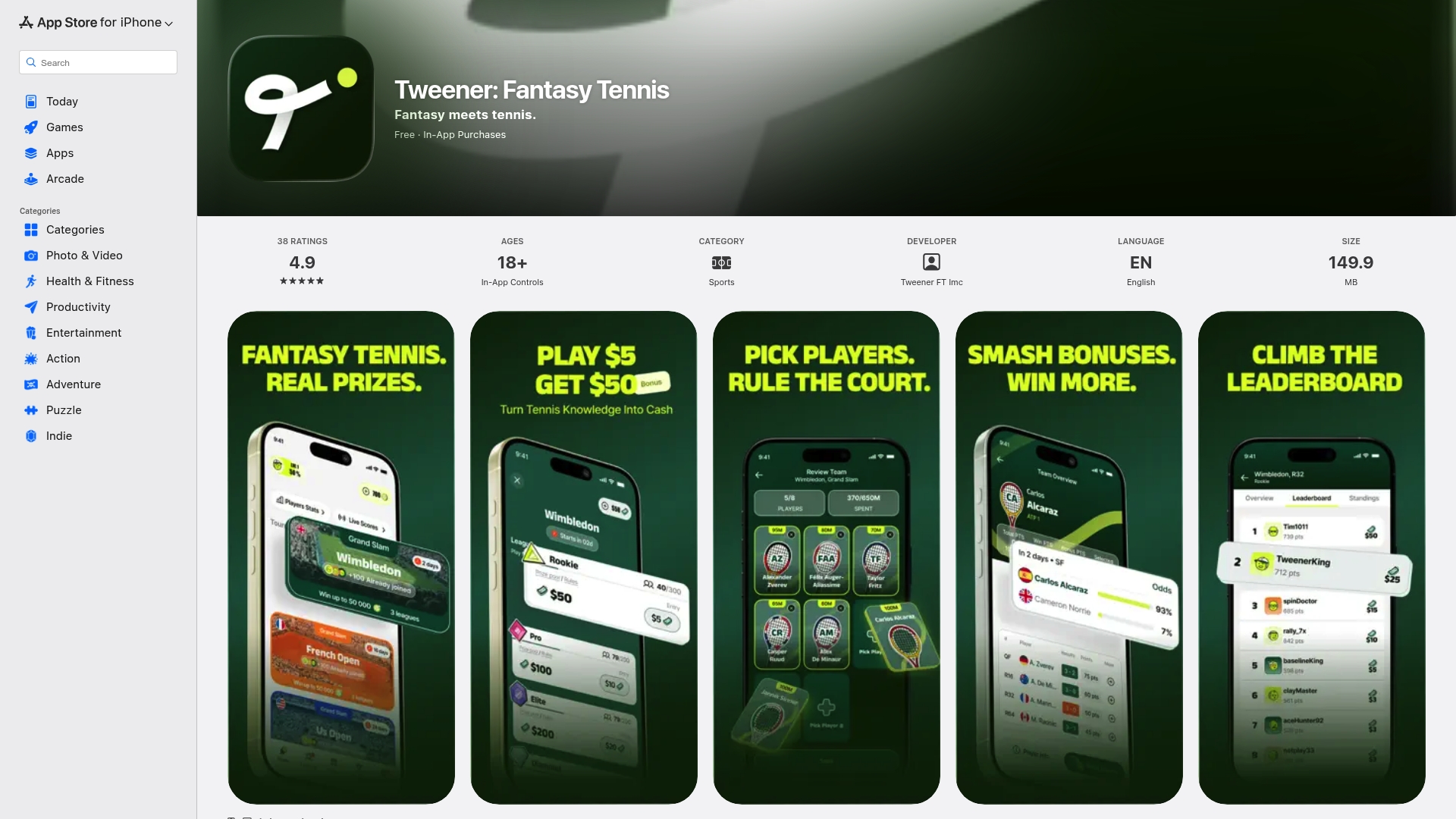
Download the Tweener app for live fantasy tennis management and mid-match adjustments that give you an edge over competitors still using desktop platforms. The mobile interface lets you monitor match statistics in real time, update captain selections, and adjust lineups based on the latest prediction updates. Access comprehensive game rules and expert tips to maximize your performance while joining a vibrant community of tennis fans and fantasy players optimizing their outcomes with predictive insights. Transform your tennis knowledge into winning fantasy strategies today.
Frequently asked questions about predicting tennis outcomes
What factors most influence tennis match predictions?
Recent form, surface-specific performance, head-to-head records, and player fatigue represent the most influential prediction factors. Models analyzing these elements alongside Elo ratings and serve statistics achieve the highest accuracy rates. Psychological momentum and matchup-specific advantages also significantly impact outcomes but prove harder to quantify systematically.
How reliable are tennis outcome predictions compared to rankings?
Prediction models achieve 70-85% accuracy compared to roughly 65% for ranking-based forecasts alone. Rankings reflect cumulative season performance but don't account for current form, surface preferences, or scheduling fatigue. Advanced models incorporating multiple features consistently outperform simpler ranking-only approaches, especially for surface-specific tournaments and players with volatile recent results.
Can I use predictions to improve my fantasy tennis team in real time?
Yes, live tennis prediction models update probabilities during matches based on score progression and momentum shifts. These real-time forecasts enable you to adjust captain picks, modify remaining lineup slots, and make informed decisions about which players to fade or emphasize. Mid-match adjustments provide significant competitive advantages in fantasy formats allowing live changes.
What are common pitfalls to avoid when relying on predictions?
Avoiding overconfidence in any single prediction remains critical since even the best models miss 15-20% of outcomes. Don't ignore qualitative factors like undisclosed injuries, motivation differences, or psychological matchup advantages that models struggle to capture. Treat predictions as probabilistic guidance rather than deterministic certainty, and always maintain appropriate bankroll management and risk tolerance.
How do surface and player fatigue affect prediction accuracy?
Surface type dramatically influences prediction accuracy because player performance varies significantly across clay, grass, and hard courts. Specialists on specific surfaces often outperform their overall rankings when competing on favorable terrain. Player fatigue from compressed tournament schedules reduces prediction reliability, especially in later rounds when accumulated physical stress impacts performance unpredictably. Effective fantasy team management requires monitoring both factors closely.