

Fantasy tennis turns watching matches into an interactive experience where you build teams using real ATP and WTA players. Your squad earns points based on how those athletes perform in actual tournaments. Success requires strategic thinking, not just picking the top names. This guide breaks down fantasy tennis team management, from scoring systems to league formats, helping you compete effectively and maximize your enjoyment of professional tennis through strategic team building.
Table of Contents
- What is fantasy team management in tennis?
- How scoring works in fantasy tennis
- Types of fantasy tennis leagues and play modes
- Key strategies for managing a winning fantasy tennis team
- Common misconceptions about fantasy tennis management
- Practical steps to get started with fantasy tennis team management
- Enhance your fantasy tennis experience with Tweener
- FAQ
Key takeaways
| Point | Details | |-------|---------|| | Fantasy teams score from real matches | Your roster earns points based on actual ATP/WTA player performance metrics like wins, sets, and aces. | | Scoring updates live during matches | Points accumulate in real time as tournaments progress, requiring active management. | | Multiple league and mode options | Choose between public/private leagues and free/cash modes to match your preferences. | | Strategic roster adjustments matter | Success comes from analyzing form, surfaces, and tournament context, not just player rankings. | | Common myths hinder performance | Overvaluing rankings while ignoring current form and surface suitability limits scoring potential. |
What is fantasy team management in tennis?
Fantasy tennis teams are composed of real ATP and WTA players whose actual match performance determines fantasy points. You select a roster from active professional players competing in ongoing tournaments. As those athletes win matches, hit aces, or break serve in real life, your fantasy team accumulates points. This creates a direct connection between watching tennis and competitive gameplay.
Team management involves making strategic decisions about which players to include on your roster. You track tournament schedules, player form, and match conditions to optimize your lineup. Unlike casual fandom, fantasy tennis requires analyzing data and adjusting rosters throughout tournament progression.
Platforms like Tweener provide structured environments where you compete against other fans through fantasy leagues. The experience combines sports knowledge with strategic planning. You make roster decisions before tournament rounds begin, then watch as real match results determine your standing.
Key aspects of fantasy tennis management:
- Building balanced rosters with players across different skill levels and playing styles
- Monitoring tournament draws to anticipate favorable matchups
- Adjusting lineups based on player injuries, fatigue, or surface preferences
- Competing in leagues with friends or strangers for various stakes
- Tracking live scoring to see how your team performs in real time
The strategic layer adds depth to tennis viewing. Every serve, break point, and match outcome directly impacts your fantasy standing, transforming passive watching into active engagement.
How scoring works in fantasy tennis
Fantasy tennis scoring translates real match statistics into points for your team. Match wins typically generate the highest point values, rewarding players who advance through tournament rounds. Sets won provide additional scoring, recognizing performance even in losses. Individual statistics like aces and break points add granular scoring based on playing quality.
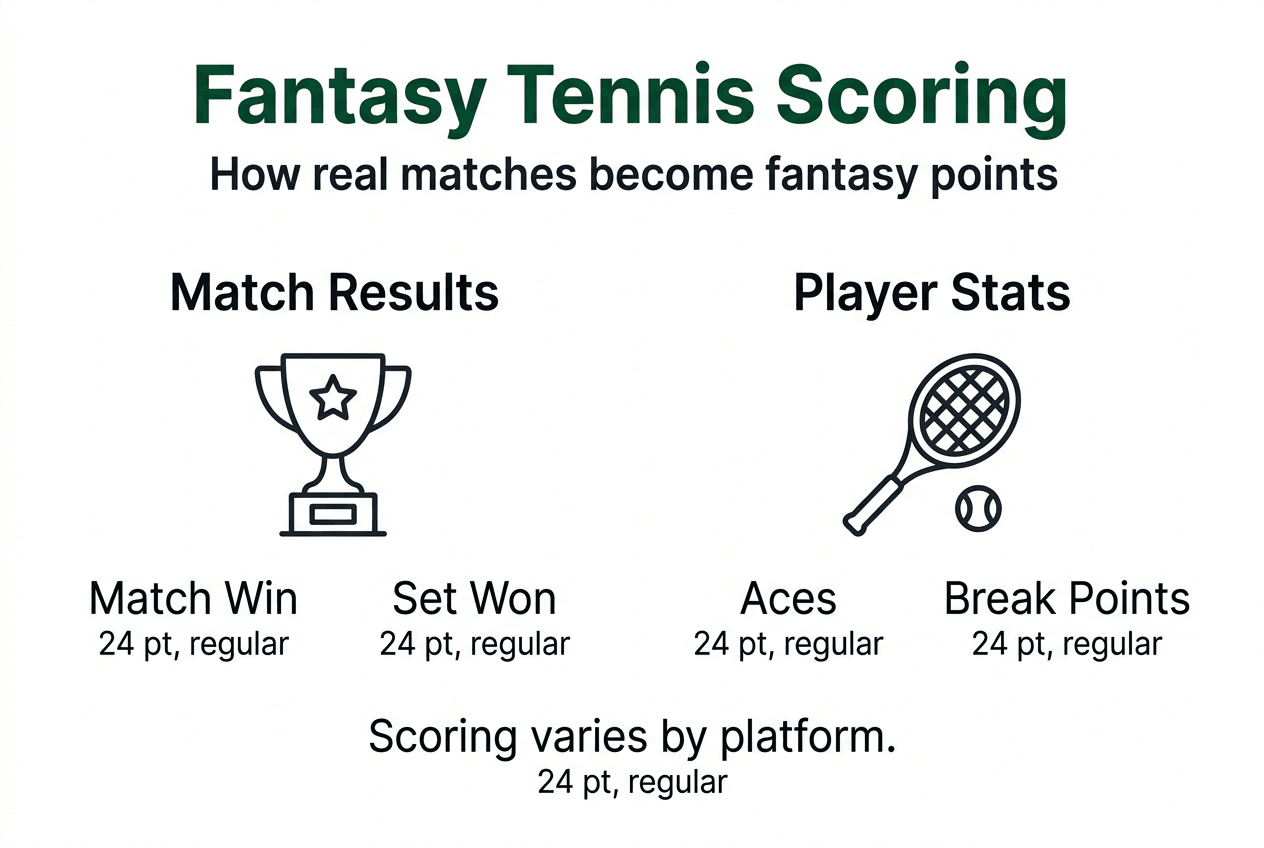
Points are awarded for match wins, sets won, aces, and break points; scoring may vary but aligns with standard tennis metrics. Live updates occur as ATP and WTA matches progress, letting you track your team's performance in real time. This immediate feedback creates excitement as you watch matches unfold.
Common scoring categories in fantasy tennis:
- Match victories (highest point value, scaled by tournament round)
- Sets won (points awarded per set, regardless of match outcome)
- Aces served (bonus points for powerful service games)
- Break points converted (rewards aggressive, effective play)
- Tournament advancement bonuses (scaling rewards for deep runs)
Scoring systems may differ slightly between platforms, but core principles remain consistent. Most fantasy tennis games emphasize match results while rewarding statistical excellence. Understanding these metrics helps you evaluate player value beyond simple win/loss records.
Here's a typical scoring breakdown:
| Action | Point Value | Notes |
|---|---|---|
| Match win (early rounds) | 10-15 points | Lower stakes matches |
| Match win (later rounds) | 20-30 points | Quarterfinals and beyond |
| Set won | 3-5 points | Awarded per set |
| Ace | 1-2 points | Per ace served |
| Break point converted | 2-3 points | Per successful break |
Detailed game rules vary by platform, so reviewing specific scoring helps you optimize roster decisions. Some systems weight Grand Slam performance higher than smaller tournaments, adding strategic complexity to player selection.
Types of fantasy tennis leagues and play modes
Public leagues offer open entry where you compete against large pools of participants. These leagues create unpredictable competition since you face opponents with varying skill levels and strategies. Public formats work well for testing strategies and experiencing diverse competition without social pressure.
Private leagues are invite only, typically featuring friends, family, or colleagues. These create social competition with people you know, adding friendly rivalry to tournament watching. Private leagues often use customized rules or scoring to match group preferences.
League comparison:
| League Type | Entry | Competition Style | Social Element | Skill Range |
|---|---|---|---|---|
| Public | Open to all | Large pools | Anonymous | Wide variation |
| Private | Invite only | Small groups | Friends/family | Similar skill |
Play modes determine financial stakes and risk levels. Free mode uses virtual currency, letting you compete without monetary investment. You earn virtual coins through gameplay and in-app activities, which can be redeemed for rewards like gift cards. This mode suits beginners wanting to learn mechanics without financial pressure.
Cash mode involves real money deposits for entry into paid contests. Winners receive actual payouts, creating higher stakes and more intense competition. This mode operates where legally permitted and attracts experienced players seeking financial rewards alongside entertainment.
Mode selection impacts your experience:
- Free mode provides risk-free learning and practice
- Cash mode offers tangible rewards but requires monetary commitment
- Virtual currency systems let you progress without spending
- Real money contests increase competitive intensity
Tweener offers both modes, letting you choose based on your comfort level and goals. Many players start in free mode to develop strategies before transitioning to cash contests.
Key strategies for managing a winning fantasy tennis team
Start with a balanced roster focusing on player form and surface suitability, not just ranking. A top 10 player struggling on clay may underperform compared to a lower-ranked clay court specialist. Recent match results reveal current form better than annual rankings. Check tournament history to identify players who excel at specific events.

Adjusting rosters based on player form, tournament surface, and opposition is key to maximizing fantasy points. Use live match data to make mid-tournament roster changes when allowed. If a player shows exceptional form early in a tournament, adding them before later rounds captures their momentum. Conversely, dropping players who barely advance preserves roster spots for stronger performers.
Consider tournament stage and opponent strength when adjusting lineups. A favorite facing weak opposition in early rounds likely racks up quick points. As tournaments progress, matchups become tougher, making deep runs less predictable. Balance your roster between consistent early-round performers and potential champions.
Strategic management practices:
- Analyze head-to-head records between players for matchup insights
- Monitor weather conditions that affect play styles (wind favors certain players)
- Track player fatigue in multi-tournament stretches or long matches
- Diversify across playing styles (serve-and-volley, baseline grinders)
- Reserve roster spots for emerging players with favorable draws
Balance star players' potential with consistent performers to reduce risk. A championship favorite may exit early due to upsets, while multiple mid-tier players accumulating steady points provide stability. Smart rosters mix ceiling and floor to manage variance.
Pro Tip: Check injury reports and player press conferences before tournaments. Players managing minor injuries often underperform even if they start matches. Social media and tennis news sites provide valuable insights into player readiness beyond official injury lists.
Monitor player schedules to avoid rostering athletes skipping tournaments or managing workload. Top players sometimes rest between major events, leaving your roster with inactive spots earning zero points. Review game rules about roster locks and substitution windows to maximize flexibility.
Common misconceptions about fantasy tennis management
Many believe the highest-ranked players always earn the most fantasy points. Rankings reflect annual consistency, not current form or tournament-specific performance. A player ranked third globally might struggle on grass courts despite dominating clay earlier in the season. Surface type dramatically affects player effectiveness, making ranking alone a poor selection criterion.
High-ranked players underperform fantasy expectations about 35% of the time due to factors like surface and recent injuries. Current form matters more than ranking when predicting fantasy output. A player riding a winning streak at lower-tier events often outscores a top-ranked player between major tournaments.
Fantasy points depend on detailed statistics, not just match wins. A player winning in straight sets earns fewer points than one winning after dropping a set but hitting numerous aces and converting break points. Understanding scoring nuances reveals why statistically dominant players sometimes outscore those with better win records.
Frequent misconceptions:
- Assuming Grand Slam champions always deliver top fantasy value (tournament-specific form varies)
- Ignoring mid-tournament roster adjustments (active management significantly impacts results)
- Treating fantasy tennis like betting (skill-based strategy differs from gambling)
- Overlooking doubles specialists who accumulate points across multiple matches
"Success in fantasy tennis comes from analyzing current data, not relying on reputation. The player dominating headlines isn't always the one maximizing your fantasy points."
Fantasy tennis is skill-based competition, distinct from sports betting. You build teams using strategic analysis rather than wagering on match outcomes. Legal frameworks treat fantasy sports and gambling differently, though both involve real-money options. Tweener operates as a fantasy platform with strategic team building at its core.
Ignoring surface preferences leads to poor roster choices. Clay court specialists underperform on grass and hard courts, while serve-dominant players struggle on slow clay. Matching player strengths to tournament surfaces improves fantasy performance more than selecting based on overall ranking or recent Grand Slam results.
Practical steps to get started with fantasy tennis team management
Begin by analyzing current player data and tournament conditions to pick your initial roster. Review ATP and WTA rankings alongside recent tournament results to identify players in strong form. Check the tournament surface and historical performance at that specific event. Players who excel at particular tournaments often repeat success due to favorable conditions.
Join public or private leagues that match your competitive and social preferences. Public leagues offer immediate entry and diverse competition, while private leagues create social engagement with people you know. Consider starting with free mode to learn mechanics without financial risk before transitioning to cash contests.
Steps to launch your fantasy tennis experience:
- Research upcoming tournaments and their surfaces (hard court, clay, grass)
- Identify players in current form through recent match results and statistics
- Build a balanced roster mixing star players with consistent mid-tier performers
- Select a league type (public or private) and play mode (free or cash)
- Monitor live scoring during matches to track your team's performance
- Make roster adjustments between tournament rounds based on player performance
- Review your results to identify successful strategies and areas for improvement
Use fantasy tennis app features to monitor live scoring and player updates. Mobile apps provide real-time notifications as your players compete, keeping you engaged even when you can't watch matches. Push notifications alert you to significant events like match wins or statistical milestones.
Adjust your roster strategically as tournaments progress based on form and injuries. Most platforms allow roster changes between rounds, letting you replace underperforming players or capitalize on emerging storylines. Stay informed through tennis news and player social media to spot opportunities before other managers.
Pro Tip: Start by focusing on one or two tournaments rather than spreading your attention across multiple events. Deep knowledge of fewer tournaments beats superficial coverage of many. You'll develop better intuition for player matchups and tournament dynamics through concentrated focus.
Practice in free mode before engaging in cash mode contests to build confidence. Free play lets you experiment with strategies, learn scoring systems, and understand tournament rhythms without financial pressure. Download the app to access both modes and choose your preferred experience.
Enhance your fantasy tennis experience with Tweener
Ready to apply these strategies? Tweener provides everything you need to build and manage fantasy tennis teams with intuitive interfaces and real-time scoring. Join public leagues for immediate competition or create private leagues with friends to add social rivalry to tournament watching.
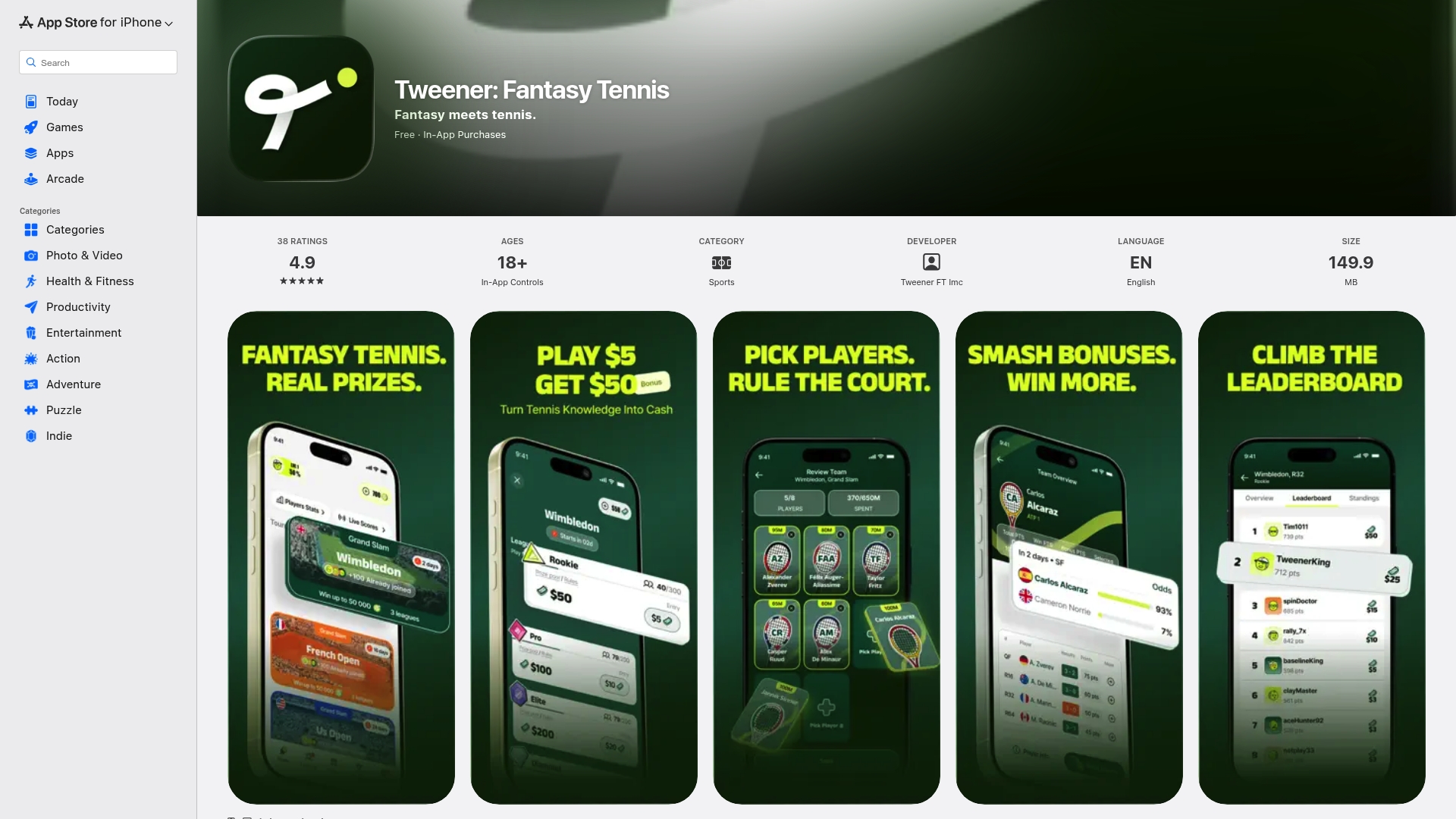
Choose between free mode using virtual coins or cash mode with real-money contests, matching your risk appetite and competitive goals. The platform tracks live tournament action, sending updates as your players compete. Whether you're practicing strategies or competing for rewards, Tweener delivers comprehensive fantasy tennis experiences.
Download the app to start building your roster today. Review fantasy tennis game rules to master scoring systems and optimize your team management. The next tournament is your opportunity to turn tennis knowledge into competitive success.
FAQ
What is fantasy team management in tennis?
Fantasy team management involves selecting a roster of real ATP and WTA players who earn points based on their actual tournament performance. You compete against other fans in leagues, making strategic decisions about which players to include and when to adjust your lineup. Success requires analyzing player form, surface suitability, and tournament conditions rather than simply selecting the highest-ranked athletes.
How do fantasy tennis scoring systems work?
Scoring awards points for match wins, sets won, aces, break points, and other statistical achievements during real tournaments. Points accumulate in real time as matches progress, with later tournament rounds typically worth more than early matches. Different platforms may weight statistics slightly differently, but all systems reward both match success and statistical excellence.
What's the difference between public and private fantasy tennis leagues?
Public leagues allow open entry and feature large participant pools with diverse skill levels and strategies. Private leagues are invite-only, typically involving friends or family in smaller groups with personalized competition. Public leagues offer immediate access and varied competition, while private leagues create social engagement and friendly rivalry among people you know.
Should I focus on top-ranked players or current form?
Current form and tournament-specific factors matter more than annual rankings for fantasy success. High-ranked players underperform expectations regularly due to surface preferences, recent injuries, or scheduling decisions. Analyze recent match results, surface suitability, and tournament history to identify players likely to excel in specific events, regardless of their overall ranking.
How often should I adjust my fantasy tennis roster?
Adjust your roster between tournament rounds whenever platform rules allow, based on player performance and emerging information. Monitor match results, injury reports, and player statements to identify roster improvements. Active management significantly impacts results, as tournament dynamics reveal which players are peaking and which are struggling. Successful managers make strategic changes rather than setting rosters once and forgetting them.