

Choosing the right captain in fantasy tennis can boost your weekly points by up to 25%, yet many players overlook this crucial strategic decision. The difference between a winning team and a mediocre one often comes down to captain selection, not just roster composition. Most fantasy tennis participants default to picking the highest ranked player available, missing opportunities to leverage matchups, surface preferences, and scoring system nuances. This guide reveals expert strategies for selecting captains who deliver maximum points, helping you climb league standings and outsmart your competition through informed, data driven decisions that transform your fantasy tennis performance.
Table of Contents
- Why captain picks matter in fantasy tennis
- Strategies to choose the right captain in fantasy tennis
- Adapting captain picks to surface types and scoring systems
- Common pitfalls and pro tips for captain picks in fantasy tennis
- Boost your fantasy tennis performance with Tweener
- Frequently asked questions about captain picks in fantasy tennis
Key takeaways
| Point | Details |
|---|---|
| Captain multiplier effect | Your captain's points count double, making selection crucial for weekly success |
| Top seeds dominate | Players ranked in the top 8 contribute to 60% of winning fantasy teams |
| Surface matters significantly | Matching captain strengths to court surface boosts effectiveness by 15-25% |
| Strategic flexibility wins | Adapting captain picks weekly based on form and matchups outperforms fixed choices |
| Platform scoring varies | Different fantasy platforms reward different actions, requiring tailored captain strategies |
Why captain picks matter in fantasy tennis
The captain pick represents the most impactful decision you make each week in fantasy tennis. Unlike regular roster selections where players earn standard points, your captain receives a points multiplier that doubles their contribution to your team's total score. This mechanic transforms a solid 50 point performance into a game changing 100 point haul, creating massive separation between competitors who master this strategy and those who treat it as an afterthought.
Many fantasy tennis platforms designate one player on your roster as captain, applying a 2x multiplier to all points they earn during the scoring period. When Novak Djokovic wins a tournament as your captain, his championship run delivers twice the fantasy value compared to the same performance from a non captain teammate. Selecting a top 10 ranked player as captain can increase weekly points by 15-25%, making this choice the difference between league dominance and mid table mediocrity.
The most common misconception plaguing fantasy tennis players is the belief that the highest ranked available player automatically makes the best captain. Rankings reflect long term consistency and career achievements, but weekly fantasy success depends on immediate form, upcoming matchups, and surface suitability. Carlos Alcaraz might hold a top 3 ranking, but if he's facing a tough draw on clay while recovering from a minor injury, a lower ranked clay specialist with favorable opponents could deliver superior captain value.
Several key factors determine captain effectiveness beyond simple ranking position. Current form matters more than historical performance, as a player riding a three tournament winning streak brings momentum that rankings don't fully capture. Match difficulty plays a crucial role because even elite players struggle to accumulate points against fellow top 10 opponents, while a quality player facing weaker competition can rack up easy wins. Surface preference creates significant variance, with players like Rafael Nadal historically dominating clay while others excel on grass or hard courts.
Pro Tip: Track player performance over their last three tournaments rather than season long statistics when evaluating captain candidates, as recent form predicts immediate results more accurately than cumulative data.
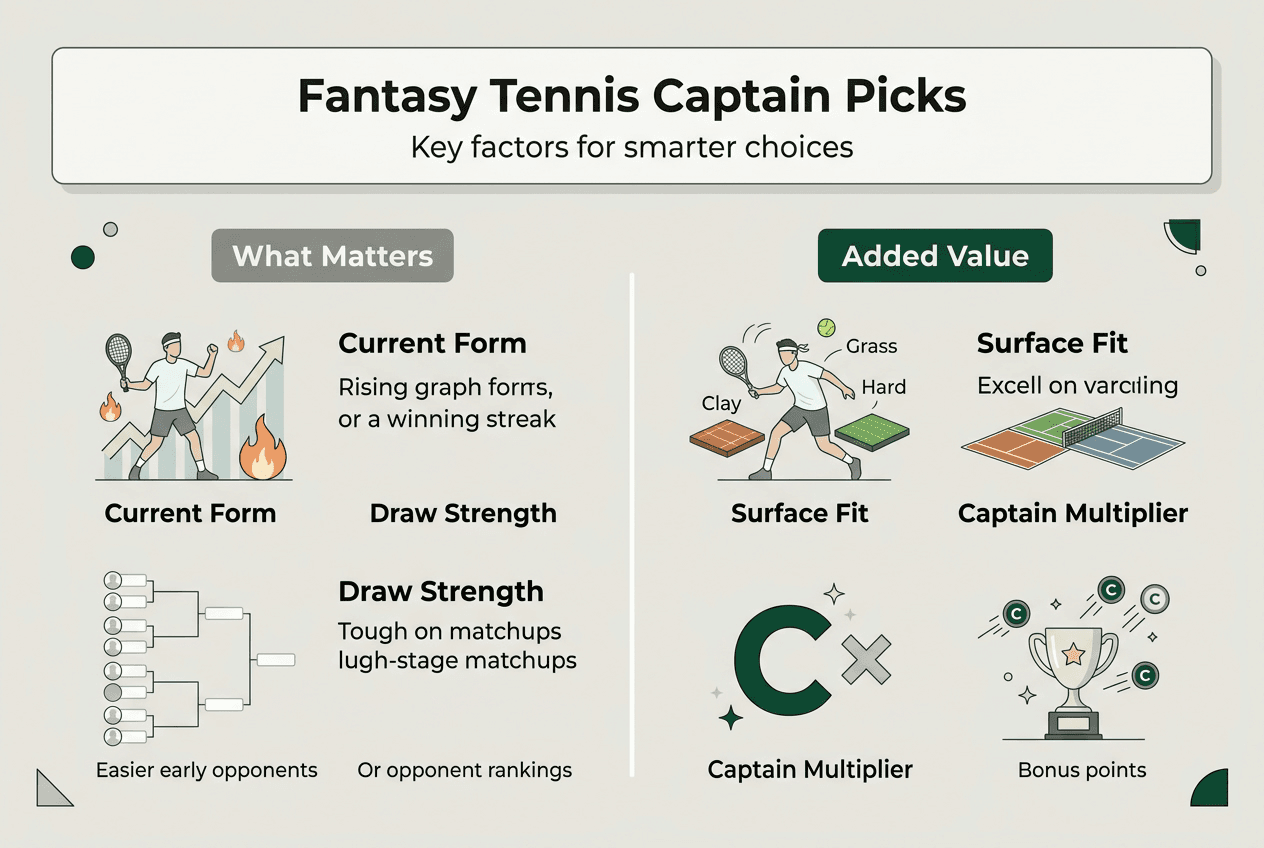
Understanding these dynamics separates successful fantasy tennis managers from casual participants. Your captain choice should reflect strategic analysis of weekly conditions rather than defaulting to name recognition. The player who looks best on paper might not be the player who delivers maximum points this particular week, making fantasy team management in tennis a skill that rewards research and adaptability over rigid formulas.
Strategies to choose the right captain in fantasy tennis
Selecting the optimal captain each week requires a systematic approach that balances multiple variables. Start by evaluating current form through recent tournament results, looking beyond wins and losses to examine how players performed against quality opponents. A player who pushed the world number one to three sets in a semifinal might be peaking at the right time, even if they didn't win the title. This recent performance data reveals momentum and confidence levels that rankings lag behind by weeks or months.
Matchup quality represents the second critical evaluation factor. A top 5 player facing another top 5 opponent in the first round creates a difficult path to accumulating points, as one of them must exit early. Compare this to a top 15 player with a favorable draw facing opponents ranked outside the top 50 in early rounds. The latter scenario offers clearer opportunities for your captain to advance deep into the tournament bracket, collecting points from multiple match wins rather than risking early elimination.
Consider upset potential when weighing captain options, as fantasy tennis rewards bold choices that pan out. Captains from the top 8 seeds contribute to 60% of winning teams; strategic picks outside top seeds cover 40%, revealing significant opportunity for differentiation. When you identify an emerging player hitting peak form with an easy draw, making them captain while competitors stick with obvious top seed choices can vault you up league standings if your analysis proves correct.
Follow this step by step process to rank captain candidates each week:
- List all rostered players competing in the upcoming scoring period
- Research each player's last three tournament results and current win streak
- Analyze the tournament draw to identify favorable and difficult paths
- Check surface type and review each player's historical performance on that surface
- Consult injury reports and player statements about fitness and motivation
- Compare your top three candidates and select the one with the best combination of form and opportunity
Pro Tip: Create a simple spreadsheet tracking these variables for your roster players across the season, building a personal database that reveals patterns and informs future captain decisions more effectively than relying on memory alone.
Balancing top seeds against strategic outsider picks requires understanding your league's competitive landscape. In casual leagues where most managers default to obvious captain choices, picking the consensus option keeps you competitive but limits upside. More aggressive leagues reward differentiation, making calculated risks on lower profile players with optimal conditions a path to separation. Tournament prediction strategies help identify these opportunities by revealing which players match up well against specific opponents and tournament styles.
Data analytics elevate captain selection from guesswork to informed strategy. Tennis analytics improve your game by quantifying factors like serve effectiveness, return game strength, and performance under pressure. When you combine these metrics with situational factors like surface and opponent quality, patterns emerge showing which players deliver consistent captain value versus those who underperform despite strong rankings.
Adapting captain picks to surface types and scoring systems
Tennis surfaces create dramatic performance variance that smart fantasy managers exploit through captain selection. The three main surfaces are grass, clay, and hard court, each rewarding different playing styles and skill sets. Grass courts favor big servers and aggressive net players who can finish points quickly, as the low bounce and fast pace reward power over endurance. Clay courts slow the ball down and create high bounces, benefiting baseline grinders with exceptional movement and stamina who excel in long rallies. Hard courts offer a middle ground that tends to favor well rounded players without extreme stylistic advantages.

Player strengths vary so dramatically by surface that a dominant clay court specialist might struggle on grass, while grass court experts often underperform on clay. Rafael Nadal's clay court dominance throughout his career demonstrates surface specialization at its peak, with his game perfectly suited to the slow, high bouncing conditions. Selecting Nadal as captain during clay court season historically delivered exceptional returns, while the same choice during grass season often disappointed despite his overall elite ranking.
This comparison illustrates how player styles match specific surfaces:
| Player Style | Best Surface | Key Advantage | Captain Value | | --- | --- | --- | | Big Server | Grass | Free points on serve | High in short tournaments | | Baseline Grinder | Clay | Outlasts opponents | High in best of five | | All Court Player | Hard Court | No weakness | Consistent across events | | Net Rusher | Grass | Quick point finishing | Volatile but explosive |
Fantasy tennis platforms implement different scoring systems that reward various in match actions, requiring you to align captain selection with how your specific platform allocates points. Some platforms heavily reward aces and service winners, making big servers like John Isner historically valuable captain picks despite lower overall rankings. Other platforms emphasize break point conversion and return game statistics, favoring players with exceptional return skills who might not dominate the ace leaderboards.
Selecting captains based on surface suitability significantly boosts effectiveness, as players competing in their preferred conditions outperform expectations while those on unfavorable surfaces often disappoint. When the tour shifts from hard courts to clay in spring, reassess your captain strategy completely rather than maintaining the same approach across surface transitions.
Match your platform's scoring rules to captain selection by identifying which statistics earn the most points. If your platform awards significant points for aces, prioritize captains with high ace rates during grass and hard court seasons. If break points and return games dominate scoring, focus on players with strong return statistics and the ability to break serve consistently. Understanding these nuances transforms captain selection from generic best player logic to targeted optimization for your specific scoring environment.
Adapt your captain choice weekly based on the tournament surface and current conditions. Check weather forecasts, as rain and humidity affect ball speed and bounce characteristics. Review player interviews and practice reports for insights into their comfort level and preparation on the current surface. Cross reference this information with your platform's gameweek scoring guide 2026 to identify which available players offer the best combination of surface fit and scoring system alignment. Tweener game rules provide specific details about how different actions translate to fantasy points, enabling precise captain optimization.
Common pitfalls and pro tips for captain picks in fantasy tennis
The biggest mistake fantasy tennis players make is defaulting to the highest ranked player on their roster as captain every single week. Rankings update slowly and reflect cumulative performance over rolling 52 week periods, making them a lagging indicator of current form. A player might hold a top 5 ranking while nursing a minor injury or experiencing a slump, while a lower ranked teammate could be surging with three consecutive tournament finals. Blindly following rankings ignores the dynamic nature of tennis form and tournament specific factors that determine weekly fantasy success.
Ignoring recent injuries or fatigue creates another common pitfall that sinks captain value. Professional tennis demands intense physical output, and players competing in multiple tournaments across consecutive weeks often show declining performance. When your potential captain just completed a grueling five set semifinal three days ago and now faces another tough opponent, their physical state matters more than their ranking. Monitor player statements about fitness, check tournament schedules for back to back events, and factor rest time into captain decisions.
Key mistakes to avoid when selecting your captain:
- Overlooking surface transitions when the tour moves between clay, grass, and hard courts
- Neglecting opponent quality and draw difficulty in favor of player name recognition
- Failing to adjust for platform specific scoring that rewards certain play styles
- Ignoring head to head records when your captain faces a player who historically dominates them
- Sticking with the same captain for multiple weeks without reassessing conditions
Underestimating your fantasy platform's scoring emphasis leads to suboptimal captain choices that look good on paper but underdeliver in points. If your platform awards minimal points for aces but heavily rewards break point conversions, captaining a big server over a strong returner costs you points despite the server's higher ranking. Study your platform's point allocation system thoroughly and select captains whose strengths align with the actions that generate the most fantasy value.
Pro Tip: Set a calendar reminder each Monday to review the upcoming week's tournaments, surfaces, and draws before finalizing your captain pick, creating a consistent process that prevents last minute rushed decisions based on incomplete information.
Strategic flexibility beats fixed captain preferences in competitive fantasy tennis leagues. The player who makes an excellent captain during hard court season might be a poor choice when the tour shifts to clay. Successful managers continuously reassess their roster and captain options based on current conditions rather than maintaining loyalty to specific players. Cash mode fantasy tennis guide emphasizes this adaptive approach, as real money competitions reward managers who make optimal weekly decisions over those who stick with comfortable but suboptimal patterns.
Monitor live updates and tournament news throughout the scoring period, as conditions change rapidly in professional tennis. A player might withdraw due to injury after you set your captain, or weather delays could affect match schedules and player rest. Platforms that allow captain changes up until match start time give you opportunities to pivot based on breaking news. Even on platforms with earlier deadlines, staying informed helps you make better decisions for future weeks by understanding how unexpected factors influenced results.
Scout emerging players who might not appear on casual managers' radars but offer exceptional captain value in the right situations. Young players breaking into the top 50 often face easier draws and bring fearless aggressive play that translates to fantasy points. When you identify these players early and captain them during their breakthrough tournaments, you gain massive advantages over competitors who wait until rankings catch up. Top ATP and WTA picks 2026 highlights rising stars worth monitoring for captain opportunities.
Boost your fantasy tennis performance with Tweener
After mastering these captain selection strategies, implementing them effectively requires the right platform and tools. Tweener provides analytics features specifically designed to optimize captain picks through real time data and expert insights. The platform tracks player form, surface performance, and head to head records, consolidating the research you need into one convenient dashboard. Instead of manually checking multiple sources for tournament draws and player statistics, Tweener delivers this information directly within the app.
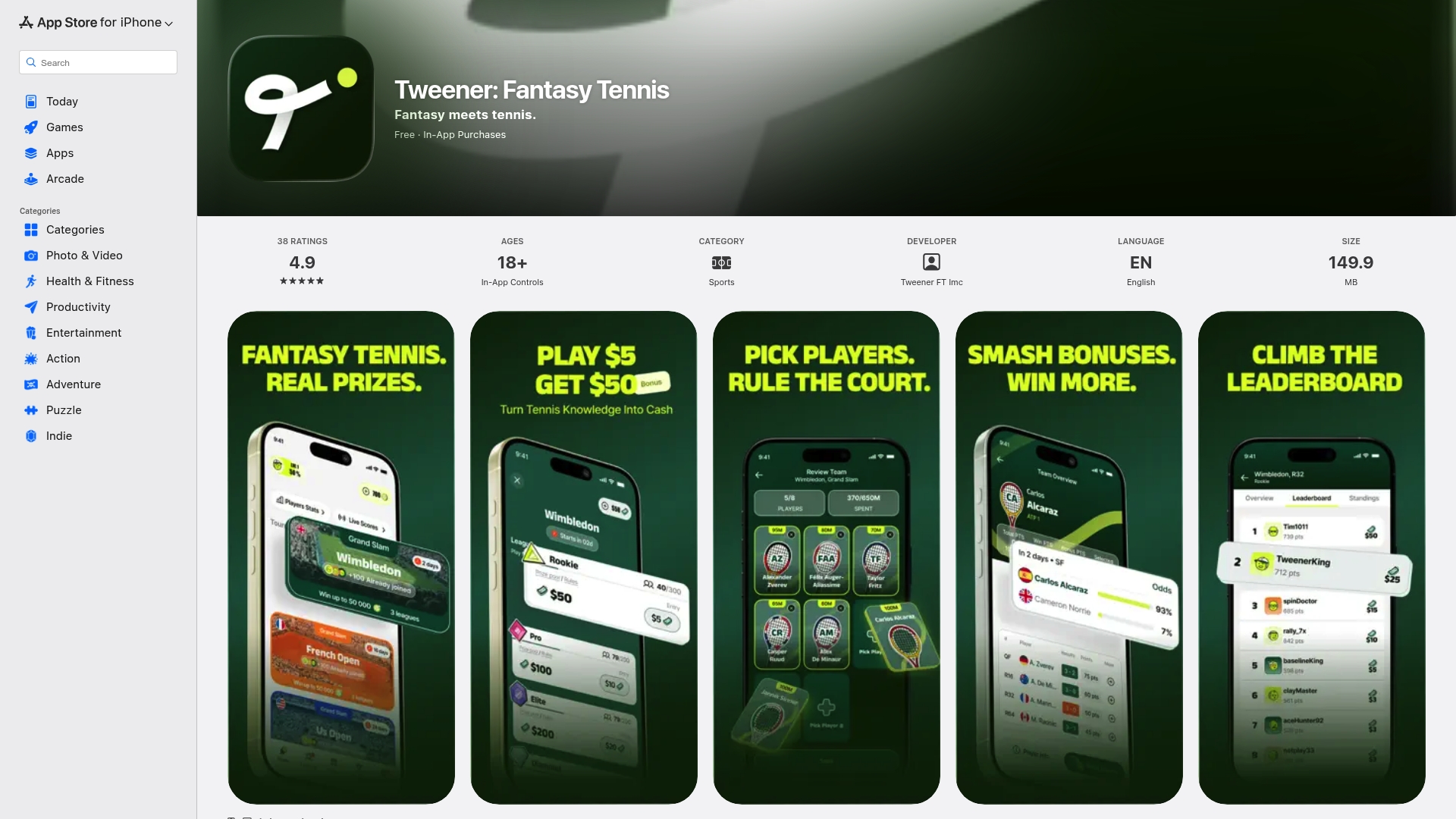
Join competitive leagues on Tweener fantasy tennis platform where your improved captain selection strategies translate directly into league success and rewards. The platform's detailed scoring system rewards smart decisions, with both free coin mode for practice and cash mode for real money competition. Mobile accessibility means you can adjust your captain pick and monitor live tournament results anywhere, keeping you connected to your fantasy team throughout each scoring period. Download the Tweener app to access comprehensive Tweener game rules and start applying these strategies immediately for better fantasy tennis results.
Frequently asked questions about captain picks in fantasy tennis
What exactly does a captain pick do in fantasy tennis?
Your captain receives a points multiplier, typically 2x, that doubles all fantasy points they earn during the scoring period. This makes captain selection the highest leverage decision you make each week, as the right choice can boost your total score by 15 to 25% compared to suboptimal picks.
How often should I change my captain pick?
Reassess your captain every single week based on current form, tournament surface, and draw difficulty. Players who make excellent captains one week might be poor choices the next due to changing conditions, so avoid defaulting to the same captain repeatedly without analysis.
Can a lower ranked player be a good captain?
Absolutely, as 40% of winning fantasy teams use strategic captain picks outside the top 8 seeds. A lower ranked player with peak form, favorable matchups, and strong surface fit often outperforms a higher ranked player facing tough opponents or competing on their weak surface.
How do surface conditions affect captain effectiveness?
Surface type dramatically impacts player performance, with specialists dominating their preferred surfaces while struggling on others. Selecting captains based on surface suitability can boost effectiveness by 15 to 25%, making surface analysis essential for optimal weekly decisions.
Where can I track the best captain picks before gameweek?
Tweener provides integrated analytics and expert insights for captain optimization, consolidating player form, tournament draws, and surface data in one platform. The app delivers real time updates and detailed statistics that inform captain decisions without requiring manual research across multiple sources.