

If you've ever wondered why fantasy tennis doesn't follow the same weekly rhythm as fantasy football or basketball, you're not alone. The term gameweek in fantasy tennis confuses many newcomers because it doesn't align with fixed calendar weeks. Instead, gameweeks correspond to tournament structures and match clusters, making strategic roster selection fundamentally different. Understanding this concept is essential for maximizing points, managing your budget effectively, and avoiding costly lineup mistakes. This guide breaks down exactly how gameweeks work, how scoring functions within them, and what strategic approaches will help you dominate your fantasy tennis leagues in 2026.
Table of Contents
- What is a gameweek in fantasy tennis? Understanding the basics
- How scoring works in a fantasy tennis gameweek
- Strategic gameweek roster selection and management
- Common pitfalls and expert tips for mastering fantasy tennis gameweeks
- Explore Tweener for your fantasy tennis gameweek strategy
- Frequently asked questions
Key takeaways
| Point | Details |
|---|---|
| Gameweek timing | Gameweeks align with tournament rounds or stages, not fixed calendar weeks like other fantasy sports. |
| Scoring metrics | Points accumulate from performance stats including aces, sets won, break points converted, and match victories. |
| Strategic selection | Budget allocation and player evaluation based on form, surface, and matchups determine gameweek success. |
| Common mistakes | Chasing recent highlights without context and ignoring withdrawal news leads to poor gameweek outcomes. |
| Platform differences | Scoring systems and gameweek structures vary across fantasy tennis platforms and contest types. |
What is a gameweek in fantasy tennis? Understanding the basics
Unlike traditional fantasy sports where scoring periods run Monday through Sunday, gameweek in fantasy tennis refers to a specific period during which matches are played and points are awarded based on player performance. This fundamental difference stems from how professional tennis tournaments operate. While the NFL plays every Sunday, tennis tournaments run continuously with varying lengths and formats.
Gameweeks typically align with rounds of a tournament or specific stages within a tennis tournament. Grand Slam events like the Australian Open or Wimbledon span two weeks, with multiple rounds creating extended gameweek opportunities. Smaller ATP 250 or WTA 250 tournaments might compress into a single week or even shorter periods. Masters 1000 events fall somewhere in between, typically lasting 10 to 14 days depending on draw size and scheduling.
This tournament based structure creates unique strategic considerations. You're not simply setting a lineup for seven days and forgetting about it. Instead, you must track which players advance through rounds, when they play, and how their performance accumulates over the tournament's duration. A player who wins in straight sets early might face a tougher opponent later in the same gameweek, affecting total point accumulation.
Many newcomers assume gameweeks function like traditional weekly fantasy formats. This misconception leads to poor timing decisions and missed opportunities. Understanding that gameweeks flow with tournament progression rather than arbitrary weekly cutoffs is your first step toward strategic mastery. The game rules on most platforms clearly outline these timing structures, but the core principle remains consistent across the sport.
Key structural elements that define fantasy tennis gameweeks include:
- Tournament type determines gameweek length and scoring opportunities
- Draw size affects how many rounds players can potentially advance through
- Scheduling variations mean some gameweeks offer more matches than others
- Player advancement creates dynamic scoring rather than fixed weekly totals
The fantasy tennis scoring system you choose will determine exactly how these gameweek structures translate into points, but the underlying tournament based timing remains constant. This makes pre tournament research and real time adjustment far more critical than in weekly fantasy formats where you can set and forget.
How scoring works in a fantasy tennis gameweek
Once you understand when gameweeks occur, the next critical piece is knowing how player actions convert into fantasy points. Scoring systems in fantasy tennis often incorporate various performance metrics such as aces, first serve percentage, return points percentage, games and sets won, and match victories. Each platform weights these metrics differently, but certain core statistics appear across most formats.
DFS platforms award points for wins, aces, break points converted, straight sets victories and penalize for double faults or being bagelled. Understanding this dual nature of positive and negative scoring is crucial. A player who serves 15 aces but commits 10 double faults might net fewer points than someone with 8 aces and only 2 double faults, depending on platform scoring weights.

Here's how typical gameweek scoring breaks down across major performance categories:
| Performance Metric | Point Value | Strategic Impact |
|---|---|---|
| Match win | 40 to 60 points | Highest single scoring action |
| Set won | 10 to 15 points | Rewards dominance over close matches |
| Ace served | 1 to 2 points | Benefits big servers |
| Break point converted | 2 to 3 points | Highlights clutch performance |
| Double fault | Minus 1 to 2 points | Penalizes inconsistent servers |
| Bagel received | Minus 5 to 10 points | Significant penalty for poor performance |
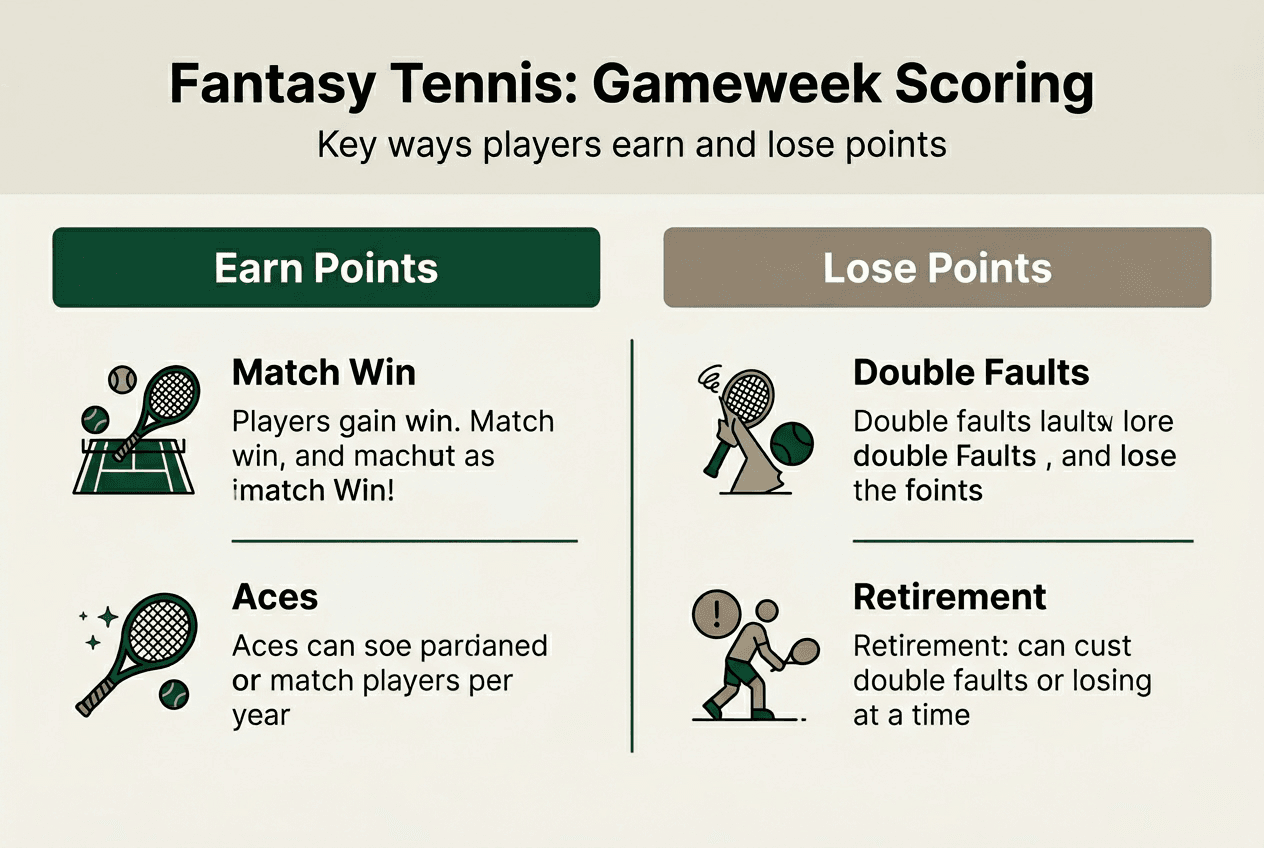
These values vary by platform, so always check your specific league's scoring rules before finalizing rosters. Some formats emphasize match wins heavily, making advancing deep into tournaments the primary goal. Others reward statistical performance more evenly, allowing players who lose competitive matches to still accumulate respectable point totals.
Pro Tip: Before each gameweek, review your platform's scoring system and identify which metrics carry the most weight, then prioritize players whose playing styles naturally generate those statistics.
The gameweek timeline also affects scoring accumulation. In a Grand Slam spanning two weeks, a player who reaches the final could participate in seven matches, each offering multiple scoring opportunities. Compare this to a first round exit, which provides only one match worth of potential points. This creates a risk reward dynamic where higher priced favorites offer safer floors but potentially lower ceilings in tournament formats.
Variations in scoring systems across platforms mean you can't simply transfer strategy from one app to another. What works on one platform might fail on another if scoring weights differ significantly. Take time to understand these nuances, and consider how they interact with fantasy team management in tennis principles. The tennis fantasy scoring guide provides deeper insight into platform specific differences and how to optimize for each.
Key scoring considerations for gameweek success:
- Match advancement multiplies scoring opportunities exponentially
- Statistical consistency often outperforms single match explosions
- Negative points can erase gains quickly on high variance players
- Platform specific weights change optimal player selection dramatically
Strategic gameweek roster selection and management
Knowing how points accumulate is worthless without a framework for selecting the right players. Budget allocation and player selection are crucial aspects of gameweek strategy; player prices fluctuate with performance and demand. Every fantasy tennis platform operates on a salary cap system, forcing you to balance expensive favorites against value picks who might overperform their cost.
Effective gameweek strategy balances risk and reward considering player form, surface, matchups, and ownership. Surface suitability might be the most overlooked factor among casual players. A clay court specialist priced as a value play on hard courts rarely delivers, while that same player might dominate on their preferred surface. Current form matters too, but it must be contextualized against competition level and recent schedule.
Head to head statistics reveal crucial matchup advantages that pricing doesn't always reflect. Some players consistently struggle against certain playing styles regardless of current rankings. A counterpuncher might dominate aggressive baseliners but struggle against serve and volley players. These stylistic mismatches create exploitable pricing inefficiencies during gameweeks.
Managing withdrawal risk is perhaps the most frustrating aspect of fantasy tennis gameweeks. Unlike team sports where injury reports arrive days in advance, tennis players can withdraw hours before matches or retire mid match. This unpredictability requires defensive roster construction and real time monitoring.
Pro Tip: Always check official tournament draws and player press conferences within 24 hours of match start times to catch early withdrawal signals before your competition does.
Balancing chalk versus value picks depends entirely on contest type. In cash games where you simply need to finish in the top half, rostering popular favorites provides safety. In large field tournaments where only top finishes pay, you need differentiation through contrarian picks. This creates different optimal strategies within the same gameweek depending on your contest selection.
Strategic roster construction follows this framework:
- Identify must play favorites whose floors justify their salary
- Find two to three value plays with favorable matchups or surface fits
- Allocate remaining budget to high upside players with tournament winning potential
- Reserve lineup flexibility for late breaking news or withdrawal replacements
- Monitor early round results and adjust subsequent round lineups accordingly
Withdrawal and injury management requires proactive rather than reactive thinking. Build rosters with backup options already identified. If your expensive pick withdraws, knowing exactly which value replacement fits your remaining budget saves crucial time. This preparation separates successful gameweek managers from those who scramble at the last minute.
The top ATP and WTA picks 2026 article provides current player analysis, while tournament prediction strategies 2026 offers frameworks for evaluating matchups. Combining these resources with platform specific fantasy tennis lineup strategy creates a comprehensive gameweek approach.
Critical selection factors for gameweek optimization:
- Surface history trumps recent form on mismatched surfaces
- Ownership percentages guide cash versus tournament roster construction
- Travel schedules and back to back tournament fatigue affect performance
- Draw positioning determines potential path through tournament rounds
- Pricing inefficiencies emerge around ranking changes and recent upsets
Common pitfalls and expert tips for mastering fantasy tennis gameweeks
Even experienced fantasy tennis players fall into predictable traps during gameweeks. Over reliance on recent match results and ignoring surface and travel fatigue leads to common pitfalls. That stunning upset victory last week means little if it came on a different surface against an injured opponent. Context matters more than raw results.
Recency bias causes players to overweight the last match they watched while ignoring broader performance patterns. A player who won their last tournament might be physically and mentally exhausted, especially if they played multiple three set matches. Meanwhile, a rested player coming off a first round exit two weeks ago could be the better gameweek selection despite less impressive recent headlines.
Travel and surface transitions destroy more fantasy lineups than any other factor. Players traveling from clay in Europe to hard courts in North America face jet lag plus surface adjustment. This double burden rarely shows up in pricing immediately, creating fade opportunities on popular names. The best gameweek managers track these transitions and exploit the lag between travel impact and pricing adjustment.
Withdrawal monitoring separates elite players from the pack. Following official tournament social media, player accounts, and press conference reports provides early warning signals. Vague comments about minor injuries or fatigue often precede withdrawals by 12 to 24 hours. Acting on these signals before official announcements gives you a massive edge.
Understanding player archetypes and their fit for different contest formats prevents costly mistakes. Consistent baseline grinders offer safe floors for cash games but rarely provide the ceiling needed for large tournament wins. Aggressive, high variance players work better in tournament formats where you need differentiation. Mixing these archetypes without considering contest type leads to suboptimal results.
Expert players maintain structured approaches rather than guessing. As one fantasy tennis analyst notes:
If you can't describe how the lineup scores points, you're probably relying on luck instead of structure.
This quote encapsulates the difference between recreational and serious gameweek management. Every roster decision should have a clear rationale tied to scoring system, matchup analysis, or ownership strategy. Random hunches might work occasionally, but structured thinking wins long term.
Common mistakes to avoid during gameweeks:
- Chasing last week's breakout performance without surface context
- Ignoring player comments about fatigue or minor injuries
- Building tournament lineups with the same safety first approach as cash games
- Failing to adjust for ownership in guaranteed prize pool contests
- Neglecting draw analysis and potential paths through tournament rounds
- Overvaluing ranking while undervaluing recent form and surface fit
The master cash mode guide provides detailed frameworks for risk management, while the ATP tour schedule 2026 helps you plan ahead for surface transitions and scheduling clusters. Combining these resources with disciplined bankroll management creates sustainable gameweek success.
Pro Tip: Create a simple spreadsheet tracking player performance by surface type, and reference it before every gameweek to identify surface specialists being mispriced due to recent results on different courts.
Advanced gameweek management also involves understanding how tournament structure affects optimal strategy. Early rounds reward safety and consistency since most of your roster should advance. Later rounds allow more aggression since you're selecting from a smaller, more predictable player pool. Adjusting risk tolerance as tournaments progress maximizes expected value across the full gameweek.
Explore Tweener for your fantasy tennis gameweek strategy
Now that you understand gameweek mechanics, scoring systems, and strategic frameworks, putting this knowledge into practice requires the right platform. Tweener fantasy tennis platform combines real time scoring with tournament aligned gameweeks, giving you the tools to implement everything covered in this guide. The app tracks player performance across all major ATP and WTA tournaments, updating points as matches progress.
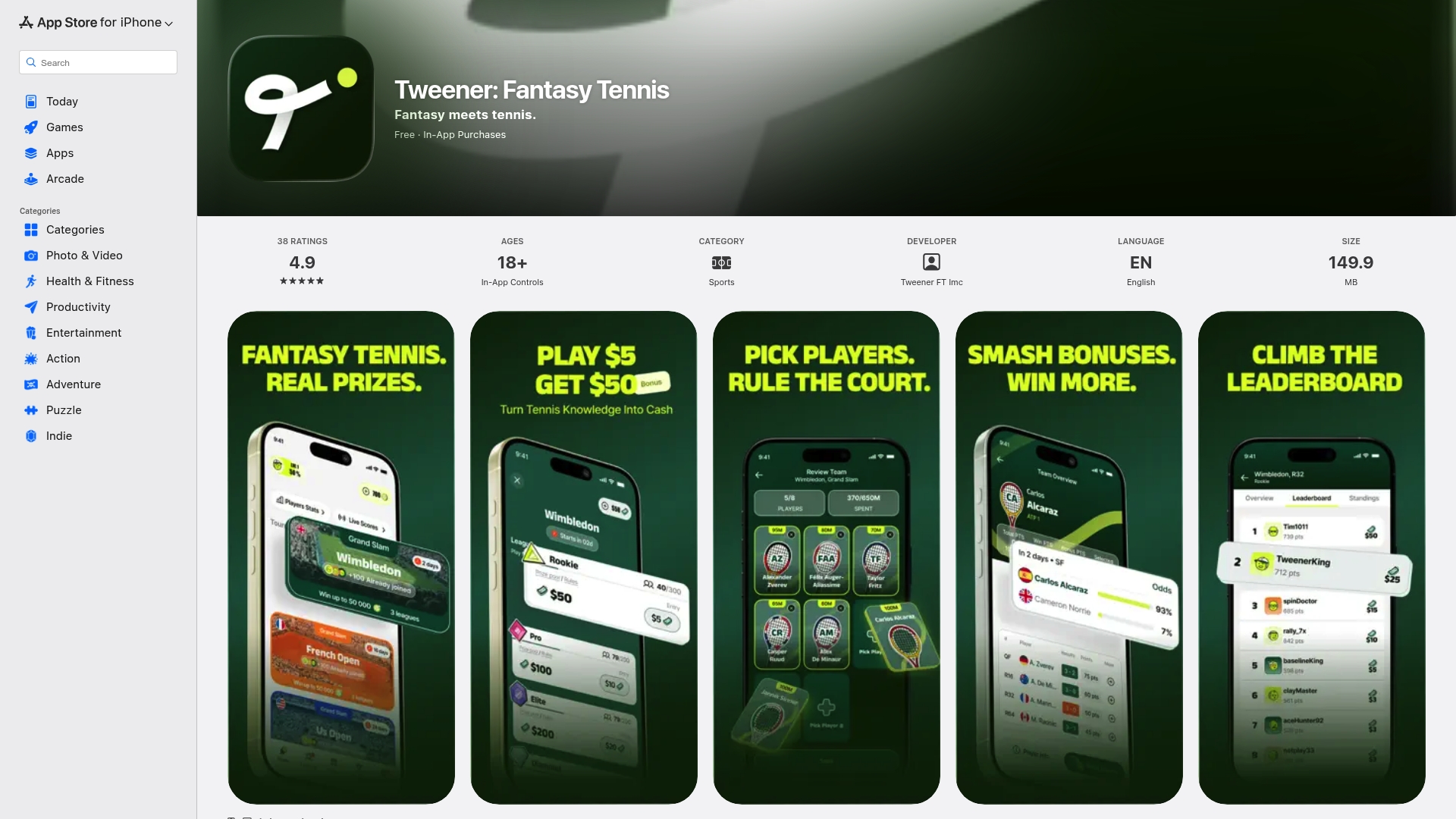
What sets Tweener apart is how seamlessly it handles the tournament based gameweek structure that confuses players on other platforms. Tweener game rules clearly outline scoring metrics, gameweek timing, and contest formats, eliminating the guesswork that plagues fantasy tennis beginners. Whether you prefer free mode using virtual coins or cash mode for real money competition, the platform adapts to your experience level and risk tolerance.
The combination of expert insights, comprehensive player data, and intuitive lineup management makes Tweener ideal for applying the strategies outlined in this guide. Ready to test your gameweek knowledge? Download the Tweener app and start building winning rosters today.
Frequently asked questions
What exactly is a gameweek in fantasy tennis?
A gameweek is the scoring period during which fantasy points accumulate based on player performance in actual tennis matches. Unlike fixed weekly schedules in other fantasy sports, tennis gameweeks align with tournament structures and can last anywhere from a few days to two weeks depending on the event.
How do player withdrawals affect my gameweek score?
When a player withdraws before competing, they typically score zero points for that gameweek, which can devastate your lineup if they were a high priced selection. Some platforms offer late swap options if withdrawals occur after initial lineup lock, but rules vary by contest type and timing.
Do all fantasy tennis platforms use the same gameweek scoring?
No, scoring systems vary significantly across platforms. Some emphasize match wins heavily while others reward statistical performance more evenly. Always review your specific platform's scoring rules before finalizing rosters, as optimal strategy changes based on how points are awarded.
Should I prioritize surface specialists or well rounded players during gameweeks?
This depends on the tournament surface and your contest format. Surface specialists often provide better value when tournaments match their strengths, while well rounded players offer safer floors across varying conditions. In cash games, consistency matters more; in tournaments, surface specialists on their preferred courts can provide differentiation.
How does gameweek strategy differ between Grand Slams and smaller tournaments?
Grand Slams offer extended gameweeks with more rounds, making player advancement crucial for point accumulation. Smaller tournaments compress into shorter periods with fewer rounds, shifting strategy toward players likely to win their first match rather than those who might advance deep. Budget allocation and risk tolerance should adjust accordingly.
What's the biggest mistake casual players make with fantasy tennis gameweeks?
Treating gameweeks like fixed weekly formats is the most common error. Casual players set lineups without considering tournament progression, surface transitions, or withdrawal risk. Successful gameweek management requires active monitoring and willingness to adjust based on real time tournament developments rather than set it and forget it approaches.