

Many believe success in cash mode fantasy tennis comes down to luck. In reality, DFS is legally classified as a game of skill that rewards strategic thinking and tennis knowledge. This guide walks you through the legal, payment, live data, and strategic components that separate winners from hopefuls in real-money fantasy tennis contests.
Table of Contents
- Introduction to cash mode in fantasy tennis
- Legal and regulatory landscape for cash mode
- Payment processing and transaction mechanisms
- Leveraging live ATP and WTA data in cash mode strategy
- Common misconceptions about cash mode in fantasy tennis
- Practical strategies to succeed in cash mode contests
- Conclusion and next steps for players
- Try cash mode fantasy tennis with Tweener
- Frequently asked questions
Key takeaways
| Point | Details |
|---|---|
| Cash mode operates on skill-based principles | Real-money contests reward strategic team selection and live match analysis, not random chance. |
| Legal compliance determines access | Geographic restrictions and age verification control where players can participate in cash contests. |
| Fast payment processing matters critically | Instant deposits and withdrawals directly impact user satisfaction and platform retention rates. |
| Live ATP/WTA data enables dynamic strategy | Real-time match performance feeds allow players to adjust selections and optimize contest entries. |
| Misconceptions hinder player success | Understanding the skill-based nature and legal framework helps set realistic expectations. |
Introduction to cash mode in fantasy tennis
Cash mode transforms fantasy tennis from casual entertainment into competitive contests where you compete for real money based on ATP and WTA player performance. Unlike free play modes that use virtual currency, cash mode requires actual deposits and delivers monetary payouts to winners. The format combines your tennis expertise with strategic decision-making as you build teams from active professional players and earn points from their live match results.
The key differentiator lies in how platforms like Tweener integrate real-time tournament data. As matches unfold during Grand Slams or ATP/WTA events, your selected players accumulate points based on aces served, games won, sets captured, and match victories. This live scoring creates an engaging experience where you track your team's performance alongside actual tournament action.
Cash mode offers several advantages over free play:
- Higher stakes drive more strategic team building and contest research
- Real monetary rewards provide tangible incentives for improving skills
- Competitive player pools attract serious fantasy tennis enthusiasts
- Multiple contest formats allow risk management through entry fee selection
- Immediate feedback on strategic decisions through live match scoring
Before diving into cash contests, you need foundational tennis knowledge and basic fantasy sports understanding. Knowing player form, surface preferences, head-to-head records, and tournament seedings gives you a competitive edge. Familiarity with scoring systems and contest structures helps you make informed entry decisions.
The transition from free to cash mode requires careful consideration. Start by mastering team selection and scoring mechanics in virtual currency games. Once comfortable with platform operations and strategic frameworks, cash mode offers the next level of engagement for dedicated fantasy tennis players.
Legal and regulatory landscape for cash mode
The legal foundation of cash mode rests on DFS being classified as skill-based games rather than gambling in most jurisdictions. This distinction matters because it determines whether platforms can legally offer real-money contests in specific locations. Understanding these legal nuances protects you from unintentionally violating local regulations while ensuring your winnings remain legitimate.
Geographic restrictions vary significantly across countries and within the United States. Some US states prohibit real-money fantasy sports, requiring platforms to block access through geo-location technology. States like Arizona, Louisiana, and Nevada maintain strict regulations, while others embrace DFS with clear legal frameworks. International players face different rules depending on their country's stance on online gaming and fantasy sports.
Platforms implement several compliance measures to operate legally:
- Geo-location verification blocks users from restricted jurisdictions
- Age verification systems ensure only adults over 18 or 21 participate
- License acquisition in regulated markets demonstrates legal standing
- Terms of service clearly outline user responsibilities and restrictions
- Regular audits confirm ongoing compliance with evolving regulations
These legal restrictions directly impact your access to cash contests. If you travel to a restricted state or country, you may find yourself temporarily unable to enter paid competitions even with an active account. Platforms use your device location, not your registered address, to determine eligibility at the moment of contest entry.
Before depositing money, research your local laws regarding fantasy sports. Check both state and federal regulations if you're in the United States. International players should verify their country's position on online gaming platforms. Review game rules in fantasy tennis on your chosen platform to understand specific legal disclosures and user obligations.
The regulatory landscape continues evolving as governments update their positions on skill-based gaming. Staying informed about legal changes in your jurisdiction ensures uninterrupted access to cash mode and protects your account from compliance issues.
Payment processing and transaction mechanisms
Reliable payment systems form the backbone of cash mode fantasy tennis, directly affecting your ability to enter contests and withdraw winnings. Modern platforms offer over 13 payment options to accommodate diverse user preferences and geographic banking systems. The speed and security of these transactions significantly impact your overall experience and willingness to continue playing.
Common payment methods include:
- Credit and debit cards for instant deposits
- PayPal and digital wallets for fast transfers
- Direct bank transfers for larger transactions
- Prepaid cards for budget control
- Cryptocurrency options on select platforms
Transaction speed matters more than most players initially realize. Instant deposits let you jump into time-sensitive contests before they fill or lock. Quick withdrawals provide immediate access to your winnings, reinforcing positive experiences. Payment failures cause up to 25% user dropout on fantasy platforms, demonstrating how critical smooth transactions are for retention.

Security measures protect both your financial information and contest integrity. Reputable platforms use encryption technology, two-factor authentication, and fraud detection systems. These safeguards prevent unauthorized access while ensuring legitimate transactions process without delays. Always verify a platform's security credentials before adding payment information.
Failed or slow payments create frustration and missed opportunities. Delayed deposits might cause you to miss a contest featuring your preferred player lineup. Withdrawal delays can erode trust in the platform. Choose payment methods known for reliability within the fantasy sports ecosystem.
Pro Tip: Select payment methods that offer instant processing for both deposits and withdrawals. This flexibility allows you to move funds quickly based on tournament schedules and contest availability, maximizing your participation opportunities.
The Tweener platform prioritizes payment reliability to ensure you can focus on strategy rather than transaction concerns. Understanding payment mechanics before your first deposit helps avoid common pitfalls and sets you up for smooth cash mode operations.
Leveraging live ATP and WTA data in cash mode strategy
Real-time match data transforms cash mode from static team selection into dynamic strategic competition. Live ATP/WTA stats integration allows you to monitor player performance as matches unfold, creating opportunities for mid-tournament adjustments and informed contest entries. This continuous feedback loop separates skilled players from those relying solely on pre-match predictions.
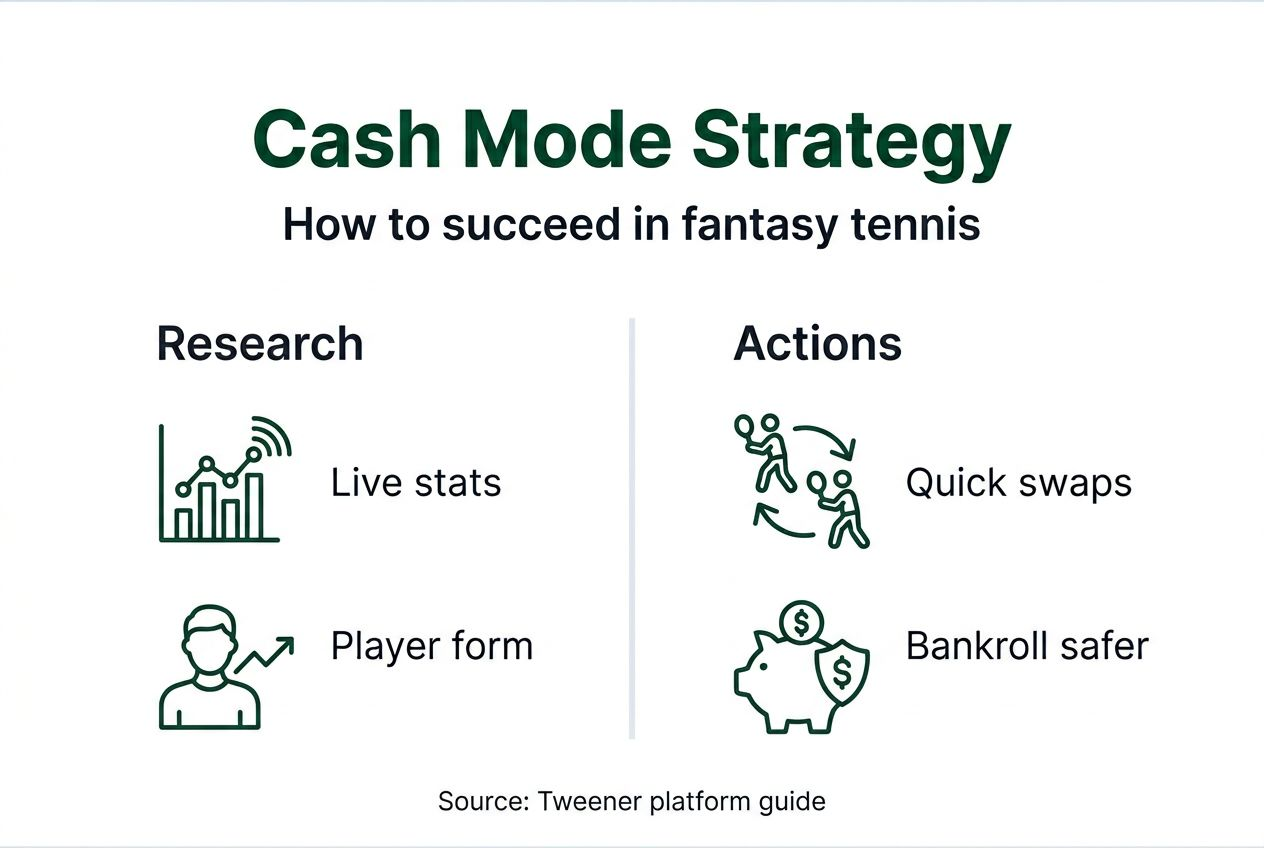
Live statistics directly influence fantasy point accumulation across multiple dimensions. When your selected player fires aces, breaks serve, or wins sets, these events immediately register as points. Monitoring these developments during matches helps you assess whether your team is performing as expected or needs strategic pivots for upcoming contests.
Benefits of live data monitoring include:
- Identifying hot streaks that signal strong form for future selections
- Spotting unexpected weaknesses that warrant removing players from upcoming lineups
- Timing new contest entries when favorable matchups emerge mid-tournament
- Adjusting risk tolerance based on current standings in active contests
- Learning which statistics correlate most strongly with fantasy success
Strategic adjustments based on live information require quick analysis. If a top-seeded player struggles in early rounds, their value for later tournament stages decreases. Conversely, a lower-ranked player dominating matches becomes an attractive pick for subsequent contests. This dynamic evaluation process rewards active engagement over passive team management.
The following table illustrates how different match events impact fantasy scoring:
| Match Event | Typical Point Value | Strategic Importance |
|---|---|---|
| Ace served | 1-2 points | High for serve-dominant players |
| Break point won | 3-5 points | Critical in tight matches |
| Set victory | 10-15 points | Major scoring component |
| Match win | 20-30 points | Highest single-event value |
| Clean sheet win | 5-10 bonus points | Rewards dominant performances |
Pro Tip: Use live match data to enter new contests strategically as the tournament progresses. If you notice a player hitting exceptional form, load them into your lineup for upcoming rounds before the broader market catches on and drives up their selection rate.
The continuous monitoring cycle follows this pattern: select players based on research, track their live performance, analyze results against expectations, and refine future selections. This iterative approach builds expertise faster than sporadic participation. Understanding fantasy tennis scoring rules helps you prioritize which live stats to monitor most closely during active matches.
Common misconceptions about cash mode in fantasy tennis
Misunderstandings about cash mode create unrealistic expectations and poor strategic choices. Clearing up these misconceptions helps you approach real-money contests with appropriate mindset and preparation. The most prevalent false beliefs center on luck, guarantees, and legal status.
The luck versus skill debate is settled at the legal level. Skill and strategic decision-making dominate outcomes rather than random chance in fantasy tennis. Your ability to analyze player matchups, interpret form trends, and adapt to live data determines success far more than fortune. Players who invest time in research and strategy consistently outperform those making random selections.
Key misconceptions to avoid:
- Depositing money guarantees profits or winning outcomes
- Cash contests are legal everywhere without geographic restrictions
- Success requires insider information or professional tennis connections
- Free mode and cash mode use different scoring systems
- Platforms manipulate results to favor certain users
No deposit or entry fee guarantees winning, regardless of amount. Every contest involves competition against other skilled players who also research and strategize. Your edge comes from superior analysis and decision-making, not from simply participating or spending more money. Understanding this reality helps maintain healthy bankroll management.
The false belief that cash contests are universally legal creates compliance risks. As discussed earlier, significant geographic restrictions exist. Assuming legality without verification can result in blocked accounts, forfeited winnings, or legal complications. Always confirm your local regulations before entering paid competitions.
The skill-based classification influences contest fairness and outcome predictability. Unlike pure gambling where house edges guarantee long-term losses, fantasy tennis rewards expertise development. You can improve your winning percentage through dedicated learning and strategic refinement. This distinction makes cash mode a competitive endeavor rather than a game of chance.
Setting realistic expectations about risks and rewards protects you from disappointment. Most players lose money initially as they build skills. Viewing early entries as learning investments rather than guaranteed income helps maintain perspective. Review fantasy tennis contest rules to understand exactly how winners are determined and payouts are distributed.
Practical strategies to succeed in cash mode contests
Transforming knowledge into winning requires structured approaches to team selection, contest entry, and risk management. These actionable strategies help you compete effectively while protecting your bankroll from common mistakes that derail beginners.
Follow this sequence for entering cash mode contests:
- Research active tournaments and player forms across ATP and WTA circuits.
- Analyze matchup statistics including head-to-head records and surface preferences.
- Build multiple team variations to test different strategic hypotheses.
- Select contest types matching your risk tolerance and bankroll size.
- Monitor live match data to assess team performance and identify learning opportunities.
- Review results to understand which strategies worked and which need refinement.
- Apply lessons learned to subsequent contest entries with adjusted approaches.
Balancing risk versus reward requires honest assessment of your skill level and financial comfort. Begin with low-stakes contests to gain experience without significant losses. Using player form and surface stats optimizes team picks while proper timing of contest entries affects potential winnings. As your success rate improves, gradually increase entry fees to access higher payout pools.
The following table compares free mode and cash mode to guide your usage:
| Aspect | Free Mode | Cash Mode |
|---|---|---|
| Primary purpose | Skill development and learning | Competitive play for monetary rewards |
| Risk level | Zero financial risk | Real money at stake |
| Competition intensity | Casual to moderate | High skill player pools |
| Best use case | Practice and experimentation | Proven strategies and confident picks |
| Entry barriers | None | Age verification and payment setup |
Pro Tip: Manage your bankroll carefully by never risking more than 5-10% of your total deposit on any single contest. This conservative approach protects against variance and losing streaks while keeping you active enough to develop skills.
Diversifying your contest participation spreads risk and exposes you to different competitive environments. Enter both guaranteed prize pool contests and head-to-head matchups. Try various tournament types from Grand Slams to smaller ATP/WTA events. This variety accelerates learning and reveals which formats suit your strengths.
Before committing significant funds to cash mode, maximize free mode practice. Build confidence in team selection, understand scoring nuances, and develop a personal analytical framework. Download the app to access both modes seamlessly and review fantasy tennis game rules until they become second nature.
Conclusion and next steps for players
Cash mode fantasy tennis combines real money stakes with skill-based competition built on live ATP and WTA match data. Success requires understanding the legal landscape, selecting reliable payment methods, leveraging real-time information, and applying strategic frameworks consistently. The format rewards tennis knowledge, analytical thinking, and disciplined bankroll management.
Key elements to remember:
- Cash mode is fundamentally skill-based despite luck's short-term influence
- Legal compliance varies by location and requires verification before participation
- Secure, fast payment processing is essential for positive user experience
- Live match data enables dynamic strategy and mid-tournament adjustments
- Continuous learning and strategic refinement separate winners from casual players
Your next steps depend on current experience level. New players should start by creating an account, exploring free mode to build foundational skills, and researching upcoming tournaments. Once comfortable with platform mechanics and scoring systems, transition to small-stakes cash contests to test strategies with real money.
Experienced players can focus on refining analytical processes, expanding contest type participation, and optimizing bankroll allocation across multiple events. Review past performance to identify patterns in successful and unsuccessful team selections. Apply these insights to future contests while remaining adaptable to changing player forms and tournament conditions.
The intersection of tennis expertise and fantasy sports strategy creates engaging competition with tangible rewards. Approach cash mode with realistic expectations, commitment to continuous improvement, and responsible financial management. Your dedication to learning and strategic thinking directly correlates with long-term success in real-money fantasy tennis contests.
Try cash mode fantasy tennis with Tweener
Ready to put your tennis knowledge to the test in real-money contests? The Tweener platform delivers the complete cash mode experience with live ATP and WTA data integration, secure payment processing, and full legal compliance in permitted jurisdictions. The platform offers both free mode for skill building and cash mode for competitive play, letting you transition smoothly as your confidence grows.
Tweener supports multiple payment methods with fast transaction processing, ensuring you never miss contest opportunities due to deposit delays. The app's real-time scoring system updates as matches progress, giving you immediate feedback on team performance. Legal safeguards including geo-location verification and age checks protect both you and the platform.

Download the Tweener app to access cash mode contests during upcoming tournaments. Review fantasy tennis game rules to understand scoring mechanics and contest structures. Start with free mode to practice team selection without financial risk, then graduate to cash contests when ready to compete for real money.
Pro Tip: Use Tweener's free mode extensively before entering cash contests. Build your analytical framework, test different team-building approaches, and develop confidence in your decision-making process without risking your bankroll.
Frequently asked questions
Is cash mode fantasy tennis legal everywhere?
Legality varies significantly by jurisdiction. Some US states and countries prohibit real-money fantasy sports, requiring platforms to block access through geo-location technology. Always verify your local regulations before depositing funds or entering cash contests.
How fast are deposits and withdrawals in cash mode fantasy tennis?
Most reputable platforms offer instant or near-instant deposits, allowing immediate contest entry. Withdrawal speeds vary by payment method but typically process within 24 to 48 hours. Fast transactions significantly improve user experience and platform satisfaction.
Can I win prizes just by depositing money in cash mode?
Deposits enable contest participation but never guarantee winnings. Success depends on your skill in team selection, strategic decision-making, and competition against other knowledgeable players. View deposits as entry fees, not investments with assured returns.
What strategies improve my chances in cash mode contests?
Use live ATP and WTA performance data to inform team selections and identify player form trends. Analyze surface preferences, head-to-head records, and recent match results. Balance risk through appropriate contest and stake selection while continuously refining your analytical approach based on past results.