

TL;DR:
- Fantasy tennis offers profitable real-money contests by leveraging ATP and WTA live match data.
- Successful players monitor surface, fatigue, and real-time stats to adapt lineups during tournaments.
- Platforms like Tweener provide dedicated tennis focus, live scoring, and flexible contest options for participants.
Most tennis fans assume fantasy sports belong to football or basketball. That assumption is costing you real money. The ATP and WTA tours run nearly year-round, delivering hundreds of tournaments packed with matchups, upsets, and data points that are practically made for fantasy competition. Real-money fantasy tennis lets you do more than watch. You pick players, track live stats, and earn payouts based on how those players actually perform on court. This guide walks you through everything, from how scoring works to which platforms to use and how to build lineups that win.
Table of Contents
- How real money fantasy sports work for tennis
- Best platforms and contests for tennis fans
- Strategic player selection during live ATP and WTA tournaments
- Common pitfalls and winning habits for tennis fantasy
- Why tennis fantasy is different: Real-time insight creates real money gains
- Start playing: Connect with real money fantasy tennis apps
- Frequently asked questions
Key Takeaways
| Point | Details |
|---|---|
| Live tournament impact | Tracking ATP and WTA events in real time adds strategic depth and helps you win more in fantasy tennis. |
| Platform differences matter | Choose your platform based on coverage, contest types, and scoring to maximize your experience and rewards. |
| Smart picks outperform luck | Using stats like hold percentage and ace rate gives you a measurable edge over casual fantasy players. |
| Avoid common mistakes | Monitor fatigue, surface preference, and last-minute player updates to stay ahead in fantasy tennis contests. |
How real money fantasy sports work for tennis
The mechanics are simpler than you might expect. You select a roster of ATP or WTA players before or during a tournament, and those players earn you points based on what they do on court in real matches. Every ace, every break of serve, every set won, it all adds up in real time.
Scoring systems vary slightly by platform, but the core categories are consistent. DFS tennis strategies on platforms like DraftKings and Dabble award points for wins, aces, breaks, double faults (as negatives), and games or sets won. Tweener, which is built specifically around professional tennis, takes this further by integrating live tournament formats explained directly into the contest structure.
Here is what typically earns or costs you points in a fantasy tennis contest:
- Match win: Highest single-event point reward
- Ace: Positive points per ace, rewarding big servers
- Break of serve: Points for breaking your opponent's serve
- Double fault: Negative points, penalizing inconsistency
- Games won: Cumulative points across the match
- Sets won: Bonus points for dominant set performances
Surface type plays a bigger role in tennis fantasy than most beginners realize. A player who dominates on clay may struggle on hard courts, and that shift directly affects their ace rate, hold percentage, and break conversion numbers. These are the fantasy tennis terms you need to understand before placing any real money.

Live tournament mode is where strategy really opens up. Because tennis matches unfold over hours and sometimes days, you can adjust your thinking mid-tournament based on how players are actually performing, not just how they were ranked going in.
Pro Tip: Focus your real-money entries on ATP and WTA events that offer live contest options. Static pre-tournament picks leave too much value on the table when conditions shift mid-draw.
Best platforms and contests for tennis fans
Not every daily fantasy sports platform treats tennis seriously. Some offer it as an afterthought with limited player pools and basic scoring. Others, like Tweener, are built around it entirely.
Here is a comparison of the main platforms tennis fans use:
| Platform | Tennis focus | Contest types | Entry fees | ATP/WTA coverage |
|---|---|---|---|---|
| Tweener | Dedicated tennis app | Tournament, H2H, leagues | Free and paid | Full ATP and WTA |
| DraftKings | Limited ATP focus | Showdown, classic | Varies | Select events |
| Dabble | Moderate tennis coverage | Pick-based contests | Low to mid | ATP focus |
The contest scoring details on each platform reflect how they weight different stats, and that matters when you are building a lineup. A platform that rewards aces heavily favors big servers like John Isner-style players, while one that weights break conversion pushes you toward aggressive returners.
Key advantages by platform for tennis fans:
- Tweener: Full ATP and WTA integration, public and private leagues, free coin mode plus real-money cash contests, live tournament tracking built in
- DraftKings: Large user base, strong brand trust, but limited tennis depth compared to its football and basketball offerings
- Dabble: Lower entry fees, good for beginners, though coverage depth can vary by event
Contest types also shape how you play. Head-to-head contests pit you against one opponent, which rewards consistency. Tournament-style contests have larger fields and bigger payouts but require more variance in your picks. Single-match formats are fast and great for testing specific player reads without committing to a full tournament roster.
If you want to explore tennis fantasy rewards beyond just cash, Tweener's free mode lets you earn virtual coins redeemable for gift cards, which is a smart way to build skills before moving to paid contests.
Strategic player selection during live ATP and WTA tournaments
Picking the right players is where most fantasy tennis contests are actually won or lost. Here is a step-by-step approach that works during live events.
- Check the draw before the tournament starts. Identify which players have favorable early-round matchups. A top-10 seed facing a qualifier on their best surface is a high-floor pick.
- Assess surface compatibility. Hard court specialists and clay court grinders perform very differently. Match your picks to the current surface.
- Review recent form. A player coming off a long five-set match two days ago carries fatigue risk. Live tournament edges come from tracking these details that casual fans ignore.
- Monitor serve statistics. Hold percentage and ace rate are the two most predictive stats for fantasy scoring consistency.
- Watch for withdrawals and injuries. Tennis has a high mid-tournament withdrawal rate. Build your roster with depth so one scratch does not collapse your lineup.
Here is how surface and fatigue typically influence fantasy scoring:
| Factor | Impact on fantasy score | Action to take |
|---|---|---|
| Clay surface | Lower ace rates, more breaks | Favor returners and grinders |
| Grass surface | Higher ace rates, fewer breaks | Target big servers |
| Post-long match fatigue | Reduced hold %, more errors | Avoid or reduce exposure |
| Fresh legs, easy draw | Higher consistency | Prioritize as anchor picks |
For deeper guidance on choosing tennis players and building a reliable roster, matching player profiles to surface conditions is the single most consistent edge available. Pair that with match prediction strategies and you have a framework that holds up across different tournaments.
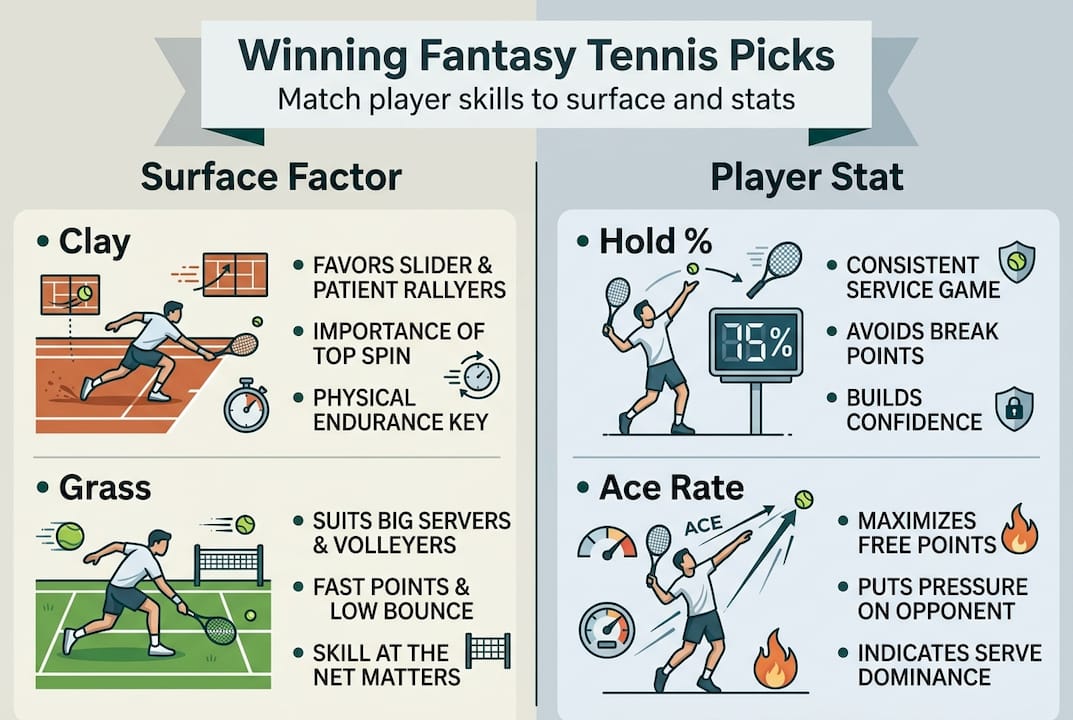
Pro Tip: Prioritize players with a hold percentage above 75% and a strong ace rate on the current surface. These players score consistently even when they do not win in straight sets, giving your lineup a reliable floor.
For optimal pick strategies that go beyond basic surface reads, tracking head-to-head records and recent break point conversion rates adds another layer of precision to your selections.
Common pitfalls and winning habits for tennis fantasy
Even experienced fantasy players make the same mistakes in tennis contests. Recognizing them early saves money and builds better instincts.
Common mistakes to avoid:
- Ignoring surface effect. Picking a player purely on ranking without checking their surface win rate is one of the most expensive errors you can make.
- Overlooking fatigue after long matches. A player who just survived a three-hour five-setter has real physical and mental wear going into the next round.
- Skipping matchup analysis. Two players can have similar rankings but wildly different head-to-head dynamics. Serve-and-volley players struggle against heavy topspin baseliners, for example.
- Locking in your roster too early. Tennis lineups need flexibility. Last-minute withdrawals and weather delays can flip the value of your picks fast.
Winning habits that separate consistent players:
- Research stat-based picks using hold percentage, ace rate, and break conversion before every contest
- Monitor tournament conditions, including court speed, weather, and scheduling
- Update your roster live when platforms allow mid-contest adjustments
- Keep notes on player trends across surfaces and tournament stages
For more structured advice, the winning lineup tips available through Tweener's blog cover specific scenarios that come up repeatedly during Grand Slams and Masters events.
"The biggest edge comes from tracking live ATP and WTA stats and adapting your choices during tournaments."
The fantasy team competition benefits go beyond money too. Players who engage deeply with live stats consistently report a sharper understanding of the sport overall, which feeds back into better picks.
Pro Tip: Build a flexible lineup with at least one backup option at each roster slot. When a player withdraws mid-tournament, you want a ready replacement rather than scrambling under pressure.
Why tennis fantasy is different: Real-time insight creates real money gains
Here is something most fantasy sports guides will not tell you: tennis rewards watching more than any other sport. Football fantasy is largely set-and-forget after Sunday morning. Baseball fantasy runs on season-long averages. Tennis fantasy changes every single day of a tournament.
A player's value can shift dramatically between rounds based on live tournament edges like fatigue from long matches or a sudden surface switch in an indoor event. The fans who actually watch the matches, track the stats in real time, and adjust their contest format strategy accordingly are the ones cashing out consistently.
Luck matters less here than people assume. The analytical skill of reading a player's body language, noticing a serve speed drop, or catching a mid-match momentum shift translates directly into smarter picks. That is a skill you build by engaging with the sport more deeply, not by guessing. Tennis fantasy does not just reward your tennis knowledge. It actively sharpens it.
Start playing: Connect with real money fantasy tennis apps
You now have the framework to play tennis fantasy with real strategy behind every pick. The next step is putting it into practice on a platform built for exactly this.
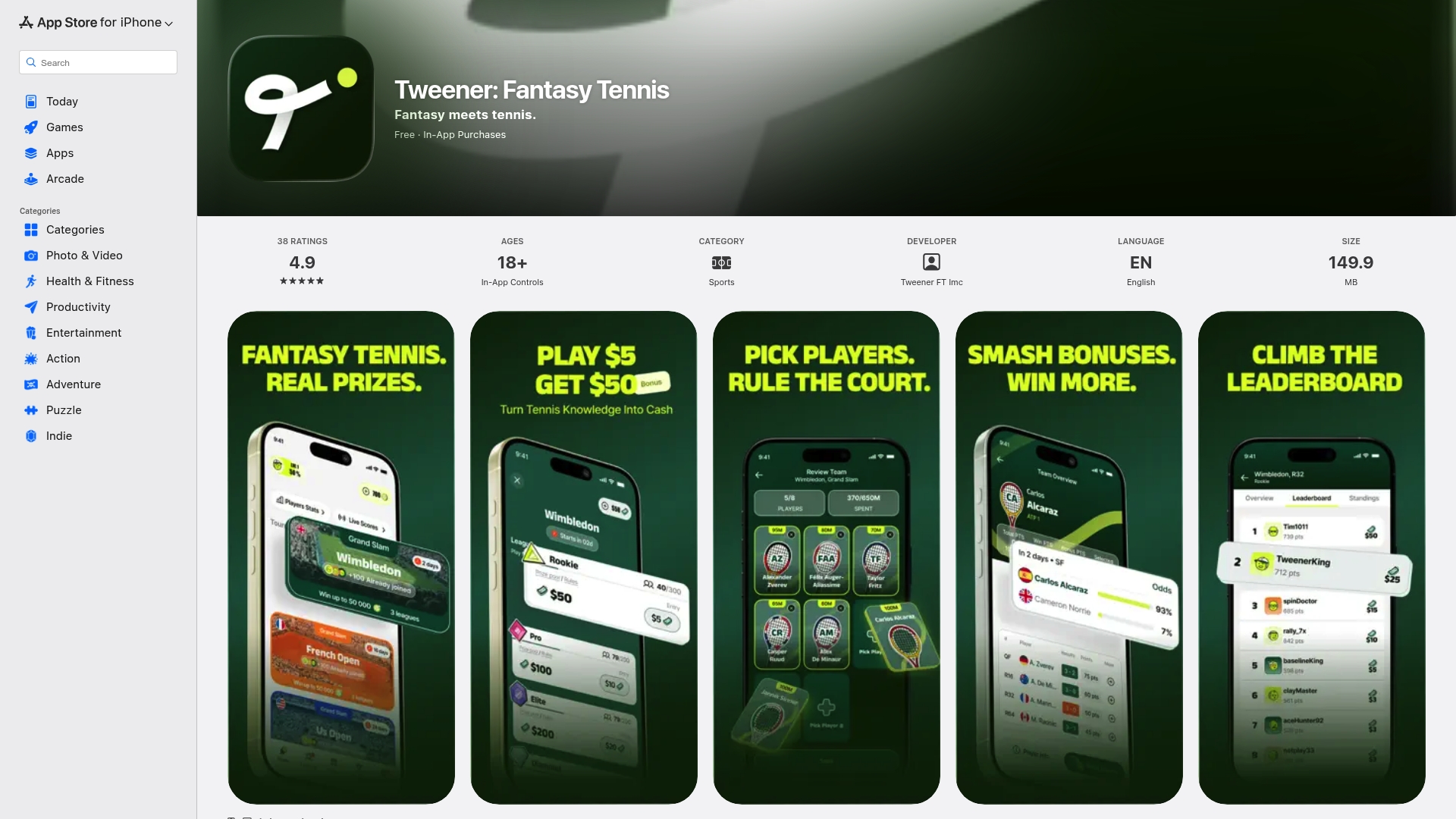
Tweener fantasy tennis is designed specifically for ATP and WTA fans who want to compete in real-time contests tied to live tournaments. Whether you start in free coin mode to build your skills or jump straight into cash contests, the app tracks everything live so you never miss a scoring moment. Download the Tweener app and join public leagues or set up a private league with friends. Your first tournament is one pick away.
Frequently asked questions
How do real-money fantasy tennis contests score points?
Players earn points for wins, aces, breaks, double faults, and games or sets won based on live ATP and WTA event outcomes. Scoring systems vary slightly by platform but follow these core categories.
Which platforms offer real-money tennis fantasy contests?
Leading options include DraftKings, Dabble, and Tweener, each with different features for tennis fans. Platform availability and contest depth vary, with Tweener offering the most dedicated tennis experience.
What stats matter most in tennis fantasy contests?
Hold percentage, ace rate, break conversion rate, and surface preference are the key stats for strategic picks. These core statistics directly predict how consistently a player will score across a tournament.
How can you gain an edge in live fantasy tennis contests?
Monitor tournament conditions for fatigue, surface switches, and player form to make smarter real-time selections. Tracking live edges like post-long-match fatigue and scheduling gaps gives you an advantage most players overlook.