

TL;DR:
- Success in fantasy tennis relies on a systematic approach focused on surface, form, and matchup analysis.
- Using digital tools for stats, news, and predictions improves decision-making and lineup optimization.
- Tracking and reviewing past picks helps identify patterns and refine strategies for consistent wins.
You were one player away from winning your fantasy tennis league. One bad pick, one overlooked injury, one surface mismatch, and the prize slipped through your fingers. It's a frustrating feeling that most fantasy tennis players know well. The difference between finishing first and finishing mid-table rarely comes down to luck. It comes down to how systematically you approach your selections. This guide walks you through every stage of the process, from understanding what actually drives fantasy points to tracking your results over time, so you can stop guessing and start winning more consistently.
Table of Contents
- Understand the basics: What impacts fantasy tennis performance?
- Set up for success: Tools and resources for optimization
- Make smarter picks: Proven strategies for choosing your lineup
- Avoid common mistakes and refine your approach
- Track results and improve: Measuring your progress
- Why disciplined experimentation beats gut feeling in fantasy tennis
- Take your fantasy tennis picks to the next level
- Frequently asked questions
Key Takeaways
| Point | Details |
|---|---|
| Track the right stats | Focus on player stats that directly impact fantasy points, like aces and recent results. |
| Use the best tools | Leverage digital platforms and alerts to stay ahead with lineup selections. |
| Apply clear strategies | Follow proven, step-by-step selection methods for consistent fantasy wins. |
| Avoid classic mistakes | Watch out for common errors like overvaluing top names or missing injury updates. |
| Review and iterate | Regularly track your results and refine your approach for long-term improvement. |
Understand the basics: What impacts fantasy tennis performance?
Before you can optimize anything, you need to understand what actually generates points in your fantasy league. Most platforms award points for wins, games won, aces, and break points converted, while deducting for double faults and early exits. That means a player who wins in straight sets and fires 15 aces is worth far more than someone who scrapes through in five sets.
But wins and losses only tell part of the story. The factors that separate good picks from great ones include:
- Surface performance: Some players are clay specialists who struggle on hard courts. Picking a clay-court grinder for a grass-court tournament is a costly mistake.
- Recent form: A player on a five-match winning streak carries momentum. One coming off a loss or a long break may be rusty.
- Head-to-head records: Certain matchups consistently favor one player, regardless of ranking.
- Tournament draw: An easier draw early in the tournament means more wins and more points.
- Fatigue and scheduling: Players who competed deep into the previous tournament may be physically drained.
Must-track stat: Break points won percentage. Players who consistently convert break points tend to win more games and generate higher fantasy scores, regardless of their overall ranking.
Knowing core stats is vital for fantasy success, and digging into the player stats guide is a smart starting point. Once you understand what to look for, you can use lineup building tips to translate that knowledge into better selections. Strong fantasy team management also means knowing when to rotate players and when to stay the course.
Monitoring trends matters just as much as reading static stats. A player's last three tournaments on a specific surface tells you more than their career average. Always look at the most recent data first.
Set up for success: Tools and resources for optimization
With an understanding of what matters, equipping yourself with the right tools is the next step. Trying to track all these variables manually is overwhelming. The right digital resources make it manageable and even enjoyable.
Here's a comparison of the types of tools available and what they offer:
| Tool type | What it does | Best for |
|---|---|---|
| Fantasy tennis apps | Live scoring, lineup management, league standings | Daily team decisions |
| ATP/WTA stat databases | Historical and current player stats | Deep research |
| Tennis news sites | Injury updates, withdrawal announcements | Last-minute changes |
| Social media accounts | Real-time player updates and practice reports | Quick intelligence |
| Prediction platforms | Match outcome probabilities | Matchup analysis |
Free tools cover the basics well. ATP and WTA official sites offer detailed match stats, head-to-head records, and surface breakdowns at no cost. Premium tools or subscriptions to analytics platforms add predictive modeling and trend alerts, which can sharpen your edge in competitive leagues.
Digital platforms streamline your selection process significantly. Spending time on predicting match outcomes before each tournament is one of the highest-value activities you can do. Pairing that with solid prediction strategies gives you a repeatable framework rather than a one-off guess.

Pro Tip: Set up Google Alerts for your top five target players before each tournament. You'll get immediate notifications about withdrawals, injury news, or practice session reports, giving you time to adjust before the deadline.
Integrating multiple sources is key. No single tool gives you everything. Use stat databases for research, news sites for injury updates, and your fantasy app for execution. Treat them as a system, not separate resources.
Make smarter picks: Proven strategies for choosing your lineup
Armed with tools, it's time to translate information into smart, winning lineup choices. Strategic selections consistently outperform random picks, and the difference usually comes down to process. Here's a step-by-step approach that works:
- Start with the draw. Before looking at individual players, review the tournament bracket. Identify which sections of the draw look weaker and which players have a realistic path to the quarterfinals or beyond.
- Shortlist by surface and form. Filter your candidate pool to players who perform well on the current surface and have shown good form in the last four to six weeks.
- Check opponent styles. A big server facing a return specialist is a tougher matchup than the rankings suggest. Look at how your target player performs against specific playing styles.
- Factor in fatigue and scheduling. Players who went deep in the previous tournament may be carrying physical or mental fatigue. This is especially relevant in back-to-back weeks on the calendar.
- Prioritize value over star power. Top-ranked players are often over-selected in public leagues. A well-researched mid-tier pick with a favorable draw can outscore a marquee name and give you a competitive edge.
- Finalize and check for injuries. Always do a last-minute scan for withdrawal news before your lineup locks.
Pro Tip: Look for players ranked between 20 and 50 who are entering their best surface of the season. These under-the-radar picks often deliver top-10 point totals at a fraction of the selection cost in salary-cap formats.
For captain selections specifically, captain picks advice can help you identify who to double-point with confidence. Review the full lineup strategies guide for a deeper breakdown of each step.
Avoid common mistakes and refine your approach
Even with the best intentions, a few common missteps can derail your fantasy campaign. Recognizing them early saves you points and frustration.
The most frequent errors fantasy tennis players make include:
- Recency bias: Picking a player because they won last week, without checking if the surface or draw conditions are similar this week.
- Ignoring surface specialists: Clay-court dominance does not translate to hard-court success. Always match the player to the tournament surface.
- Overvaluing big names: High-profile players attract attention, but they also attract high selection rates. When everyone picks the same player, the upside is limited.
- Skipping injury checks: A player nursing a minor injury may still compete but perform below their usual level, costing you points.
- Setting and forgetting: Locking in your lineup and not checking for late withdrawals or schedule changes is one of the most avoidable mistakes.
Here's a quick comparison of risk versus reward approaches:
| Approach | Risk level | Potential reward | Best used when |
|---|---|---|---|
| All-star lineup | Low risk | Moderate reward | Tight, conservative leagues |
| Value-focused picks | Medium risk | High reward | Competitive public leagues |
| Contrarian selections | High risk | Very high reward | Large-field tournaments |
Avoiding simple errors boosts your ranking more than any single brilliant pick. Review your fantasy tennis tips regularly and cross-reference with top picks for 2026 to see which players analysts are backing and why.
After each tournament, spend ten minutes reviewing what went wrong. Did a player underperform due to injury? Was the surface mismatch obvious in hindsight? Honest reflection builds better instincts over time.
Track results and improve: Measuring your progress
Consistent measurement and reflection turn experience into lasting improvement. Without tracking, you repeat the same mistakes without realizing it. With tracking, every tournament teaches you something.
Here's how to build a simple but effective review habit:
- Log your picks and scores after each tournament. A simple spreadsheet works fine. Record the player, their actual score, and whether your pre-tournament reasoning held up.
- Identify patterns in your misses. Were your worst picks consistently on one surface? Did you repeatedly overestimate a specific player type?
- Track your hit rate on value picks. If your under-the-radar selections are outperforming your star picks, that's a signal to shift your strategy.
- Compare your lineup to top finishers in your league. What did they pick that you didn't? Was it a player you considered and rejected, or one you missed entirely?
- Set a monthly review. Look at your cumulative scores across multiple tournaments to spot improvement trends, not just week-to-week swings.
Ongoing tracking and adjustments unlock top finishes. The players who consistently win leagues are not always the ones with the deepest tennis knowledge. They're the ones who review, adjust, and iterate. Staying disciplined about your fantasy sports rewards goals also keeps you motivated through the inevitable rough patches.
Tracking doesn't need to be complex. Even a basic log of picks, scores, and one-line notes on why each pick was made will reveal patterns that improve your decision-making faster than any tool alone.
Why disciplined experimentation beats gut feeling in fantasy tennis
Here's something most fantasy tennis guides won't tell you: your gut feeling is only useful after you've trained it with data. Early in a season, instinct is mostly pattern-matching based on incomplete information. It feels confident, but it's often just familiarity bias dressed up as expertise.
After tracking picks systematically for a full season, something surprising happens. You start to see that your best performances came not from bold, instinct-driven calls, but from methodical decisions backed by surface data, draw analysis, and recent form. The exciting, high-risk picks that felt right in the moment? They underperformed more often than not.
The most valuable lesson is that fantasy tennis rewards process more than prediction. You don't need to be right every time. You need a system that produces more right answers than wrong ones over a full season. That's what separates consistent top-three finishers from players who spike one week and crash the next.
Exploring player selection insights with a critical eye, testing one new approach per tournament, and measuring the result honestly will teach you more than reading a hundred previews. Treat every tournament as an experiment, not a gamble.
Take your fantasy tennis picks to the next level
You now have a clear framework for researching players, avoiding common traps, and measuring your results. The next step is putting it into practice on a platform built specifically for tennis fans who want to compete seriously.
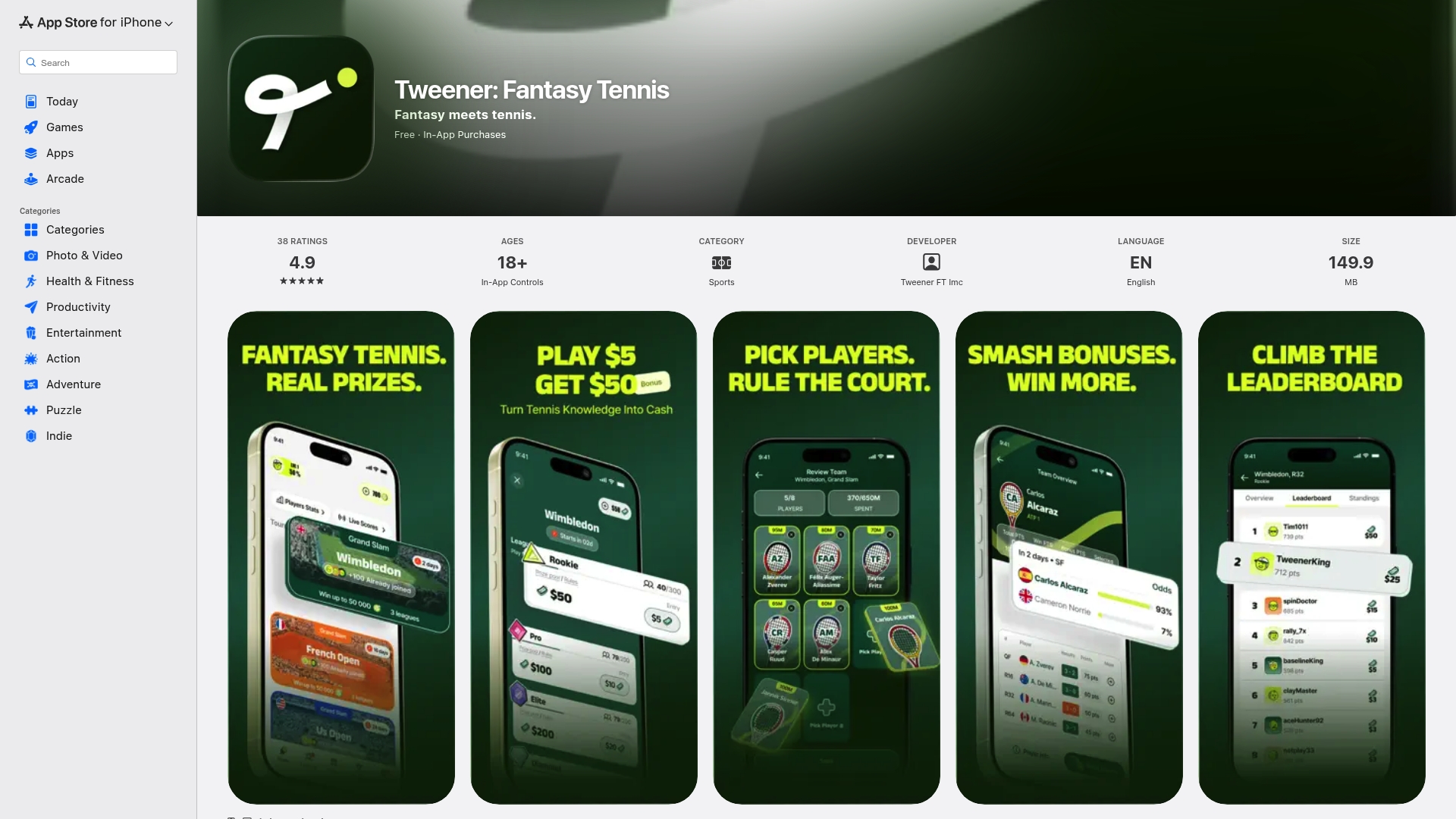
Tweener is a mobile fantasy sports app designed around real ATP and WTA tournaments, giving you a live, competitive environment to apply everything covered in this guide. Whether you prefer free leagues using virtual coins or paid contests with real-money prizes, Tweener gives you the tools and community to sharpen your picks every week. Stop watching tennis from the sidelines and start competing. Download the Tweener app today and put your strategy to the test.
Frequently asked questions
What are the most important stats to track for fantasy tennis picks?
The most important stats include aces, double faults, break points won, surface preference, and recent form. Core stats are vital for building a competitive lineup each week.
How can I find reliable information about a player's current fitness?
Check official tour news, recent match reports, and injury updates from trusted tennis news sources. Social media accounts for players and their coaches can also surface real-time fitness information before official announcements.
What are common mistakes in fantasy tennis leagues?
Common mistakes include chasing big names without research, ignoring surface specialists, and overlooking injury news. Simple errors hurt your ranking more than most players realize, and they're entirely avoidable with a consistent pre-tournament checklist.
Should I always pick the top-ranked players?
Not always. Lower-ranked players with favorable matchups, surfaces, or strong recent form often offer better value. Top ATP and WTA picks analysis regularly highlights mid-tier players who outperform their ranking in specific tournament conditions.
How often should I update my fantasy tennis lineup?
Update your lineup before each tournament starts and regularly monitor for injuries and withdrawals. Last-minute changes, especially in the 24 hours before play begins, can significantly affect your scoring potential.