

Most tennis fans watch matches for the thrill of the rally, but overlook the player statistics that reveal why certain players dominate and others struggle. Understanding core tennis stats like serve percentages, break point conversion, and return game efficiency transforms how you watch matches and, more importantly, how you build winning fantasy tennis teams. This guide breaks down the essential player statistics tracked by ATP and WTA tours, explains what they mean for match outcomes, and shows you exactly how to apply this knowledge to elevate your fantasy team strategy and live competition decisions.
Table of Contents
- Key Takeaways
- Understanding core tennis player statistics
- How tennis rankings reflect player performance
- Advanced insights: context and nuance in tennis stats
- Using tennis player stats to boost your fantasy team strategy
- Enhance your fantasy tennis experience with Tweener
- FAQ
Key Takeaways
| Point | Details |
|---|---|
| Core stat categories | Core stats break down into serve, return, and overall performance that drive match outcomes and fantasy potential. |
| 52 week ranking basis | Rankings are calculated on a rolling 52 week window using a player's best results across events, with Grand Slams carrying the most weight. |
| Surface and context matter | Interpret statistics with awareness of surface type and opponent quality to avoid misreading a player's true edge. |
| Recent data and pressure moments | Fantasy decisions should weigh recent results and key pressure moments, and avoid overreacting to short term losses when core stats stay strong. |
Understanding core tennis player statistics
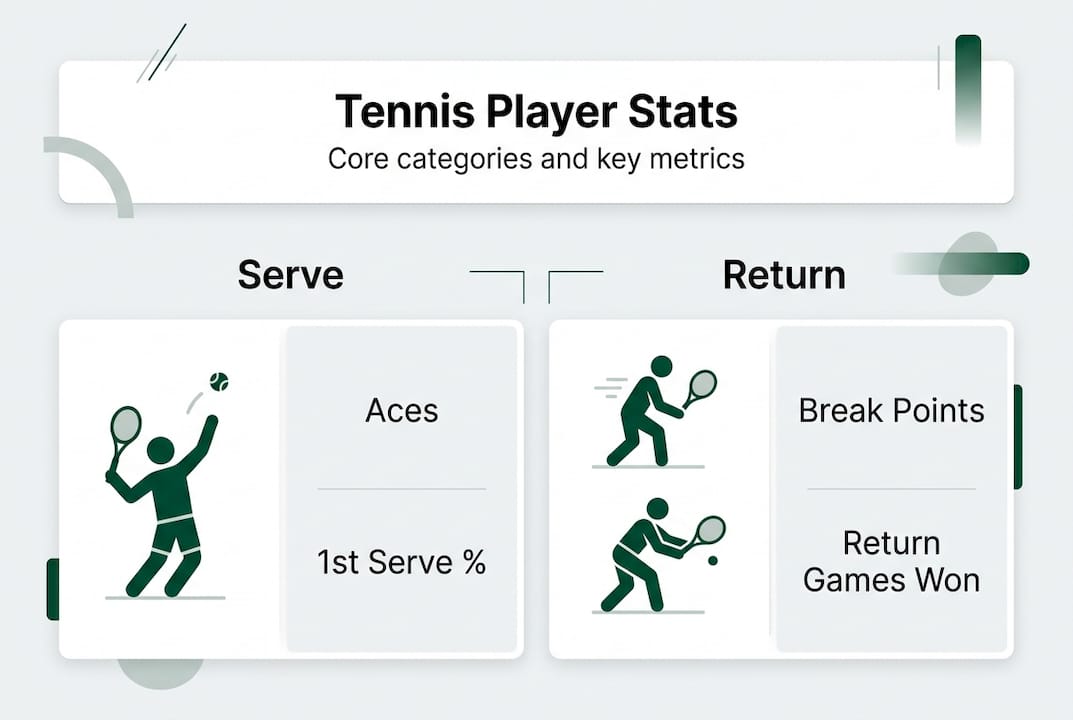
Tennis player statistics fall into three fundamental categories that together paint a complete picture of performance. Serve metrics include aces (unreturnable serves), double faults (two consecutive serve errors), first serve percentage (how often the first serve lands in), points won on first and second serves, service games won percentage, and break points saved. Return metrics track return points won percentage, return games won, and break points converted. Overall statistics combine these elements into total points won percentage and win-loss records across tournaments.
These numbers reveal critical insights about player strengths and vulnerabilities. Core tennis player stats tracked by ATP and WTA show dramatic differences between elite and average players. Novak Djokovic maintains a career service games won rate of 86% and wins 74% of first serve points, while Frances Tiafoe posts 81% and 73% respectively. Tour average break point conversion hovers around 40%, making players who exceed this mark particularly dangerous in tight matches. A player winning 55% of total points typically dominates matches, while someone at 48% struggles to close out wins.
The relationship between these stats determines match outcomes more reliably than rankings alone. A player with strong first serve percentage but weak second serve points won faces vulnerability when pressured. Similarly, excellent return stats combined with poor service game defense creates inconsistent results. Tennis statistics reveal that serve and return efficiency directly correlate with winning percentages, making them essential for predicting match results and fantasy point potential.
Stat category breakdown:
| Category | Key Metrics | What It Reveals |
|---|---|---|
| Serve | Aces, 1st serve %, service games won % | Ability to hold serve and pressure opponents |
| Return | Return points won %, break points converted | Capacity to break opponent's serve |
| Pressure | Break points saved/converted | Performance in critical match moments |
| Overall | Total points won %, win-loss record | General match dominance and consistency |
Pro Tip: Compare a player's service games won percentage with their return games won rate. Players strong in both categories consistently reach later tournament rounds and deliver higher fantasy point totals. When these metrics diverge significantly, expect volatile performance that depends heavily on matchup and surface.
Understanding tennis analytics requires looking beyond surface-level numbers to the patterns they create. A player averaging 12 aces per match on grass might drop to 4 on clay, fundamentally changing their strategic approach and fantasy value. Similarly, break point conversion rates fluctuate based on opponent serve quality, making head-to-head historical data valuable for predicting specific matchup outcomes.
How tennis rankings reflect player performance
Tennis rankings operate on a rolling 52-week system that rewards consistency across multiple tournament types. Rankings are based on points from best 18-19 results for ATP players or 16 for WTA players over the past year, with mandatory events carrying the most weight. This system prioritizes performance at the sport's biggest stages while allowing flexibility for players to optimize their schedules around strengths.
Point priority hierarchy:
- Four Grand Slam tournaments (Australian Open, French Open, Wimbledon, US Open)
- Eight ATP Masters 1000 or nine WTA 1000 mandatory events
- ATP Finals or WTA Finals for qualified players
- Best results from ATP 500/250 or WTA 500/250 optional events
- Additional tournaments to reach minimum result requirements
This structure means a player's ranking reflects their ability to perform across different surfaces and competition levels throughout the year. A player ranked 15th has accumulated points from strong showings at multiple tournament tiers, demonstrating versatility that pure win-loss records might miss. However, rankings lag behind current form because they include results from up to 12 months prior, creating opportunities for savvy fantasy players who recognize improving or declining trajectories before rankings adjust.

The connection between rankings and statistics reveals important nuances for tournament prediction strategies. A top-10 player entering a clay court event with weak clay-specific stats over the past 52 weeks presents higher risk than their ranking suggests. Conversely, a player ranked 40th with exceptional recent form and surface-appropriate statistics might offer better fantasy value than their position indicates. Rankings provide context for expected competition level but should never override concrete performance data.
Pro Tip: Check when a player's ranking points expire. A highly ranked player defending significant points from a previous year's tournament faces pressure that might affect performance, while a lower-ranked player with few points to defend plays with freedom. This psychological edge often translates to statistical outperformance in fantasy scoring.
Understanding tennis scoring alongside rankings helps you recognize when rank disparities matter. A player ranked 25th facing a rank 50 opponent on their preferred surface with strong head-to-head stats presents a safer fantasy pick than the rankings alone suggest. Conversely, rankings separated by just 10 spots on a surface where the lower-ranked player excels create near-even matchups with upset potential.
Advanced insights: context and nuance in tennis stats
Raw statistics without context create dangerous assumptions that undermine fantasy strategy. Surface type dramatically alters player performance, with some specialists thriving on clay while struggling on grass despite similar overall rankings. Small sample sizes from limited recent matches produce unreliable statistical snapshots that don't reflect true ability. Momentum shifts within matches and tournaments affect subsequent performance in ways season-long averages can't capture.
Tennis analytics nuances include factors like altitude effects at tournaments in Mexico City or Madrid, where thinner air accelerates ball speed and favors big servers. Head-to-head matchup history reveals psychological edges or tactical advantages that transcend current form. A player might post excellent overall stats but consistently lose to a specific opponent whose game style exploits their weaknesses. These edge cases require deeper analysis beyond comparing raw numbers.
Surface impact comparison:
| Surface | Typical Ace Rate | First Serve % | Rally Length | Favors |
|---|---|---|---|---|
| Grass | High (10-15/match) | 65-70% | Short (0-4 shots) | Big servers |
| Clay | Low (3-6/match) | 60-65% | Long (5+ shots) | Baseline grinders |
| Hard | Medium (6-10/match) | 62-68% | Medium (3-5 shots) | All-around players |
Critical contextual factors:
- Momentum detection through cumulative sum analysis shows when players are trending up or down within tournaments
- Altitude adjustments require recalibrating serve expectations at high-elevation events
- Recent injury recovery periods often show depressed stats before players return to baseline performance
- Tournament importance affects effort levels, with players sometimes conserving energy in lower-tier events
- Weather conditions like wind or extreme heat disproportionately impact certain playing styles
"Statistics tell you what happened, but context tells you why it happened and what will happen next. The best tennis analysts combine raw numbers with surface tendencies, recent form trajectories, and matchup-specific factors to build accurate performance models. Ignoring any of these layers leaves significant edge on the table."
Momentum shifts represent one of the most underutilized statistical insights for live tennis predictions. A player might lose the first set but show improving first serve percentage and break point conversion as the match progresses, signaling an imminent turnaround that raw score doesn't capture. Advanced statistical tracking reveals these patterns through sequential analysis that highlights when performance metrics diverge from earlier match segments.
Fantasy team management requires synthesizing these contextual layers into actionable decisions. A player with declining serve stats over their last five matches presents risk even if their season-long averages remain strong. Similarly, a player showing improved break point conversion specifically on hard courts entering a hard court tournament offers value that surface-agnostic statistics miss. The most successful fantasy players filter every stat through multiple contextual lenses before making team selections.
Using tennis player stats to boost your fantasy team strategy
Applying tennis statistics to fantasy team building transforms guesswork into systematic strategy. The key lies in filtering data appropriately and focusing on metrics that directly correlate with fantasy point scoring systems. Most fantasy tennis platforms reward consistent performance across multiple statistical categories, making well-rounded players more valuable than one-dimensional specialists.
Strategic stat filtering process:
- Isolate statistics from the last 52 weeks to ensure relevance and recency
- Filter further by surface type matching the upcoming tournament conditions
- Examine pressure moment performance through break points saved and converted percentages
- Compare service games won and return games won to assess overall game balance
- Cross-reference head-to-head records against likely opponents in the draw
- Weight recent tournament results more heavily than older data within the 52-week window
Service hold percentage combined with break percentage creates a composite metric that predicts match dominance better than either stat alone. A player holding serve 85% of the time while breaking opponents 35% of the time will consistently win matches and accumulate fantasy points. When these numbers diverge significantly, with strong hold but weak break stats or vice versa, expect closer matches with more variable fantasy outcomes. The most reliable fantasy picks maintain balance across both categories.
Pro Tip: Break point conversion under 30% signals a player who creates opportunities but fails to capitalize in pressure moments. These players often lose tight matches despite strong overall stats, making them risky fantasy selections in competitive draws. Conversely, players exceeding 45% break point conversion consistently deliver in crucial games, providing fantasy point stability even in difficult matchups.
Common fantasy stat interpretation pitfalls:
- Overreacting to a single tournament loss without checking if underlying serve and return metrics remained stable
- Ignoring surface-specific stat variations when selecting players for clay, grass, or hard court events
- Focusing exclusively on aces and winners while neglecting unforced error rates that determine point efficiency
- Selecting players based on ranking alone without verifying recent form through last 10-match statistics
- Overlooking scheduling factors like back-to-back matches that affect physical freshness and statistical output
The strategic use of tennis stats for fantasy competitions requires understanding how different tournament formats affect player performance. Best-of-three versus best-of-five set matches change stamina requirements and statistical sustainability. Players with excellent first-set stats but declining performance in later sets present risk in Grand Slam formats but offer value in shorter tournaments. Filtering stats by match length provides this critical insight.
Top fantasy tennis picks emerge from combining statistical analysis with tournament draw positioning. A player with strong stats facing a favorable early-round draw accumulates points before potentially facing tougher competition. This strategic advantage multiplies when using smart captain picks that double point totals for your highest-scoring player. Selecting captains based on statistical consistency rather than upside potential reduces variance and improves overall fantasy team performance.
Understanding gameweek scoring helps prioritize which statistics matter most for your fantasy platform's specific point allocation system. Platforms rewarding aces heavily make big servers more valuable, while systems emphasizing match wins favor consistent players with strong hold and break percentages. Align your statistical analysis with your platform's scoring rules to maximize point optimization.
Enhance your fantasy tennis experience with Tweener
Now that you understand how tennis player statistics drive match outcomes and fantasy success, you need tools that put this knowledge into action. Tweener provides real-time player stats, tournament tracking, and fantasy league management specifically designed for tennis fans who want to compete based on actual ATP and WTA match results.
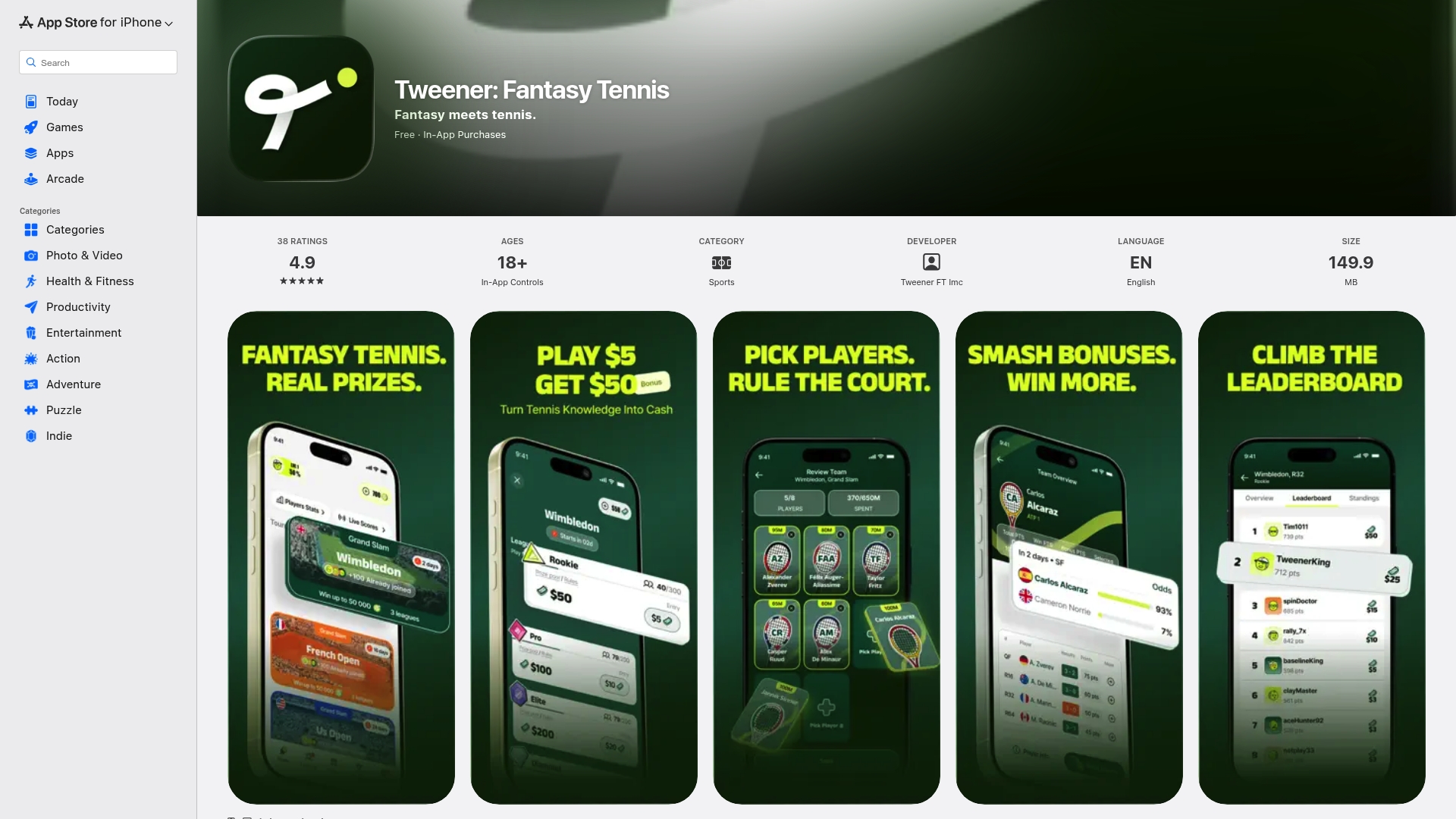
The Tweener platform lets you build fantasy teams using the statistical insights covered in this guide, then compete in leagues where your players earn points based on their real match performance. Whether you prefer free coin-based competitions or cash contests, Tweener's interface helps you filter players by recent form, surface performance, and head-to-head records. Understanding Tweener game rules allows you to optimize team selection around the platform's specific scoring system, turning statistical knowledge into competitive advantage. Join thousands of tennis fans who've elevated their viewing experience by putting their analytical skills to the test in live fantasy competitions.
FAQ
What are the most important tennis player stats to track?
Serve statistics like aces, first serve percentage, and break points saved reveal a player's ability to hold service games under pressure. Return metrics including break points converted and return points won show capacity to break opponent serves. Total points won percentage combines both elements into overall match dominance, making it the single best predictor of consistent performance.
How do tennis player rankings impact fantasy team choices?
Rankings aggregate tournament results over 52 weeks from Grand Slams, Masters events, and other competitions, providing a baseline for player quality. However, rankings lag behind current form and don't account for surface-specific performance variations. Combine ranking position with recent statistics filtered by surface type to make informed fantasy selections that account for both reputation and actual current ability.
Why do surface and match context matter when reading tennis stats?
Players perform dramatically differently on clay, grass, and hard courts due to varying ball speed, bounce height, and rally length characteristics. A player's grass court ace rate might triple their clay court rate, fundamentally changing their strategic approach and fantasy value. Small sample sizes from limited recent matches produce unreliable snapshots, while head-to-head history reveals matchup-specific advantages that overall stats miss.
How can I use tennis stats to improve my live fantasy tennis picks?
Filter all statistics by the last 52 weeks and specific surface matching the tournament conditions you're analyzing. Focus on pressure moment performance through break points saved and converted percentages, which reveal who performs when matches tighten. Stable core metrics like service games won and return games won matter more than single tournament results, helping you avoid knee-jerk reactions to temporary form dips while maintaining focus on underlying performance quality.