

Building a fantasy tennis lineup that consistently wins requires more than just picking your favorite players or chasing last week's highlights. You need a strategic framework that balances floor and ceiling, accounts for surface nuances, and adapts to different contest formats. Most fantasy players struggle because they overlook critical details like hold rates, scoring systems, and late-breaking news. This guide breaks down the exact process successful fantasy tennis managers use to construct optimized lineups, avoid common traps, and maximize their edge in both cash games and tournaments.
Table of Contents
- Key Takeaways
- Understanding the core mechanics of building winning tennis lineups
- Preparation steps: research, scoring systems, and surface specialization
- Step-by-step execution: constructing your lineup and managing risks
- Boost your fantasy tennis success with Tweener
- Frequently asked questions
Key Takeaways
| Point | Details |
|---|---|
| High floor anchors | Start with reliable players who regularly score and have hold rates above 80% for consistency. |
| Ceiling attackers | Add aggressive players with big upside when matchups and conditions favor them. |
| Game stacks | Target matches likely to go long to maximize points from extended rallies and sets. |
| Volatile underdogs | Include a few low owned upset risks to differentiate in large field contests without overloading your roster. |
| Scoring awareness | Understand each platform scoring and surface effects to tailor attributes that matter most. |
Understanding the core mechanics of building winning tennis lineups
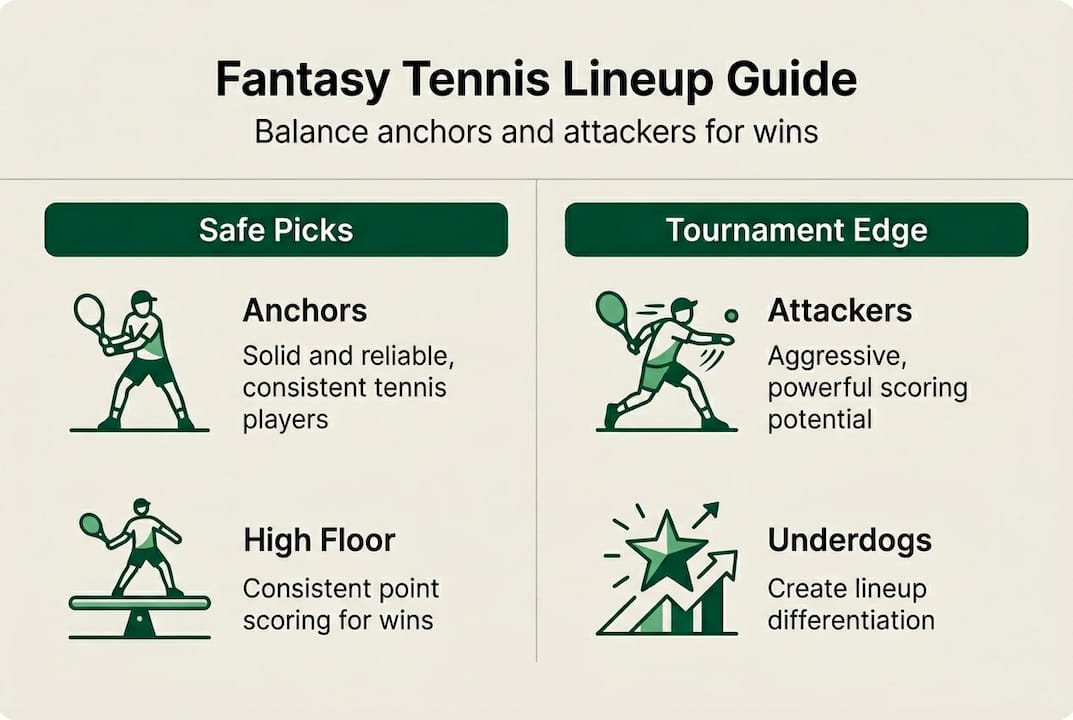
Core mechanics for building fantasy tennis lineups involve starting with high-floor anchors, adding ceiling attackers, game-stack targets, and volatile underdogs. Each player type serves a distinct purpose in your lineup construction. Anchors are elite players with hold rates above 80% who provide consistent scoring regardless of opponent strength. These are your Alcaraz, Sinner, and Swiatek picks who rarely disappoint but also rarely provide massive upside.
Ceiling attackers bring explosive potential through aggressive playstyles and favorable matchups. These players might have lower consistency but can deliver tournament-winning performances when conditions align. Think of aggressive baseliners facing opponents who struggle with pace, or big servers on fast surfaces where they can dominate service games and create break opportunities.
Game stacks target matches likely to go long, producing elevated fantasy points through extended play. When two defensive grinders meet on clay, the resulting three-set battle generates more fantasy value than a quick straight-set victory. Understanding fantasy team management in tennis helps you identify these opportunities systematically.
Volatile underdogs function as tournament differentiators. These low-owned players can vault your lineup to the top of large-field contests when they pull off upsets. The key is using them strategically rather than filling your roster with longshots.
Pro Tip: Cash games demand 70-80% anchors for safety, while tournaments need 40-50% ceiling attackers to separate from the field. Adjust your player mix based on contest format before anything else.
Preparation steps: research, scoring systems, and surface specialization
Successful lineup construction starts long before you lock in players.
rewards match and set wins while penalizing set and game losses with detailed point values. Different platforms use varying formulas, so understanding your specific scoring system determines which player attributes matter most. Some platforms heavily reward aces and break points won, making aggressive players more valuable than consistent grinders.Your research checklist should include:
- Current form over the last 10-15 matches, not just recent tournament results
- Injury reports and practice session updates from reliable sources
- Head-to-head history against upcoming opponents
- Travel schedules and potential fatigue from back-to-back tournaments
- Weather conditions affecting ball speed and bounce height
- Recent coaching changes or equipment adjustments
Surface specialization is critical: big servers excel on grass while baseline grinders dominate clay. This fundamental principle should guide every lineup decision you make.

| Surface type | Ball speed | Bounce height | Favored playstyle | Key stat to monitor |
|---|---|---|---|---|
| Grass | Fast | Low | Big servers, net rushers | Ace rate, hold % |
| Clay | Slow | High | Baseline grinders, retrievers | Rally length, break % |
| Hardcourt | Medium | Medium | All-around players | First serve %, return games won |
Understanding tennis scoring mechanics helps you project how different matchups will unfold. A player who consistently wins tight sets 7-5 generates more fantasy points than one who cruises 6-2 because of the additional games played.
Pro Tip: Set alerts for lineup changes, withdrawals, and weather delays 30 minutes before lock. Late information gives you an edge most casual players miss entirely.
Step-by-step execution: constructing your lineup and managing risks
Now you're ready to build. Lineup building starts with late news checks, salary balancing, high-upside attackers, long-match stacks, and reliable anchors. Follow this sequence every time:
- Lock in your primary anchor at the top salary tier
- Identify one ceiling attacker with favorable matchup metrics
- Find a game stack where both players have grinding tendencies
- Fill remaining spots balancing salary and contest format needs
- Reserve 10-15% of salary for a volatile underdog in tournaments
- Review for surface mismatches or overlooked injury concerns
Salary cap management requires understanding opportunity cost. Spending up for two elite anchors might force you into risky value plays elsewhere. Conversely, too many mid-tier players creates a boring lineup without differentiation. The optimal approach varies by contest size and payout structure.
| Lineup strategy | Cash games | GPP tournaments |
|---|---|---|
| Anchor allocation | 2-3 elite players | 1-2 elite players |
| Ceiling attackers | 0-1 | 2-3 |
| Value/underdog plays | Minimal, only for salary | 1-2 for differentiation |
| Ownership concern | Low priority | Critical factor |
| Correlation strategy | Avoid stacks | Embrace game stacks |
Common mistakes that destroy lineups:
- Chasing last tournament's surprise winner without context
- Ignoring surface history when a player switches from clay to grass
- Overloading on volatile players hoping for multiple upsets
- Failing to differentiate cash game and tournament strategies
- Neglecting the scoring system's specific point values
- Building lineups days early without checking final injury reports
Study fantasy tennis picks for 2026 to see how experts balance these factors in real tournament situations. Notice how winning lineups rarely feature all chalk or all contrarian plays.
Pro Tip: In large-field tournaments, include one 2-5% owned player who has legitimate upset potential based on surface fit and recent form. This single decision can be the difference between cashing and winning the whole contest.
Your lineup should tell a coherent story. If you're stacking a clay court match, make sure both players actually perform well on clay. If you're fading a popular chalk play, have a legitimate reason beyond wanting to be different. Smart captain picks in multiplier formats require even more precision since mistakes get amplified.
Risk management means understanding your exposure across multiple lineups in tournament play. If you're building 20 entries, you need correlation strategies that give you paths to victory under different scenarios. Maybe 30% of lineups assume the top seed dominates, 40% assume a mid-tier upset, and 30% assume chaos. This diversification protects you from complete failure while maintaining upside.
The master cash mode guide emphasizes consistency over ceiling, but even cash games require some calculated risk. You can't win every week by playing it completely safe because variance exists in tennis. The goal is minimizing unnecessary risk while taking smart chances where the odds justify the exposure.
Boost your fantasy tennis success with Tweener
You've learned the framework, now it's time to put these strategies into action with tools built specifically for fantasy tennis success. Tweener's fantasy tennis platform gives you access to real-time analytics, scoring breakdowns, and expert insights that transform lineup building from guesswork into systematic optimization. The platform integrates surface data, player form metrics, and head-to-head histories so you can make informed decisions quickly.
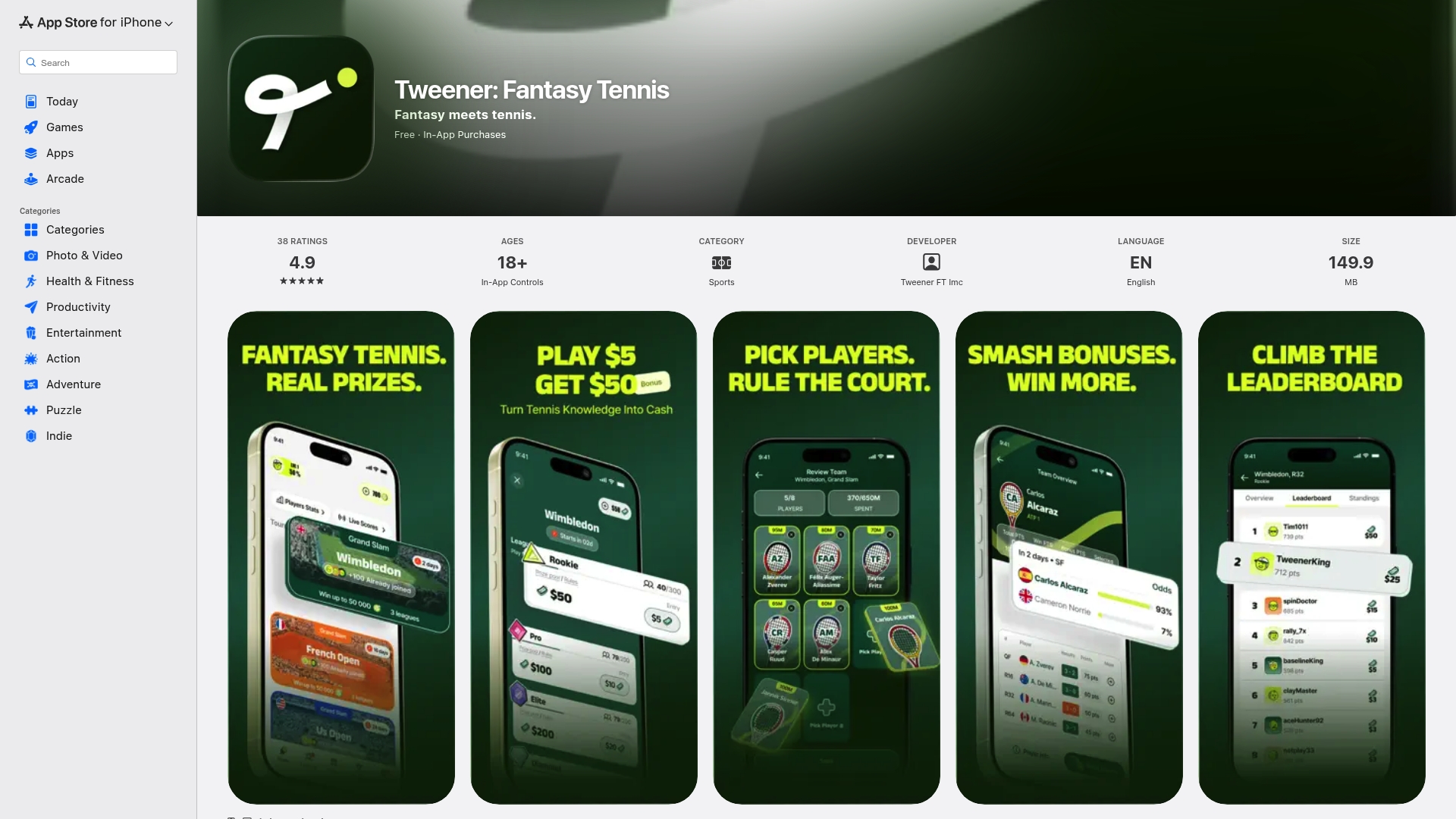
Whether you're competing in free coin leagues or cash mode contests, Tweener's interface streamlines the research process we've outlined. Check Tweener's game rules to understand exactly how scoring works on the platform, then apply the anchor-attacker-stack framework to build lineups that consistently outperform the field. The combination of expert strategy and purpose-built tools gives you the edge needed to turn tennis knowledge into fantasy success.
Frequently asked questions
What is the best way to choose anchors in fantasy tennis lineups?
Anchors are chosen based on hold rates above 80% and current form across recent tournaments. Look for elite players facing opponents they've historically dominated, especially when surface conditions favor their playstyle. The best anchors combine high floors with reasonable ceilings, meaning they rarely bust but can still deliver big scores in favorable matchups. Check recent service game statistics and break point conversion rates to identify players in peak form. Understanding fantasy team management in tennis helps you systematically evaluate anchor candidates rather than relying on rankings alone.
How does surface type affect player selection in fantasy tennis?
Surface specialization impacts player effectiveness dramatically, with big servers thriving on grass while baseline grinders dominate clay. Grass courts reward aggressive serving and net play because the low bounce makes returns difficult. Clay slows the ball and creates high bounces, favoring patient players who can construct points and outlast opponents in long rallies. Hardcourts split the difference, rewarding versatile players with balanced skill sets. Always check a player's surface-specific statistics over the past year rather than overall career numbers. Review fantasy tennis picks for 2026 to see how surface transitions affect lineup construction in real tournaments.
What are some common mistakes to avoid when building fantasy tennis lineups?
Common mistakes include ignoring surface conditions, chasing highlight performances without context, and failing to adjust for scoring system nuances. Many players build lineups days before tournaments without checking final injury reports or practice session news. Overloading on volatile players hoping for multiple upsets creates unnecessary risk, especially in cash games where consistency matters most. Another critical error is using identical strategies for cash games and large-field tournaments when these formats require opposite approaches. The cash mode strategy guide explains how to optimize for steady returns rather than tournament-winning upside.
How should I balance salary when building fantasy tennis lineups?
Salary balance requires understanding opportunity cost and contest format. In cash games, pay up for two elite anchors even if it means using value plays elsewhere because consistency matters most. Tournaments allow more creativity since you need differentiation from the field. Leave 10-15% of your salary cap available for late-breaking value plays that emerge from withdrawals or favorable draw changes. Avoid the trap of filling every salary slot perfectly, as this often forces you into suboptimal players just to spend every dollar. Sometimes the best lineup leaves a small amount unused because the available options at that price point don't fit your strategy.
When should I use game stacks in fantasy tennis lineups?
Game stacks work best when two defensive players meet on slow surfaces, creating conditions for extended matches with elevated point totals. Look for matchups between baseline grinders on clay courts or players with similar playing styles who historically produce long battles. Avoid stacking matches featuring dominant servers on grass because these tend to finish quickly with fewer total games played. Game stacks provide correlation that helps tournament lineups, but use them sparingly in cash games where the added volatility can hurt consistency. The key is identifying matchups where both players have legitimate paths to fantasy production regardless of who wins the match.