

Choosing the right players for your fantasy tennis team can feel overwhelming when you face hundreds of ATP and WTA athletes across multiple surfaces and tournaments. Many fans struggle to move beyond gut instinct and name recognition, missing opportunities to leverage data that reveals true value. This guide walks you through proven, stats-driven strategies to select players who consistently earn fantasy points, helping you compete confidently in leagues throughout 2026 and maximize your chances of winning real rewards.
Table of Contents
- Understanding key stats and data sources for player selection
- Adjusting strategy: ATP vs WTA and scouting player form
- Step-by-step guide to selecting your fantasy tennis players
- Troubleshooting common pitfalls and verifying your player picks
- Enhance your fantasy tennis picks with Tweener
- Frequently asked questions
Key takeaways
| Point | Details |
|---|---|
| Prioritize serve and break stats | Service hold percentage and break point conversion directly impact fantasy scoring potential |
| Understand ATP vs WTA differences | ATP is serve-dominant with fewer breaks; WTA is more volatile with higher break rates |
| Balance chalk and value plays | Combine reliable favorites with underpriced players to optimize your lineup upside |
| Analyze recent surface form | Last 5-10 matches on the current surface reveal momentum better than career averages |
| Use trusted analytics platforms | Sites like Tennis Abstract and TennisRatings provide accurate, updated player metrics |
Understanding key stats and data sources for player selection
Successful fantasy tennis selection starts with understanding which statistics actually predict fantasy points. Core metrics for player evaluation include service hold and break percentages, surface-adjusted ratings that reveal consistency beyond flashy names. Service hold percentage shows how often a player protects their serve, while break percentage indicates their ability to convert return opportunities into games won. First serve win percentage and second serve win percentage matter because longer service games drain energy and reduce overall match performance.
Aces per match, break points converted, break points saved, and return games won translate directly into fantasy scoring across most platforms. A player who converts 45% of break points and saves 70% of those faced will accumulate points faster than someone with weaker percentages, even if their ranking appears similar. These granular metrics separate consistent performers from volatile ones, helping you avoid players who win through luck rather than repeatable skill.
Reliable data sources make the difference between guessing and strategic selection. Tennis Abstract provides detailed serve and return statistics filtered by surface, while TennisRatings offers Elo-based rankings that adjust for opponent quality and recent form. Both platforms update regularly during tournaments, giving you access to the latest performance trends. Cross-referencing multiple sources ensures you catch discrepancies and validate your research before finalizing lineups.
Pro Tip: Always verify a player's surface-specific rating within 48 hours of match start, as recent results can shift rankings significantly and reveal emerging form or fatigue.
Here's how key statistics correlate with fantasy scoring impact:
| Statistic | Fantasy Impact | Why It Matters |
|---|---|---|
| Service Hold % | High | More holds mean longer matches and more point opportunities |
| Break Point Conversion | Very High | Breaks earn bonus points and shift match momentum |
| Aces Per Match | Medium | Direct point bonuses but less predictive of overall success |
| Return Games Won | High | Indicates aggressive play style that generates scoring chances |
| Second Serve Win % | Medium | Reveals mental toughness and ability to recover under pressure |
When evaluating players, focus on these essential stats:
- Service hold percentage above 75% on the tournament surface
- Break point conversion rate of 40% or higher
- Return games won per set averaging 1.5 or more
- Aces per match relative to opponent return strength
- Break points saved percentage exceeding 65%
These metrics create a foundation for comparing players objectively rather than relying on reputation or recent headlines. Why follow tennis analytics improve game 2026 explores how data transforms your understanding of player value and match dynamics. By mastering these statistics and knowing where to find accurate data, you build a systematic approach that consistently identifies players primed for fantasy success.
Adjusting strategy: ATP vs WTA and scouting player form
ATP and WTA tours play fundamentally different styles of tennis, and these differences reshape your fantasy strategy. ATP matches have about 1.7 breaks per set, while WTA has 3.2, and comebacks happen in 41% WTA vs 29% ATP matches, creating distinct risk profiles for your selections. ATP tennis rewards serve-dominant players who hold consistently, making top servers safer picks with predictable point floors. WTA tennis features more breaks and momentum swings, offering higher upside but greater volatility in fantasy scoring.
These tour differences affect how you balance your roster. In ATP contests, prioritize players with elite serve statistics and strong records on fast surfaces where breaks happen less frequently. In WTA contests, target aggressive returners who create break opportunities and players with proven mental resilience to weather momentum shifts. The higher break rate in WTA means return specialists often outscore pure servers, flipping the value hierarchy you use for ATP selections.

Recent form matters more than career statistics when selecting players for upcoming matches. A player's last 5 to 10 matches on the current surface reveal momentum, confidence, and physical condition that season-long averages obscure. Someone riding a three-match winning streak on clay brings different energy than a player returning from injury, even if their career clay records look similar. Surface-specific performance data filters out irrelevant results and highlights players adapting well to current conditions.
Key distinctions between ATP and WTA for fantasy strategy:
- ATP serves hold more often, reducing break-based scoring opportunities
- WTA matches feature more breaks, increasing variance and comeback potential
- ATP favorites are safer chalk plays with higher ownership floors
- WTA underdogs offer better value due to upset frequency
- ATP requires prioritizing serve stats; WTA rewards return aggression
Pro Tip: Weight the last five matches at 60% and career surface stats at 40% when evaluating WTA players, as recent form predicts volatility better than long-term averages.
Surface-specific analysis separates informed selections from casual guesses. A player dominant on hard courts may struggle on clay if their game relies on pace rather than spin and movement. Check how a player performed in their most recent tournament on the current surface, not just their overall record. Tournament prediction strategies tennis 2026 details how surface transitions affect player performance and fantasy value throughout the season.
Understanding these tour differences and form patterns helps you adjust risk tolerance based on contest type. In large-field tournaments where differentiation matters, WTA volatility creates opportunities to roster contrarian picks who can vault you up leaderboards. In head-to-head matchups where consistency wins, ATP chalk plays provide reliable scoring. Matching your player selection to tour style and recent form gives you an edge over opponents who ignore these dynamics.
Step-by-step guide to selecting your fantasy tennis players
Building a winning fantasy tennis lineup requires a systematic approach that combines research, risk assessment, and tactical adjustments. Follow this sequence to make selections that maximize your scoring potential while managing exposure to variance. Start by gathering current statistics from trusted sources, then layer in tour-specific considerations and recent form before finalizing your roster.
Begin with comprehensive data collection. Pull serve and return statistics for all available players, filtering by the tournament surface and level. Compare these numbers to the field average to identify players performing above or below expectations. Next, evaluate whether you're selecting for ATP or WTA and adjust your stat priorities accordingly, emphasizing serve metrics for ATP and return aggression for WTA.
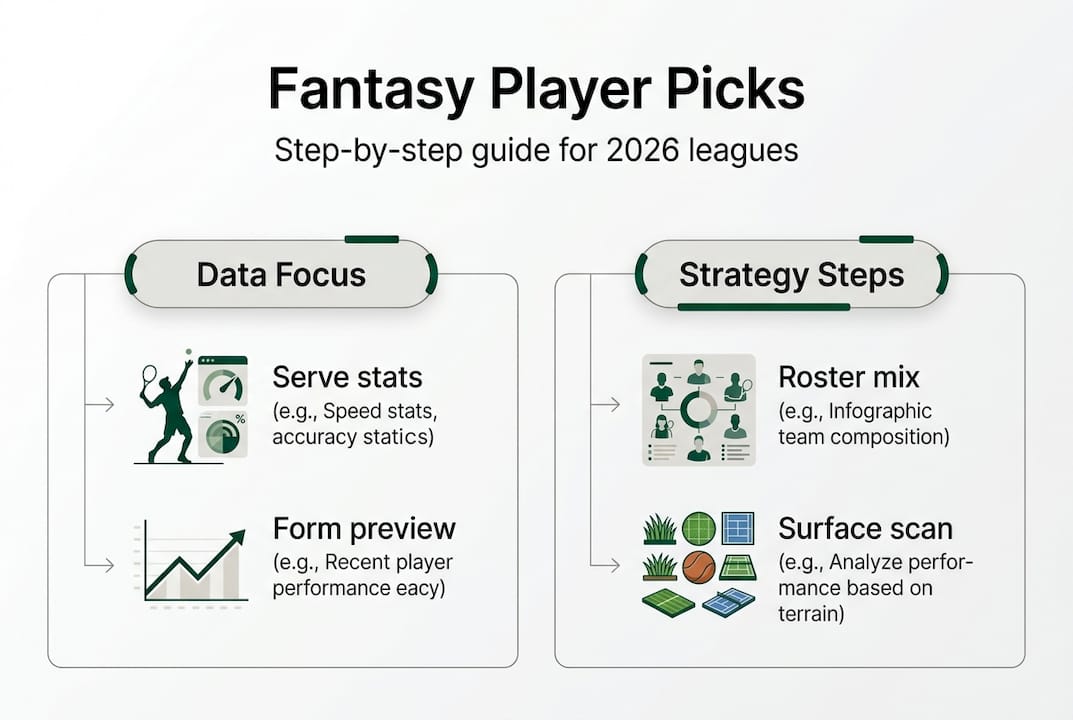
Once you understand the statistical landscape, assess recent form by reviewing match results from the past two weeks. Look beyond win-loss records to examine set scores, break point stats, and opponent quality. Balancing chalk (high-owned favorites) and value plays while monitoring late withdrawals improves fantasy success, so identify which top players justify their ownership and which mid-tier athletes offer scoring upside at lower roster percentages.
Here's a structured comparison of chalk versus value plays:
| Approach | Pros | Cons | Best Use Case |
|---|---|---|---|
| Chalk Favorites | Consistent scoring floor, lower bust risk | High ownership limits upside, expensive salary | Head-to-head contests, cash games |
| Value Plays | Low ownership creates differentiation, salary savings | Higher variance, injury/form risk | Large-field tournaments, GPPs |
| Balanced Mix | Combines safety and upside potential | Requires more research time | Most contest types |
Follow these steps to finalize your lineup:
- Research current statistics from Tennis Abstract and TennisRatings for all available players
- Evaluate ATP versus WTA style and adjust stat priorities for the tour
- Check recent form by reviewing the last 5 to 10 matches on the current surface
- Identify chalk plays with strong stats and value picks with favorable matchups
- Monitor news sources and social media for late scratches or injury updates
- Balance your roster between safe scorers and upside plays based on contest type
- Verify salary allocation leaves room for pivots if news breaks before lock
- Review opponent serve and return stats to confirm favorable matchup dynamics
Pro Tip: Set mobile alerts for player news 90 minutes before lineup lock, as late withdrawals can reshape value and force quick roster adjustments that separate winning lineups from the field.
Match length expectations also influence player value. Best-of-three matches cap scoring potential, while best-of-five formats in Grand Slams reward stamina and mental toughness. Players known for grinding out long matches accumulate more points in extended formats, making them better values in majors than in shorter tour events. Consider tournament structure when weighing players with similar statistics but different playing styles.
Fantasy team management in tennis and top atp wta fantasy tennis picks 2026 provide additional frameworks for refining your selection process and staying current with player trends. By following this step-by-step approach, you transform player selection from guesswork into a repeatable system that adapts to changing conditions and consistently identifies winning rosters.
Troubleshooting common pitfalls and verifying your player picks
Even experienced fantasy players fall into predictable traps that undermine otherwise solid lineups. Recognizing these pitfalls and implementing verification checks protects your roster from avoidable mistakes. The most frequent error is ignoring surface-specific performance, assuming a player's overall ranking translates across all court types. A top-10 player on hard courts may rank outside the top 30 on clay, making them a poor value despite their prestigious ranking.
Qualifier fatigue represents another overlooked risk. Players who advance through qualifying rounds enter the main draw already having played multiple matches, reducing their physical and mental reserves. These athletes often face seeded opponents in early rounds while carrying fatigue that statistics from previous tournaments don't capture. Similarly, players returning from injury may show strong practice form but lack match fitness, leading to disappointing fantasy outputs despite encouraging recent headlines.
Watch for these red flags before finalizing your selections:
- Player advanced through qualifying and faces a top-20 opponent in round one
- Recent form comes entirely from a different surface than the current tournament
- Athlete returning from injury layoff exceeding three weeks
- Significant drop in second serve win percentage over the last five matches
- Opponent holds strong head-to-head record despite lower ranking
- Player showed visible frustration or tanking behavior in recent loss
Verification requires cross-checking your research across multiple data sources. If Tennis Abstract shows strong serve stats but TennisRatings reveals a declining Elo rating, investigate which metric better reflects current form. Review actual match scores from recent tournaments rather than relying solely on aggregated statistics, as the numbers may hide concerning patterns like repeated third-set collapses or struggles closing out tight matches.
Pro Tip: If a key player withdraws within two hours of lineup lock, immediately pivot to the next-best value at that salary point rather than chasing ownership by reaching for a popular chalk play that now carries inflated roster percentages.
Using recent form combined with career stats filtered by surface and tournament level yields best selection precision, giving you a complete picture that neither metric provides alone.
Late lineup changes require quick decision-making based on prepared alternatives. Maintain a shortlist of backup players at each salary tier so you can pivot efficiently when news breaks. Consider how a withdrawal affects other players' value, as an easier draw may boost a previously marginal selection into a strong play. Master live tennis predictions 2026 accuracy guide explains how real-time information reshapes player value and helps you make sharper in-the-moment adjustments.
Verify your final roster by reviewing salary allocation and exposure balance. Ensure you're not over-concentrated in a single match or section of the draw, as one upset could tank multiple selections simultaneously. Check that your chalk plays genuinely justify their ownership based on statistics rather than name recognition, and confirm your value picks have legitimate paths to scoring rather than representing pure lottery tickets. This final verification step catches emotional decisions and keeps your lineup grounded in data.
Enhance your fantasy tennis picks with Tweener
Applying these selection strategies becomes easier with the right tools supporting your research and lineup management. Tweener offers a comprehensive fantasy tennis platform that streamlines player analysis, tracks real-time statistics, and provides expert insights to sharpen your decision-making. The app integrates data from ATP and WTA matches, letting you monitor serve percentages, break rates, and recent form without juggling multiple browser tabs or spreadsheets.
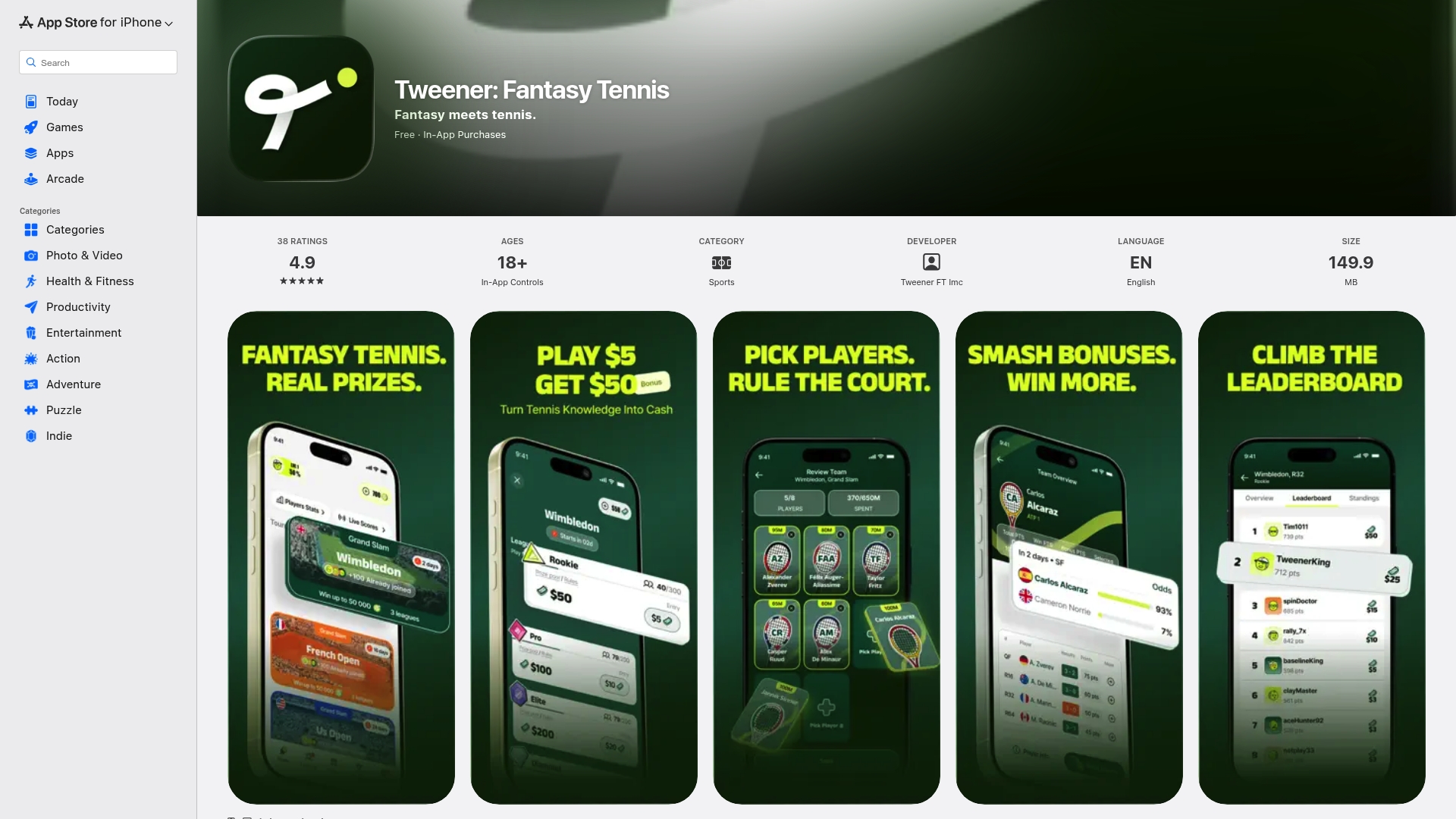
Tweener's interface simplifies the selection process by highlighting players with favorable matchups and surface-specific momentum. You can create teams for both free and cash contests, competing in public leagues or private groups with friends while the app tracks scoring automatically as live matches unfold. The platform's reward system lets you earn virtual coins through smart picks and redeem them for gift cards, adding tangible value to your fantasy tennis engagement beyond just bragging rights.
In-app alerts notify you of late scratches, injury updates, and lineup changes that could reshape your roster strategy. These real-time notifications ensure you never miss critical information that separates winning lineups from the field. Tweener transforms tennis tournaments into interactive competitions where your analytical skills and player knowledge directly influence your success. Download the Tweener app to access these features, and review game rules on Tweener to understand exactly how player performance translates into fantasy points.
Pro Tip: Use Tweener's captain feature to double the points of your highest-conviction play, amplifying the impact of your best research while managing risk across the rest of your roster.
Frequently asked questions
What key statistics should I prioritize when choosing tennis players for fantasy leagues?
Prioritize service hold percentage, break percentage, aces per match, and break points converted, as these metrics directly influence fantasy point accumulation across most scoring systems. Recent form on the playing surface matters equally, revealing momentum and adaptation that career averages obscure. Cross-reference serve and return statistics to identify players with favorable matchup dynamics against their scheduled opponents.
How do ATP and WTA differences impact fantasy tennis player strategies?
ATP tennis is serve-dominant with approximately 1.7 breaks per set, making top servers safer chalk plays with predictable scoring floors. WTA tennis averages 3.2 breaks per set with 41% comeback rates, creating higher volatility that rewards aggressive returners and value picks. Adjust your roster balance based on the tour, emphasizing serve stats for ATP and return aggression for WTA to match the scoring dynamics of each style.
What is the best way to balance chalk favorites and value plays in my fantasy tennis team?
Combine chalk picks who provide consistent scoring floors with value players offering upside potential at lower ownership percentages. In head-to-head contests, lean toward chalk for reliability; in large-field tournaments, increase value exposure for differentiation. Monitor late news and injury updates to adjust your balance, as withdrawals can shift which players offer the best risk-reward profiles before lineup lock.
How should I verify a player's current form before selecting them?
Review the player's last 5 to 10 matches with emphasis on results from the current tournament surface and similar competition levels. Cross-reference recent performance with career statistics filtered by surface to distinguish temporary slumps from genuine decline. Check second serve win percentage and break point conversion trends, as deterioration in these metrics often signals physical or mental struggles that overall records may hide.