

Even seasoned tennis fans can lose a fantasy contest simply by misreading a stat or misunderstanding a term they assumed they already knew. Fantasy tennis has its own vocabulary, and it sits at the intersection of real tennis knowledge and fantasy sports strategy. A term like "break point conversion" means something specific in a fantasy scoring context, and getting it wrong can cost you a matchup. This guide breaks down the essential industry language so you can stop guessing and start making picks with real confidence.
Table of Contents
- What makes fantasy tennis terminology unique?
- Breaking down key player performance metrics
- How fantasy scoring systems use these industry terms
- Expert tips: Avoiding common mistakes with industry lingo
- Put your knowledge to work with Tweener
- Frequently asked questions
Key Takeaways
| Point | Details |
|---|---|
| Know the core terms | Understanding aces, break points, and win percentages is crucial for fantasy tennis success. |
| Check the scoring system | Each platform uses different scoring methods, so always read the rules closely before drafting. |
| Surface and stats matter | Player value can swing greatly depending on the tournament surface and key stats like serve strength. |
| Avoid common pitfalls | Don't overrate flashy stats without checking how your platform scores them. |
What makes fantasy tennis terminology unique?
Many fans are surprised by how quickly industry language diverges even for those familiar with tennis basics. Let's explore these differences.
Tennis is an individual sport, and that single fact changes everything about how fantasy leagues are structured. In team sports like basketball or soccer, every player on your roster is guaranteed to play each week. In tennis, a first-round upset means your star pick earns almost nothing. That elimination risk is baked into every decision you make.
Surface type is another layer that most fantasy newcomers underestimate. Tracking player performance across different surfaces reveals patterns that are invisible if you only look at overall rankings. A player who dominates on clay can struggle badly on grass, and vice versa. The tennis scoring breakdown also matters because fantasy points often mirror real match structure.
"Unlike team fantasy sports, tennis's individual and elimination nature means no weekly play guarantees. Prioritize serve strength on fast surfaces like grass, and favor returners on clay."
Here is what makes fantasy tennis terminology distinct from both standard tennis and other fantasy sports:
- Individual format: No team carries a weak player. Every roster spot must earn its keep.
- Surface sensitivity: Terms like "serve dominance" carry different weight depending on whether the tournament is on grass, clay, or hard court.
- Elimination risk: A player's fantasy value can drop to zero after one bad match.
- Familiar words, new meanings: Terms from the tennis glossary take on specific fantasy scoring implications that go beyond their standard definitions.
Breaking down key player performance metrics
With this context in mind, here are the stats and terms you must know to build a high-performing fantasy tennis roster.
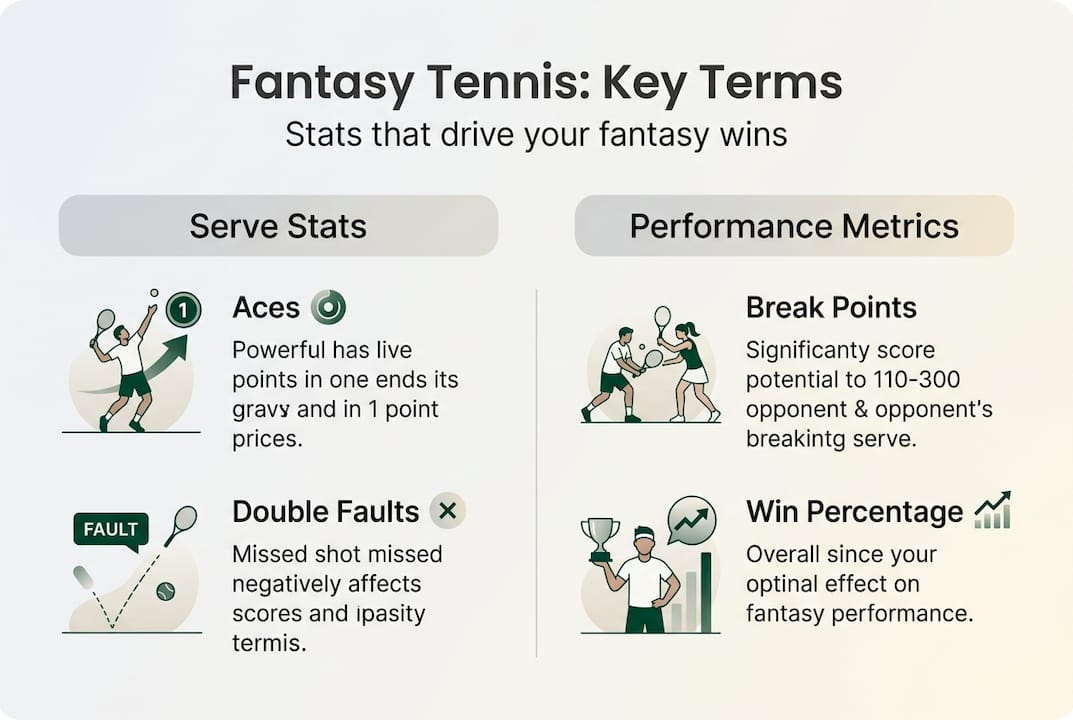
The key tennis stats that drive fantasy scoring are not random. They reflect the moments in a match that actually decide outcomes. Understanding each one gives you a real edge when building your lineup.

| Stat | Definition | Elite benchmark | Fantasy impact |
|---|---|---|---|
| Ace | A serve the returner cannot touch | Varies by player | Direct bonus points on most platforms |
| Break | Winning a game on the opponent's serve | N/A | High value; shifts match momentum |
| Break point conversion % | % of break point chances converted | Elite: above 45% | Predicts offensive pressure |
| Service games won % | % of service games held | Elite: above 85% | Core indicator of serve reliability |
| Return points won | % of points won when returning | Elite: above 40% | Signals ability to break opponents |
| Unforced errors | Mistakes not forced by opponent | Lower is better | Often penalized in fantasy scoring |
Pro Tip: Do not just look at a player's ace count in isolation. Cross-reference it with their service games won percentage. A player hitting 10 aces but losing serve twice is less valuable than one hitting 6 aces and holding every game.
Here is a simple process for using advanced match data to inform your picks:
- Check the tournament surface first. This filters which stats matter most.
- Look at service games won percentage for the current surface, not career averages.
- Review break point conversion rate over the last five matches.
- Factor in unforced error trends, especially for players coming off long matches.
- Compare return points won to identify players likely to create break opportunities.
The importance of performance metrics cannot be overstated. These numbers tell you what a player is actually doing on court, not just whether they won or lost.
How fantasy scoring systems use these industry terms
Once you understand the core stats, the next challenge is discovering how different fantasy platforms use them.
Most fantasy tennis platforms start with ATP and WTA ranking points as a baseline, then layer on their own bonus and penalty rules. That means the same player can be worth very different amounts depending on where you are playing. There is no universal scoring standard across platforms, which is why reading the rules of your specific league is not optional.
| Scoring element | ATP/WTA baseline approach | Platform bonus example |
|---|---|---|
| Match win | Ranking points awarded | Flat point bonus per round won |
| Ace | Not tracked in ranking points | +1 to +3 points per ace |
| Unforced error | Not tracked in ranking points | -0.5 to -1 point per error |
| Break point conversion | Not tracked in ranking points | Bonus for high conversion rate |
| Service games won % | Reflected indirectly in results | Direct multiplier on some platforms |
A useful benchmark: an 85% service games won rate is widely recognized as the threshold for elite serve performance. Players consistently above that number are safer fantasy picks regardless of platform, because their serve reliability translates to match wins across scoring systems.
When building your roster, focus on these stats regardless of which platform you use:
- Service games won percentage (consistency indicator)
- Break point conversion rate (offensive upside)
- Return points won (ability to threaten opponents' serve)
- Unforced error count (risk management)
For deeper guidance on fantasy lineup tips and how to apply these stats to real picks, it helps to study top fantasy tennis picks from recent tournaments. You can also review how experts approach choosing players for fantasy based on surface and scoring context. Reviewing the full tennis industry terms glossary can also sharpen your vocabulary before a big tournament.
Expert tips: Avoiding common mistakes with industry lingo
Mastering these nuances means looking beyond the dictionary definitions of industry terms.
One of the most common mistakes fantasy players make is treating serve stats and match outcome stats as interchangeable. A player can rack up 15 aces and still lose the match. If your platform rewards aces but not match wins equally, that player might still score well. But if your platform weights match progression heavily, that same performance is a bust. Always know which stats your platform actually rewards.
Surface and play style affect player value in ways that raw rankings never capture. A clay court specialist with a high break point conversion rate is a completely different fantasy asset on grass, where their return game may not translate. There are also no weekly play guarantees due to individual elimination, so a player's draw matters as much as their stats.
Here are the most common terminology mistakes to avoid:
- Confusing aces with serve dominance: High ace counts do not always mean a player holds serve consistently.
- Ignoring surface context: A stat that looks elite on hard courts may be average on clay.
- Overlooking unforced errors: Some players post great offensive stats but leak points through errors, which can hurt your score.
- Assuming all platforms score the same: Always read the specific scoring rules before drafting.
- Overweighting ranking position: A lower-ranked player with elite serve stats on the right surface can outperform a top seed in fantasy.
Pro Tip: Before each tournament, match your player's strongest stats to the surface type and then verify those stats are actually rewarded in your platform's scoring system. This two-step check takes five minutes and can save you from a costly lineup mistake.
For more on winning tennis lineups and how to manage your roster across a full tournament, solid fantasy team management habits are just as important as knowing the terminology.
Put your knowledge to work with Tweener
Understanding industry terms is only half the equation. The other half is having a platform that lets you apply that knowledge in real time, against real competition, during live ATP and WTA tournaments.
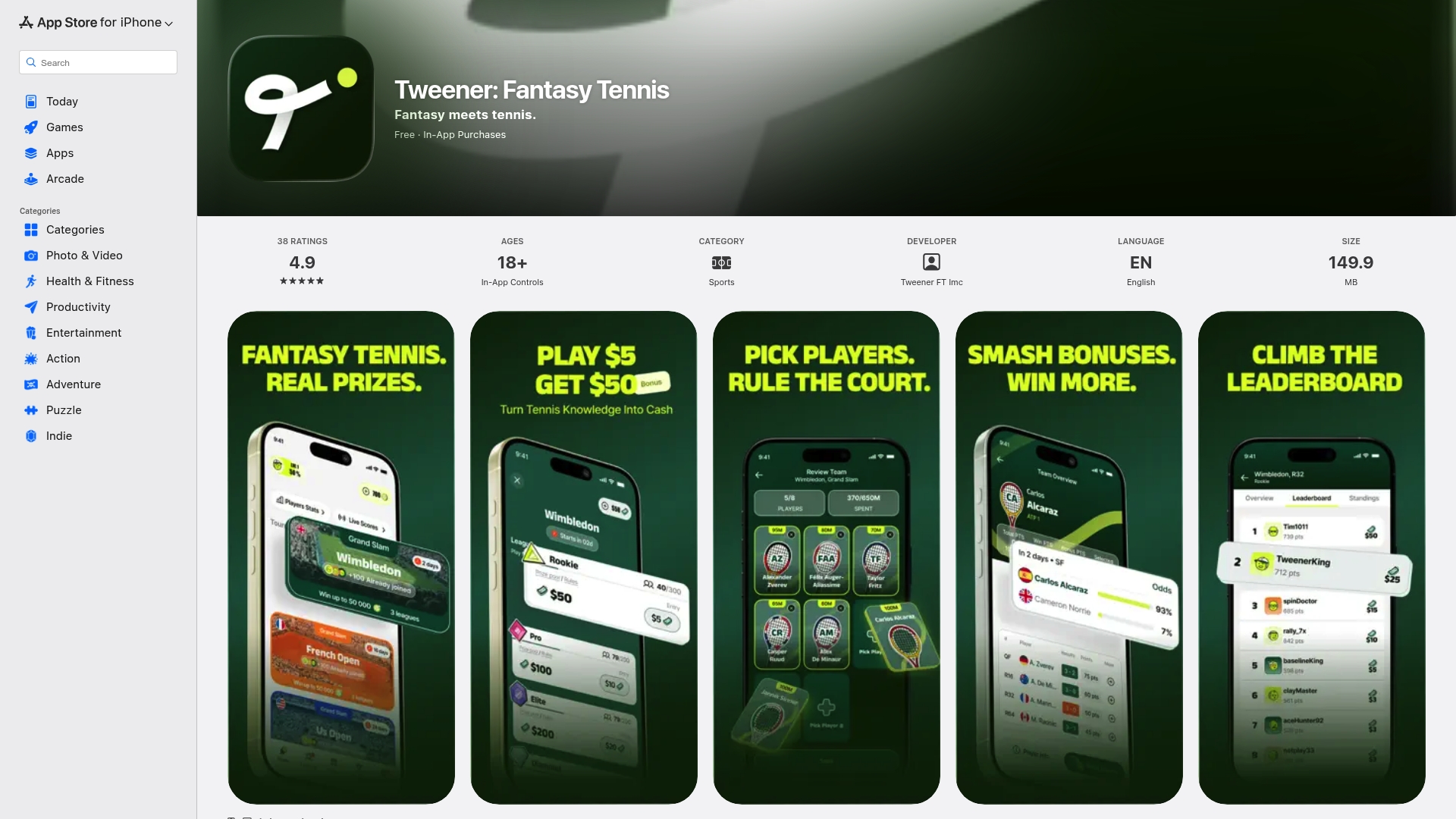
Tweener is built exactly for this. The app lets you draft real professional tennis players, compete in public or private leagues, and earn points based on actual match performance. Whether you want to play for free using virtual coins or enter cash contests for real-money payouts, Tweener gives you the arena to test everything you have learned. Every stat you now understand, from service games won percentage to break point conversion, directly shapes how your fantasy team performs. Download Tweener and start competing with the knowledge you have built.
Frequently asked questions
What does 'service games won percentage' mean in fantasy tennis?
It is the percentage of service games a player wins during a match. Players above 85% service games won are considered elite, and that reliability typically translates directly into more fantasy points.
Why do fantasy tennis leagues have different scoring systems?
Platforms adapt ATP/WTA ranking points and add their own bonus and penalty rules. There is no universal scoring standard, so always read your league's specific rules before drafting.
How do playing surfaces affect player value in fantasy tennis?
Grass courts reward big servers, while clay courts favor strong returners. Serve strength on grass versus return ability on clay means the same player can have very different fantasy value depending on the tournament.
Are aces always valuable in fantasy tennis scoring?
Not always. Aces earn bonus points on most platforms, but their real value depends on how your league weights them. A player with many aces and other stats may still underperform if match wins carry more weight in your scoring system.
Where can I find a full glossary of industry terms for fantasy tennis?
Reputable sources like Tennisletics and the LTA fan zone offer detailed glossaries covering both standard tennis and fantasy-relevant terminology.