

TL;DR:
- A tennis draw is a structured knockout bracket assigning players positions and matchups in a tournament. Seeding based on rankings arranges top players to prevent early confrontations, shaping the narrative and potential paths to the final. Analyzing the draw enhances strategic predictions and improves fantasy tennis decisions.
A tennis draw is the structured knockout bracket that determines who plays whom, in what order, and on which side of the tournament from the first round through the final. Every professional tournament from Wimbledon to the US Open runs on this system, and understanding it transforms you from a passive viewer into someone who can read the competitive story before a single ball is struck. Grand Slam tournaments use a 128-player main draw across seven rounds, meaning every champion wins seven consecutive matches. That scale makes the draw's architecture the single most important factor in shaping a tournament's narrative.
Tennis draw explained: what the bracket actually means
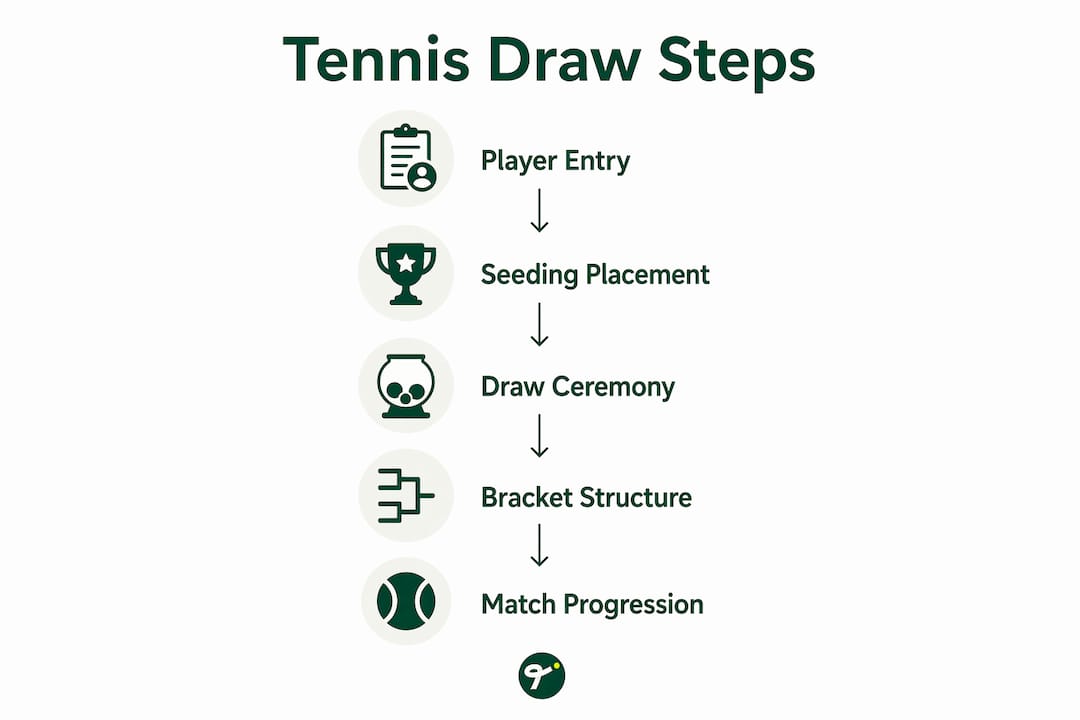
The draw is not a random list of matches. It is a controlled structure where player positions are assigned according to strict rules, and the result is a bracket that projects every possible matchup from the first round to the final. The term "draw" refers both to the bracket itself and to the ceremony where positions are officially assigned.
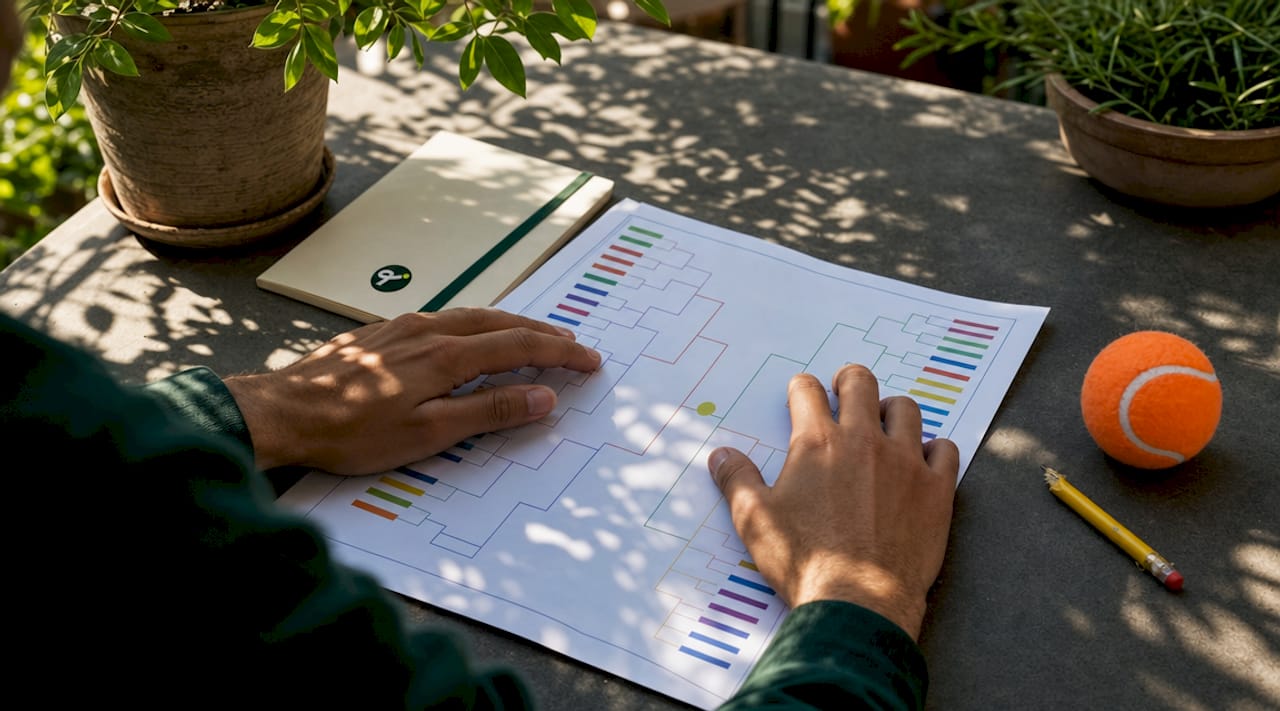
Seeding is the foundation of how tennis draws work. The ATP and WTA rankings determine which players receive seeds, and those seeds are then placed in specific zones of the bracket to prevent the best players from colliding too early. 32 players receive seeds in Grand Slams, and the rules prevent any two seeds from meeting before the third round at the earliest. That single rule shapes the entire competitive arc of a tournament.
The bracket is divided into halves, quarters, and eighths. The top seed anchors one half of the draw, and the second seed anchors the other. Seeds 3 and 4 are drawn into the two remaining quarters, while seeds 5 through 8 are placed into the eight sections. This structure means the projected semifinal matchups are visible the moment the draw is released. Fans and analysts immediately begin mapping the most likely path to the final for every top player.
Understanding tennis tournament brackets at this level gives you a genuine analytical edge. When Novak Djokovic and Carlos Alcaraz land in the same half, the conversation shifts from "who wins the tournament" to "who survives the semifinal." That is the draw doing its job.
How seeding shapes the draw and protects top players
Seeding exists to protect competitive integrity while maximizing the chance that the best players meet in the later rounds. Without seeding, a random draw could place the top two players in the world against each other in the first round, which would be both unfair and commercially damaging for the tournament.
Here is how seed placement works in Grand Slams:
- Seeds 1 and 2 are placed in opposite halves of the draw, guaranteeing they can only meet in the final.
- Seeds 3 and 4 are drawn randomly into the two remaining quarters, so one lands in the top half and one in the bottom half.
- Seeds 5 through 8 are drawn randomly into the four eighths of the bracket not already occupied by seeds 1 through 4.
- Seeds 9 through 32 are drawn randomly within their designated sections, ensuring they cannot face a higher seed until the third round.
This tiered placement creates what analysts call the "projected draw." Before a ball is hit, you can identify which seeds are in the same quarter and which unseeded players face the toughest early-round paths.
Reducing seeds from 32 to 16 has been debated as a way to create earlier high-profile matchups, but no change has been implemented as of 2026. The debate reflects a genuine tension: more seeds mean safer paths for top players, while fewer seeds create more chaos and potentially more compelling early rounds.
The draw's structure creates projected quarterfinal and semifinal matchups that form the basis of every serious pre-tournament analysis. Journalists, coaches, and fantasy players all start from the same bracket and work outward.
Pro Tip: When the draw drops, immediately identify which quarter each top-10 player lands in. A seed 5 or 6 in the same quarter as seed 1 or 2 faces a brutal path and is worth fading in fantasy selections.
How does the draw ceremony work?
The draw ceremony is a formal, carefully orchestrated event involving tournament officials, player representatives, and media. It is not a casual administrative process. Every position assigned must comply with seeding rules, and the ceremony is broadcast live because it carries genuine competitive significance.
The ceremony typically follows this sequence:
- Seeded players are fixed first. Seeds 1 and 2 are placed in their designated halves. Seeds 3 through 32 are drawn into their assigned sections according to the tiered rules described above.
- Unseeded players are drawn randomly into the remaining slots within each section, filling out the full 128-player bracket.
- Qualifier placeholders are inserted. Players who have not yet completed qualifying are listed as Q1, Q2, and so on. These placeholders are replaced with actual names once qualifying concludes.
- Lucky loser slots are noted. If a main draw player withdraws before the tournament begins, a lucky loser fills that spot.
The draw ceremony is held three to four days before the tournament starts, giving players, coaches, and media time to analyze the bracket and prepare. At Roland Garros and Wimbledon, the ceremony is a televised event with significant media coverage, and the bracket is published immediately on official tournament websites.
Lucky losers are the final-round qualifying players who lost their last qualifying match but are selected to fill main draw spots when a player withdraws. Selection is based on ranking among those final-round losers, sometimes decided by a playoff rather than random selection. This means a lucky loser is not simply the next person in line. The highest-ranked final-round qualifier who lost gets priority.
Pro Tip: Follow the draw ceremony live or check the bracket within minutes of its release. The first wave of analysis from coaches and journalists often surfaces within an hour and reveals matchup dynamics that take days to fully appreciate.
What are the different ways players enter the draw?
Not every player in a Grand Slam main draw earned their spot the same way. The draw format accommodates several distinct entry pathways, each with different implications for bracket composition.
| Entry type | How it works | Typical count |
|---|---|---|
| Direct acceptance | Players ranked high enough on the ATP/WTA entry list earn automatic entry | ~96 players |
| Wild cards | Tournament organizers award entries to players outside the ranking cutoff | 8 per Grand Slam |
| Qualifiers | Players compete in a preliminary qualifying competition for main draw spots | 16 per Grand Slam |
| Lucky losers | Final-round qualifying losers who replace late withdrawals | Variable |
Direct acceptance is the most straightforward pathway. The ATP and WTA publish entry rankings, and players above the cutoff line earn their spot automatically. Wild cards give tournament organizers flexibility to include local favorites, returning champions, or commercially significant players who fall outside the ranking cutoff. At Wimbledon, wild cards have historically gone to British players and former champions returning from injury.
Qualifying for a Grand Slam involves 128 players competing across three rounds for 16 main draw spots. Qualifiers are placed into the main draw bracket after the ceremony, replacing the Q1 through Q16 placeholders. Their positions in the bracket are determined by the draw, not by their qualifying performance, so a qualifier can land against a top seed in the first round.
Understanding ATP and WTA entry systems helps you assess which players in the draw are battle-tested and which are there on organizational discretion. Wild cards and qualifiers often carry upset potential precisely because they are underestimated.
How draw knowledge improves your fantasy tennis strategy
Reading a tennis draw is the first analytical move any serious fantasy player makes before a tournament. Seeding spots and draw placements directly influence fantasy tennis strategies by revealing which players face easy early-round paths and which face potential landmines in the second or third round.
Here is what to look for when analyzing a draw for fantasy purposes:
- Favorable quarter: A top-10 seed in a quarter without another top-10 seed has a clear path to the semifinals. These players are high-value fantasy picks.
- Dangerous unseeded players: Qualifiers and wild cards with strong recent form can disrupt seeds in the first two rounds. Identifying these players before the tournament starts is a genuine edge.
- Surface specialists: At Roland Garros or Wimbledon, surface performance matters more than ranking. A clay-court specialist seeded 20th can outperform their seed significantly.
- Injury and fatigue flags: Players entering the draw after a deep run the previous week face a compressed recovery window. Their bracket position determines how quickly they face top competition.
- Upset potential: Upsets remain a staple of tennis, and seeding only reduces their probability. It does not eliminate it.
Draw announcements are widely seen as the first competitive narrative of a tournament, influencing media and fan discussion before a single match is played. When Jannik Sinner and Carlos Alcaraz land in the same half at the Australian Open, that story drives coverage for two weeks. Fantasy players who understand this dynamic can position their teams around the narratives the draw creates.
Key takeaways
A tennis draw is a controlled bracket system where seeding rules, entry pathways, and draw ceremonies combine to create the competitive structure of every professional tournament.
| Point | Details |
|---|---|
| Draw structure | Grand Slams use a 128-player bracket across seven rounds, with positions assigned by strict seeding rules. |
| Seeding protection | 32 seeds are placed in tiered zones so top players cannot meet before the third round. |
| Draw ceremony timing | The ceremony runs three to four days before the tournament, with qualifier placeholders filled after qualifying ends. |
| Entry pathways | Players enter via direct acceptance, wild cards, qualifying, or lucky loser selection. |
| Fantasy application | Draw position reveals path difficulty and upset risk, making it the first tool for smart fantasy selection. |
Why the draw is the most underrated part of watching tennis
Most fans treat the draw as a formality. They wait for the matches to start and ignore the bracket until a player they follow is about to play. That is a mistake, and I say that as someone who has spent years watching how the draw shapes tournament outcomes before a single point is played.
The draw ceremony is where the tournament's story is written in outline form. When Rafael Nadal was at his peak at Roland Garros, the entire conversation shifted the moment the draw was released. Which quarter did the dangerous clay-court challengers land in? Who would have to face Nadal in the quarterfinal? Those questions were not idle speculation. They were the competitive reality for two weeks.
What I find most interesting is how the draw reveals hidden pressure on specific players. A seed ranked 12th who lands in the same quarter as the world number one faces a completely different tournament than a seed ranked 14th who gets a relatively open quarter. The ranking difference is small. The draw difference is enormous.
For fantasy players, ignoring the draw is like ignoring the schedule in NFL fantasy. You would never draft a running back without checking their upcoming opponents. The same logic applies here. A player with a favorable draw is worth more than their ranking suggests. A player with a brutal draw is worth less.
My advice: treat the draw ceremony as the opening act of the tournament. Watch it live, or pull up the bracket the moment it drops. Spend 20 minutes mapping the quarters and identifying which seeds face the most dangerous paths. That 20 minutes will change how you watch every match that follows.
— Nathan
Put your draw knowledge to work with Tweener
Reading the draw is one thing. Competing on it is another.
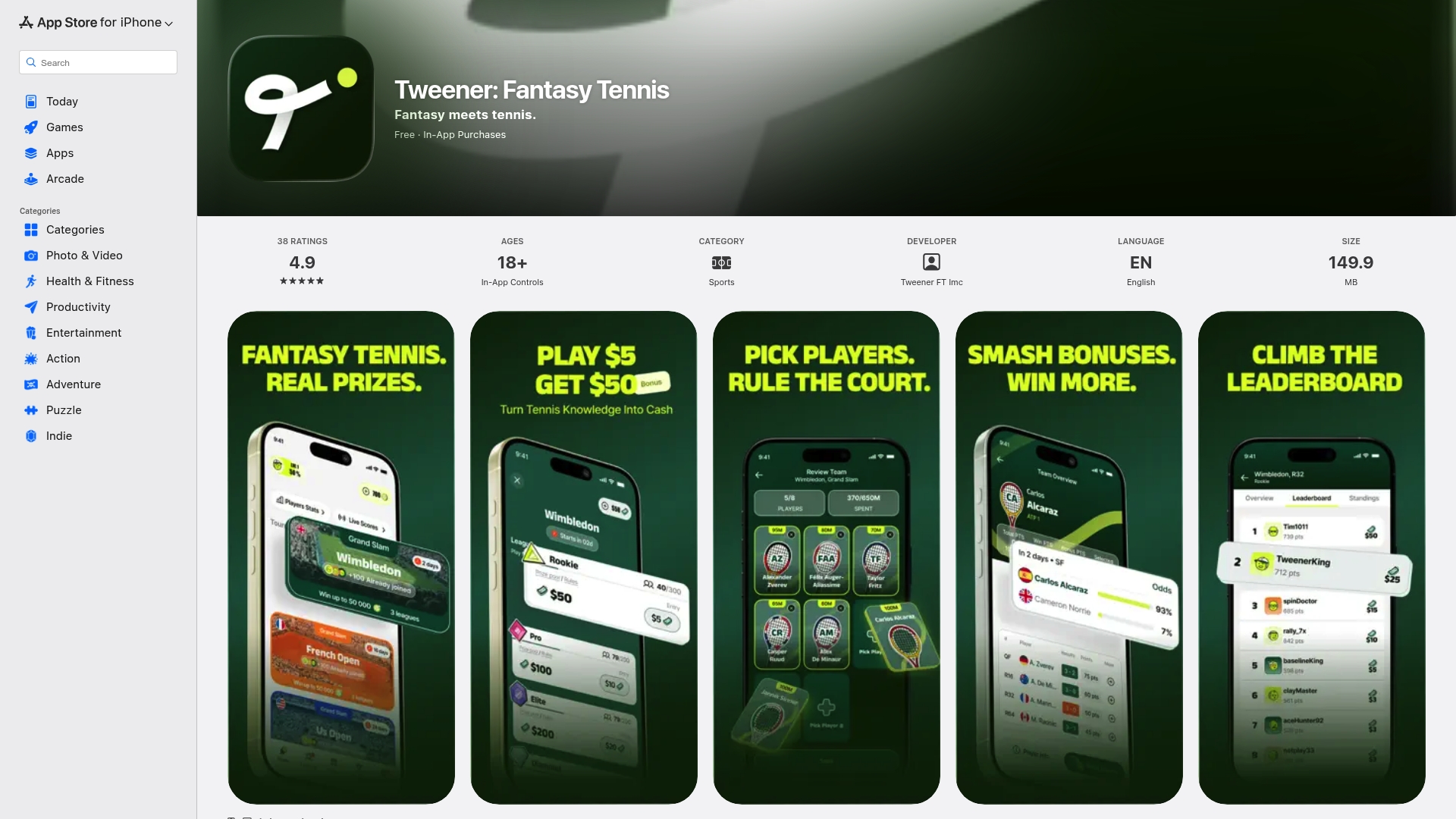
Tweener is the fantasy tennis platform built for fans who want to turn draw analysis into real competition. You pick ATP and WTA players, build your team around tournament brackets, and earn points based on how your players actually perform. Private leagues let you compete with up to nine friends across every Grand Slam, and the free mode lets you start without any financial commitment. If you are ready to use everything you now know about seeds, draw sections, and player paths, start competing on Tweener today. You can also download the Tweener app and be ready before the next draw ceremony drops.
FAQ
What is a tennis draw?
A tennis draw is the structured knockout bracket that assigns every player a position in a tournament, determining their first-round opponent and their projected path to the final. In Grand Slams, the draw covers 128 players across seven rounds.
How are seeds placed in a tennis draw?
Seeds 1 and 2 are placed in opposite halves of the bracket so they can only meet in the final. Seeds 3 and 4 are drawn into the remaining two quarters, and seeds 5 through 8 fill the eight sections, preventing top players from meeting before the third round.
What is a lucky loser in tennis?
A lucky loser is a player who lost in the final round of qualifying but earns a main draw spot when another player withdraws before the tournament begins. Selection is based on ranking among final-round qualifying losers, not random chance.
When does the draw ceremony happen?
The draw ceremony takes place three to four days before the tournament starts. Seeded players are placed first according to strict rules, then unseeded players are drawn randomly into remaining slots.
How does the draw affect fantasy tennis?
Draw position reveals how difficult a player's path to the later rounds will be. A top seed in an open quarter is a safer fantasy pick than one facing multiple dangerous opponents early, making the bracket the first tool for smart team selection.