

TL;DR:
- Understanding tennis schedules reveals player form, injuries, and surface priorities for strategic advantage.
- Schedule awareness guides optimal fantasy team choices, chip timing, and response to surface transitions.
- Mastery of the calendar's patterns separates successful managers from casual followers.
Most fantasy tennis players treat the ATP and WTA calendar like a passive backdrop, something to glance at when a tournament starts and forget about the rest of the time. That's a costly mistake. Tournament schedules are loaded with strategic signals about player readiness, surface preparation, and peak performance windows. When you know how to read those signals, you stop reacting and start anticipating. This article breaks down exactly how schedule awareness transforms your fantasy decisions and your overall experience as a tennis fan.
Table of Contents
- Why tournament schedules matter in tennis
- How schedules affect fantasy team selection and strategy
- Interpreting player decisions: Surface transitions and tournament swings
- Maximizing engagement: Using schedules for fan presence and fantasy advantage
- Our take: Schedule mastery separates casual followers from winners
- Ready to take your tennis fantasy game to the next level?
- Frequently asked questions
Key Takeaways
| Point | Details |
|---|---|
| Schedule reveals strategy | Understanding tournament schedules helps you decode player choices and predict performance shifts. |
| Fantasy game timing | Aligning team moves with calendar swings maximizes your fantasy scoring with chips and picks. |
| Surface transitions matter | Surface switches can disrupt form, and schedule context lets you anticipate sudden changes. |
| Peak engagement windows | Following schedules gets you present for high-stakes moments in tournaments and fantasy leagues. |
| Schedule mastery wins | Winners consistently use schedule knowledge for smarter decisions, more fun, and better fantasy results. |
Why tournament schedules matter in tennis
The tennis calendar isn't assembled randomly. The ATP and WTA tours structure their seasons around deliberate surface blocks, grouping clay events together, then grass, then hard courts, creating momentum and preparation windows that players plan their entire years around.
Understanding this structure changes how you see the sport. As the tennis calendar is built to reflect strategic player decisions, what a player enters or skips tells you something real about their physical condition, their surface priorities, and their ranking goals. A player who skips a clay Masters event to rest before Roland Garros isn't being lazy. They're making a calculated bet on peak timing.
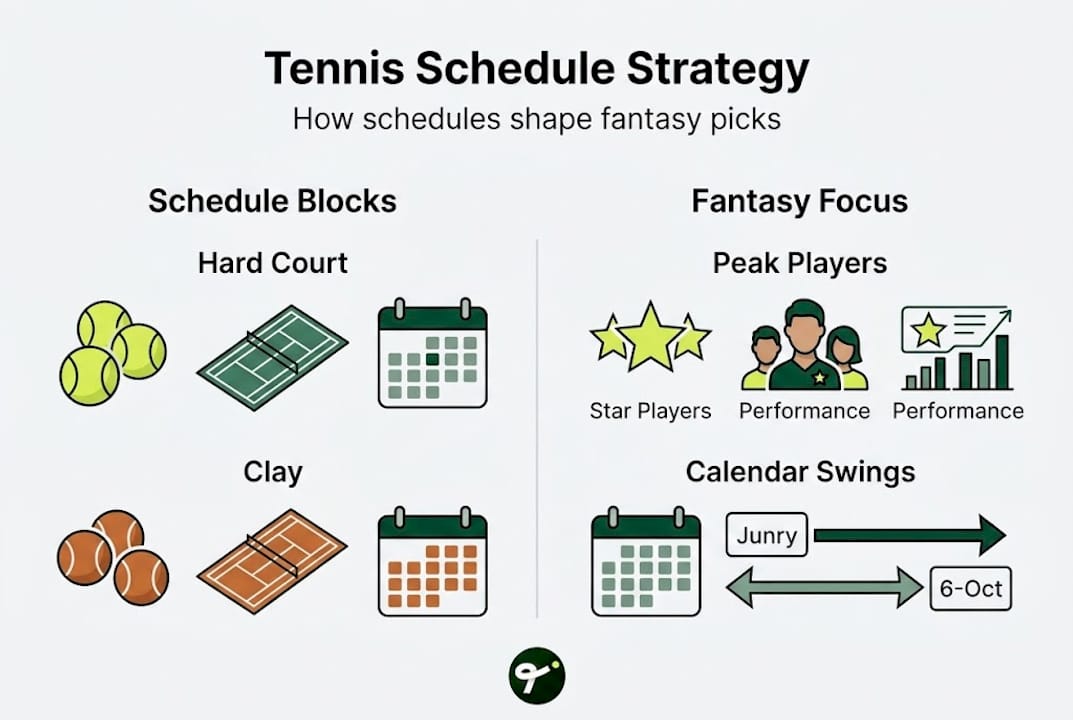
Here's what the typical annual surface structure looks like:
| Season block | Surface | Key events | Fantasy implication |
|---|---|---|---|
| January to February | Hard | Australian Open, ATP 500s | Fitness-focused players shine |
| March to May | Clay | Monte Carlo, Madrid, Rome, Roland Garros | Baseline specialists dominate |
| June to July | Grass | Queen's Club, Wimbledon | Serve-and-volley styles resurface |
| August to November | Hard | US Open Series, ATP Finals | All-rounders peak again |
This structure matters because sports scheduling concentrates stakes at specific moments, and knowing those moments helps you position yourself, as a fan and a fantasy manager, to be fully engaged when it counts most.
Key reasons why schedule structure shapes your fantasy approach:
- Surface blocks signal form windows. Players who specialize on clay will typically show improving form as the clay swing builds momentum across weeks.
- Entry patterns reveal health and priorities. A player entering a smaller warm-up event before a Slam signals they need match practice, which can mean inconsistency.
- Schedule density creates fatigue risk. Players who stack multiple events in a short window often show performance drops later in that block.
- Rest weeks are strategic, not accidental. When a top player skips a mid-tier event, they're loading up for something bigger. That's a fantasy signal.
"The schedule is the first piece of information a smart fantasy manager should study. Everything else flows from it."
When you start choosing tennis players with schedule context in mind, you're no longer guessing. You're reading the same information the players and their coaches are acting on.
How schedules affect fantasy team selection and strategy
Having understood how schedules shape tournament play, let's explore how this translates directly to fantasy strategy.
In ATP Fantasy and platforms like Tweener, the calendar swings are your strategic backbone. ATP Fantasy managers are actively encouraged to plan chip usage and switching decisions around these calendar segments, not around individual match results. That's a fundamentally different mindset than picking whoever won last week.

Here's a direct comparison of two approaches:
| Strategy type | Approach | Outcome |
|---|---|---|
| Reactive selection | Pick players based on last tournament results | Miss surface transitions, get caught by fatigue |
| Schedule-aware selection | Align picks with surface blocks and player entry patterns | Anticipate form changes before they happen |
| Chip timing (reactive) | Use Triple Bounce or Swing Switch when desperate | Waste high-value tools on low-stakes moments |
| Chip timing (schedule-aware) | Save chips for peak events in the right surface block | Maximize points during highest-scoring windows |
The difference in outcomes is significant. Schedule-aware managers consistently gain an edge during surface transitions because they've already adjusted their lineups before the results confirm the shift.
Here's a practical numbered process for applying schedule awareness to your fantasy decisions:
- Map the next four weeks of the calendar before making any picks. Know what surface is coming and which players have historically performed well on it.
- Check player entry lists early. If a top-ranked player hasn't entered a tournament two weeks out, assume they're skipping it and plan accordingly.
- Identify the peak event in each surface block. Roland Garros on clay, Wimbledon on grass, the US Open on hard. These are your highest-leverage moments for chips and captain picks.
- Avoid stacking players from the same country or training group during dense schedule windows. Shared fatigue patterns can hurt your entire lineup at once.
- Review your team after every surface transition, not just when your score drops. Proactive adjustments beat reactive ones every time.
Pro Tip: Don't save your best chips for the last major of a surface block. The early events in each swing often produce the biggest scoring spikes because players arrive fresh and motivated.
For deeper guidance on optimizing fantasy picks around these moments, the patterns repeat across seasons and are learnable. Building your lineup strategy around building tennis lineups with surface context is one of the most reliable edges available.
Also, smart captain picks become much easier when you know which players are entering a surface block at full health and with a strong recent record on that surface. The schedule tells you who to trust before the draw even comes out.
Interpreting player decisions: Surface transitions and tournament swings
Strategic fantasy play depends not only on schedule awareness but also on interpreting how real players respond to those schedules.
Surface transitions are where the most interesting and unpredictable things happen in tennis. Moving from clay to grass is one of the most dramatic shifts in all of sports. The ball bounces lower, moves faster, and rewards completely different technical skills. Players who dominated on clay for six weeks can look lost in their first grass match. Surface transitions can disrupt preparation and performance in ways that go beyond simple surface stereotypes, and the schedule context explains why.
Here are the key signals to watch during surface transitions:
- Sudden tournament withdrawals. A player pulling out of the first grass event after a heavy clay schedule is likely managing fatigue or a minor injury, not just resting.
- Entry into smaller warm-up events. Players who enter Queen's Club or Halle before Wimbledon are telling you they need match time to adapt. That's a positive sign for their Wimbledon form.
- Skipping the transition event entirely. Some players skip the first event of a new surface block and go straight to the major. This is a high-confidence move that signals they feel ready without needing tune-up matches.
- Back-to-back tournament entries. A player entering three straight weeks signals high confidence and fitness. Watch their third-week performance closely, as fatigue often surfaces there.
"Schedule context doesn't just predict performance. It explains it. When you know what a player has been through in the weeks before, their results stop being surprises."
For match prediction strategies, this kind of contextual reading is more valuable than head-to-head statistics alone. Stats don't tell you that a player just came off three weeks of clay with a tight hamstring. The schedule does.
Pro Tip: Cross-reference player entry lists with recent match load data. A player who played seven matches in two weeks before a surface change is a risk pick, even if their ranking is high.
Your power rankings guide should always be filtered through schedule context. A player ranked third in the world who has played 12 matches in the past month is not the same fantasy asset as a player ranked sixth who has rested strategically and enters the new surface block fresh.
Maximizing engagement: Using schedules for fan presence and fantasy advantage
Now, let's turn theory into actionable steps and see how schedule awareness transforms your daily tennis experience.
The best fantasy managers and the most engaged tennis fans share one habit: they follow the calendar proactively. They don't wait for a tournament to start before paying attention. They track entry deadlines, watch for withdrawal announcements, and note which players are building momentum across a surface block. Schedule knowledge concentrates your attention on the highest-stakes moments, which is where the most exciting tennis and the biggest fantasy scores happen.
Here's how to build a weekly schedule routine that works:
- Monday: Check the upcoming tournament draw and confirmed entries. Note any surprising absences or late additions.
- Tuesday: Review your fantasy lineup against the draw. Are your picks actually playing? Are any facing tough first-round opponents?
- Wednesday to Thursday: Watch early-round matches for form signals. A player winning easily in round one is a different pick than one who barely survived.
- Friday to Saturday: Adjust your fantasy team based on what you've seen. Use this window for any available transfers or captain changes.
- Sunday: Reflect on the week's results. Note which players outperformed or underperformed relative to the schedule context. Build that into next week's decisions.
Key habits that separate engaged fans from casual viewers:
- Set tournament notifications on your phone or fantasy app so you never miss a key withdrawal or schedule change.
- Follow top ATP and WTA picks coverage that contextualizes player form within the current schedule block.
- Use weekly calendars to see the full picture of what's happening across tours simultaneously. Sometimes a WTA event and an ATP event overlap in ways that affect scheduling for doubles specialists or mixed-event players.
- Track your own fantasy history by surface block. Most managers do better on one surface than others, often because they understand that surface's players more deeply.
Consistent tracking player performance within schedule context is what separates managers who have a good week occasionally from those who perform well across an entire season. When you know the calendar rhythm, you can anticipate the peaks rather than just react to them.
The payoff is real. Fantasy managers who align their decisions with the calendar structure tend to make fewer panic moves, waste fewer chips, and stay competitive deep into tournaments. For drafting tennis players at the start of a season or a contest, having a clear mental map of the schedule gives you a framework that most of your opponents simply don't have.
Our take: Schedule mastery separates casual followers from winners
Here's the honest truth that most fantasy tennis content won't tell you: the players who consistently win aren't always the ones who know the most about tennis technique or player statistics. They're the ones who understand timing.
Most fans underestimate how much the schedule shapes everything. They see a player lose in the second round and call it an upset. A schedule-aware manager sees a player who entered three straight weeks, traveled across two time zones, and switched surfaces mid-swing. The "upset" was predictable if you were watching the right signals.
Real winners in fantasy tennis treat the calendar like a map. They know which months favor which player types. They know when to hold their strongest picks and when to rotate. They know that the week before a Slam is often noisier and less predictable than the Slam itself, because players are either peaking or managing risk.
The uncomfortable insight is this: schedule mastery isn't about memorizing dates. It's about pattern recognition. The tour repeats itself every year with variations. Players who love clay show up in April. Serve-heavy players get their moment in June. Hard court specialists dominate the back half of the season. Once you see these patterns, your winning lineup tips decisions become less stressful and more systematic.
Success in fantasy tennis, and in being a deeply engaged fan, comes down to who pays attention to the nuances that others overlook. The schedule is the most overlooked edge in the game. Use it.
Ready to take your tennis fantasy game to the next level?
If schedule awareness is the edge, Tweener is the platform built to help you act on it. Tweener delivers real-time tournament updates, expert fantasy insights, and a competitive community of tennis fans who take their picks as seriously as you do.
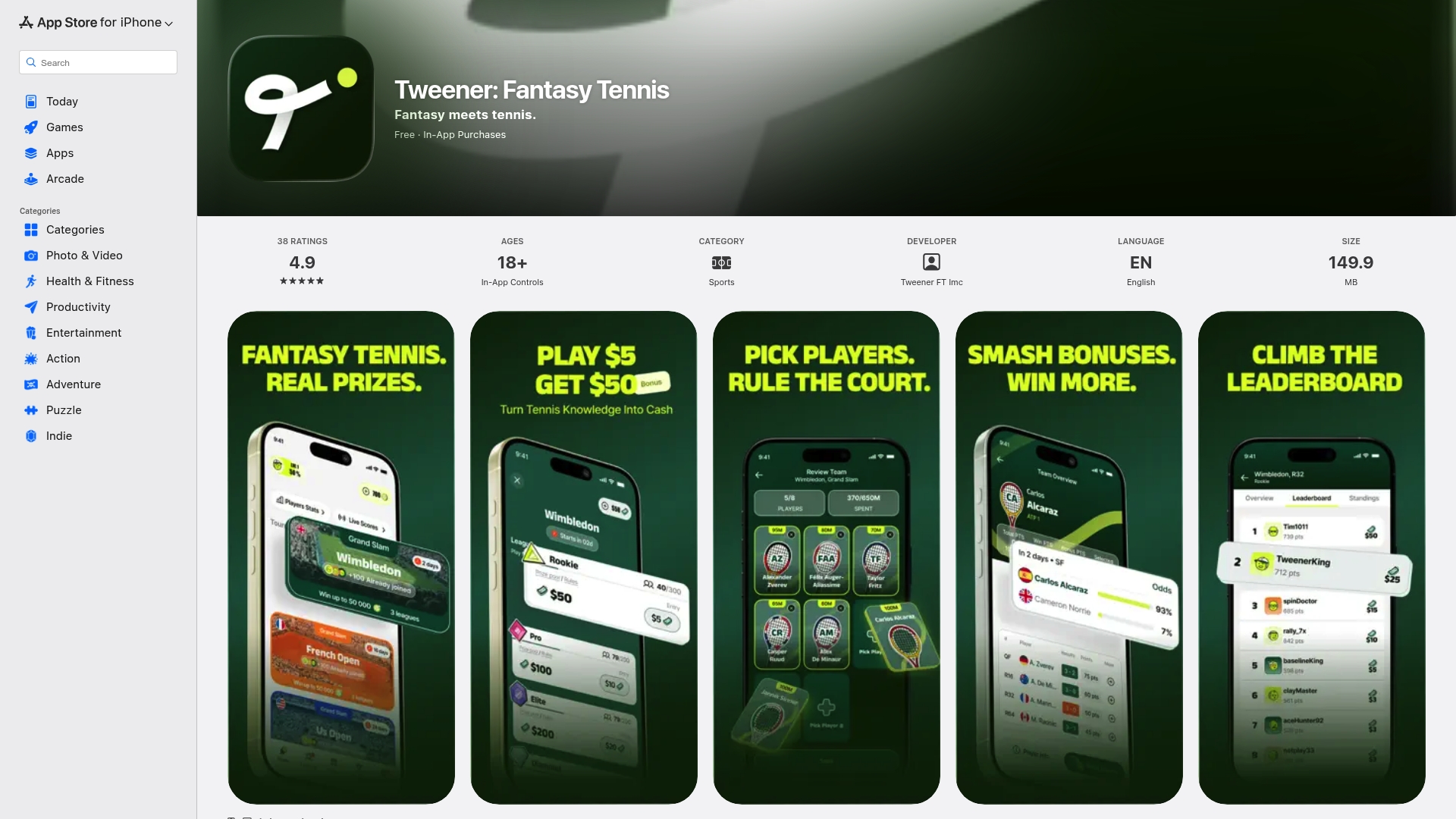
Whether you're competing in free leagues using virtual coins or entering cash contests for real-money payouts, Tweener gives you the tools to put your schedule knowledge to work. Visit the Tweener fantasy platform to explore public and private leagues, review the game rules to understand how scoring and chips work, and download the app to start building lineups that reflect the strategic thinking you've developed here. The calendar is already moving. Your next smart pick is one schedule check away.
Frequently asked questions
How do tournament schedules impact fantasy performance?
Tournament schedules let you anticipate player peaks and optimize fantasy team selection for high-value events. Schedule knowledge concentrates stakes at specific moments, and knowing those moments gives you a consistent edge over managers who only react to results.
What are surface blocks in the tennis calendar?
Surface blocks are runs of tournaments played on the same type of surface, like clay or grass, shaping player preparation and performance. As the tennis calendar is structured, these blocks reflect deliberate player decisions about when to peak and when to rest.
Should I adjust my fantasy team with every schedule swing?
Yes, strategic adjustments during calendar swings enhance your fantasy score, especially when using chips or captain picks. ATP Fantasy managers are specifically encouraged to time their chip usage around these calendar segments for maximum impact.
Why do players sometimes skip major tournaments?
Players skip tournaments to optimize for surface transitions, avoid injuries, or prepare for peak events, all visible in schedule context. Interpreting these decisions as strategic signals rather than surprises gives fantasy managers a meaningful advantage before the draw is even released.