

TL;DR:
- Successful fantasy tennis drafting relies on research, strategy, and understanding match context.
- Building a balanced roster with different risk profiles maximizes scoring potential.
- Staying updated on player form, surface fit, and last-minute changes is crucial for success.
Picking the right mix of stars, underdogs, and value plays for your fantasy tennis roster is harder than it looks. You stare at a long player list, the salary cap is tight, and one wrong pick can sink your week. Whether you're new to the game or a seasoned competitor, the gap between a good lineup and a great one usually comes down to preparation and process. The Tweener app lets you build rosters of 4 to 10 ATP and WTA players and earn points from real match performances, with bonuses for aces, upsets, and dominant wins. This guide walks you through every stage, from research to draft to final verification.
Table of Contents
- Know the fantasy tennis draft basics
- Prepare: Research the player pool and match context
- Draft: Build a balanced roster with proven strategies
- Finalize, verify, and adapt your lineup for success
- A fantasy veteran's take: Stop chasing last week's points
- Draft smarter with Tweener fantasy tennis
- Frequently asked questions
Key Takeaways
| Point | Details |
|---|---|
| Balance your roster | Use a mix of stars, ceiling attackers, and value underdogs to maximize upside. |
| Research is crucial | Check stats, head-to-heads, and injuries before each draft to gain an edge. |
| Prioritize fit over fame | Focus on surface matchup and tournament draw path instead of just picking big names. |
| Verify before lock | Double-check for late news, lineup balance, and adapt as needed before the contest starts. |
Know the fantasy tennis draft basics
Before you pick a single player, you need to understand the rules of the game. Fantasy tennis is not like fantasy football, where you set a lineup and wait for Sunday. Tennis is a daily, sometimes hourly sport with draws, retirements, and weather delays. That unpredictability is what makes it exciting and what makes preparation so important.
On Tweener, you build rosters of 4 to 10 ATP/WTA pros and score points from match stats, with special bonuses for aces, underdogs, and bagels (winning a set 6 to 0). Roster size and contest format vary, so always check the specific rules before entering a league. You can compete in season-long formats or shorter per-tournament contests, giving you flexibility depending on how much time you want to invest.
The salary cap is the central mechanic that drives every decision. Top-ranked players cost more, so you cannot simply fill your squad with the world's best and call it a day. You need to choose tennis players who deliver strong value relative to their price. That means finding mid-tier players in favorable draws or specialists on a surface where they overperform their ranking.
| Feature | Details |
|---|---|
| Roster size | 4 to 10 ATP/WTA players |
| Scoring | Match stats: wins, aces, bagels, upsets |
| Formats | Per-tournament or season-long |
| Play modes | Free (virtual coins) or cash contests |
| Bonuses | Underdogs, dominant wins, ace totals |
What makes tennis fantasy unique compared to other sports is the head-to-head draw structure. A player ranked 20th in the world can reach the final if their draw avoids the top seeds early. That creates enormous value opportunities that most casual drafters miss completely. Inside the Tweener app, you can review scoring rules, browse player statistics, and compare options before committing to your roster. Spend five minutes in the rules tab before every draft. It pays off.
Prepare: Research the player pool and match context
With a solid grasp of the rules, preparation becomes your sharpest competitive edge. Elite fantasy tennis drafters do not guess. They research. And the good news is that the information you need is more accessible than ever.
Start with the basics: current form, recent match results, and any injury news. A player returning from a wrist issue might still be ranked in the top 30 but could be operating at 70 percent. That is a liability, not a value play. You should also track H2H, serve/return stats, and injuries to find the best value plays in any given week.
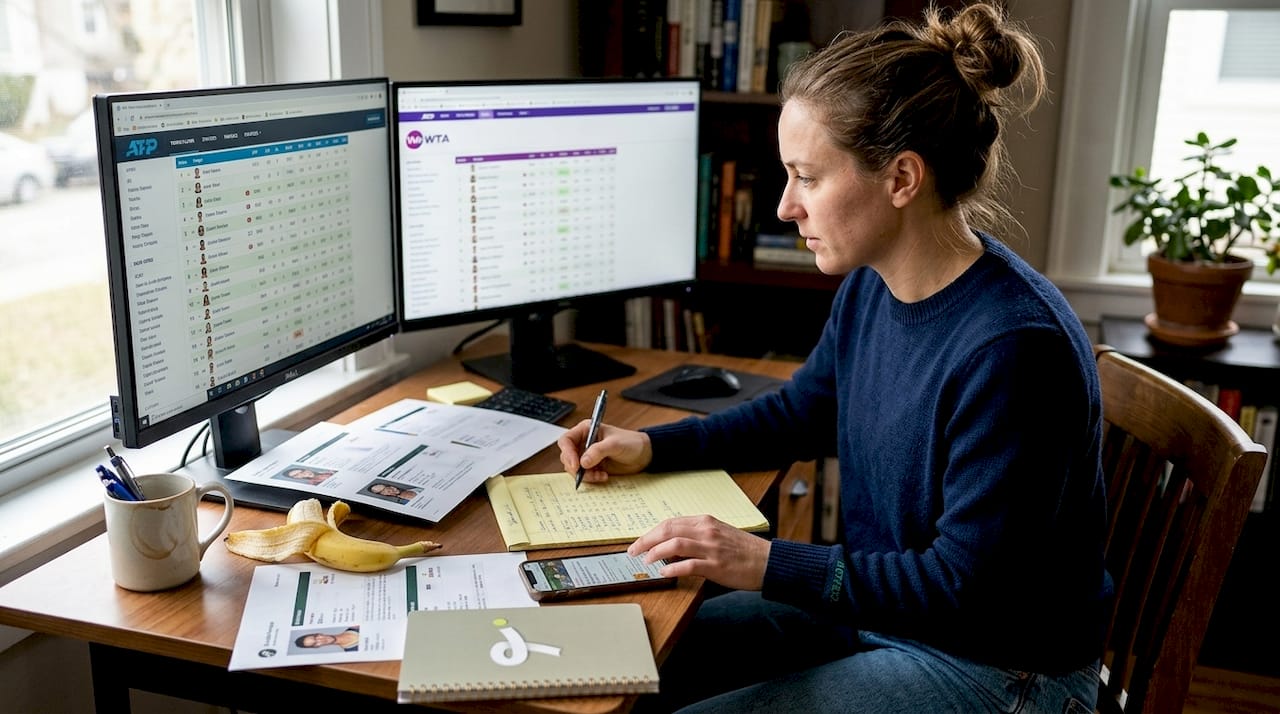
Surface fit is one of the most underrated factors in fantasy tennis. Rafael Nadal on clay and Rafael Nadal on grass are two very different fantasy assets. The same logic applies across the entire player pool. Clay specialists, grass serve-and-volleyers, and hard-court grinders each have very different scoring ceilings depending on the tournament surface.
Before every draft, check these essentials:
- Current injury status and recent match load
- Surface win rate over the past 12 months
- Head-to-head record against likely opponents in the draw
- First-serve percentage and ace rate (key for Tweener bonuses)
- Draw path difficulty: which seeds or dangerous players are in the same bracket quarter
- Recent tournament results on the same surface
Tweener's in-app comparison tools let you stack two players side by side and quickly spot statistical edges. Use this feature before finalizing any pick. For deeper pre-draft analysis, check out top ATP and WTA picks on the Tweener blog, which breaks down weekly value targets.
Pro Tip: Low-ownership underdogs are where tournaments are won. If a player ranked 45th is facing a top-10 seed who just played a grueling three-setter the day before, that underdog has real upset potential. In Tweener, underdogs earn bonus points for wins, so a single upset can vault you up the leaderboard. Use the app's underdog filter to optimize fantasy picks and find those hidden-value plays before the field catches on.
Draft: Build a balanced roster with proven strategies
Once your research is done, you step into the draft lobby. This is where strategy meets execution. A balanced roster is not about picking the five highest-ranked players you can afford. It is about building a squad with different risk profiles that can score across multiple match outcomes.
Think of your roster in four distinct roles:
- Anchor: A high-floor player, usually a top-10 seed with a clean draw path. They may not win you the week, but they will not hurt you either.
- Ceiling attacker: A player with big upside, often a heavy server or aggressive baseliner who racks up aces and can go deep in a draw.
- Game-stack target: A player in a favorable matchup likely to produce a long, stat-heavy match, maximizing points from extended play.
- Value underdog: A lower-priced player with a realistic upset chance. In Tweener, this role can be the highest-scoring spot on your roster on a good day.
A balanced roster blends high-floor anchors, ceiling attackers, game-stack targets, and volatile underdogs for consistent scoring across different match scenarios.
| Roster role | Typical traits | Risk level |
|---|---|---|
| Anchor | Top-10 seed, clean draw | Low |
| Ceiling attacker | High ace rate, aggressive style | Medium |
| Game-stack target | Long-match history, stat producer | Medium |
| Value underdog | Low ownership, upset potential | High |
Stacking too many players from the same surface type or over-investing in one chalk star is one of the most common ways to lose a week. If your anchor goes out in round two, you need other roster spots to carry the load.
For a deeper breakdown of how each role functions in live contests, the Tweener blog covers how to build a winning lineup and explains key player roles in detail. Read both before your next draft.
Finalize, verify, and adapt your lineup for success
Your draft is done, but your work is not. The period between submitting your roster and the first match is critical. Late-breaking news can change everything, and the players who win fantasy leagues are the ones who stay alert right up to lock time.
Start by scanning your lineup for concentration risk. Do you have three clay specialists in a hard-court tournament? Are four of your five picks in the same draw quarter? These are silent killers that seem fine on paper until the bracket plays out badly.
Key things to double-check before lock:
- Confirmed participation: has anyone withdrawn or retired since you drafted?
- Draw updates: have any late entries or lucky losers changed the bracket?
- Weather or surface conditions: outdoor clay plays very differently after rain
- Serve/return matchup edges: does your ceiling attacker face a weak returner?
- Salary cap compliance: confirm your final roster is within budget
Tweener's last-look and swap deadline features let you make changes right up until matches begin. Use them. Avoid overloading on one surface or chalk and always prefer value plays when the data supports it.
Pro Tip: Set a phone alert for 30 minutes before lineup lock. Check the ATP and WTA official social accounts for any last-minute withdrawal news. A single swap from an injured player to a healthy alternative has saved countless lineups. Tweener's swap feature is there for exactly this moment. Use it to lock in winning tennis lineups and sharpen your match prediction strategies right before the action starts.
A fantasy veteran's take: Stop chasing last week's points
Here is something most guides will not tell you: the player who dominated last week's tournament is often the worst pick for this week. Tennis is a grind. Players travel constantly, switch surfaces, and carry physical fatigue from deep runs. Chasing last week's hot hand is one of the most reliable ways to lose a fantasy week.
World ranking is similarly overrated as a drafting signal. A player ranked fifth in the world on a surface they hate, against an opponent who owns their head-to-head record, is not a good pick. Budget allocation per event and focusing on draw path and surface fit over raw rankings is what separates consistent winners from casual players.
The biggest lesson most players ignore: the draw path matters more than the name on the jersey.
Tweener's in-app tools give you access to surface stats, head-to-head records, and underdog indicators that most players scroll past without a second look. Those features exist for a reason. Players who use them consistently outperform those who rely on gut feel and name recognition. Check out smart captain picks for a practical example of how draw-path thinking translates into real scoring advantages.
Draft smarter with Tweener fantasy tennis
Every strategy in this guide works best when you have a platform built for tennis fantasy. Tweener is exactly that.
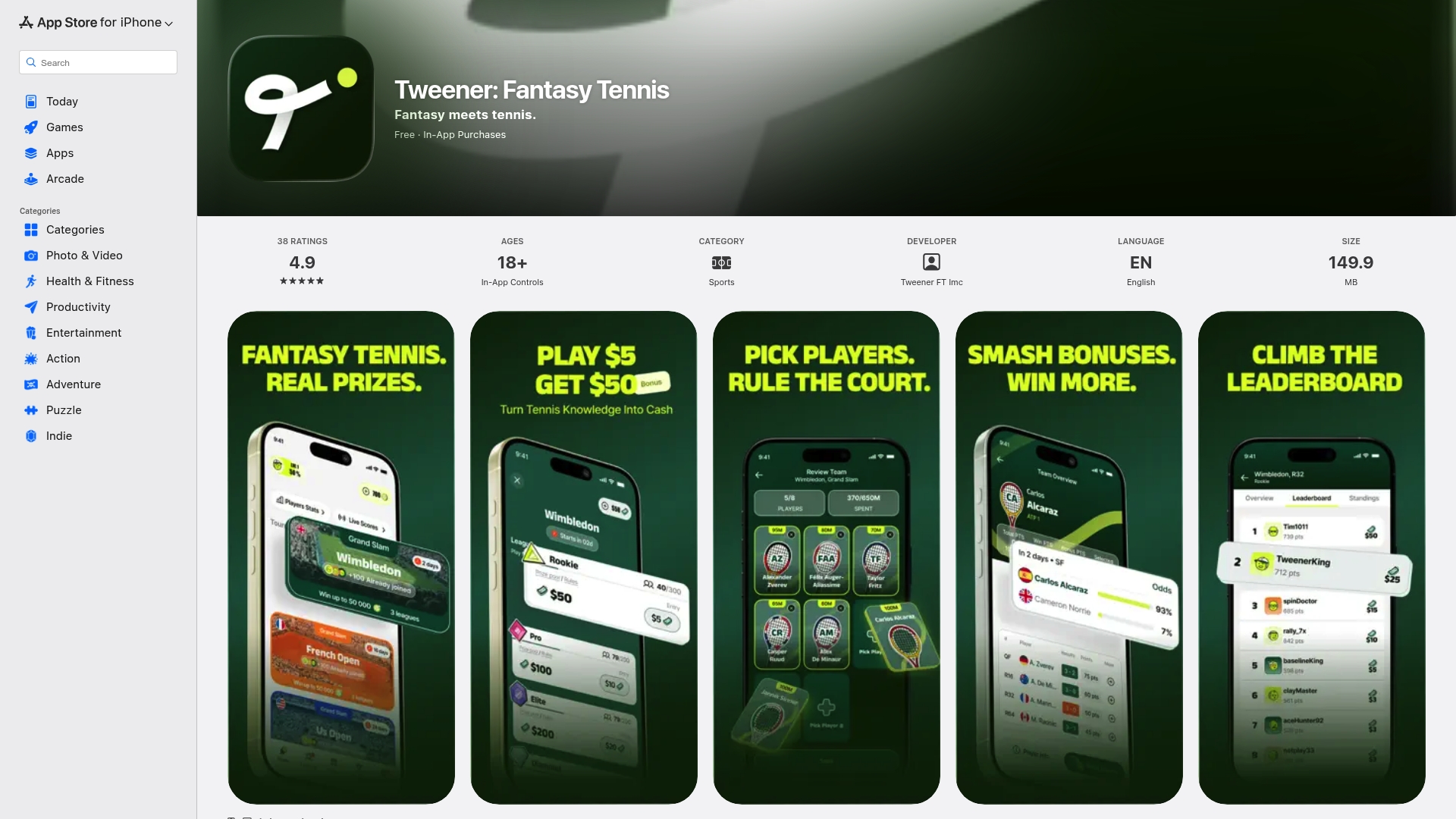
The Tweener fantasy tennis platform puts all of these tools in one place: player stats, draw analysis, in-app comparisons, and live scoring during real ATP and WTA tournaments. You can compete for free using virtual coins or enter cash contests for real payouts where permitted. Ready to put your draft strategy to work? Download the Tweener app for iOS or Android and join a league for the next tournament. The next big upset is already in the draw. Make sure you have the right player on your roster.
Frequently asked questions
How many players are on a Tweener fantasy tennis roster?
Tweener rosters hold 4 to 10 ATP or WTA players, depending on the specific contest format you enter.
What stats should I prioritize when selecting tennis players?
Prioritize serve/return stats, recent form, surface fit, and injury updates to identify the highest-value picks available.
How does the Tweener scoring system work?
Tweener awards points for match stats including aces, wins, and upsets, with additional bonuses for underdog victories and dominant set wins like bagels.
What's a common mistake fantasy tennis drafters make?
Many drafters overload on chalk stars or one surface type and miss the underdog value plays that can win a week outright.