

TL;DR:
- Role archetypes in tennis determine fantasy point potential more than rankings or reputation.
- Combining anchors, ceiling attackers, and underdogs creates a balanced lineup with stability and upside.
- Understanding surface and match context is crucial for selecting roles and maximizing fantasy success.
Picking players for your fantasy tennis lineup based on ATP or WTA rankings alone is one of the most common mistakes fans make. The player ranked fifth in the world might score fewer fantasy points this week than someone ranked 40th, depending on the surface, the matchup, and their playing style. Role selection shapes your weekly results more than reputation ever will. Understanding the key archetypes in fantasy tennis gives you a real edge over managers who just chase big names. This guide breaks down each player role, explains their fantasy value, and gives you a practical framework for building smarter lineups every single week.
Table of Contents
- How player roles drive fantasy tennis success
- Breaking down the key player archetypes in fantasy tennis
- Comparison of player roles: Impact on fantasy scoring
- Situational recommendations: Matching roles to tournament formats
- Why most fantasy managers overlook role dynamics—and how to beat them
- Level up with Tweener: Your tool for smarter fantasy tennis
- Frequently asked questions
Key Takeaways
| Point | Details |
|---|---|
| Know your roles | Different player archetypes drive unique points—don’t just pick based on ranking. |
| Compare strengths | Big servers, all-court players, and underdogs each thrive in the right formats. |
| Adapt to formats | Tailoring your lineup to daily, tournament, or season-long leagues boosts your win odds. |
| Blend for success | Combine high-floor anchors with ceiling attackers and value underdogs for balanced results. |
How player roles drive fantasy tennis success
Most fantasy managers spend too much time looking at rankings and not enough time thinking about how a player actually wins points. A top-10 player who grinds out long matches on clay might score far less than a serve-heavy player who blasts through opponents in straight sets on grass. The scoring system rewards specific actions, and different player types produce those actions at very different rates.
Understanding role archetypes in fantasy tennis is the foundation of any serious lineup strategy. Once you recognize which players fit which roles, you can build lineups that balance reliability with upside. Here are the four core archetypes every fantasy manager should know:
- High-floor anchor: Consistent performers who rarely have a bad week. These players hold serve reliably, advance deep into draws, and give you a stable points base.
- Ceiling attacker: Specialists who can spike to massive point totals through aces, fast wins, or dominant service games. High variance, but potentially huge reward.
- Volatile underdog: Lower-ranked players who carry upset potential. Risky to roster, but when they pull off a surprise, the fantasy payoff can be enormous.
- Game-stack target: Players in matches likely to go long, generating more total points through extended rallies, breaks, and tiebreaks.
The smartest approach is never to fill your roster with just one type. Winning lineup tips consistently point to the same principle: balance stability with upside. If you load up on anchors, you cap your ceiling. If you chase only ceiling attackers, one bad draw destroys your week.
Pro Tip: Aim for two anchors, one or two ceiling attackers, and one calculated underdog pick each week. This mix protects your floor while keeping your ceiling open.
Knowing these fantasy tennis terms before you build your first lineup also saves you from common mistakes that trip up newer players.
Breaking down the key player archetypes in fantasy tennis
With this foundation, let's look at how player archetypes map directly to fantasy point opportunities. The player types in tennis translate cleanly into fantasy value, but only if you understand what each style produces on the scoreboard.
Here are the five main tennis archetypes and their fantasy relevance:
- Serve-and-Volleyer: These players rush the net after big serves and finish points quickly. They thrive on fast surfaces like grass and indoor hard courts. Think classic Wimbledon specialists. Short points mean more games per hour, which can boost total stats.
- Offensive Baseliner: Aggressive groundstroke players who go for winners from the back of the court. Players like Carlos Alcaraz fit this mold. They generate break points and winners at a high rate, both of which score well in most fantasy systems.
- Defensive Baseliner: Counterpunchers who force errors and keep the ball in play. They tend to extend matches, making them ideal game-stack targets. Think of players who win by outlasting opponents rather than overpowering them.
- All-Court player: The most versatile type. These players can serve big, rally from the baseline, and attack the net when needed. They adapt to any surface, which makes them reliable fantasy player selection options across the entire season.
- Counterpuncher/Pusher: Similar to the defensive baseliner but even more extreme. These players frustrate power hitters and drag matches into five sets. Excellent for game-stack builds, but low ceiling for ace-based scoring.
Surface matters enormously here. A serve-and-volleyer on clay loses most of their edge because the slower surface neutralizes the serve. An offensive baseliner on grass might struggle with the low bounce. Check top ATP/WTA picks each week with surface context in mind.

Pro Tip: On clay weeks, lean toward defensive baselines and all-court players. On grass, prioritize big servers and serve-and-volleyers for maximum ace upside.
Comparison of player roles: Impact on fantasy scoring
Having defined the key player types, let's compare how each performs in real fantasy competition. The table below gives you a quick reference for expected stats and average fantasy output by role.
| Player role | Avg. aces per match | Hold % | Upset potential | Avg. fantasy pts |
|---|---|---|---|---|
| Serve-and-Volleyer | High (8-12) | Very high | Low | High |
| Offensive Baseliner | Medium (4-7) | High | Medium | High |
| Defensive Baseliner | Low (1-3) | Medium | Medium | Medium |
| All-Court | Medium (4-6) | High | Medium | High |
| Counterpuncher | Very low (0-2) | Medium | High | Medium/Low |
Aces are one of the most valuable individual stats in fantasy tennis scoring. In most formats, each ace earns bonus points, making big servers premium assets. Big servers excel in fantasy formats that award +2 points per ace, with players like Alexander Zverev and Giovanni Mpetshi Perricard standing out as top targets.
"In fantasy formats with ace bonuses, a single dominant serving performance can outscore an entire match of baseline grinding."
This is why ceiling attackers and serve-and-volleyers often carry the highest weekly upside. A player like Mpetshi Perricard, who has recorded some of the fastest serves on tour, can rack up 15 or more aces in a single match. That alone is a massive point swing.
Long rallies and extended matches favor defensive baselines and counterpunchers in game-stack formats, where total games played drives your score. Building fantasy lineups around expected match length is a skill that separates good managers from great ones. Use fantasy match prediction tools to identify which matches are likely to go deep before locking in your roster.
Situational recommendations: Matching roles to tournament formats
With a clear picture of score impact, let's turn to building practical lineups for specific fantasy setups. The format you are playing in changes everything about which roles you should prioritize.
- Daily fantasy contests: Prioritize ceiling attackers and volatile underdogs. You need to outscore everyone in a single round, so upside matters more than consistency. Target big servers on fast surfaces and any live underdog with a favorable draw.
- Head-to-head matchups: Balance is key. Use two anchors to protect your floor, then add one ceiling attacker to create separation. Avoid stacking too many underdogs, as one bad result can cost you the entire matchup.
- Tournament-long pools: Anchors become your most important assets here. You need players who survive deep into draws and accumulate points across multiple rounds. Supplement with one or two all-court players who can handle any surface.
- Upset-hunting weeks: When the draw looks wide open, increase your underdog allocation. Identify lower-ranked players with strong recent form and a favorable first-round matchup.
- Serve-bot reward weeks: When a fast-surface event lines up with ace-heavy scorers, stack ceiling attackers. This is when big servers deliver their highest expected value.
Modern tennis favors hybrid all-court players like Alcaraz and Jannik Sinner over pure specialists for year-long formats, because their adaptability means they stay relevant across every surface swing on the calendar.
Pro Tip: Review your roster every week. A player who was a perfect anchor last month might be a liability on a surface that doesn't suit them. Lineup agility wins leagues.
Understanding fantasy tournament types and knowing when to deploy smart captain picks from each role category rounds out a complete strategic approach.
Why most fantasy managers overlook role dynamics—and how to beat them
Here is something we have noticed across thousands of fantasy tennis lineups: managers who win consistently are rarely the ones with the deepest tennis knowledge. They are the ones who think in systems.
Imagine a week where every competitor loads up on the top-5 seeds. A manager who instead targets two anchors, one big server on a grass court, and a live underdog in a weak section of the draw walks away with a massive points advantage. Not because they got lucky, but because they understood role synergy.
The "household names only" strategy fails because it ignores context. A famous player in a tough draw on an unfavorable surface is a liability, not an asset. Role-first thinking forces you to ask the right questions before picking anyone.
Blending net rushers with big servers, for example, creates a lineup that scores from multiple angles: aces, quick holds, and net winners. That kind of balance is harder to beat than any single star-heavy roster.
When choosing tennis players for your lineup, always start with the role you need, then find the best available player who fits it. That single shift in thinking is the biggest upgrade most managers can make.
Level up with Tweener: Your tool for smarter fantasy tennis
Putting role-based strategy into practice is much easier when you have the right platform behind you. Tweener is built specifically for fantasy tennis fans who want to compete at a higher level.
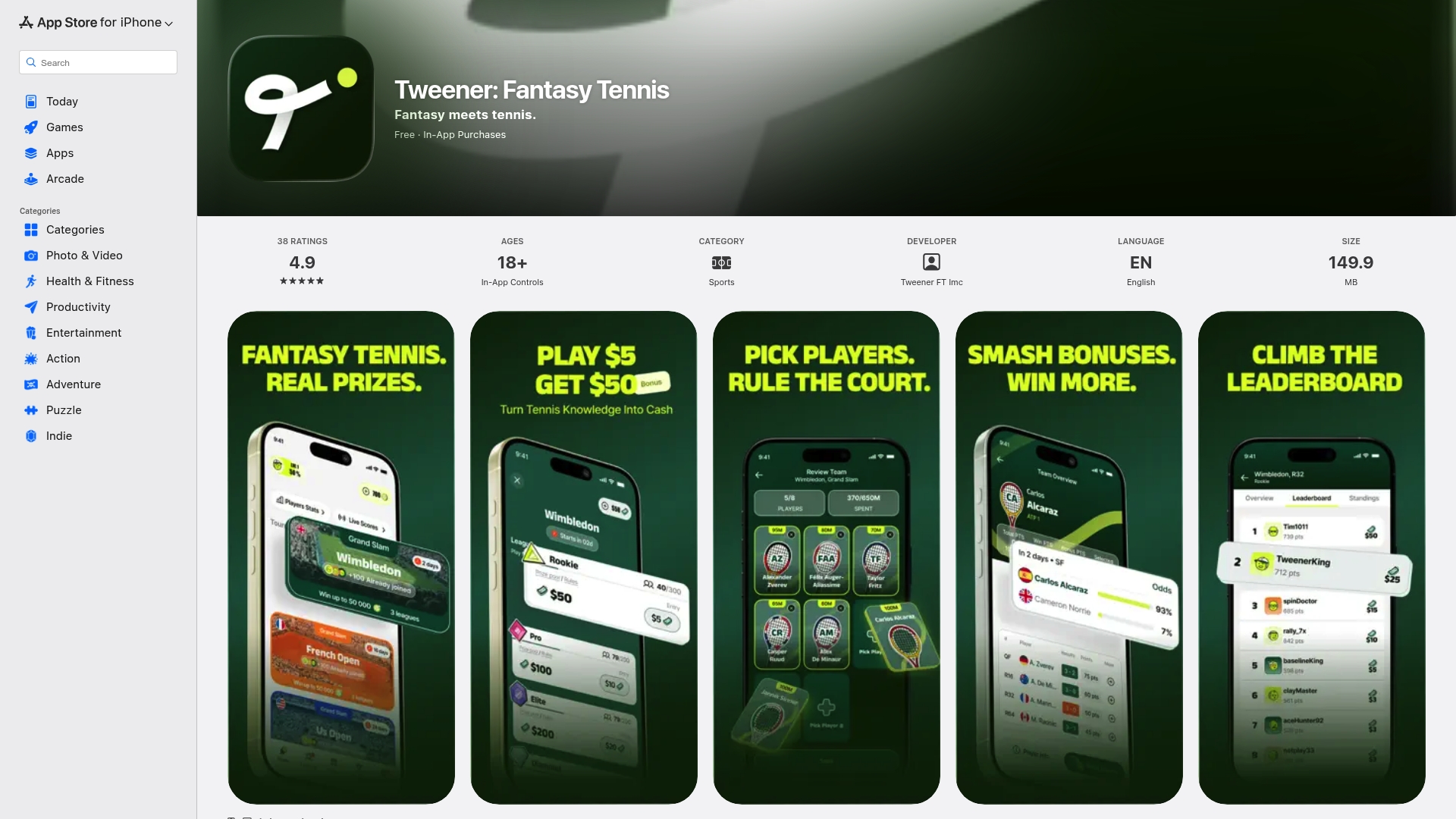
Explore Tweener to see how the app supports role-based lineup decisions with easy player comparison tools and real-time tournament data. Swapping player roles between events takes seconds, so you can adjust your roster as surface and matchup conditions change each week. Whether you are competing in free coin leagues or entering paid contests for real-money prizes, the platform gives you everything you need to act on the strategy you just learned. Download the Tweener app and check the Tweener game rules to understand exactly how each role and scoring category works before your next contest.
Frequently asked questions
Which fantasy tennis player role gives the most points?
Big servers score highest per match in formats that award +2 points per ace, making serve-heavy players the top ceiling assets in most scoring systems.
Should I pick all-court players or specialists for season-long fantasy formats?
All-court players like Alcaraz and Sinner are the best choice for season-long formats because their adaptability keeps them competitive across every surface throughout the year.
What is a high-floor anchor in fantasy tennis?
A high-floor anchor is a consistent player who reliably earns points each week without the risk of a sudden early exit or low-output performance.
How do I use player roles to build a winning lineup?
Mix anchors, ceiling attackers, and underdogs in your roster, then adjust the balance based on the tournament surface, expected match lengths, and your specific fantasy format each week.