

TL;DR:
- Understanding prize structures is crucial for making strategic decisions in fantasy tennis contests.
- Contest type influences payout distribution, player selection, and overall strategy.
- Matching lineup choices to specific payout formats and prize rewards increases winning chances.
Most fantasy tennis players spend hours debating whether to pick Jannik Sinner or Carlos Alcaraz, but almost nobody asks the question that actually determines whether they finish in the money: how does this contest pay out? That blind spot costs players real rewards every single week. Prize structures in fantasy tennis are not one-size-fits-all. They range from tiered cash payouts over $1,000 in paid-entry leagues to ATP Finals tickets and branded merchandise in official free games. Understanding what you are actually competing for changes every decision you make, from which contest to enter to which players you put on your roster.
Table of Contents
- Understanding fantasy sports prize structures: Tennis edition
- Types of contests and how prizes are distributed
- Strategic team selection for maximizing prizes
- Nuances, edge cases, and what most players miss
- Our take: Why understanding prize structure is your real edge
- Ready to compete? Elevate your fantasy tennis game
- Frequently asked questions
Key Takeaways
| Point | Details |
|---|---|
| Tiered prizes dominate | Most fantasy tennis contests use tiered leaderboards for rewarding top performers. |
| Contest rules change strategy | Knowing the prize structure helps you pick teams and contests that match your risk preference. |
| Balance stars and value | Mixing elite players with value picks improves lineup depth for different prize structures. |
| Edge cases matter | Understanding volatile pricing and contest quirks can help you avoid strategic mistakes. |
Understanding fantasy sports prize structures: Tennis edition
Before you build a single lineup, you need to know what the prize pool actually looks like. Fantasy tennis rewards fall into three broad categories: cash, experiential prizes like event tickets, and merchandise. Each category comes with a completely different strategic logic.
Cash prizes are straightforward. You finish high enough on the leaderboard, you get paid. Paid-entry leagues like Fantasy ATP Tennis 2026 offer a guaranteed prize pool over $5,850 across 61 prizes, with a first-place payout of $1,173 and an entry fee of $17.60. That is a meaningful return if you crack the top spots, but the competition is sharper because everyone has skin in the game.
Official ATP Fantasy contests work differently. The ATP Fantasy game awards ATP partner merchandise and tickets to 2027 events, with the overall winner receiving two tickets to the Nitto ATP Finals including flights and accommodation. That is a prize most tennis fans would genuinely value, and it attracts a different kind of competitor.
Here is a quick breakdown of the main prize types you will encounter:
| Prize type | Typical contest | Top reward example |
|---|---|---|
| Cash payout | Paid-entry leagues | $1,173 first place |
| Event tickets | Official ATP Fantasy | Nitto ATP Finals |
| Merchandise | Official partner games | ATP branded gear |
| Virtual coins | Free-to-play apps | Gift card redemption |
The structural difference between winner-take-all and tiered leaderboards matters enormously. In a winner-take-all format, you need a perfect week. In a tiered payout, finishing in the top 15% is enough to see a return. Most serious platforms use tiered systems because they keep more players engaged longer.
"The prize structure you choose to compete in should drive your roster decisions, not the other way around."
For a deeper look at how payouts are calculated across different platforms, the guide on fantasy tennis payout structures breaks it down tournament by tournament. You can also explore how different fantasy tennis rewards compare across the major platforms before committing to a contest.
Types of contests and how prizes are distributed
Not all fantasy tennis contests are built the same, and the differences go well beyond the size of the prize pool. The type of contest you enter determines how many players get paid, how much the top spot is worth relative to the field, and whether your strategy should be conservative or aggressive.
Tiered leaderboard payouts are the most common structure in fantasy tennis, with top prizes ranging from $1,000-plus in paid-entry games to ATP Finals tickets in free official games. Here is how the main contest types compare:

| Contest type | Entry cost | Prize type | % of field paid |
|---|---|---|---|
| Paid-entry league | $10 to $25 | Cash | Top 10 to 15% |
| Official ATP Fantasy | Free | Tickets and merch | Top 1 to 5% |
| Free-to-play app | Free | Virtual coins or gift cards | Varies widely |
| Private league | Custom | Custom | Custom |
For real money fantasy tennis, the math is simple: entry fees fund the prize pool, and the platform takes a rake (a small percentage of the pool as a fee). Larger pools attract stronger competition, so your edge needs to be sharper.
Here is a numbered breakdown of how prizes typically flow in a paid-entry contest:
- Entry fees collected from all participants form the gross pool.
- Platform rake deducted (usually 10 to 15%) before prizes are calculated.
- Top finishers paid on a sliding scale, with first place taking the largest share.
- Bonus prizes sometimes awarded for specific achievements like highest single-round score.
- Remaining participants receive nothing, which is why contest selection matters.
Free-to-play platforms operate differently. The ATP Fantasy game uses a season-long leaderboard where consistency across tournaments accumulates points toward the top prizes. That format rewards depth of knowledge rather than a single hot week.
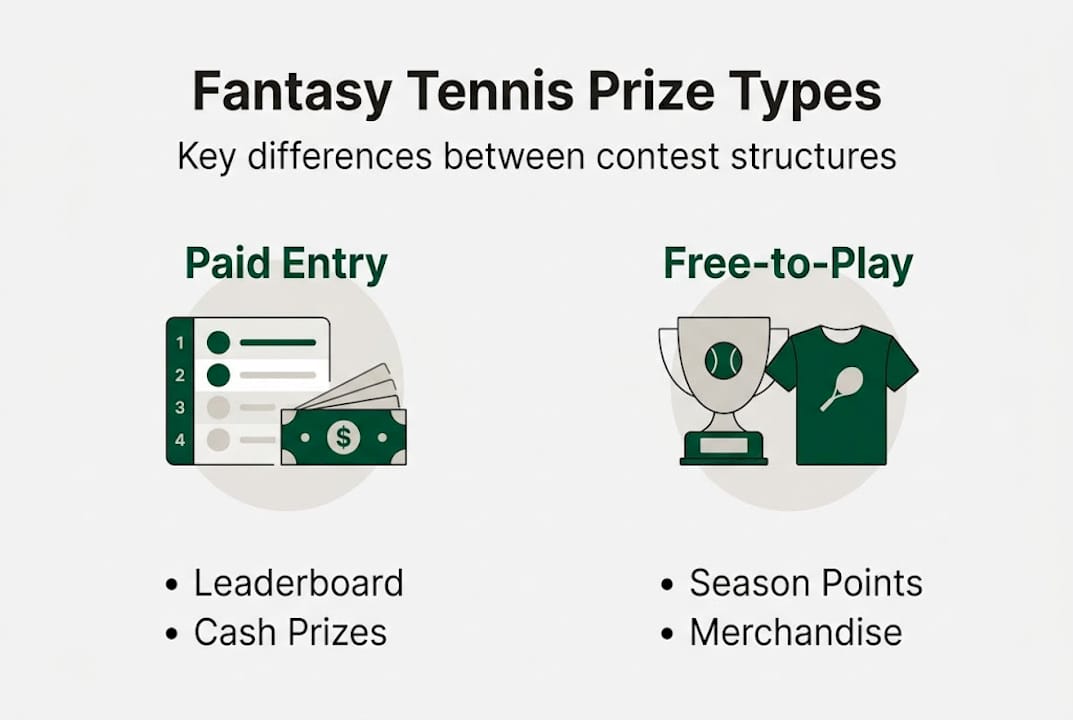
The key insight here is that free contests demand consistent performance while paid contests often reward variance. Knowing which game you are playing changes everything about how you should build your team.
Strategic team selection for maximizing prizes
Once you understand the prize structure of your contest, team selection becomes a much more focused exercise. You are not just picking the best players. You are picking the right players for the specific payout structure you are competing in.
For building a fantasy tennis lineup in a top-heavy payout contest, you need ceiling. That means taking calculated risks on players who could go deep in a draw, even if they carry some variance. In a deep-pool contest where 15% of entries get paid, you want a high floor, meaning players who are almost certain to win at least a couple of rounds.
The core principles of drafting tennis players for prize-focused play come down to a few reliable tactics:
- Balance stars with value picks. Top-ranked players cost more credits but provide reliability. Players ranked 30 to 100 on the ATP or WTA tour often offer strong value relative to their price.
- Prioritize surface specialists. A clay-court grinder at Roland Garros is worth more than a grass specialist in the same draw. Match the player to the surface.
- Monitor injury news. A player who is 80% fit is not worth full price. Late withdrawals and fitness doubts are among the most actionable edges available.
- Stack matches with close expected scores. When two evenly matched players meet, both are likely to play deep sets, generating more fantasy points regardless of who wins.
For optimizing tennis fantasy picks in contests with guaranteed prize pools, the field size matters too. Smaller fields mean your odds of cashing are higher, even if the absolute prize is lower.
Pro Tip: In winner-take-all or top-heavy contests, differentiate your lineup from the field. If everyone picks Sinner, beating the field means finding the player who outperforms him that week, not just picking him yourself.
Nuances, edge cases, and what most players miss
Even experienced fantasy tennis players leave prizes on the table because they miss the fine print. The details of how contests are scored and priced create real strategic opportunities that most participants overlook.
Player pricing is one of the biggest sources of confusion. In the ATP Fantasy game, pricing is tied to live ATP rankings, which creates volatility. A player like Sinner might cost 36 credits while Zverev costs only 33 despite comparable recent form. That pricing gap does not always reflect actual expected fantasy output, and sharp players exploit those inefficiencies.
Another overlooked nuance: in most fantasy tennis formats, there is no penalty for a player losing in straight sets. A quick loss is just a zero, not a negative score. That changes how you think about risky picks. A player with a 40% chance of a deep run and a 60% chance of a first-round exit is worth considering if their ceiling is high enough.
"Mid-tier players ranked 15 to 30 are often the worst value in fantasy tennis. They cost almost as much as top players but rarely go deep enough to justify the price."
This is the deadweight problem. Players in that middle tier eat up your budget without delivering the points ceiling you need to win. Avoid them unless the matchup is genuinely favorable.
Pro Tip: Check the draw before finalizing your lineup. A top-10 player in the easy half of a draw is worth more than the same player facing a tough opener. Draw position is free information that most casual players ignore.
For more on how to build lineups that account for these variables, the guide on building winning tennis lineups covers draw analysis in detail. Smart fantasy captain picks can also multiply your score significantly in formats that use a captain or multiplier mechanic.
Our take: Why understanding prize structure is your real edge
Here is something most fantasy tennis guides will not tell you: the biggest difference between players who consistently cash and players who do not is not player knowledge. It is contest selection and prize structure literacy.
You can know every ATP ranking, every surface stat, and every head-to-head record, and still lose money by entering the wrong contests. A player who understands that a top-heavy payout demands a high-variance lineup will consistently outperform a more knowledgeable player who plays it safe in the wrong format.
The essential fantasy tennis skills that actually move the needle are reading payout tables before entering, matching your lineup strategy to the specific distribution structure, and choosing contests where your edge is greatest relative to the field. Most players skip that homework entirely.
Contest selection is the most underleveraged skill in fantasy tennis. It is also the easiest one to improve because the information is right there in the rules before you enter.
Ready to compete? Elevate your fantasy tennis game
Now that you understand how prize structures actually work, it is time to put that knowledge into action. Knowing the theory is one thing. Competing in the right contests with a lineup built around the payout structure is where the real rewards happen.
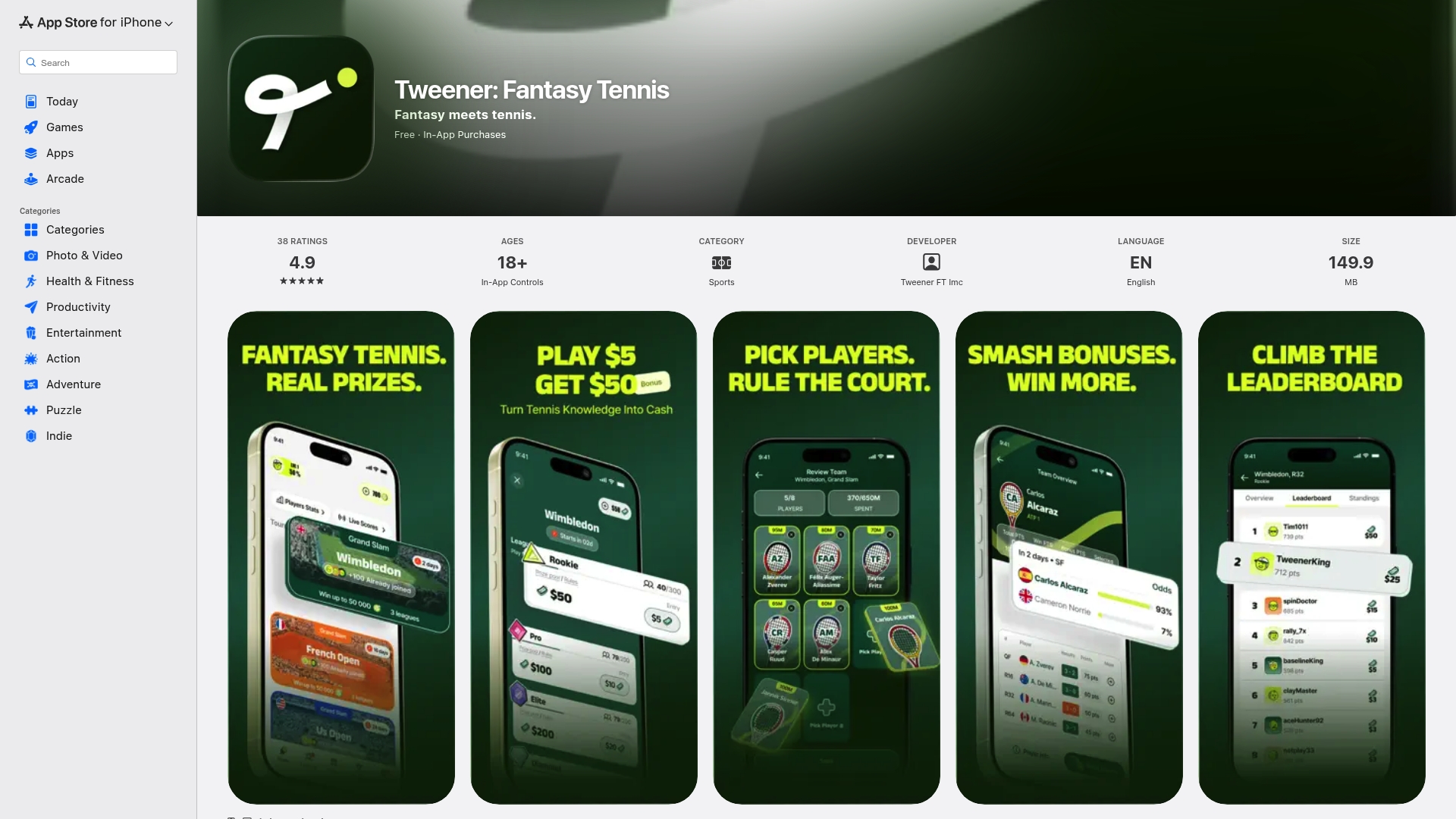
Tweener is built specifically for tennis fans who want to compete smarter. The platform connects you to fantasy contests across ATP and WTA tournaments, with both free-to-play and real-money modes so you can match your play style to the right prize structure. Download the Tweener app and start applying what you have learned today. Whether you are chasing cash prizes or competing for the love of the game, Tweener gives you the tools to compete with intent.
Frequently asked questions
How are fantasy tennis prizes typically structured?
Most fantasy tennis contests use tiered leaderboard payouts, where top finishers earn the biggest prizes and paid contests typically pay out to the top 10 to 15% of the field. Free official games often award experiential prizes like event tickets instead of cash.
What is considered a good lineup strategy for winning ATP Fantasy prizes?
Balance big names with value picks ranked 30 to 100, focus on surface specialists, stay updated on injuries, and adapt your risk level to match the specific contest's payout distribution. A deep-pool payout rewards consistency while a top-heavy payout rewards upside.
Are official ATP Fantasy contests better than cash entry fantasy tennis games?
Official ATP games offer unique prizes like Nitto ATP Finals tickets with flights and accommodation, while paid-entry contests focus on cash with broader payout distributions. The better choice depends on whether you value experiential rewards or direct financial return.
Why do some players cost more than others in fantasy tennis?
Player prices are tied to live ATP rankings, which creates pricing gaps that do not always match current form. Sinner, for example, costs 36 credits versus Zverev at 33 despite similar recent output, making the cheaper option better value in some contests.