

Most tennis fans assume that only the top one or two finishers walk away with anything meaningful in fantasy tennis. That assumption costs people real money and real opportunities. Payout structures across mobile fantasy tennis apps vary dramatically, and some platforms reward dozens of participants, not just the winner. This guide breaks down exactly how payouts work, from guaranteed prize pools and entry fees to virtual credit systems and tie-break rules. Whether you're playing for cash or competing for bragging rights, understanding how prizes are distributed will change how you pick your contests.
Table of Contents
- What is a payout structure in fantasy tennis?
- Types of payout structures on fantasy tennis platforms
- How prize money is distributed and what influences your payout
- What happens in edge cases: ties, low entries, and season-long rewards
- Rewards beyond cash: credits, badges, and bragging rights
- Ready to play? Try Tweener and discover your payout potential
- Frequently asked questions
Key Takeaways
| Point | Details |
|---|---|
| Payout structures vary | Fantasy tennis apps use diverse systems, from cash pools to credits and badges. |
| Multiple ways to win | You don’t always have to place first to earn prizes or rewards. |
| Read payout rules carefully | Contest structures, tie-breaks, and prize tiers differ significantly by app. |
| Non-cash rewards matter | Credits, badges, and recognition keep players engaged beyond cash incentives. |
What is a payout structure in fantasy tennis?
A payout structure is the system that determines how prizes are divided among participants in a fantasy tennis contest. It defines who gets paid, how much they receive, and under what conditions. Think of it as the rulebook for rewards, sitting quietly behind every league you join.
Why does this matter beyond just knowing who wins? Because payout structures shape strategy. A contest that pays only the top three spots demands a high-risk, high-reward approach. A contest that pays 60 spots rewards consistency and smart roster management. Understanding the difference helps you choose the right contest for your play style, which is one of the core fantasy team competition advantages that experienced players leverage.
Here are the core concepts you need to know:
- Guaranteed prize pool (GPP): A fixed total prize amount that gets paid out regardless of how many people enter.
- Rake: The operator's cut, usually taken from entry fees before the prize pool is calculated.
- Payout tiers: The ranked positions that receive prizes, from first place down to the last paid spot.
- Season-long vs. daily formats: Season-long leagues often spread payouts across more participants, while daily fantasy sports (DFS) contests tend to be more top-heavy.
"Payouts favor top performers but spread to encourage participation" is the guiding philosophy behind most well-designed fantasy tennis prize structures.
Types of payout structures on fantasy tennis platforms
Not all fantasy tennis apps handle prizes the same way. The platform you choose has a bigger impact on your potential earnings than almost any other decision you make.
Here's a comparison of the major formats you'll encounter:
| Platform | Entry fee | Prize pool | Paid spots | Reward type |
|---|---|---|---|---|
| Zweeler | €15 to €17 | $5,850 | 61 | Cash |
| DraftKings | Varies | Varies (GPP) | Top 20% | Cash |
| Smash It | Free | N/A | N/A | Credits |
| Game Set Match | Free | Small prizes | Top 3 | Mixed |
Zweeler's season-long contest charges a €15 to €17 entry fee and distributes $5,850 across 61 payout spots, making it one of the more participant-friendly cash structures in fantasy tennis. DraftKings and similar DFS platforms use GPPs with top-heavy payouts and a 10 to 15% rake, meaning the house takes its cut before prizes are distributed. Smash It uses a credit system and platforms like FanSlam offer no-cash rewards, focusing instead on engagement and community.
Here's how each model works in practice:
- Cash prize pools (DFS style): You pay an entry fee, the platform pools those fees, takes a rake, and distributes the remainder to top finishers. High variance, high reward.
- Season-long cash pools: Entry fees fund a fixed prize pool distributed across many finishers over a full season. Lower variance, rewards consistency.
- Credit and virtual reward systems: No real money changes hands. You earn in-app currency redeemable for perks, gift cards, or other rewards.
- Free leagues with minor prizes: Open to everyone, low stakes, great for learning the game before committing real money.
Understanding the difference between cash vs. credit systems is essential before you deposit a single dollar into any platform.
How prize money is distributed and what influences your payout
Knowing a prize pool exists is one thing. Understanding how that money actually flows to participants is another.
Fixed prize pools, like Zweeler's $5,850 structure, pay out the same total regardless of entries. Variable pools, common in DFS, grow as more players join. Both models have trade-offs. Fixed pools give you certainty. Variable pools can balloon into massive payouts but also attract sharper competition.
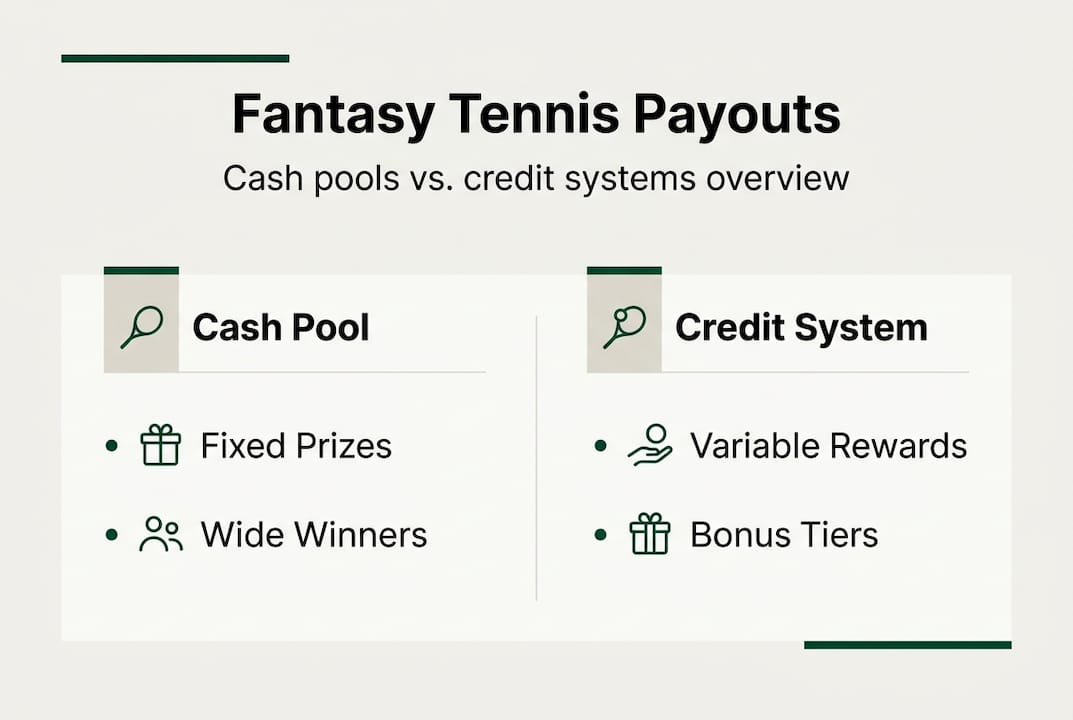
In Zweeler's ATP Tennis contest, first place wins approximately $1,173, but 61 prizes are paid out from the total $5,850 pool. That means a much larger percentage of participants walk away with something. Compare that to DraftKings GPPs, where the top finisher can take 10 to 20% of the entire pool, with sharply declining amounts for every position below.

Here's a simplified look at how those distributions compare:
| Finish position | Zweeler (% of pool) | DFS GPP (% of pool) |
|---|---|---|
| 1st | ~20% | 10 to 20% |
| 2nd to 5th | ~15% combined | 5 to 10% combined |
| 6th to 20th | ~25% combined | 3 to 7% combined |
| 21st to 61st | ~40% combined | 0% (unpaid) |
The contrast is stark. Zweeler's model rewards a much wider field. DFS rewards the sharpest players at the top.
Pro Tip: Always read the full payout table before entering any contest. Look for the "last paid place" and calculate what percentage of the field gets paid. If fewer than 15% of entrants receive prizes, you're in a high-variance contest that demands a different lineup strategy. You can explore Tweener prize pool details to see how transparent prize distribution looks in practice, and check out winning lineup strategies to match your picks to the contest format.
What happens in edge cases: ties, low entries, and season-long rewards
Standard payout rules cover most situations. But edge cases happen more often than you'd think, and being caught off guard can cost you.
Here are the most common edge cases and what to expect:
- Ties for a paid spot: Most platforms split the combined prize money for the tied positions equally among tied participants. Some use a tie-breaker statistic, like total aces or games won, to separate finishers.
- Low entry counts: In DFS GPPs, fewer entries can actually increase individual payouts since the pool is fixed but fewer people share it. However, some platforms cancel contests or reduce paid spots if minimum entry thresholds aren't met.
- Season-long formats: Consistent performance across multiple tournaments is the key to season-long payout structures. One bad week won't eliminate you, but sustained poor picks will.
- Cancelled tournaments: Real-world events like weather delays or player withdrawals can affect scoring and, in some cases, prize distribution. Always check platform policies.
Pro Tip: Before entering any contest, read the platform's official rules on tie-breaks and minimum entries. You can review prize tie-break rules and the full fantasy tennis platform rules to know exactly what you're signing up for. Five minutes of reading can save you a lot of frustration.
Rewards beyond cash: credits, badges, and bragging rights
Cash isn't always king. A growing number of fantasy tennis apps have built reward systems that keep players engaged without involving real money at all.
Why do platforms do this? Because not every player wants to risk cash, and not every market allows real-money contests. Some platforms use virtual credits or minor in-app rewards rather than cash, making fantasy tennis accessible to a much wider audience.
Here's what non-cash reward systems typically include:
- In-app credits: Earned through gameplay, redeemable for gift cards, premium features, or contest entries.
- Badges and achievements: Unlocked by hitting milestones like winning a league, picking a perfect lineup, or playing a set number of contests.
- Leaderboard rankings: Public standings that give competitive players social recognition without a cash prize attached.
- Bragging rights: Private leagues with friends where the prize is simply the satisfaction of winning.
These systems serve a real purpose. They keep casual players engaged, build community, and give everyone a reason to keep coming back even when they're not ready to play for cash. Check out the in-app reward guide for a deeper look at how credits and achievements work, and explore team management for rewards to understand how roster decisions connect to your reward potential.
Ready to play? Try Tweener and discover your payout potential
You now understand how payout structures work across the fantasy tennis landscape. The next step is putting that knowledge to use on a platform built specifically for tennis fans.
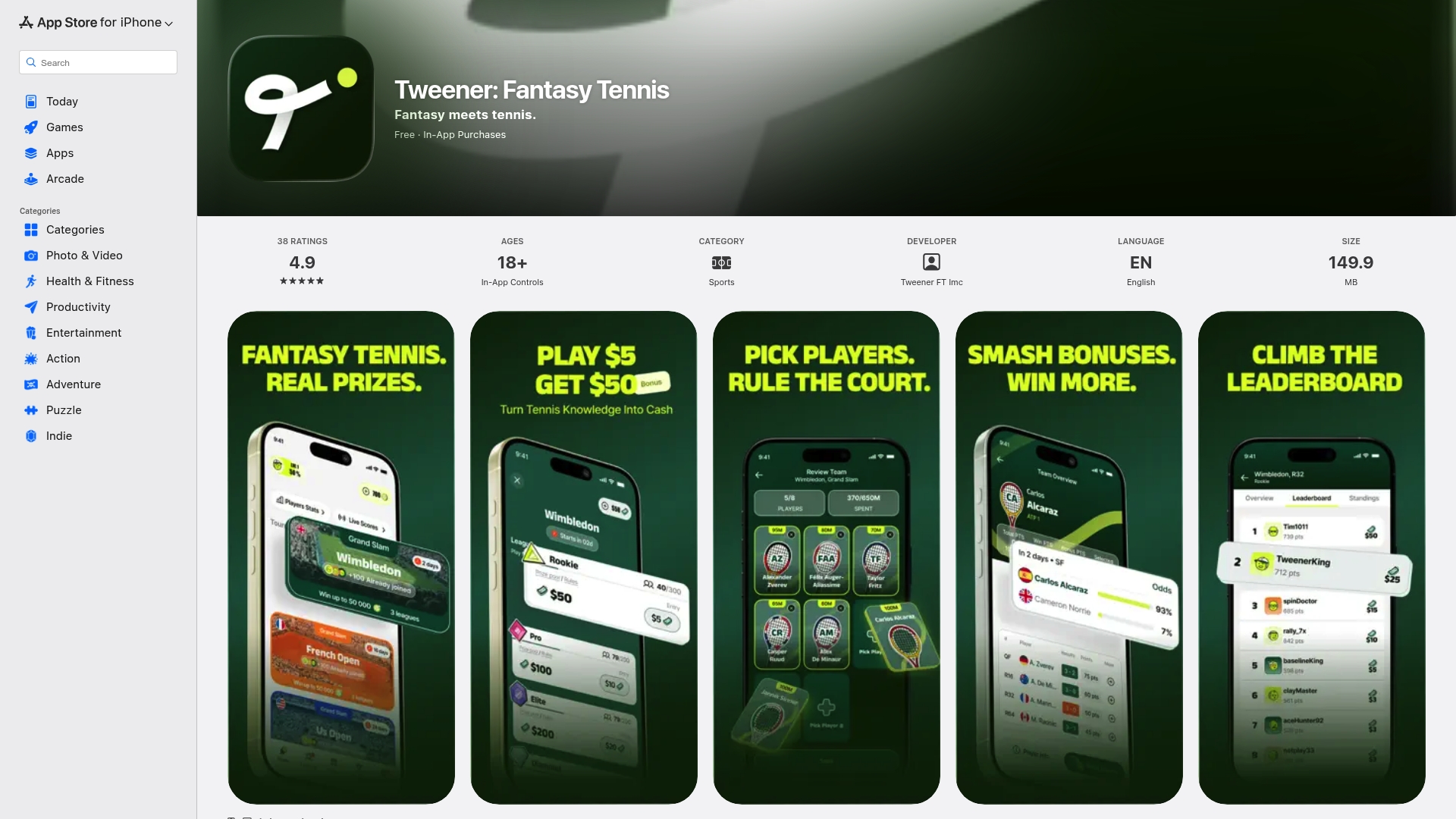
Tweener offers both a free mode with virtual coins redeemable for real rewards and a cash mode for players ready to compete for real-money payouts. Prize distribution is transparent, the app is built for mobile, and you can jump into a contest during any live ATP or WTA tournament. Whether you want to test your lineup skills risk-free or step into a paid contest, Tweener makes it easy to get started. Download Tweener today and review the Tweener game rules before your first contest so you know exactly how prizes are distributed.
Frequently asked questions
How do guaranteed prize pools work in fantasy tennis?
Guaranteed prize pools promise a fixed total payout distributed among winners regardless of how many players enter the contest. This means the prize amount is locked in from the start, giving you certainty before you commit.
What is 'rake' and how does it affect payouts?
Rake is the 10 to 15% operator fee taken from entry fees before the prize pool is calculated. It means the actual payout pool is always slightly less than the total amount collected from participants.
Can I win rewards in fantasy tennis without finishing first?
Absolutely. Platforms like Zweeler pay prizes to 61 places in their fantasy ATP Tennis contest, meaning a large portion of the field walks away with something.
What happens if there's a tie for a prize spot?
Most fantasy tennis apps follow platform-specific tie-breaker rules such as splitting the combined prize money equally or using a secondary statistic to separate tied participants.
Are there ways to win in fantasy tennis besides cash prizes?
Yes. Many mobile apps award in-app credits or badges as rewards, giving players real value and social recognition without requiring any cash to be on the line.