
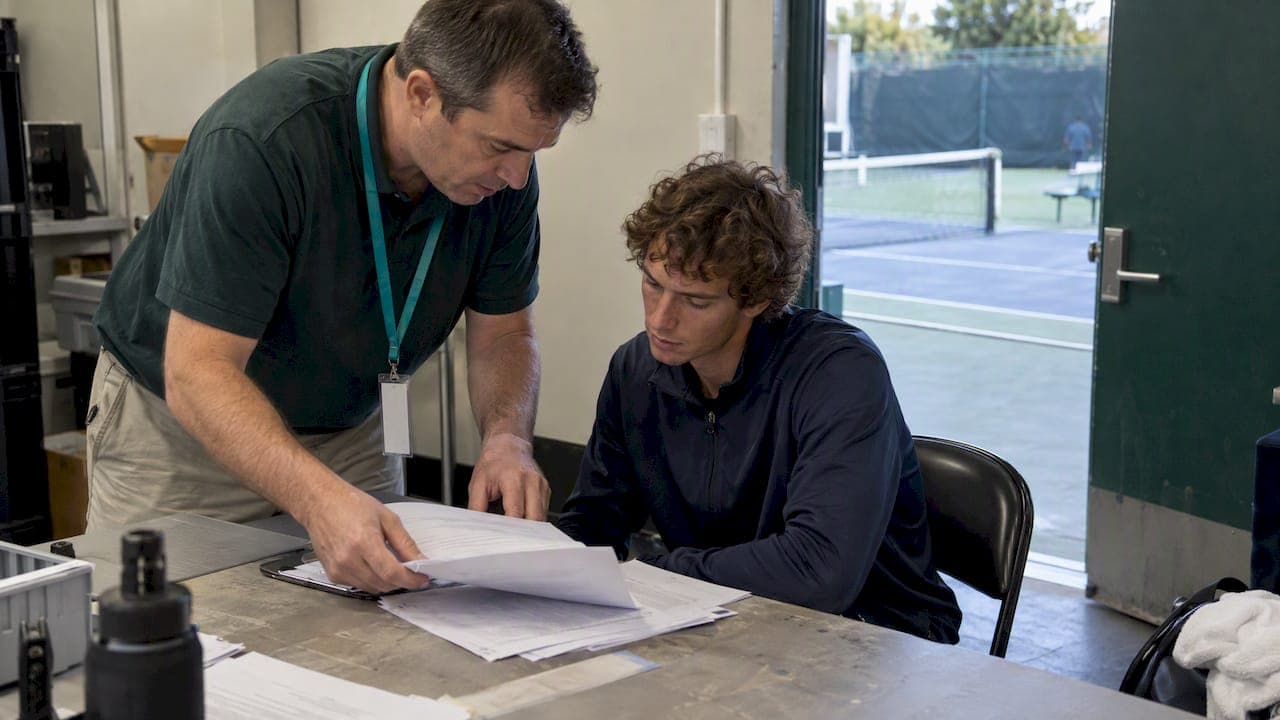
Special exempt tennis refers to the "SE" label on a draw, a main-draw entry given to a player who is still competing in a qualified event when the next tournament's qualifying begins. The player must also be on the qualifying acceptance list and have applied. Tour rulebooks govern the details, and we break them down below.
TL;DR:
- Under ATP rules, a player still on court at 9 p.m. local time at the qualifying site remains eligible only if that player wins.
- For ATP 500 draws, prior events may include another ATP 500, a Masters 1000, a Grand Slam, or an ATP 250 in the same region.
- The number of SE places varies by draw; when eligible applicants outnumber spots, ranking or protected ranking sets priority, subject to rulebook limits.
- Players added after the withdrawal deadline remain bound by commitment rules, so check the tournament notice and updated draw before adjusting fantasy lineups.
Table of Contents
- How does a player earn a special exempt spot?
- Which events count as qualified tournaments?
- How do tournaments fill SE spots when several players qualify?
- What deadlines and timing rules should you watch?
- How does SE show up on a draw?
- What does the official rule language actually say?
- Why special exempts make tennis weeks better
- How we help you react to late draw changes
- FAQ
- Sources
How does a player earn a special exempt spot?
Think of SE as a procedural entry category, not a reward. Under the 2026 ATP rules, a player must be on the qualifying acceptance list, still competing in a qualified event when qualifying begins, and not ranked high enough at the entry deadline to have been a direct acceptance. A player with a protected ranking can be considered too, but the rulebook limits how that ranking applies. We cover the basics in our protected ranking guide.
- Qualifying acceptance list: Being on it is the ticket. A player who skips the entry process cannot be added later because he went deep the week before.
- The "still competing" test: The player must still be in a qualified event on the day qualifying starts. A match that ends after midnight does not automatically count, and a player on court at 9 p.m. local time at the qualifying site is eligible only if he wins that match.
- Not a medical exemption: SE has nothing to do with a Therapeutic Use Exemption, which is an anti-doping process.
- Not a wildcard: A wildcard is a discretionary invitation. Our wildcard explainer covers the contrast.
The rule exists for fairness: a player should not abandon a deep run just to report for next week's qualifying, yet the tight "still competing" test stops ordinary withdrawals from turning into SE berths.
Which events count as qualified tournaments?
The previous week's event must be a "qualified tournament" for the one you want to enter, and the lists differ by level. ATP Chapter VII sets them out:
- Masters 1000: an SE may come from another Masters 1000, an ATP 500 or a Grand Slam.
- ATP 500: an SE may come from an ATP 500, a Masters 1000, an ATP 250 in the same region or a Grand Slam.
- ATP 250: an SE may come from an ATP 250, ATP 500, Masters 1000 or Grand Slam.
- Challenger: the rules lean on same-region events unless no Challengers are scheduled.
- Juniors: for 2026 ITF junior events, a qualified tournament can be the same grade or one grade higher or lower, with regional limits for J30 through J300. That is a junior rule and does not apply to ATP, WTA or adult ITF events.
WTA wording and tournament notices can differ, so always check the event's own draw notice.
How do tournaments fill SE spots when several players qualify?
The number of SE places varies by event, so check the draw composition each tournament publishes. When more eligible players want a place than exist, the ATP orders them by ranking or protected ranking, subject to rulebook restrictions.
- Spot count: Check the event's draw composition, not a general rule of thumb.
- Priority: Ranking or protected-ranking order decides who gets in first.
- Exceptions: The rulebook lets some placements move across levels, and the acceptance list and current rulebook define the final order.
- Last resort: If no eligible player exists, the spot is handled under the rulebook's other entry provisions rather than sitting empty by default.
The takeaway is that SE spots are scarce and rule-bound, so a deep run does not guarantee one.
What deadlines and timing rules should you watch?
Timing is where most SE confusion starts. The ITF regulations say a special exempt must be on the qualifying acceptance list, apply, and satisfy the qualified-tournament condition, and that commitment rules apply once accepted. Players added after the withdrawal deadline are bound by those commitment rules, so an SE acceptance carries consequences if the player later pulls out.

Pro Tip: Track the previous event's schedule against the next tournament's qualifying start time, because a match that runs late can decide whether a player counts as still competing.
To follow an SE storyline day by day:
- Check who is on the next event's qualifying acceptance list.
- Note when qualifying begins at the next site.
- Watch which prior-week players are still alive in the semifinals or final.
- Look for late matches near the 9 p.m. local cutoff.
- Read the updated draw to see who was added as an SE.
For background on qualifying itself, see our guide to the qualifying round.
How does SE show up on a draw?
On an official draw, "SE" sits next to the player's name, marking him or her as a main-draw entrant who bypassed qualifying. Our draw guide shows how to read the rest of the bracket.
- Linz: The WTA's Linz 2026 preview lists a draw composition that explicitly includes a special exempt slot.
- Tournament pages: Event sites such as the Australian Open explain SE as a main-draw award for players still competing elsewhere.
- Fan impact: SEs arrive late, so lineups and brackets can shift after you thought a draw was set.
For fantasy players, the practical effect is a late main-draw entrant and a slightly altered qualifying field, which is worth a lineup check before play starts.
What does the official rule language actually say?
The ATP text in Chapter VII, section 7.10, defines SE eligibility, the qualified-event lists, the 9 p.m. match-win condition and the cross-level exceptions. ITF regulations treat SE as an entry category requiring application, acceptance-list status at the freeze deadline and a qualified-tournament condition.
Special exempt status is not an automatic entitlement: the player must be on the qualifying acceptance list, apply, and still be competing in a qualified event.
Rules change by season and by tour, so confirm the details against the tournament's own draw notice.
Why special exempts make tennis weeks better
An SE protects an in-form player who would otherwise face an impossible choice, and it creates the late-week storylines I enjoy most: someone wins a title on Sunday and is playing a main draw on Monday. My tracking advice is simple. Follow qualifying start times, and read draw previews alongside the rulebook highlights. Tweener is a fantasy tennis app for following players and competing in fantasy contests.
— Nathan
How we help you react to late draw changes
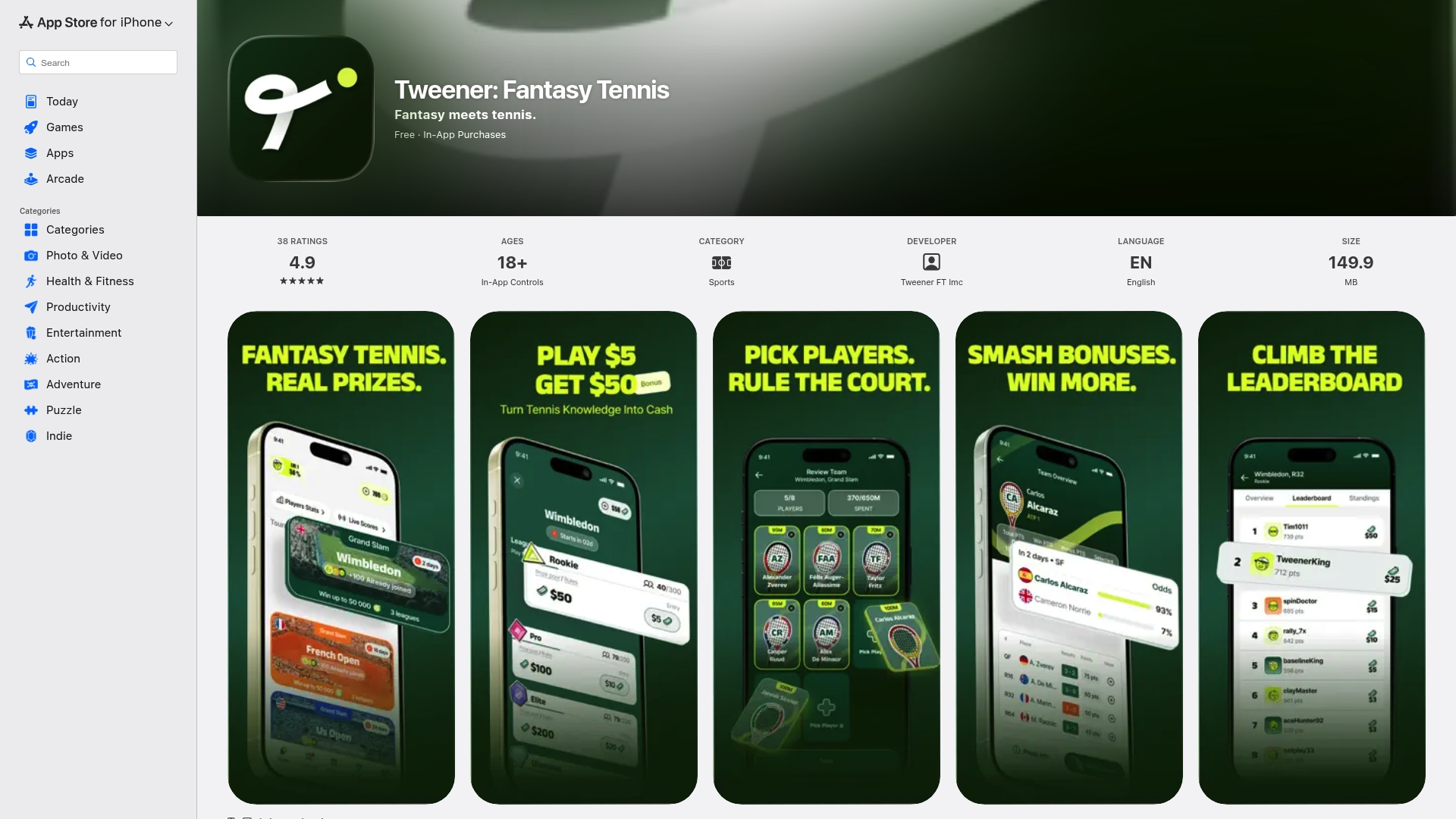
When an SE reshapes a main draw, you can adjust fast. We built Tweener around Draft Mode and Pick'em Mode, so you can respond when a late entrant changes who looks strong. Our game rules explain how the modes score real matches, and you can open the app on Tweener to track players and set your lineup.
FAQ
What does SE mean on a tennis draw?
SE stands for special exempt, a main-draw entry for a player who could not play qualifying because he or she was still competing in a prior qualified event. It is a procedural category, not a medical or discretionary one.
How many special exempt spots does a tournament have?
The number of SE places varies by tournament. The draw composition published for each event gives the exact number.
Is a special exempt the same as a wildcard?
No. A wildcard is a discretionary invitation, while a special exempt must be on the qualifying acceptance list, apply and still be competing in a qualified event.
Does a late match decide special exempt status?
It can. Under ATP rules, a player on court at 9 p.m. local time at the qualifying site is eligible only if he wins that match.