

You can win a prize in a fantasy app if you are a legal U.S. resident, meet the minimum age, hold an account in good standing and live in a state where that contest type is allowed. Most apps set the age at 18, some states set it higher, and winners may be asked to prove who they are before a payout. Free contests, cash contests and promotional rewards each have their own rules, so check the one you are entering.
This guide walks through each requirement, shows where rules differ by state, and explains what happens to a prize when something doesn't check out. It also covers the tax side, because a prize that is eligible can still create paperwork.
TL;DR
- Typical prize rules require legal U.S. residency, a minimum age (18 in most places, 21 in some) and a valid account in good standing.
- Eligibility depends on where you are when you play. Some states restrict or prohibit paid fantasy contests, and some set a higher age.
- Winners can be asked for government ID, tax forms or signed eligibility paperwork before a prize is released.
- Free-coin contests, cash contests and promotional giveaways are often governed by separate rules, so read the one attached to your contest.
- Prizes can be taxable whether or not you receive a tax form.
Table of Contents
- Who is eligible to win a prize in a fantasy app
- Age requirements: why 18 is not always enough
- State rules: where location changes everything
- Free contests, cash contests and promotional rewards
- What winners may need to provide
- What happens if you don't meet the rules
- Prizes and taxes
- Where to verify the current rules
- Play for coins or for cash
- FAQ
- Sources
Who is eligible to win a prize in a fantasy app
There is no single national rulebook for fantasy prizes. Each operator writes its own official rules, and each state layers its own law on top. Still, the same building blocks show up almost everywhere.
Take one published example. One app's official prize rules say a winner must be a legal resident of the United States, be at least 18 at the time of participation and have a valid account in good standing. The same rules say players aged 13 to 17 may take part in challenges for fun but cannot receive any prize or reward (Bangr Official Prize Rules). That structure, with fun play open to a wider group and prizes reserved for adults, is common across the industry.
Legal practitioners who write promotion rules recommend spelling out age, geographic location, residence and citizenship in the eligibility section. They also advise excluding the sponsor's employees and their immediate families to avoid any appearance of impropriety (K&L Gates guide to sweepstakes and contest promotions). So if you work for an operator, or live with someone who does, expect to be excluded from its prizes.
A quick checklist of what you will usually see:
- Age. Usually 18, sometimes 19 or 21, depending on the state and the product.
- Residency. Legal U.S. residency and a home address in a state where the contest is offered.
- Account standing. One account per person, accurate details and no rule violations.
- Location at play. Apps that run cash contests commonly confirm your physical location when you enter.
- No conflict of interest. Staff and their close family members are typically excluded.
If your goal is to compare how apps handle these checks, the pattern is more useful than any single brand. Look for a plain-language rules page, not just a sign-up screen.
Age requirements: why 18 is not always enough
Age is the requirement that trips up the most players, because it can change with the state and the product. States may set minimum ages for entry, usually 18 or 21 (Sprintlaw). A prize rules page may also tie eligibility to the age of majority where you live, so an 18-year-old in a state with a different age of majority can still fall short.
Legislatures keep moving this line. Illinois lawmakers passed a fantasy sports framework in 2026 that sets a minimum age of 21 for daily fantasy contests and directs the state gaming board to write rules on geolocation, identity verification, anti-money-laundering and responsible gaming. Its fantasy provisions were slated to take effect July 1, 2026 (Holland & Knight). If you live in a state that has recently changed its law, assume the older "18 and up" rule you remember may no longer apply.
How do apps actually confirm age? Through identity checks at sign-up, at deposit or at withdrawal. Our explainer on age verification in gaming apps covers what those checks look like and why they are asked for.
State rules: where location changes everything
Fantasy sports law in the U.S. is state by state. A contest that is fine in one state can be restricted next door, and that is true for prize-bearing contests specifically.
Some operators publish their own lists. One prize-drawing rulebook, for example, names Delaware, Idaho, Massachusetts, Michigan, Nevada, New York, Washington and Washington, D.C. as restricted (Manifold prize rules). That list belongs to that operator and that kind of drawing. It is not a map of fantasy law, and your app's list may look quite different. The takeaway is simple: restrictions are real, they vary by product, and the operator's own rules page is the first place they appear.
States can also restrict what a prize may be. Sprintlaw notes that states may ban certain prize types such as alcohol, tobacco, firearms or lottery tickets, and that California is strict on alcohol promotions (Sprintlaw). For a typical fantasy app paying cash or gift cards, that matters less than residency and age, but it explains why promotional prizes sometimes come with extra conditions.
For a deeper state-level read, these guides go further:
- 5 checks before you deposit: daily fantasy legal states
- 4 U.S. state rules for fantasy sports cash and how to check
- Fantasy tennis legal states: where you can play for cash
How to check your own state
- Open the app's official rules or terms and find the eligibility section.
- Find the list of states where cash contests are offered, if one is published.
- Look for the minimum age that applies to paid entry.
- Confirm what the app says about location checks when you enter.
- For anything unclear, contact the app's support and keep the reply.
Your state gaming regulator's website is the authority on state law, and it is worth a visit if you are weighing a deposit.
Free contests, cash contests and promotional rewards
One app can run three different kinds of prize, and each can have its own eligibility terms.
| Prize type | What you play with | What you can win | Where rules usually differ |
|---|---|---|---|
| Free contest | Virtual coins | Coins, which may be redeemable for items such as gift cards | Often open more widely, but still bound by the app's terms and account rules |
| Cash contest | Deposited money | Real-money payouts | State availability, minimum age, location checks, identity checks |
| Promotional reward | Varies | Bonuses, giveaways, tournament extras | Separate promotion rules, with their own dates, exclusions and restrictions |
Two habits save headaches. First, don't assume that being allowed into a free contest means you qualify for a cash one. Second, treat a promotion as its own mini-contract with its own fine print.
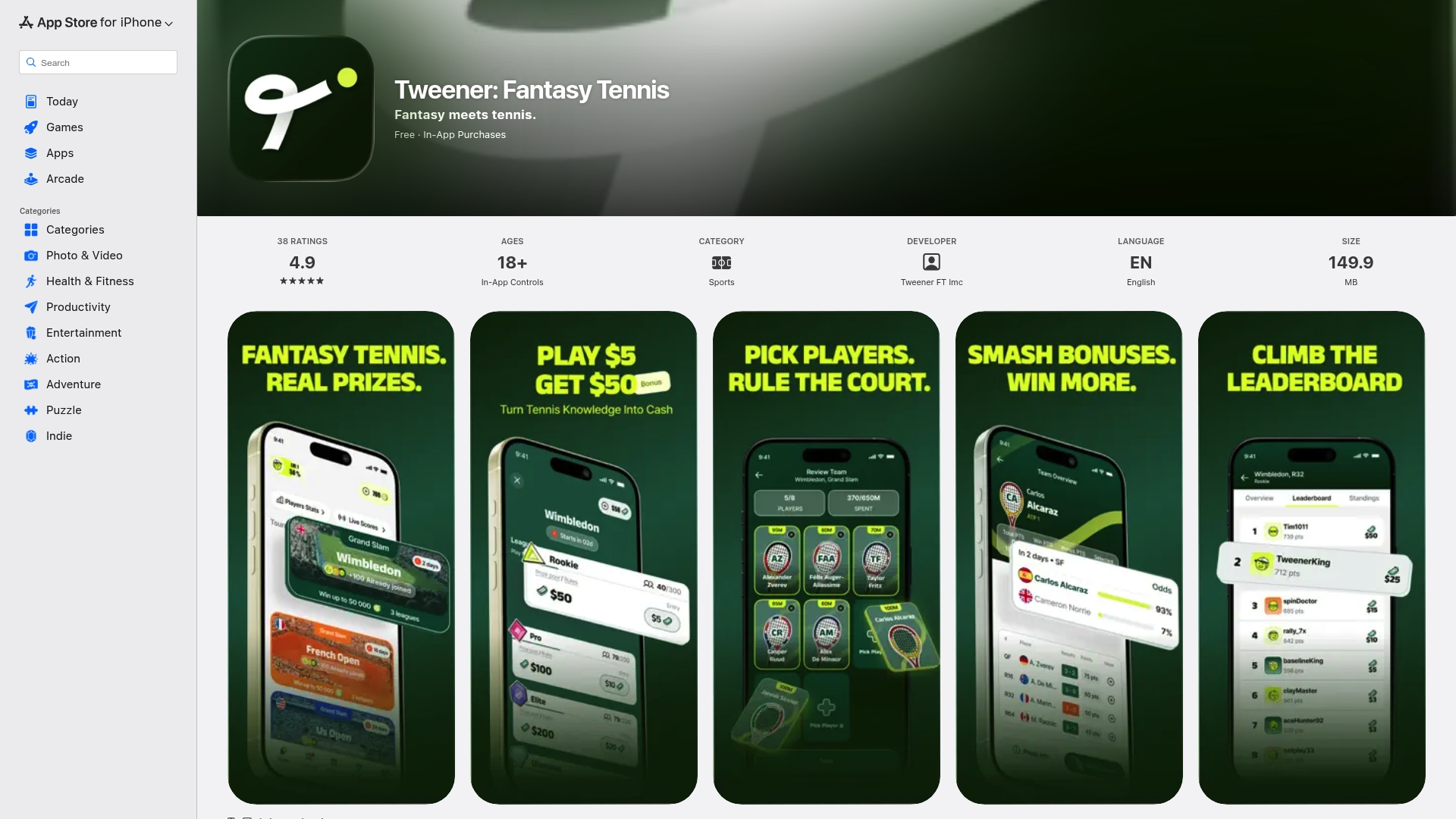
At Tweener, free play runs on virtual coins that you earn through gameplay and other in-app activity and can later redeem for rewards such as gift cards. Cash mode, where you deposit money to enter paid contests for real-money payouts, is offered only where it is legally permitted. You can read the specifics in the Tweener game rules.

What winners may need to provide
Winning is not always the last step. Before a prize is released, an operator may ask you to verify your identity and eligibility, show a government-issued ID, sign an affidavit of eligibility and liability or publicity release, and provide tax documentation (Manifold prize rules).
That looks like a lot, so prepare ahead:
- Use your legal name and real date of birth when you sign up.
- Keep a valid, unexpired ID handy.
- Use a payment method in your own name.
- Expect to enter your tax details if your winnings are large enough.
- Read any release before you sign it.
Mismatched details are the most common reason a payout stalls. An account opened with a nickname and a borrowed card is a problem waiting for a big win.
What happens if you don't meet the rules
If an app finds that you don't qualify, the usual outcomes are a voided entry, a forfeited prize, a restricted or closed account, or a blocked withdrawal. Exact consequences are set by each operator's terms, so look at the section on violations in the rules.
Operators have strong reasons to be strict. Legal guidance on promotions warns that sloppy eligibility handling can lead to expensive consequences, bad publicity and complications. It cites a 2005 case in which a Chicago radio station refused a car prize to a winner who was not a legal U.S. resident, leading to litigation and nationwide negative coverage (K&L Gates). That case shows why rules are written before the contest, not after the win.
You can avoid the problem entirely by meeting the requirements before you enter, not after you place. Eligibility rules for professionals are no different in spirit: tennis itself has strict participation rules, and the logic of banned-substance rules in competitive sports is the same as fantasy eligibility, namely that the list of who and what qualifies is set in advance and applied to everyone.
Prizes and taxes
Eligible does not mean tax-free. Monaco CPA's 2026 guide explains that under a provision of the 2025 federal tax law, the ordinary reporting threshold under Section 6041 rises from $600 to $2,000 for tax year 2026. It adds that fantasy receipts are reportable under income rules whether or not a form is furnished (Monaco CPA). In plain words: not receiving a form does not mean the income disappears.
Payment-processor reporting is a separate track. TurboTax's explainer says Congress's July 2025 law returned the third-party 1099-K threshold to more than $20,000 in payments and more than 200 transactions for 2025 and later years (TurboTax). How your entry fees and losses are treated depends on your own situation, so a tax professional should answer that one.
Keep a running log of deposits, entry fees and payouts. Our guides to fantasy sports taxes and entry fees in fantasy sports show what to track. If you are weighing how much to put in, see deposit limits on fantasy apps.
Where to verify the current rules
Rules change, so rely on primary pages instead of memory:
- The app's official rules or terms. They define age, residency, exclusions and what a winner must provide.
- The app's list of available states. Look for it near the cash-contest or deposit screens.
- Your state gaming regulator. It is the authority on your state's law.
- A tax professional. For anything about reporting and what you owe.
- Support. Ask in writing and save the answer.
If you run a private league with friends, set your own expectations too. Our guide to common fantasy league rules covers how commissioners can settle who is in and what is at stake before the first match.
Our take: eligibility is part of the game
We built Tweener around one sport, tennis, and we think a serious tennis fan deserves a clear answer to "can I win real prizes here?" before the first pick, not after the final.
That is why we run two tracks. Free play uses virtual coins you can earn and redeem for rewards such as gift cards, so you can learn Draft Mode and Pick'em Mode, study surfaces, head-to-head records and form, and compete in private leagues with friends without a deposit. Cash contests are for players who want real-money payouts, and they are offered only where it is legally permitted, in select U.S. states.
We see that as a feature, not a footnote. Skill-based play with clear rules means the winner is decided by who read the draw better, not by who slipped through a loophole. Check your state, read the rules, and then pick your players.
Nathan
Play for coins or for cash
If you want to practice before deciding, Tweener's free mode lets you build teams from real ATP and WTA players and compete for virtual coins. Where cash contests are available in your state, you can step up to paid entry for real-money payouts. Choose Draft Mode or Pick'em Mode on Tweener and read the game rules first so you know exactly what applies to you.
If you want to see how payouts are shaped before you enter, read how prize structures shape winning fantasy tennis teams and the rundown of the best fantasy tennis prizes.
FAQ
Can I win prizes in a fantasy app if I'm under 18?
Usually not. Published prize rules commonly let 13 to 17 year olds join challenges for fun but bar them from receiving any prize or reward (Bangr). Many states and apps set the minimum for paid contests at 18 or 21.
Do I need to live in the U.S. to win?
Generally, yes. Prize rules often require legal U.S. residency, and some add state-level limits. Check the eligibility section of the specific app before you enter.
Are free contests subject to the same rules as cash contests?
Not necessarily. Free contests, cash contests and promotions often have separate terms, and cash play is where state law and age limits bite hardest. Read the rules attached to the contest you are entering.
Will I need to show ID if I win?
Possibly. Operators may ask winners for government-issued ID, signed eligibility paperwork and tax documents before releasing a prize (Manifold prize rules). Keeping your account details accurate makes this quick.
Do I owe taxes on fantasy prizes?
In general, fantasy receipts are reportable under income rules even if you never get a form (Monaco CPA). A tax professional can tell you how entry fees and losses apply to you.
Sources
- Official Prize Rules, Bangr
- prize-rules, Manifold Docs
- Guide to Sweepstakes and Contest Promotions, K&L Gates
- Illinois Enacts First-Ever Fantasy Sports Regulatory Framework, Holland & Knight
- Sweepstakes vs Contest vs Giveaway: US Rules, Sprintlaw
- Fantasy Sports Taxes 2026, Monaco CPA
- Tax Considerations for Fantasy Sports Fans, TurboTax