

Daily fantasy sports are legal to play in the overwhelming majority of the United States. Salary-cap contests are available in all but a handful of states, while newer pick'em formats face tighter restrictions in places like New York and California. Five states, Hawaii, Idaho, Montana, Nevada, and Washington, effectively prohibit DFS entirely, so the real work is checking your state and your contest format before you deposit a dime.
TL;DR:
- Salary-cap DFS primarily relies on federal and state statutes, leveraging the UIGEA exemption, while pick'em formats face stricter legal restrictions and scrutiny.
- Five states—Hawaii, Idaho, Montana, Nevada, and Washington—effectively ban DFS due to broad gambling prohibitions or specific licensing requirements.
- Verifying your state's current legal status requires checking operator eligibility pages, state gaming commission or attorney general guidance, and confirming age and ID requirements before depositing.
- Operators like Tweener base their eligibility on actual state law, ensuring players only access cash contests where permitted and offering free-play options everywhere for engagement.
- Building a legal and strategic lineup starts with confirming your state’s rules and format restrictions to avoid deposit or participation issues during major tournaments.
Table of Contents
- Where Is DFS Legal? A State-by-State Snapshot
- Why Do Salary-Cap and Pick'em Games Get Treated Differently?
- Which States Effectively Ban DFS, and Why?
- How to Verify Your State's Status Before You Deposit
- Why Tweener Takes DFS Legality Seriously
- A Player's Take on Legal Awareness and Smart Strategy
- Play Tennis Fantasy the Right Way With Tweener
- Sources
Where Is DFS Legal? A State-by-State Snapshot
Daily fantasy sports occupy a strange legal middle ground in the U.S. There's no single federal law that says "DFS is legal here, illegal there." Instead, you get a patchwork of state statutes, attorney general opinions, and operator decisions that shift depending on the contest format you're playing.
Here's the practical breakdown most players need. States marked "Legal" allow traditional salary-cap DFS without major restriction. "Restricted" means the state permits some formats (usually salary-cap) but has carved out limits on pick'em or house-banked contests, or requires specific licensing. "Banned" means DFS operators have either been blocked by statute or have voluntarily withdrawn because the legal risk isn't worth it.
A few states deserve extra attention because the label alone doesn't tell the whole story:
- Louisiana legalized DFS only where local parishes approved it through referendum, so availability genuinely varies by parish, not just by state line.
- California never adopted a dedicated fantasy sports statute, so operators there tend to favor peer-to-peer pooled contests over house-banked pick'em products to stay on the safer side of the state's gambling laws.
- New York allows classic salary-cap DFS under its 2016 fantasy sports law, but pick'em formats have drawn separate attorney general attention in recent years, pushing some operators to adjust their product lineup for New York players specifically.
Treat every row above as a starting point, not a final answer. Laws change, operators pull out of states for business reasons unrelated to legality, and AG opinions get revised. A DFS state finder tool that separates salary-cap from pick'em status is a good cross-check, but the operator's own state-eligibility page and your state gaming commission's site are the sources that actually matter on the day you deposit.
Why Do Salary-Cap and Pick'em Games Get Treated Differently?
The legal split between formats comes down to one question regulators keep asking: how much of the outcome depends on the player's decisions versus the house's odds-setting?
Classic salary-cap DFS, where you build a full roster under a salary cap and compete against a field of other rosters, has leaned on the fantasy sports exemption written into the federal Unlawful Internet Gambling Enforcement Act (UIGEA). That exemption doesn't make DFS legal everywhere on its own, but it gave states a framework to write their own permissive statutes around, which most of them did between 2016 and 2020.
Pick'em and house-banked formats work differently—this reflects a legal distinction similar to those seen in other markets, which is why understanding sports betting legality in Canada provides useful comparative context. Instead of competing against other players' full rosters, you're picking over/under-style projections on individual players, and the platform sets the lines. That structure looks a lot closer to sports betting, which is exactly why states like New York and California have drawn separate lines around it.
A third category, peer-to-peer pooled contests, has emerged as an operator workaround in states wary of house-banked products. It keeps the "compete against other players, not the house" structure that made classic DFS defensible in the first place.
The takeaway: format isn't a technicality. It's the single biggest factor determining whether a contest is available in your state at all.
- Salary-cap: leans on the UIGEA fantasy exemption and state-level statutes
- Pick'em: faces the most AG scrutiny and state-by-state restriction
- Peer-to-peer pooled: an operator response designed to stay clear of betting classification
Which States Effectively Ban DFS, and Why?
Five states sit in a category of their own: Hawaii, Idaho, Montana, Nevada, and Washington effectively prohibit daily fantasy sports, and the reasons vary by state.
- Hawaii and Idaho have gambling statutes with no carveout for fantasy contests, so DFS falls under the same broad prohibition as other wagering activity.
- Montana treats most fantasy contests as gambling under existing law, with no legislative fix passed to date.
- Nevada requires the kind of casino-grade gaming license that most DFS operators aren't set up to pursue, given the state already runs a heavily regulated sports betting market.
- Washington has a state gambling law that explicitly excludes fantasy contests from its narrow legal exemptions, making it one of the clearest outright bans in the country.
Beyond those five, a second tier of states impose conditional restrictions rather than outright bans. Louisiana's parish-by-parish system and New York's pick'em-specific scrutiny both fall into this category, where the format or the location within the state matters as much as the state line itself.
Pro Tip: If you live in Louisiana, don't just check your state status. Look up whether your specific parish approved fantasy contests in its local referendum, since neighboring parishes can have completely different rules.
How to Verify Your State's Status Before You Deposit
Don't take any state-by-state table, including the one above, as the final word on your legal status. Tables age. Statutes get amended. Run this quick check before you enter a cash contest anywhere:
- Pull up the operator's own state-eligibility page first. Every legitimate DFS platform publishes one, and it reflects current business decisions, not just legal theory.
- Cross-check against your state gaming commission or attorney general's page. Arizona, Colorado, and Delaware all publish public guidance that spells out exactly how fantasy contests fit into state gaming law.
- If your state shows as "restricted," find the actual statute or AG opinion text and read the specific passage about fantasy contests. Read it conservatively; when the language is ambiguous, assume the stricter interpretation applies.
- Confirm the minimum age requirement (usually 18, sometimes 19 or 21 depending on the state) and have ID ready for verification, since age verification is standard across licensed operators.
- When you genuinely can't confirm your status, don't deposit. Play free-to-play contests until you've got a clear answer.
| Check | Where to look | Why it matters |
|---|---|---|
| Operator eligibility | Operator's own state list page | Reflects current business decisions, not just law |
| State legal status | Gaming commission or AG page | Primary source, most current and authoritative |
| Contest format rules | Statute or AG opinion text | Pick'em and salary-cap often differ within the same state |
| Age and ID | Operator sign-up flow | Standard requirement across every licensed platform |
Why Tweener Takes DFS Legality Seriously
Getting the legal map wrong isn't a minor error for a fantasy platform. Tweener built its cash-mode eligibility around actual state law, not around what's convenient for growth numbers, because a wrong answer here costs real users real money and real trust.
Tweener runs on real ATP and WTA results, letting you build a tennis roster and compete using stats like head-to-head record, surface form, and recent match data instead of guesswork. That's a fundamentally different product than a betting line, and it's why the platform treats state-eligibility transparency as core infrastructure, not an afterthought.
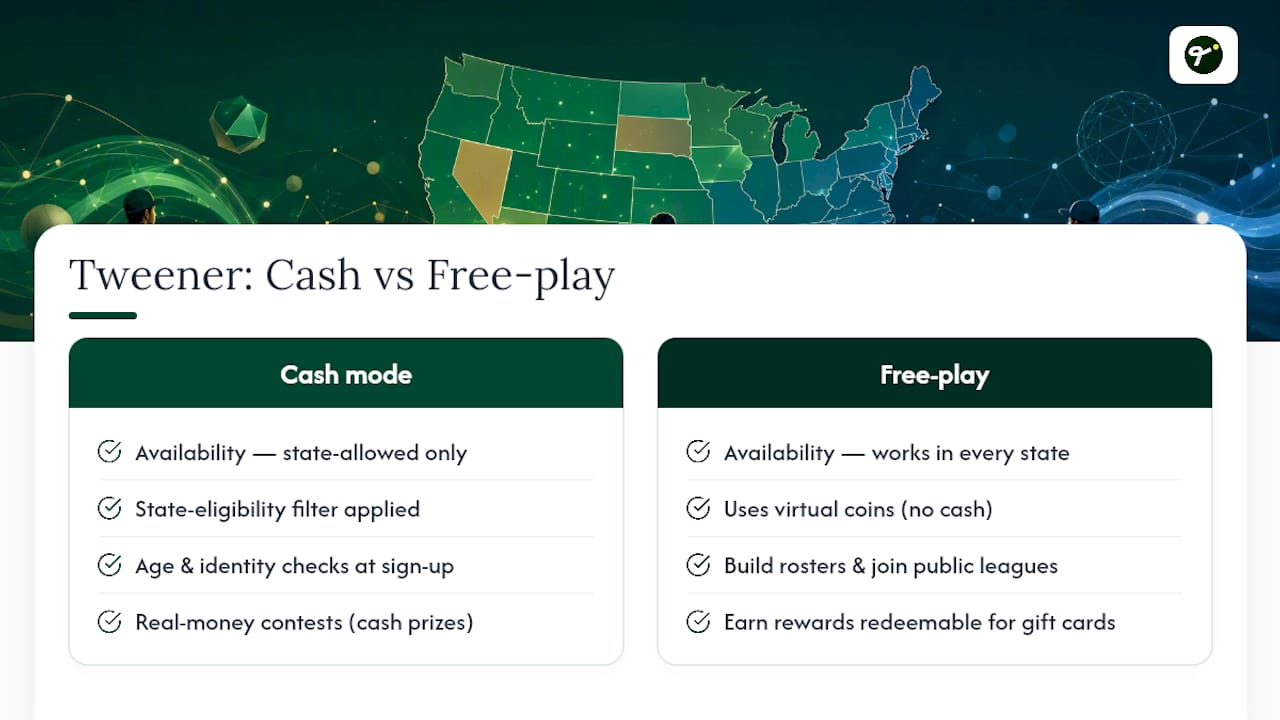
- Tweener's cash-mode contests are only available in jurisdictions where daily fantasy sports are permitted under current state law
- Age and identity checks run at sign-up and again before any cash withdrawal
- Free-play mode using virtual coins remains available regardless of state cash-mode restrictions, so tennis fans everywhere can still build rosters and compete
- State-eligibility pages are published and kept current as regulatory guidance shifts
Nathan, who covers fantasy tennis strategy and DFS legal frameworks for Tweener's editorial team, treats jurisdictional accuracy as a first-order issue for any platform serious about long-term player trust.
A Player's Take on Legal Awareness and Smart Strategy
Checking your state's eligibility isn't busywork. It's the first strategic decision you make before a single roster pick. I'd rather see a player spend five minutes confirming their state status than get halfway through drafting a US Open lineup only to discover a withdrawal restriction they didn't see coming.
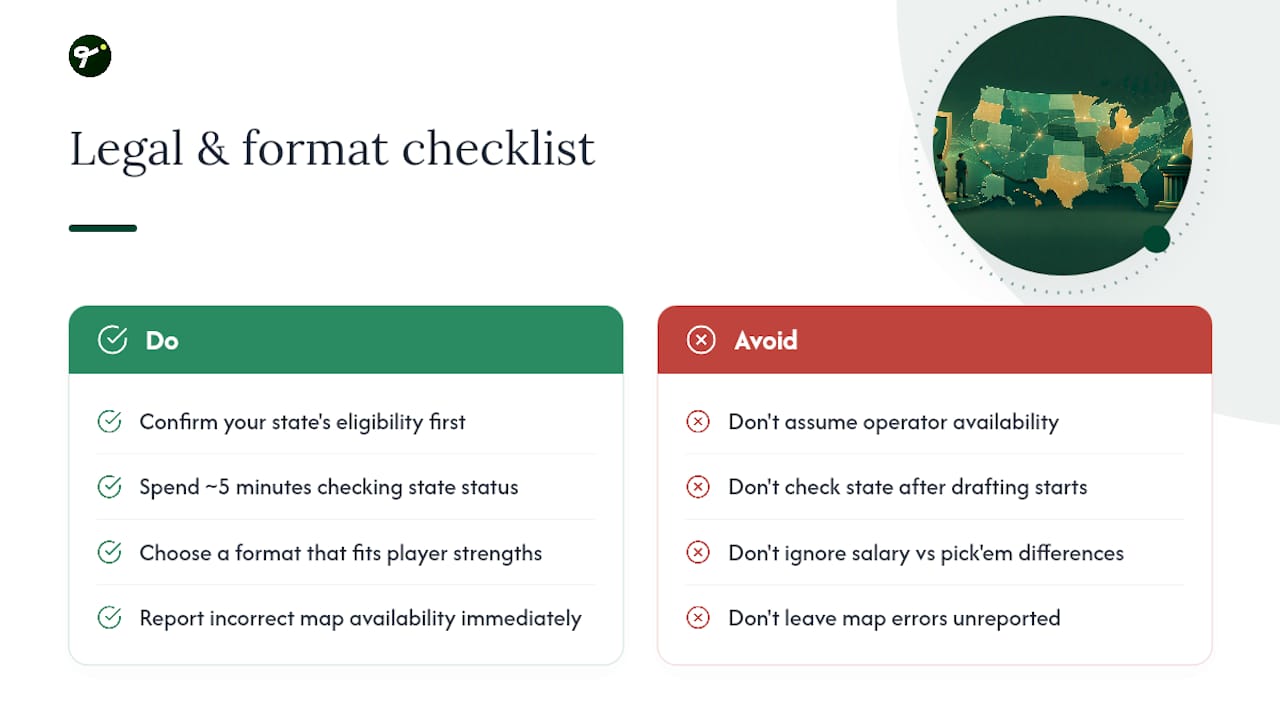
Format choice matters here too. If you're building around a specific player's surface dominance, say, someone who thrives on clay but fades on hard courts, a salary-cap roster lets that edge play out over a full slate in a way a pick'em line often can't capture. Know your format, know your state, then build your team.
If you ever spot an operator claiming availability in a state where it shouldn't be live, or vice versa, say something. These maps only stay accurate because players flag the gaps.
— Nathan
Play Tennis Fantasy the Right Way With Tweener
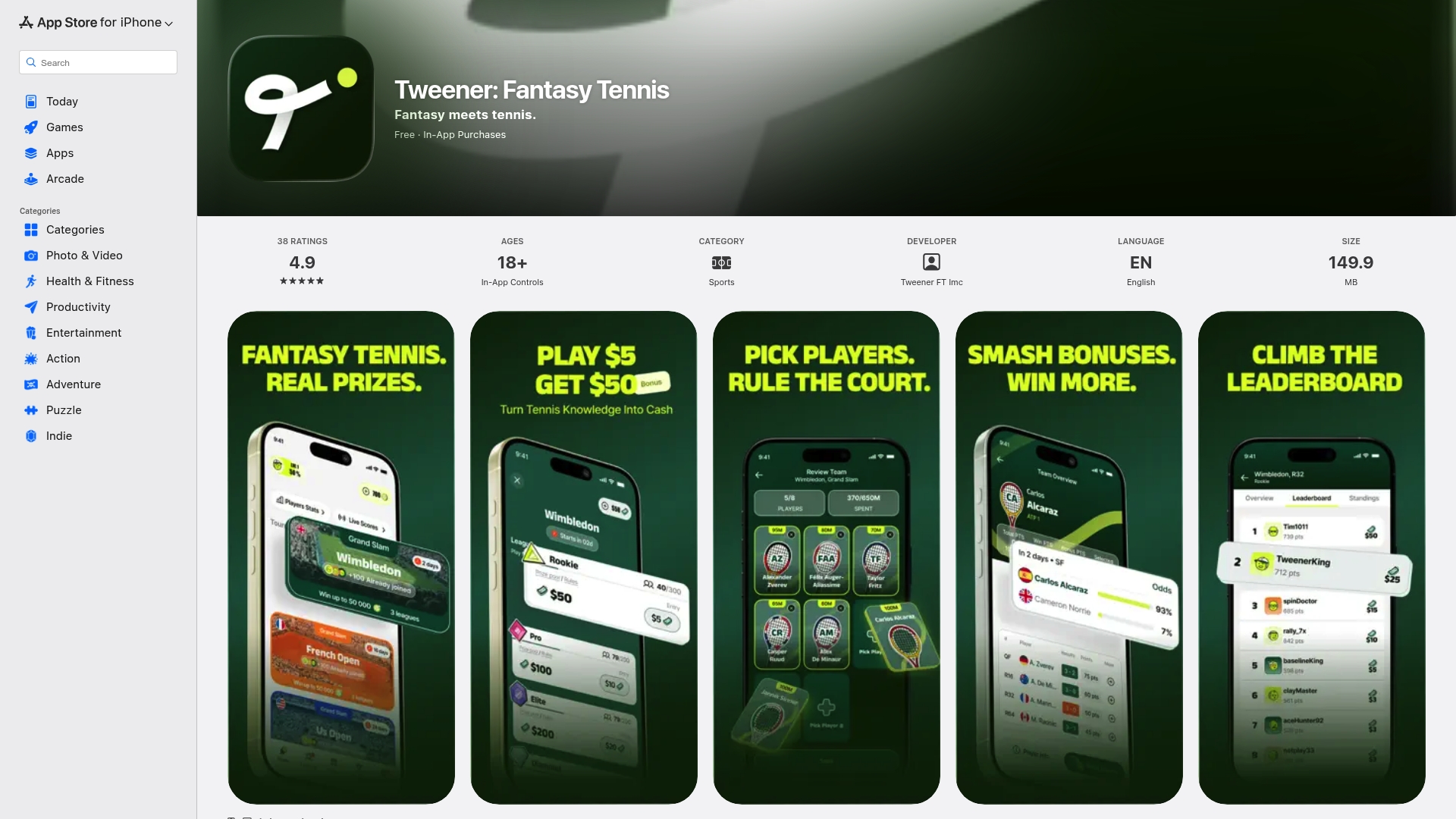
Tennis has never had its own version of a big-name daily fantasy platform, the way football and basketball fans have had for years. Tweener fills that gap specifically for tennis, with free-play contests open to everyone and cash contests available only where state law permits them.
Every cash-mode contest on Tweener runs through a state-eligibility filter tied to current regulatory guidance, plus age and identity checks at sign-up, so you're never guessing about whether your state allows real-money play. If cash mode isn't live in your state yet, the free-play version using virtual coins works everywhere and still lets you build rosters, join public leagues, and earn rewards redeemable for gift cards.
Pro Tip: During Grand Slam events, set up a private league with up to nine friends and run your own head-to-head bracket alongside the main draw. It's the closest thing tennis has to a fantasy football league with your buddies.
Ready to build your first roster? Download the Tweener app and check your state's eligibility during sign-up.
Sources
For readers who want to dig into primary sources directly: Arizona's gaming authority guidance, Colorado's fantasy contest licensing rules, and Delaware's official fantasy sports site are all publicly maintained. Always check each source's last-updated date before relying on it.
- DFS legal states map and tracker (OddsReference)