

The baseline rules every fantasy football league needs to nail down before the draft: a 10-team league, a regular season that lasts several weeks, a starting lineup of 1 QB, 2 RB, 2 WR, 1 TE, 1 Flex, 1 K, and 1 DST, a bench with multiple players, a clear PPR or non-PPR scoring choice, a snake or auction draft, FAAB-based waivers, and a defined playoff bracket. Get those six decisions locked in writing before Week 1, and most of the disputes that wreck leagues never happen.
These aren't arbitrary numbers. ESPN's default settings use a 10-team format with that exact starter template, and 4for4's settings research confirms 10 teams and a bench with multiple players as the most common baseline across competitive leagues. When two independent, platform-facing sources land on the same numbers, that's not coincidence. It's what actually works at scale.
Here's the copy-paste version for your rulebook or commissioner dashboard:
- League size: 10 teams
- Regular season: 14 weeks (Weeks 1 to 14)
- Starters: 1 QB, 2 RB, 2 WR, 1 TE, 1 Flex, 1 K, 1 DST
- Bench: 7 players
- Scoring: PPR (1 point per reception) or non-PPR, decide before the draft
- Draft: Snake for most leagues, auction for veteran groups
- Waivers: FAAB (Free Agent Acquisition Budget) recommended over rolling priority
- Playoffs: Top 6 teams, Weeks 15 to 17
Pro Tip: Set every one of these in your commissioner panel before you send the invite link. Changing a scoring setting after teams have drafted around it is the fastest way to start a league mutiny.
Pro Tip: If your group has never played together, default to PPR. It rewards target volume over boom-or-bust rushing, which keeps more rosters competitive week to week.
Pro Tip: A league size and bench setup that balances roster depth with free agent availability. That leaves enough free agents on the wire to make waivers meaningful without making the player pool feel infinite.
Pro Tip: *Write your rules down somewhere every owner can see, not just in your head.
Pro Tip: Decide your tiebreaker order before Week 1, not during a Week 14 standings crisis.
Pro Tip: If you're running a keeper league, lock your keeper rules and retention costs before the draft, not after someone's league-winning rookie blows up.
Pro Tip: Auto-draft is a last resort, not a strategy. Set calendar reminders for draft day so your league doesn't get stuck with three teams built by an algorithm.
Pro Tip: Publish your waiver run day and time clearly. "Waivers run sometime Wednesday" is not a rule, it's a guess.
Pro Tip: When in doubt on a scoring setting, match whatever your platform's default is. It's usually default for a reason: it's been tested against millions of leagues.
Pro Tip: Ask your league before the season whether they want IDP (Individual Defensive Players). It's a fun variant, but it needs total buy-in or half your league will punt on defense.
Pro Tip: Reserve a Flex spot for RB/WR/TE only unless you explicitly want a superflex league. Adding QB eligibility to Flex quietly turns your league into a two-QB league.
Pro Tip: Print or screenshot your rulebook every season. Platforms change their default settings sometimes, and you want a record of what your league actually agreed to.
Pro Tip: If someone proposes a mid-season rule change, table it until the offseason unless it's fixing a genuine emergency. Rules that change the game mid-flight breed resentment fast.
Pro Tip: Assign a co-commissioner. One person holding all the settings power, with no oversight, is how "commissioner bias" complaints start.
Pro Tip: Test your scoring settings with last year's stats before the season starts. Plug in a real Week 1 box score and see if the point totals feel right to your group.
Pro Tip: Don't skip the bye-week math. A 14-week regular season with NFL bye weeks scattered through Weeks 6 to 14 means your flex and bench depth matter more than people think.
Pro Tip: Require a minimum roster of 2 QBs if you're running superflex. Otherwise, half your league will be scrambling on bye weeks.
Pro Tip: Write down what happens if a game gets postponed or canceled. It happens rarely, but rarely isn't never.
Pro Tip: For dynasty leagues, define rookie draft rules (order, rounds, timing) as a separate document from your regular in-season rulebook.
Pro Tip: If your league runs cash prizes, state the payout structure and platform for paying out before Week 1, not after the championship.
Pro Tip: Keep your rulebook to one page if you can. A 12-page constitution nobody reads is worse than no rulebook at all.
Pro Tip: Revisit your rules every offseason as a group, even if nothing changes. It keeps everyone bought in.
Pro Tip: If a rule sounds complicated to explain to a new owner in one sentence, it's probably too complicated for your league.
Key Takeaways
A functional fantasy football league comes down to six locked-in decisions made before the draft: team count, roster structure, scoring family, draft format, waiver system, and playoff structure.
| Point | Details |
|---|---|
| Set core defaults first | Use 10 teams, a 14-week season, and the standard 1 QB/2 RB/2 WR/1 TE/1 Flex/1 K/1 DST starter template. |
| Choose your scoring family early | Decide PPR, half-PPR, or standard scoring before the draft, since it reshapes positional value entirely. |
| Use FAAB over rolling priority | A season-long budget (commonly $100) rewards active management and stays engaging all year. |
| Separate governance thresholds | Require appropriate majority votes for adopting new rules and changing existing ones to reduce bias complaints. |
| Apply the same clarity to any fantasy platform | Tools like Tweener use transparent leaderboards and structured private leagues to bring this same rules-first approach to fantasy tennis. |
Next steps: finalize your written rulebook using the template above, schedule your draft date and confirm autodraft settings, and publish your governance and voting rules to the full league before Week 1. Revisit the entire rulebook as a group every offseason, even in years when nothing changes. That annual review is what keeps a league's rules feeling like a shared agreement instead of one person's arbitrary decisions.
Table of Contents
- What Are the Most Common Fantasy League Rules for League Size and Rosters?
- What Scoring Systems Do Most Fantasy Leagues Use?
- Which Draft Format Should Your League Use?
- How Do Waiver Wire Rules Work in Fantasy Football?
- How Should Trades and League Governance Work?
- What Are the Best Playoff and Tiebreaker Rules for Fantasy Football?
- What Are the Standard Rules for Lineup Locks and Injured Players?
- Which Fantasy League Formats and House Rules Are Worth Trying?
- Copy This Rulebook Template Before Your Next Draft
- How Should Leagues Handle Scoring for Weather Delays and Ejections?
- How Should Leagues Communicate and Resolve Disputes?
- Why Clear, Written Rules Matter More Than People Think
- Run Your Private League on Tweener This Grand Slam Season
- Where to Read More on Fantasy Football Rules and Settings
- Frequently Asked Questions
- Sources
What Are the Most Common Fantasy League Rules for League Size and Rosters?
Most fantasy football leagues that stick together season after season run a moderate number of teams. It's the number where the player pool stays deep enough for real strategy, but shallow enough that waivers still matter and every owner can field a competitive roster. Go smaller, say 8 teams, and the waiver wire turns into a buffet of usable starters, which flattens the strategic gap between good and bad managers. Go bigger than 12, and you're often starting replacement-level players by Week 8 because the position depth simply isn't there.
Season length follows the same logic of matching real-world structure. The common baseline is a regular season that lasts several weeks, with the postseason running Weeks 15 through 17. That mirrors the NFL's own playoff push and gives your league a natural finish line before Championship Week.
Roster construction is where most new commissioners either overthink it or copy a template blindly without understanding why it works. The standard starter set, per ESPN's own defaults, is:
- 1 Quarterback (QB)
- 2 Running Backs (RB)
- 2 Wide Receivers (WR)
- 1 Tight End (TE)
- 1 Flex (RB/WR/TE)
- 1 Kicker (K)
- 1 Defense/Special Teams (DST)
That's 9 starters. Pair it with a bench with multiple players and you land on a 16 or 17-man roster, depending on whether you carry an IR slot separately.
Sample lineup templates by league type
10-team standard league: The template above, no modifications. This is the format most new leagues should start with because it's the one every platform, article, and podcast assumes by default. Fewer surprises, easier onboarding for new owners.
12-team deeper-bench league: Same starter slots, but bench size often drops to 5 or 6 to compensate for the shallower waiver pool. Some commissioners add a second Flex spot instead, which rewards roster construction over raw talent hoarding.
Dynasty or keeper roster: Typically expands the bench to 10 or more spots because owners are stashing rookies and injured players across multiple seasons, not just one. It also usually adds a dedicated taxi squad or extra IR slots for redshirting rookies.
Before you open your draft room, run through this checklist in your commissioner settings:
- Team count locked (10 is the default, adjust only with league consensus)
- Bench size confirmed (7 is standard, more for keeper/dynasty)
- Reserve/IR slots enabled and count set (1 or 2 is typical)
- Flex eligibility confirmed as RB/WR/TE, or RB/WR/TE/QB if running superflex
- Taxi squad enabled, if this is a dynasty league
What Scoring Systems Do Most Fantasy Leagues Use?
Scoring is where two identical rosters can produce wildly different champions, and it's the setting new commissioners underthink the most. The core mechanism is simple: yardage converts to points, touchdowns are worth a fixed value, and receptions may or may not add points depending on whether your league runs PPR.
ESPN's standard scoring conversions give you the industry baseline:
| Stat category | Point value | Notes |
|---|---|---|
| Passing yards | 1 point per 25 yards | Rewards volume passers |
| Passing touchdown | 4 points | Some leagues bump this to 6 to boost QB value |
| Rushing yards | 1 point per 10 yards | Standard across nearly all platforms |
| Rushing touchdown | 6 points | Universal default |
| Receiving yards | 1 point per 10 yards | Same rate as rushing |
| Receiving touchdown | 6 points | Universal default |
| Reception (PPR only) | 1 point | Half-PPR awards 0.5 |
| Fumble lost | -2 points | Common penalty, sometimes -1 |
| Interception thrown | -2 points | Standard penalty for QBs |
Pro Tip: Run last season's stat line for your projected first-round pick through your scoring settings before the draft. If a workhorse running back and a slot receiver come out nearly even in points, you'll draft differently than if the RB clearly separates.
The PPR decision alone reshapes your entire draft board. In a non-PPR league, bruising running backs with 20 carries a game hold outsized value because touchdowns and yardage are the only currency. Flip to full PPR, and pass-catching backs and possession receivers jump several rounds because every catch, even a 4-yard checkdown, adds a full point. Half-PPR (0.5 points per catch) splits the difference and has become the most balanced option for leagues that want receiver value without completely erasing what makes a bruising back special.
Here's what that looks like with real numbers. Take a receiver who catches 7 passes for 65 yards and a touchdown in a game:
- Non-PPR scoring: 6.5 yardage points + 6 touchdown points = 12.5 points
- Half-PPR scoring: 12.5 base points + 3.5 reception points (7 × 0.5) = 16 points
- Full PPR scoring: 12.5 base points + 7 reception points (7 × 1) = 19.5 points
Beyond the base scoring family, a handful of common tweaks show up across competitive leagues: superflex (a second Flex slot that also accepts quarterbacks, which sends QB value through the roof), fractional PPR variants like 0.5 or even 0.75 per catch, negative points for turnovers and sacks taken, and IDP scoring that adds tackles, sacks, and forced fumbles for individual defensive players instead of a single team defense slot.
Which Draft Format Should Your League Use?
Snake drafts work best for most 10-team leagues, and auction drafts work best for experienced groups who want every player theoretically available to every team. Both formats are legitimate. The right choice depends on your league's experience level, not which one is "better" in the abstract.
A snake draft reverses the pick order every round: if you pick first in Round 1, you pick last in Round 2, then first again in Round 3. It's simple to explain, fast to run, and it's the format nearly every fantasy platform defaults to for good reason. An auction draft gives every manager an equal budget, commonly $200, and every player gets nominated and bid on by the entire league, meaning any owner can theoretically roster any player if they're willing to spend the cash.
Set these draft-day rules before you open the room:
- Per-pick time limit: 60 to 90 seconds for snake drafts, longer for auction nominations
- Autodraft fallback: enabled after the time limit expires, using platform rankings
- No-show policy: state in writing what happens if an owner misses the entire draft (autodraft the whole roster, or postpone with unanimous consent)
- Live participation strongly encouraged: an autodrafted roster is rarely competitive past Week 3
For a 10-team auction with a $200 budget, that's $2,000 in total league spending power. A reasonable allocation guideline looks like this:
- Spend 60 to 70% of your budget ($120 to $140) on your top 2 to 3 players
- Reserve 20 to 25% ($40 to $50) for a solid middle tier of starters
- Leave the final 10 to 15% ($20 to $30) for bench depth and late-round fliers
Nomination order in an auction typically rotates left to right around the table, and most leagues nominate players regardless of position rather than forcing a QB-first or RB-first sequence.
Pro Tip: Draft Best Player Available instead of forcing a rigid position order. If the consensus top player left on your board in Round 4 is a wide receiver but you already have two, take him anyway; a strong player is easier to trade than a roster full of replacement-level depth at a "needed" position. This flexible approach is a stronger long-term strategy than locking into a preset position sequence, and it's the same logic worth applying when you're drafting players for winning fantasy leagues in any sport, tennis included.
How Do Waiver Wire Rules Work in Fantasy Football?
Two systems dominate fantasy waivers: rolling priority and FAAB, and FAAB is the fairer, more strategically interesting option for most leagues. Waiver priority works on an inverse-standings basis: whichever team has the worst record gets first crack at any player dropped or newly added to the wire, then priority resets or rolls to the back of the line after each use. FAAB, or Free Agent Acquisition Budget, instead gives every team a set amount of fake currency (commonly $100) at the start of the season to bid blindly on free agents all year long.

| Feature | Waiver priority | FAAB |
|---|---|---|
| Fairness for last-place teams | Favors worst record automatically | Depends on budget management, not record |
| Strategic depth | Low, mostly automatic | High, requires bid planning |
| Engagement | Can feel static after early weeks | Stays relevant all season |
| Best for | New or casual leagues | Competitive or veteran leagues |
The pros and cons split cleanly. Waiver priority is dead simple to explain to a first-time player, but it can feel repetitive once the same three teams keep cycling to the front of the line. FAAB rewards active management and forces every owner to make a real decision every single week, but it takes a round of explaining before new players fully get it.
A typical FAAB budget runs $100 per team for the full regular season. A reasonable bidding pattern looks like a $15 to $25 bid for a genuine league-winning pickup (think a backup running back who just inherited a starting job), $5 to $10 for a speculative add with upside, and $0 or $1 bids for depth pieces nobody else wants.
Common waiver questions worth settling before Week 1:
When do waivers process? Most leagues run waivers Tuesday night or Wednesday morning, after Monday Night Football wraps and before teams need to set their next lineup.
What happens to unclaimed FAAB at season's end? It typically expires. Some leagues let unused FAAB carry a small bonus into the next season's budget, but that's a house rule, not a default.
Can I drop a player who already played this week? No. Standard lock mechanics prevent dropping a player once their game has started, which protects against stat-padding roster abuse.
Recommend setting a max of 2 or 3 adds per week to prevent one owner from strip-mining the waiver wire, and clarify whether post-draft free agents (undrafted players) follow the same FAAB rules as in-season waiver claims. Most leagues treat them identically.
Pro Tip: Set your waiver period to run overnight Tuesday into Wednesday. It gives owners a full day after Monday Night Football to react to injuries and role changes before bids lock in.
How Should Trades and League Governance Work?
Every trade should follow a clear window: submission, a public review period, and automatic approval if no veto threshold is met. That single workflow prevents the two most common trade disasters, silent commissioner vetoes and trades that sit in limbo for a week.
A workable trade process looks like this:
- Trade is submitted and posted publicly to the league
- 24 to 48 hour review window opens for the rest of the league to react
- Trade auto-processes unless it hits the veto threshold
- Veto threshold set at roughly 70% of non-involved owners voting to block, not a single commissioner's gut call
Pro Tip: Avoid pure commissioner veto power whenever possible. A single person blocking trades, even with good intentions, is the single fastest way to generate accusations of favoritism in a league.
Collusion is the ugliest trade problem and the one most leagues never define until it's too late. Sample language worth adopting directly: "Collusion is defined as any agreement between two or more owners to manipulate trades, lineups, or waivers for the benefit of one team at the expense of competitive integrity. Confirmed collusion results in trade reversal and, at commissioner and league-vote discretion, forfeiture of draft picks or removal from the league."
Rule-change governance deserves its own separate threshold from day-to-day trade approvals. FanDraft's governance research recommends splitting votes into two tiers: a straightforward majority to adopt genuinely new rules the league has never had, and a higher supermajority (something like 9 of 12 owners) to change a rule the league already agreed to at the start of the season.
A governance template worth copying into your rulebook:
- New rule adoption: simple majority vote (more than 50% of owners)
- Existing rule changes: supermajority vote (roughly 75%, or 9 of 12 in a 12-team league)
- Amendment cadence: rule votes happen only in the offseason, never mid-season, except for genuine emergencies
- Dispute resolution path: disputes go to a league-wide vote first; ties broken by co-commissioner consensus, not a single vote
- Public record: every vote and its outcome gets posted in the league group chat or a shared document
Pro Tip: Move rule changes to a public league vote and keep a written record of every result. It costs you nothing and it's the single best defense against "the commissioner rigged it" complaints, which tend to surface right around Week 12 when the standings get tense.
What Are the Best Playoff and Tiebreaker Rules for Fantasy Football?
A 10-team league sending its top 6 teams to the playoffs, with the top 2 seeds earning a first-round bye, is the most common structure, and it strikes the right balance between rewarding the regular season and keeping the postseason interesting. Smaller playoff fields, like a top-4 bracket, reward consistency more heavily and make every regular-season game matter. Larger fields, like top-8, keep more of the league emotionally invested into December but can let a mediocre 7-7 team back into title contention.
Seeding typically follows this order: win-loss record first, then head-to-head record between tied teams, then total points scored for the season as the final tiebreaker. A sample tiebreaker template to copy directly into your rulebook:
- Overall win-loss-tie record
- Head-to-head record among tied teams (if applicable)
- Total points scored, full season
- Total points scored in division or conference, if your league uses divisions
- Coin flip, as an absolute last resort
| Point | Details |
|---|---|
| Playoff field size | A playoff field size typically includes a majority of teams, with some earning a bye |
| Regular season length | 14 weeks, with playoffs in Weeks 15 to 17 |
| Primary seeding factor | Win-loss record, then head-to-head, then total points |
| Bye week structure | Top 2 seeds skip the opening playoff round |
Byes reward the regular season's best teams by letting them skip a potential upset in the opening playoff round, and they add real incentive to fight for the 1 or 2 seed even after a playoff spot is already locked up.
Ties in an individual playoff matchup are rare in fantasy since decimal scoring usually breaks them naturally, but they do happen. Sample rule wording worth adopting: "In the event of a tied playoff matchup score, the team with the higher-scoring bench player (highest individual point total among all rostered players, starters and bench combined) is declared the winner. If bench totals are also tied, the higher regular-season point total decides the matchup."
What Are the Standard Rules for Lineup Locks and Injured Players?
Lineups lock at game time for each individual player, not for the entire week at once, which is the standard most platforms use by default. That means your Thursday-night starters lock before kickoff Thursday, while everyone else on your roster stays adjustable until their own Sunday or Monday game begins.
- Standard lock: each player locks individually at their own game's kickoff
- Alternative (stricter): entire lineup locks at the first game of the week, commonly used in survivor-style or high-stakes cash leagues
- Thursday game caveat: always confirm your platform handles Thursday locks separately, since forgetting to bench a Thursday starter before kickoff is one of the most common rookie-commissioner mistakes
IR (Injured Reserve) or Reserve slots let you stash a hurt player off your active bench without burning a roster spot. The common default is 1 or 2 IR slots per team, restricted to players officially designated Injured Reserve, PUP, or Out for the season by their real NFL team. In keeper and dynasty leagues, IR carryover rules matter even more: decide up front whether a player stashed on IR at season's end still counts against next year's keeper limit.
On injury tags specifically: Questionable, Doubtful, and Out designations update throughout the week, and the real risk sits with Sunday morning inactives lists that drop right before kickoff. Standard practice, and the safest one, is to bench any player tagged Questionable or worse unless you have a specific reason to trust the beat reporting on that game.

A clean sample deadline policy for your rulebook: "Managers must set an initial lineup before the first game of the week (Thursday night, if applicable). Lineup changes remain open for any player whose individual game has not yet started, per standard game-time lock mechanics."
Pro Tip: Set a calendar reminder for Sunday morning, an hour before the early games. That's your last real window to react to inactive lists before your lineup locks for good.
Which Fantasy League Formats and House Rules Are Worth Trying?
Keeper leagues let each team retain 1 to 5 players from year to year, usually at the cost of a rising draft pick or a fixed points penalty. It's the format that rewards long-term roster building over single-season luck, and it works best for groups who plan on playing together for years, not one season.
Dynasty leagues go further and eliminate the annual redraft almost entirely, replacing it with rookie-only draft classes each year while veteran rosters carry over indefinitely. Keeper and dynasty design requires deciding retention costs and lock dates well before the season, or you'll spend every offseason relitigating who "should" have been kept.
Superflex adds a second Flex spot that also accepts quarterbacks, and it single handedly reorders your entire draft board since quarterbacks suddenly become scarce, valuable assets instead of late-round afterthoughts. IDP (Individual Defensive Players) swaps out the standard team DST slot for actual linebackers, cornerbacks, and defensive linemen scored on tackles and sacks, which appeals heavily to football purists but needs full league buy-in to work.
- Casual, first-time leagues: stick with standard PPR and skip keeper, superflex, and IDP entirely until the group has a season under its belt
- Competitive veteran leagues: dynasty, superflex, or IDP formats reward the deeper strategic investment these groups already want
- Small friend groups (6 to 8 teams): dynasty works well since roster continuity matters more when everyone already knows each other
- Larger groups (12+ teams): superflex adds scarcity and strategy without requiring the multi-year commitment dynasty demands
Fun house rules that plenty of leagues layer on top of the core structure: a last-place "punishment" (running a 5K, wearing a themed jersey to the draft), a supplemental draft-pick auction where teams bid FAAB dollars for extra rookie picks, or weekly high-score cash prizes on top of the season-long payout. Whatever you adopt, write it into the same rulebook as your core scoring and roster rules rather than leaving it as a verbal agreement in a group chat from three years ago.
Copy This Rulebook Template Before Your Next Draft
A rulebook only works if it's specific enough that no owner can plausibly misread it. Vague language like "reasonable trade rules apply" invites exactly the disputes a rulebook is supposed to prevent. Below is modular, paste-ready wording you can drop directly into your league's constitution document or platform settings notes.
League Overview "This league consists of [10] teams competing in a [14]-week regular season, followed by a [3]-week playoff bracket (Weeks 15 to 17) among the top [6] teams."
Roster & Starters "Each team starts 1 QB, 2 RB, 2 WR, 1 TE, 1 Flex (RB/WR/TE), 1 K, and 1 DST, with a [7]-player bench and [1] IR slot."
Scoring "This league uses [PPR / Half-PPR / Standard] scoring. Full scoring settings are listed in the platform's league settings page and are considered binding for the season."
Draft Rules "The draft is a [snake / auction] format with a [90]-second time limit per pick. Managers who miss the draft will be autodrafted for the full duration."
Waivers "This league uses FAAB waivers with a [$100] season-long budget. Waivers process every [Wednesday morning]. Maximum [3] adds per week."
Trade Policy "Trades are subject to a [48]-hour public review period.
Playoffs & Tiebreakers "Playoff seeding follows: (1) win-loss record, (2) head-to-head, (3) total points scored. Ties in playoff matchups are broken by highest bench point total."
Lineup Locks "Player lineups lock individually at each player's game start time. No exceptions for late scratches after game time."
IR Rules "Only players officially designated IR, PUP, or Out for the season by their NFL team are eligible for reserve slots."
Rule-Change Governance "New rules require a [majority] vote. Changes to existing rules require a [supermajority, 9 of 12] vote and may only be proposed during the offseason."
Dispute Resolution "Disputes are first raised in the league group chat, then resolved by league-wide vote if not settled within 48 hours."
Collusion Penalties "Confirmed collusion, defined as coordinated manipulation of trades, lineups, or waivers for one team's benefit, results in trade reversal and possible removal from the league."
Before you open the draft room, run through this checklist inside your commissioner panel:
- Team count confirmed and locked
- Roster sizes and bench slots set
- Scoring toggles (PPR, TD values, turnover penalties) verified against last year's stat lines
- Waiver system selected (FAAB budget entered)
- Draft time limits and autodraft fallback enabled
- Payout structure and entry fee handling confirmed, if running a cash league
A rulebook that a brand-new owner can read once and understand completely is worth more than a 12-page constitution nobody actually reads. Specificity beats length every time.
Pro Tip: Link your rulebook to your platform's public rules page and, if you're organizing a private league on an app like Tweener, its own game rules page, so every owner has a single source of truth instead of five conflicting group-chat screenshots.
| Element | Vague version | Specific version |
|---|---|---|
| Trade veto | "Trades can be vetoed if unfair" | "70% of non-involved owners must vote to block within 48 hours" |
| Waivers | "Waivers run during the week" | "Waivers process every Wednesday at 3 a.m." |
| Rule changes | "The league can vote on changes" | "Majority for new rules, 9 of 12 supermajority for changes, offseason only" |
How Should Leagues Handle Scoring for Weather Delays and Ejections?
Weather cancellations and player ejections are rare enough that most leagues never write a rule for them, right up until the week it happens and half the league is arguing in the group chat. The safest default: if an NFL game is officially postponed and doesn't complete during the standard scoring window, all players in that game score zero points for that week, and the matchup is decided by whichever remaining players actually took the field. Rescheduling a full week of fantasy matchups around one postponed NFL game creates more confusion than it solves.
Ejections are simpler to handle because they don't erase the stats already on the board. A player ejected in the third quarter still keeps every yard, catch, and touchdown he racked up before leaving the game. Fantasy scoring is stat-based, not participation-based, so there's no separate penalty to apply. The only wrinkle worth writing into your rulebook is what happens if the ejection happens so early that a manager wants to make a last-minute lineup swap. Standard lock mechanics already prevent that once the game has started, and that's the right call. It keeps the rule consistent instead of creating a special exception for one unusual situation.
A clean sample rule for both scenarios: "If an NFL game is officially canceled or postponed beyond the league's scoring window, all players in that game receive zero fantasy points for the week. Player ejections do not affect previously accumulated stats; scoring reflects actual on-field production up to the point of ejection."
How Should Leagues Communicate and Resolve Disputes?
Every functioning league needs one shared communication channel, whether that's a group text, a Discord server, or a platform's built-in league chat, and it needs to be the single place where rule questions, trade discussions, and disputes actually get resolved. Splitting communication across texts, emails, and comments buried in an app creates exactly the confusion that turns a small disagreement into a season-long grudge.
Dispute resolution works best as a tiered process rather than a single commissioner ruling. Start with the owners involved discussing the issue directly in the shared channel. If that doesn't resolve it within 48 hours, escalate to a full league vote, with the commissioner or co-commissioners only stepping in to break a tie. This mirrors the same governance logic that works for rule changes: distributing decision-making power reduces the chance that any one person gets blamed for an unpopular call.
Document every dispute and its resolution somewhere permanent, even briefly. A single pinned message summarizing "Week 8 dispute: Team A vs Team B trade review, resolved by league vote 8 to 2 in favor of the trade" does more to build trust over a multi-year league than any amount of verbal reassurance that the commissioner is being fair.
Why Clear, Written Rules Matter More Than People Think
The leagues that survive five, ten, fifteen seasons almost always have one thing in common: a rulebook specific enough that nobody has to trust the commissioner's memory or good intentions. That's not a small thing. Most fantasy league blowups I've seen described aren't really about the rule itself, they're about the ambiguity around it. Nobody rage-quits a league because FAAB waivers exist. They quit because a $50 bid got processed at the wrong time and nobody can point to a written rule explaining why.
Governance research on this backs up what feels intuitive: separating vote thresholds for new rules versus changes to existing rules genuinely reduces perceived commissioner bias, because no single person is making the call. I've seen the inverse play out plenty of times in casual leagues: a commissioner reverses a trade because "it felt lopsided," gets accused of favoring his buddy in the other deal, and by Week 10 half the league has checked out emotionally even though nobody's actually broken a rule. A public vote with a recorded outcome removes that entire category of complaint, because the decision belongs to the league, not to one person's judgment call.
The best defense against that kind of slow-burn distrust isn't a smarter commissioner. It's a system where nobody needs to trust anyone's judgment in the first place, because the outcome is transparent and the vote is on record. That's the same principle behind why transparent leaderboard systems matter in any competitive fantasy format, football or tennis. When every owner can see exactly how standings and scoring work in real time, there's simply less room for disputes to fester.
Run Your Private League on Tweener This Grand Slam Season
If you've read this far, you already know what makes a fantasy league work: clear rules, fair scoring, and a format that rewards actually knowing the sport. Tennis fans have had to build that experience themselves for years, cobbling together spreadsheets or settling for shallow prediction games. Tweener changes that by giving tennis fans the same structured, skill-based fantasy experience football managers have had for decades, built specifically around ATP and WTA tournaments.
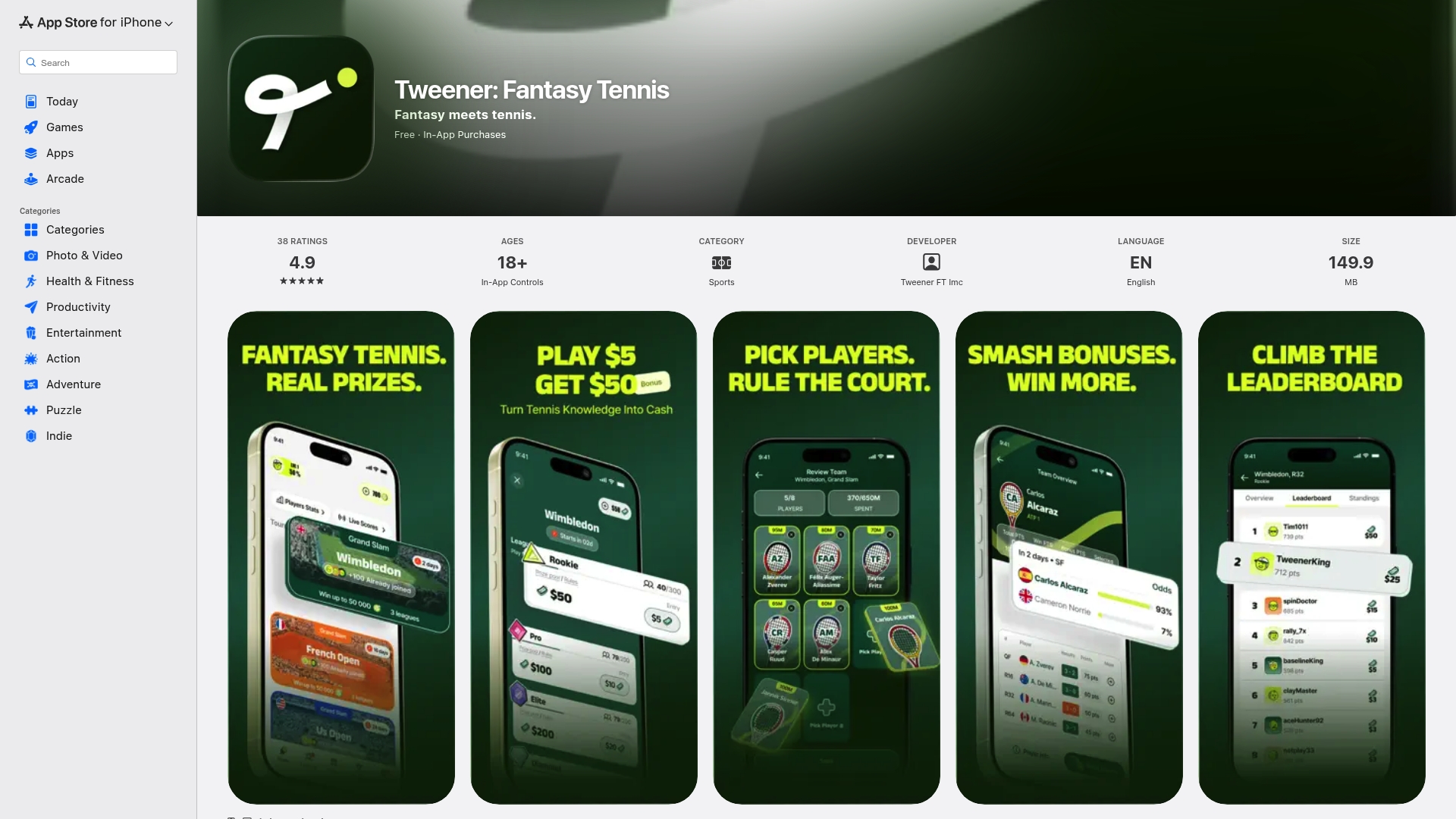
Create a private league with up to 9 friends for each Grand Slam, draft real players based on surface form, head-to-head history, and current ranking, and compete using scoring rules that reward genuine tennis knowledge instead of luck. Play free with virtual coins redeemable for rewards, or step into cash contests where legally permitted. Whether you're building your first fantasy tennis rulebook or just want a cleaner alternative to spreadsheet leagues, download Tweener and set up your league before the next major tournament starts.
Where to Read More on Fantasy Football Rules and Settings
- ESPN's fantasy football guide covers draft basics, default scoring, and standard lineup construction directly from the platform most leagues actually play on.
- 4for4's league settings breakdown offers data-backed recommendations on team count, bench size, and season length from a fantasy-focused analytics outlet.
- NFL Fantasy's league settings support page documents the full range of customizable settings a commissioner can toggle, useful as a checklist reference.
- FanDraft's governance guide digs into the voting thresholds and anti-collusion language most rulebooks skip entirely.
- Fantasy Football History's keeper strategy guide explains retention cost systems for leagues moving into keeper or dynasty formats.
- ARAG's legal overview of fantasy sports explains the skill-versus-chance legal framework that governs how fantasy contests are treated in the United States.
Frequently Asked Questions
What are the most common fantasy football league rules? The most widely used defaults are a 10-team league, a regular season that lasts several weeks, a starter lineup of 1 QB, 2 RB, 2 WR, 1 TE, 1 Flex, 1 K, and 1 DST, a bench with multiple players, PPR or half-PPR scoring, a snake draft, and FAAB-based waivers.
Is PPR or standard scoring more common? PPR and half-PPR have become more common than pure standard scoring in newer leagues, mainly because they reward pass-catching backs and receivers, which keeps more rosters competitive week to week.
How many teams should a fantasy football league have? Ten teams is the most widely used size because it balances roster depth against waiver-wire availability, though 8 to 12 teams all work depending on how deep your group wants the player pool to run.
Should our league use FAAB or waiver priority? FAAB tends to work better for competitive leagues because it rewards active roster management all season, while waiver priority is simpler to explain to first-time players but can feel static after a few weeks.
How many teams make the fantasy playoffs? Most 10-team leagues send the top 6 teams to the playoffs, with the top 2 seeds earning a first-round bye, though top-4 and top-8 formats are both common alternatives.
What happens if two teams tie in the standings? Standard tiebreaker order runs win-loss record, then head-to-head record between the tied teams, then total points scored for the season.
Sources
- Best fantasy football league settings for 2026 - 4for4
- How to play fantasy football: Guide from draft day to the championship - ESPN
- 5 Rules Your Fantasy Football League May Be Missing — FanDraft
- Understanding fantasy football snake and auction drafts - Dummies
- League Settings - NFL Fantasy Support