

TL;DR:
- Leaderboard systems rank participants by real-time performance metrics to foster competition, motivation, and engagement. Different types, such as time-windowed, segmented, friend-based, and all-time leaderboards, serve varying strategic purposes and are supported by Redis ZSETs for fast, scalable updates. Effective design, including fairness measures and user feedback, drives continuous participation and strategic improvements in fantasy sports.
A leaderboard system is a ranking framework that orders participants by performance metrics to drive competition, motivation, and sustained engagement in gaming and sports analytics. Understanding leaderboard systems is the difference between playing fantasy tennis passively and competing with genuine strategic intent. Gamification expert Yu-kai Chou identifies leaderboards as one of the most powerful motivational triggers in competitive design, but only when built and used correctly. Redis sorted sets, time-windowed resets, and segmented rankings are the technical and design tools that separate a leaderboard that retains players from one that drives them away.
What are the main types of leaderboard systems and how do they function?
Leaderboard systems divide into four primary categories, each serving a distinct competitive purpose. Knowing which type you are competing on shapes every strategic decision you make.
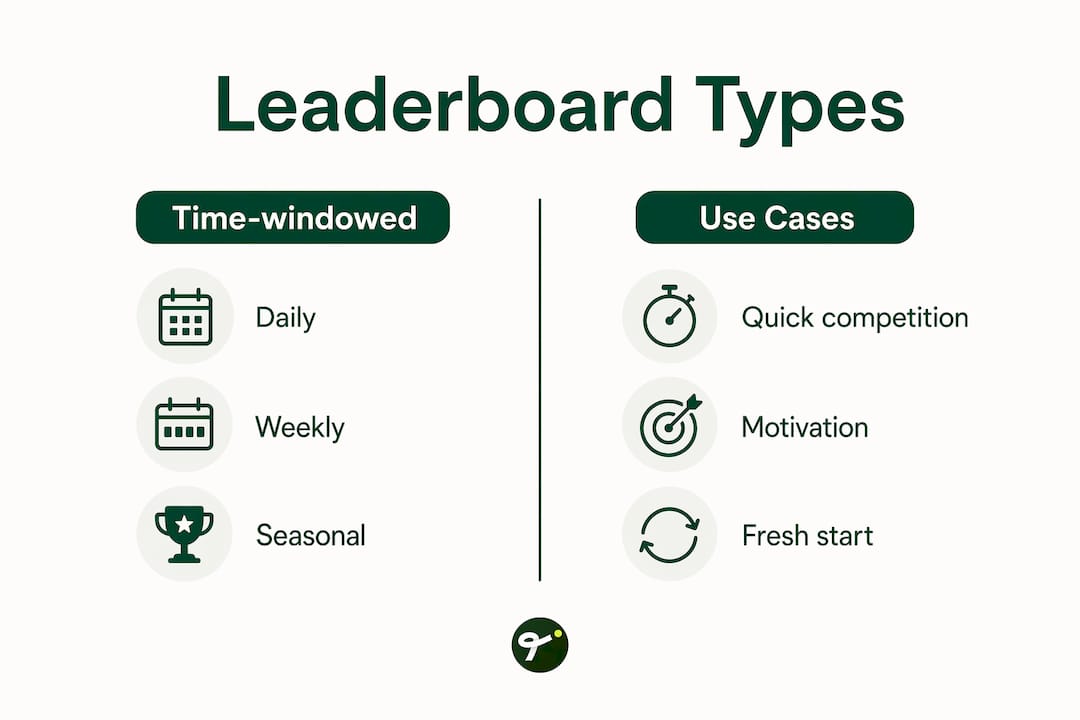
Time-windowed leaderboards reset on a fixed schedule: daily, weekly, or seasonally. The reset mechanism is not cosmetic. It gives every player a fresh start, which prevents demotivation from players who joined late or fell behind elite competitors. In fantasy tennis, a weekly leaderboard tied to a Grand Slam draw means your Wimbledon week-one picks matter independently from your week-two performance.
Segmented leaderboards rank players within skill tiers or geographic regions, from Bronze to Grandmaster structures common in competitive gaming. Segmented rankings boost retention by 20 to 30 percent because players see milestones within their bracket rather than measuring themselves against the global top 1 percent. A regional leaderboard for North American ATP fantasy picks, for example, creates a more attainable competitive context than a worldwide all-time ranking.

Friend-based leaderboards are technically implemented by intersecting a user's friend set with the global score set. Redis commands like ZMSCORE and ZINTERSTORE handle this efficiently, with friend leaderboard caching using short TTLs of around 60 seconds to keep data fresh without overloading the server. For fantasy sports, this is the most socially motivating format because you are competing against people you know.
All-time or cumulative leaderboards track total points across every contest ever played. They serve a historical record function more than a motivational one. As the Bricqs team notes, a global all-time ranking functions more as a community museum than a live motivational tool. They reward consistency over time but can feel impenetrable to newer players.
| Leaderboard type | Reset frequency | Best use case |
|---|---|---|
| Time-windowed | Daily, weekly, seasonal | Keeping all skill levels engaged |
| Segmented | Continuous within tier | Skill-based retention and progression |
| Friend-based | Near real-time | Social competition and community |
| All-time cumulative | Never | Historical record and prestige |
How does the technical architecture of leaderboard systems support real-time ranking?
The technical backbone of every high-performance leaderboard is the Redis sorted set, known as a ZSET. Redis ZSETs use a skip list structure that delivers O(log N) operations for insertions, deletions, and rank queries. At scale, Redis ZSETs handle 10 million entries in approximately 640MB of RAM while supporting over 100,000 operations per second. That performance profile is what makes real-time fantasy sports scoring possible during a live Grand Slam match with thousands of concurrent users.
Tie-breaking is a non-trivial problem in leaderboard design. Redis defaults to lexicographic ordering when scores are equal, which produces arbitrary and unfair results. The solution is composite score encoding, where the raw score is combined with a timestamp so that earlier achievers rank higher when points are tied. In a fantasy tennis context, the player who locked in their Novak Djokovic pick before the draw announcement would rank above someone who made the same pick after the odds shifted.
Write amplification is the hidden performance cost of running multiple concurrent time windows. A single match result triggering updates across five separate leaderboard windows multiplies the write load by five. Batch processing updates asynchronously, rather than writing to every window in real time, reduces this overhead significantly. Platforms using Apache Kafka as a durable event log alongside Redis as a volatile cache solve the durability problem. Redis serves fast reads; Kafka stores the source of truth for rebuilding rankings after any data loss.
Pro Tip: If you notice your fantasy app's leaderboard lagging during peak match hours, the platform is likely processing synchronous writes across multiple time windows. Apps that batch these updates deliver noticeably smoother rank refreshes.
Anti-cheat mechanisms complete the architecture. Server-side score validation must gate every submission before it reaches the leaderboard. Without this layer, automated tools compromise rankings within hours, destroying the trust that makes competition meaningful. For fantasy sports, this means all point calculations happen on the server based on verified match data, not on user-submitted inputs.
What are the design challenges and player engagement strategies in leaderboard systems?
The most common failure in leaderboard design is building a system that only rewards the top 1 percent of players. This is not a minor UX flaw. Exclusionary leaderboard design actively alienates the majority of your user base, and the players who disengage earliest are typically the mid-tier competitors who represent the largest segment of any platform.
Yu-kai Chou's Octalysis framework identifies two distinct motivational drivers that leaderboards must serve simultaneously: competitive drive (beating others) and personal achievement (beating yourself). A leaderboard that only shows global rank addresses the first driver and ignores the second entirely. The Bricqs team reinforces this by distinguishing leaderboards from personal best tracking, noting that self-improvement metrics drive motivation in ways that pure competition cannot replicate.
"A leaderboard focusing solely on global all-time rankings serves more as a community museum than a motivational tool." — Bricqs Leaderboard Guide
Design The Game's research on bracketed leaderboards shows that players need to see immediate, attainable competition context to stay engaged. Showing a player their rank within a 100-person bracket, rather than their position among 500,000 global users, keeps the competitive goal visible and achievable. This is the same psychological principle behind ATP ranking points being segmented by tournament tier rather than a single undifferentiated global score.
Pro Tip: When evaluating a fantasy sports platform, check whether it offers at least three concurrent leaderboard views: a time-windowed ranking, a friend-based ranking, and a skill-tier or bracket ranking. Platforms offering only one view are leaving significant engagement on the table.
Emotional feedback layers, including animations on rank changes, push notifications when a friend overtakes you, and visual indicators of tier progression, amplify the motivational effect of every leaderboard update. These are not decorative features. They are the delivery mechanism for the competitive signal that keeps players returning to check their standing between matches.
How can leaderboard systems improve your fantasy sports strategy?
Understanding how leaderboard systems work gives you a direct strategic advantage over players who treat rankings as a passive scoreboard. Here is how to apply that knowledge in a fantasy tennis context:
-
Identify which leaderboard type resets your competitive clock. In a weekly tournament leaderboard, a poor first-round result does not eliminate you. Adjust your risk tolerance for later rounds accordingly, taking calculated picks on higher-variance players like Nick Kyrgios or Holger Rune when you need to climb fast.
-
Use friend leaderboards to calibrate your picks. When you can see exactly which ATP or WTA players your direct competitors have selected, you gain information about where your score differential will come from. If three friends all picked Iga Swiatek, differentiating with a strong second-tier pick creates asymmetric upside.
-
Track your tier progression, not just your rank number. In segmented leaderboard systems, moving from one skill bracket to the next is a more meaningful milestone than moving from rank 847 to rank 831 in a global all-time list. Focus your performance tracking workflow on tier advancement as the primary goal.
-
Exploit transparent scoring to find undervalued picks. When a platform's scoring system is fully visible, you can calculate expected value for each player pick the same way a sharp bettor calculates +EV wagers. A player like Jannik Sinner on a clay surface with a favorable draw might generate more expected points per fantasy dollar than his seeding suggests.
-
Treat leaderboard resets as strategic entry points. The first 24 hours after a weekly reset are when the competitive field is most level. Early, confident picks made before the field consolidates around consensus choices carry the highest potential return.
The leaderboard benefits in fantasy sports extend beyond motivation. They create a feedback loop where every match result teaches you something about your selection strategy, your risk management, and your read on player form.
Key takeaways
Leaderboard systems drive genuine competitive engagement only when they combine real-time technical performance with inclusive design that serves players at every skill level.
| Point | Details |
|---|---|
| Four core leaderboard types | Time-windowed, segmented, friend-based, and all-time rankings each serve distinct strategic purposes. |
| Redis ZSETs power real-time ranking | O(log N) operations handle millions of entries at over 100,000 operations per second. |
| Segmented rankings improve retention | Skill-tier and regional brackets boost player retention by 20 to 30 percent. |
| Anti-cheat is non-negotiable | Server-side score validation protects leaderboard integrity and sustains player trust. |
| Strategy follows leaderboard type | Knowing your leaderboard's reset schedule and structure directly shapes optimal pick decisions. |
Why most fantasy players are using leaderboards wrong
I have spent years watching fantasy sports players obsess over the global all-time leaderboard while completely ignoring the weekly and friend-based rankings that actually determine their competitive experience week to week. The all-time board is a trophy case. It tells you who has played the most and won the most over years of participation. It tells you almost nothing about whether your current strategy is working.
The players who improve fastest are the ones who treat the weekly leaderboard as a feedback instrument. After each tournament, they ask: which picks separated me from my friend group, and why? That question, answered honestly using transparent scoring data, is worth more than any amount of time spent watching the global top 10 pull further away.
I also think the anti-cheat conversation is underrated in fantasy sports circles. When a platform validates all scores server-side against verified match data, it changes the nature of competition entirely. You are no longer playing against people who might be exploiting gaps in the system. You are playing a skill game with a level surface, which is exactly the environment where analytical thinking about ATP and WTA player form, surface statistics, and head-to-head records produces a real edge.
The bracketed leaderboard insight from Design The Game is the one I return to most often. Seeing your rank within a 100-person bracket is not a consolation prize for players who cannot crack the global top 100. It is a more accurate competitive signal. It tells you where you actually stand relative to players at your level, which is the information you need to improve.
— Nathan
Compete smarter with Tweener's fantasy tennis leaderboards
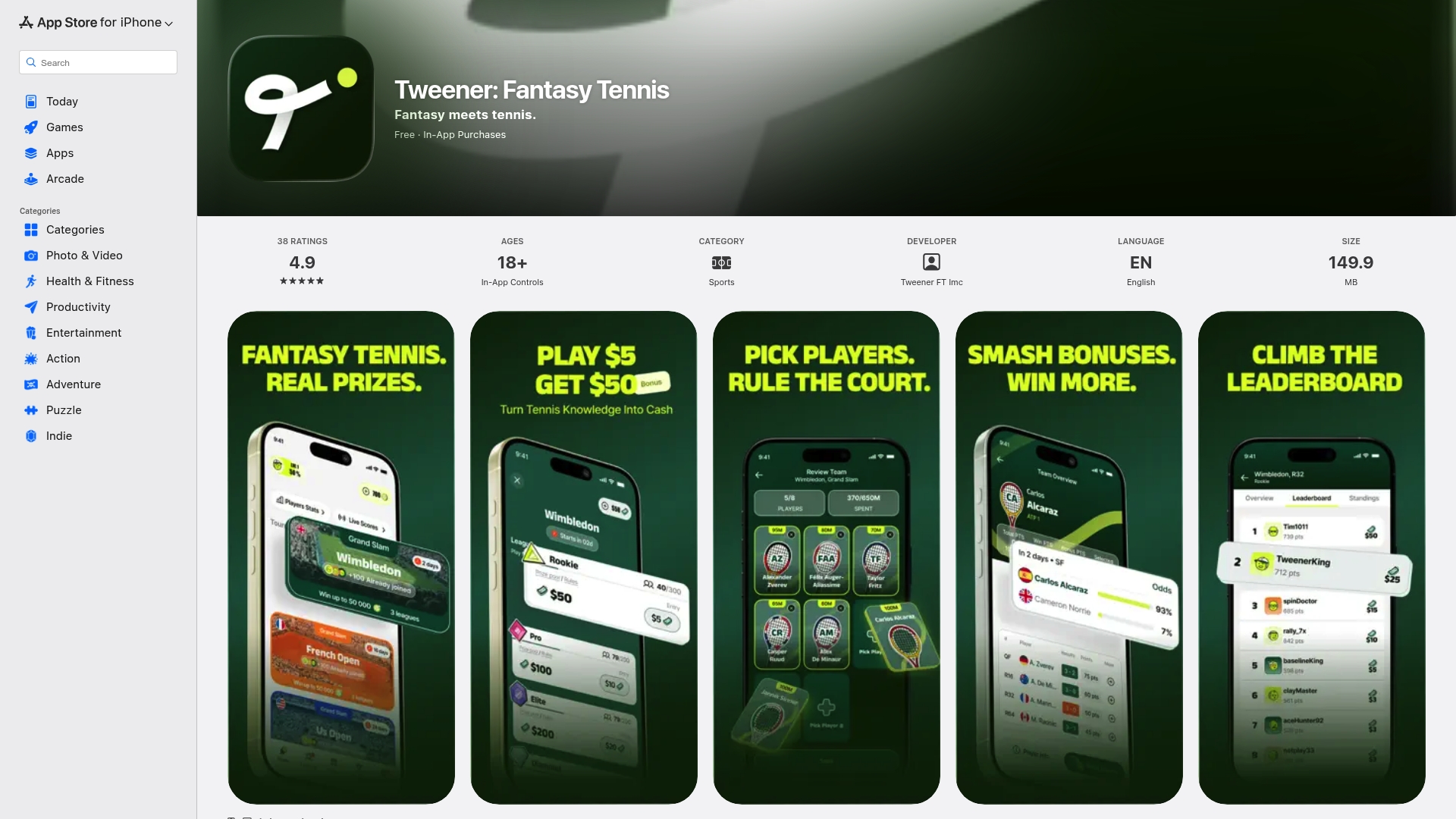
Tweener is built for exactly the kind of analytical, strategy-driven competition this article describes. The platform runs real-time leaderboards tied to live ATP and WTA match results, with tiered rankings and private leagues that let you compete against up to nine friends across every Grand Slam. Scoring is fully transparent, calculated server-side from verified match data, so every ranking position reflects genuine skill. Whether you play in free mode to earn rewards or enter cash contests for real-money payouts, the competitive structure rewards the player who understands surface stats, player form, and draw analysis. Download Tweener and put your leaderboard strategy to work during the next major tournament.
FAQ
What is a leaderboard system in gaming?
A leaderboard system is a ranking framework that orders participants by performance metrics in real time to drive competition and engagement. In gaming and fantasy sports, these systems use databases like Redis sorted sets to deliver fast, accurate rankings at scale.
How do time-based leaderboard resets work?
Time-based leaderboards reset on a fixed schedule, such as daily, weekly, or seasonally, to give all players a fresh competitive start. This prevents newer or lower-ranked players from being permanently discouraged by all-time leaders.
Why do segmented leaderboards improve player retention?
Segmented leaderboards rank players within skill tiers or geographic regions, making milestones attainable rather than abstract. Research from Yu-kai Chou's Octalysis framework shows this approach boosts retention by 20 to 30 percent compared to global-only rankings.
What makes a leaderboard system fair and trustworthy?
Server-side score validation is the primary mechanism for leaderboard integrity. Without it, automated tools can manipulate rankings quickly, destroying the competitive trust that keeps players engaged.
How can I use leaderboard data to improve my fantasy tennis picks?
Transparent scoring systems let you calculate expected value for each player pick based on surface statistics, draw difficulty, and recent form. Tracking your rank movement after each tournament round reveals which selection strategies are generating points and which are not.