
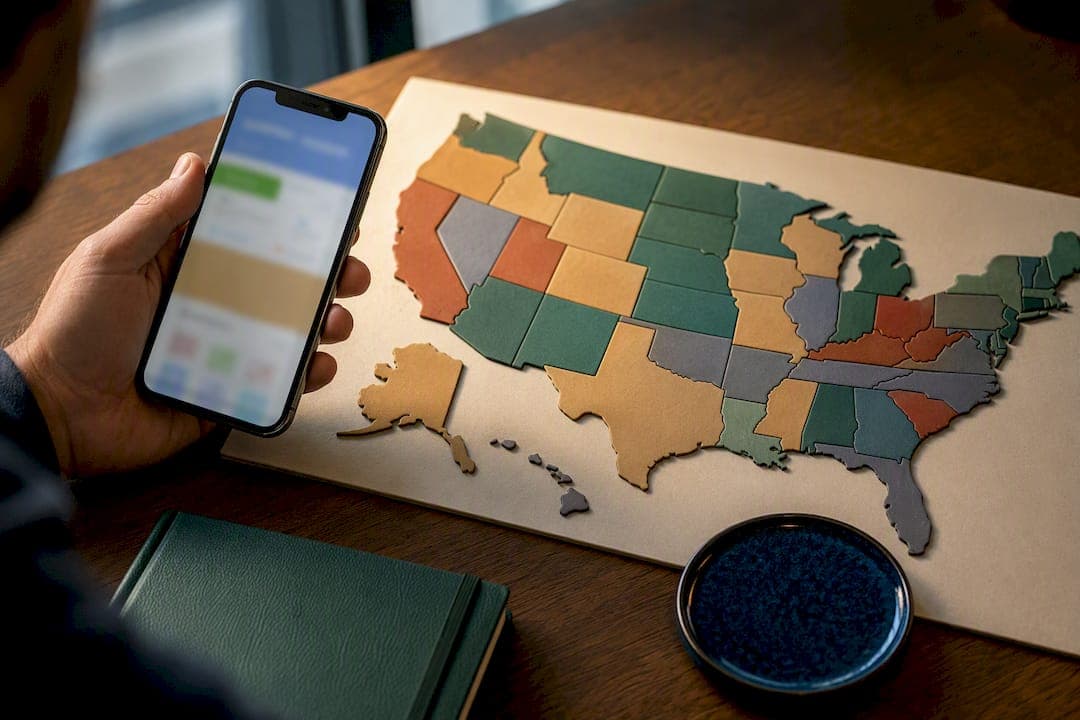
Federal law does not decide whether you can legally play fantasy sports for cash. Your state does. The Unlawful Internet Gambling Enforcement Act carves out a fantasy sports exemption, but that exemption never overrides a state's own gambling statute. Before depositing a dollar in 2026, check your state's specific status and lean toward platforms that operate in regulated states, since those carry licensing and consumer protections that unclear or prohibited states simply don't offer.
TL;DR:
- Many states have moved toward regulated frameworks with licensing, taxes, and consumer protections, but some still leave fantasy sports in legal ambiguity or prohibition.
- Courts differentiate fantasy sports from gambling by emphasizing skill over chance, but federal exemptions do not override state laws.
- Players should verify each state's current legal status through official regulatory sites, ensuring platforms disclose proper licensing and enforce geolocation and age checks.
- Regulation generally favors skill-based players by establishing clear rules and protections, making states like Illinois and New York more favorable for legal cash contests.
- Always check official state resources before depositing, and consider using platforms like Tweener that operate only in legally authorized states for cash play.
Table of Contents
- Where Does Fantasy Sports Legality Us Stand State by State?
- Why Do Courts Treat Fantasy Sports Differently Than Betting?
- What Do Regulated States Require From Operators?
- How Can You Verify Fantasy Sports Legality in Your State Before Depositing?
- How Does Tweener Handle Fantasy Sports Legality Across States?
- Is Regulation Good News for Skill-Based Fantasy Players?
- Where Can You Actually Play Fantasy Tennis for Cash?
- Where Should You Check for Updates?
- Sources
Where Does Fantasy Sports Legality Us Stand State by State?
State law splits into four practical categories, and knowing which one your state falls into tells you almost everything about what to expect when you deposit real money.
Regulated states have passed specific fantasy sports statutes with licensing, taxation, and consumer protection rules. Operators register, submit to audits, and follow contest rules set by a gaming commission. New York and New Jersey fall here, and Illinois joined the list in 2026 when it passed SB 3019, creating licensing, taxation, and responsible gaming requirements under the Illinois Gaming Board.
Expressly allowed states have laws on the books declaring fantasy contests legal as skill-based games, but without the full licensing apparatus regulated states impose. Players in these states can generally play without extra friction, though oversight is lighter.
Unclear or unaddressed states haven't passed specific legislation either way. Fantasy sports operate in a gray zone shaped by old gambling statutes never written with DFS in mind, and by informal guidance from a state attorney general rather than a legislature. That gray zone is where most disruption risk lives.
Prohibited states have laws or binding opinions that classify paid fantasy contests as illegal gambling. Deposits in these states carry direct legal exposure to the platform and potential account issues for the player.
By 2026, many states have moved into formal regulatory frameworks like Illinois's, while many others still leave fantasy sports in the unclear category, according to the Illinois SB 3019 analysis.
Representative examples by category:
- Regulated: New York, New Jersey, Illinois (2026)
- Expressly allowed: Several states with skill-based carve-outs and lighter oversight
- Unclear: States without dedicated statutes, governed by older gambling language
- Prohibited or restricted: A small handful of states with binding opinions or statutes against paid contests
Tweener maintains a running breakdown of where fantasy tennis cash play is currently permitted in its fantasy tennis legal states guide, which is worth bookmarking since state status shifts as legislatures act.
Why Do Courts Treat Fantasy Sports Differently Than Betting?
The legal line between fantasy sports and gambling comes down to one test most states use: does skill predominate over chance? Drafting a tennis lineup based on head-to-head records, surface splits, and recent form is treated differently than betting on a coin flip because the outcome depends heavily on the player's analysis, not luck alone.
UIGEA's fantasy exemption reflects this thinking at the federal level. It exempts contests where prizes and prize values are set in advance, winning outcomes reflect the relative knowledge and skill of participants, and results don't depend on the score or performance of any single real-world team or a single athlete in a single game. That's conditional language, not a blanket pass. An exemption from a federal enforcement statute does not make a contest legal in a state that separately defines it as gambling under its own criminal code. Congressional Research Service analysis has noted that UIGEA predates modern daily fantasy sports and was never designed to resolve state-level questions, which is exactly why the legal landscape splintered state by state after DFS took off.
New York's experience shows how this plays out in practice. The New York Court of Appeals and subsequent state legislation treat qualifying interactive fantasy contests as skill-based, which let the legislature build a licensed regime under Article 14 rather than banning contests outright. That's the skill-vs-chance test working as a legal foundation, not just an industry talking point.
- Skill-based classification opens the door to state licensing rather than prohibition.
- A federal exemption is necessary but not sufficient. State law has the final word.
- Courts and regulators can reach different conclusions on nearly identical contest structures.
For a deeper look at how this distinction separates poker-style skill games from fantasy sports and outright gambling, Tweener's breakdown of poker vs fantasy sports walks through the legal reasoning in more detail.
What Do Regulated States Require From Operators?
Regulated states don't just legalize fantasy contests. They build compliance obligations that shape what you experience as a player.
- Licensing and registration. Operators must register with a state gaming commission or gaming board and pay associated fees.
- Financial reporting and audits. Regulators require ongoing disclosure of revenue, prize payouts, and contest structures.
- Contest approval. Specific contest types often need pre-approval before launch, and prohibited formats get rejected outright.
- Age and identity verification. Players must prove they're old enough and who they claim to be before depositing.
- Geolocation enforcement. Apps track location continuously to confirm you're playing from a state where the operator is licensed.
New York's Gaming Commission rules require registered operators to screen for prohibited players and impose strict liability on the operator if a banned participant slips through. Illinois's 2026 framework under SB 3019 layers in taxation on top of the licensing model, giving the state ongoing revenue while formalizing consumer protections.
Pro Tip: Check whether an app discloses its state licenses or registration numbers on its site. A platform that hides this information in a regulated state is a red flag, not a technicality.
How Can You Verify Fantasy Sports Legality in Your State Before Depositing?
Run through this checklist before you enter any paid contest, tennis or otherwise.
- Confirm your state's current status by checking your state gaming commission or attorney general's site directly, not a forum post from last year.
- Read the operator's terms of service and compliance page for the specific list of states it accepts cash deposits from.
- Verify the app actually performs age and identity checks (KYC) and enforces geolocation. If it doesn't ask for either, that's a problem, not a convenience.
- Keep records of every deposit, withdrawal, and contest entry. Screenshot terms at the time you deposit.
- Watch for attorney general opinions or court injunctions. These can suspend operations overnight even without a new law passing, as California's AG opinion on daily fantasy sports demonstrated.
Most individual players face service disruption and payout delays rather than criminal exposure, but pausing deposits when a state's status turns murky protects both your money and your paper trail. Tweener's guide on risks in fantasy sports betting covers this distinction in more depth, and the five checks before you deposit resource maps it out state by state.
How Does Tweener Handle Fantasy Sports Legality Across States?
Tweener runs two modes: free play using virtual coins redeemable for rewards, and cash contests where state law permits real-money entry. That distinction exists specifically because state law, not federal law, governs whether a paid tennis contest can operate in a given market.
Tweener follows the same operational patterns regulated states expect: age verification, geolocation checks tied to where you're actually located, and responsible-play features built into the cash mode. The fantasy tennis legal states resource tracks current state-by-state availability for cash contests.
- Free-play mode: available regardless of state, no cash risk.
- Cash mode: gated by state, following the same regulated-state pattern used across the DFS industry.
State legislatures update these lists regularly, so treat any app's legal-states page, including Tweener's, as a starting point and confirm directly with your state regulator when in doubt.
Is Regulation Good News for Skill-Based Fantasy Players?
Regulation is spreading, and that's good news if you actually know what you're doing with a tennis lineup. Illinois joining New York and New Jersey in 2026 signals states are choosing licensing over prohibition, which means clearer rules and stronger consumer protections rather than sudden shutdowns. Skill-based formats fit naturally into these frameworks because the whole legal argument for legalizing them rests on skill predominating over chance. If you track surface splits and head-to-head data before setting a lineup, that's the exact behavior regulators point to when justifying legal fantasy contests over gambling. In states still sitting in the unclear category, be conservative with deposits until the law catches up.
— Nathan
Where Can You Actually Play Fantasy Tennis for Cash?
Tennis fans have never had a real DFS platform built for the sport the way DraftKings built one for football. Tweener fills that gap: draft real ATP and WTA players, build a lineup around surface form and head-to-head history, and compete in public leagues or private leagues with up to nine friends during Grand Slams.
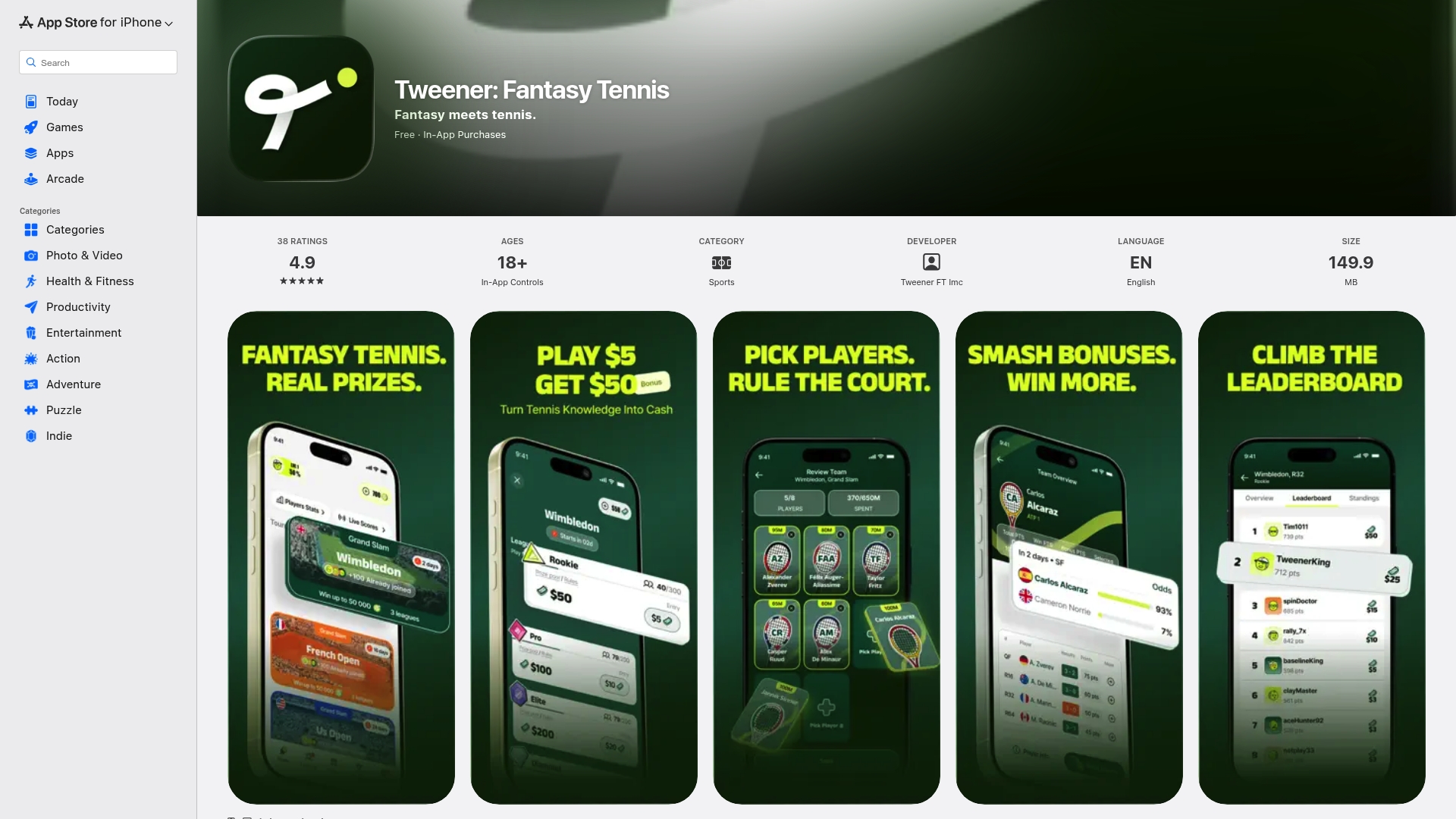
Play free using virtual coins redeemable for gift cards, or step into cash contests where your state permits real-money play thanks to Best Sports Prediction Apps for U.S. Lottery Players. Before you enter a paid contest, confirm your state's current status through Tweener's legal states resource so there's no surprise at deposit time. Ready to build your first lineup? Get the Tweener app and see how your read on Alcaraz's clay-court form or Sabalenka's hard-court numbers stacks up against your friends.
Where Should You Check for Updates?
- UIGEA federal statute text
- CRS report on DFS legal issues
- NY Gaming Commission fantasy sports rules
- Illinois SB 3019 summary
Bookmark your own state's gaming commission and legislature pages, since status can change with little advance notice.
Sources
- U.S. Code — Unlawful Internet Gambling Enforcement Act (preliminary view)
- New York Court of Appeals decision and legislative context on interactive fantasy sports
- Illinois enacts first-ever fantasy sports regulatory framework
- NY State Gaming Commission — Chapter VI: Interactive Fantasy Sports (updated 2023)