

TL;DR:
- Poker involves immediate, hand-by-hand results with a focus on probability and opponent reading, while fantasy sports are roster management competitions based on athletes' performances over days or weeks. The two games differ significantly in gameplay pace, skill sets, and the nature of feedback, requiring distinct cognitive tools for success. Understanding these differences helps players choose the game that best matches their skills, time commitment, and strategic preferences.
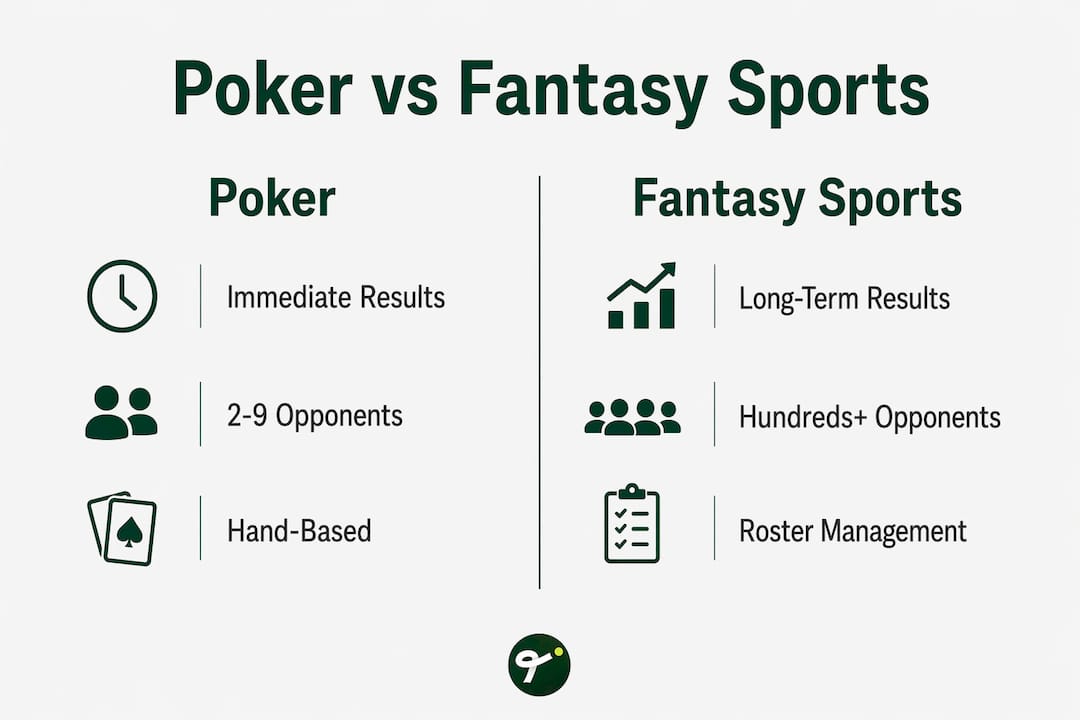
The difference between poker and fantasy sports comes down to one fundamental split: poker is a direct, card-based competition with immediate outcomes, while fantasy sports are roster management contests where your results depend entirely on real athletes performing in real games. Both reward skill over pure luck, but the type of skill, the pacing, and the psychological experience are worlds apart. Understanding that split helps you figure out which game actually fits how your brain works and how much time you want to invest.
How do poker and fantasy sports differ in gameplay mechanics?
Poker uses a standardized deck, fixed hand rankings, and betting rounds to produce immediate results. You see your cards, read the table, bet, and find out within minutes whether you won or lost. The feedback loop is tight and relentless.
Fantasy sports work on a completely different clock. You draft or select real professional athletes, build a roster, and then watch their real-world statistics accumulate over days or weeks. Your score is not a single decision. It is the sum of every point, assist, ace, or touchdown your selected players produce across multiple live events.
The structural differences go deeper than timing:
- Poker rake: Cardrooms and online platforms take a percentage of each pot, typically a fixed fee per hand.
- Fantasy sports entry fees: DFS platforms charge a 10–15% rake on total prize pools before payout. That cut comes off the top before winners are paid.
- Roster management: Fantasy sports require you to make lineup decisions before contests lock, then track performance across multiple games simultaneously.
- Hand-by-hand play: Poker demands a decision on every single hand, often dozens per hour.
Pro Tip: In fantasy sports, your biggest edge comes before the contest starts. Locking in the right roster at lineup deadline beats any in-game adjustment you can make.
The pacing difference is the most underrated factor. Poker compresses wins and losses into minutes. Fantasy sports spread results like a marathon, with cumulative scoring that rewards patience and research over reflexes.
What skills separate poker players from fantasy sports competitors?
Poker and fantasy sports both reward skill, but they demand completely different cognitive toolkits. Confusing the two is the fastest way to lose money in either game.
Poker skill centers on four pillars:
- Probability and pot odds: You calculate whether a call is mathematically justified based on the size of the pot and the likelihood of completing your hand.
- Opponent reading: You track betting patterns, timing tells, and tendencies to model what your opponent holds.
- Emotional control: A bad beat in poker can tilt your decision-making for the next 20 hands. Managing that reaction is a core skill.
- Rapid decision-making: Poker gives you seconds, not hours, to act. Speed and accuracy must coexist.
Fantasy sports strategy pulls from a different set of skills entirely. Roster management, injury research, and game script prediction drive results far more than any single in-the-moment call. You study matchup data, surface statistics in tennis, head-to-head records, and recent form before you ever submit a lineup.
The variance profiles also differ sharply. Poker allows thousands of hands per day, which means your skill level shows up in your results relatively quickly. Fantasy sports are constrained by real sports calendars. An NFL season gives you 17 weeks of data. A Grand Slam tournament gives you one week. Fewer data points mean higher variance, even for skilled players.

Pro Tip: If you are building fantasy sports skills, use predictive analytics tools to track player form across surfaces and conditions. The edge is in the data you process before the lineup locks.
The psychological rhythm differs too. Poker delivers immediate calibration. You know within the session whether your reads were right. Fantasy sports build a layered loyalty where you root for individual players regardless of team allegiance, creating a longer emotional arc tied to a full tournament or season.
How does the competitive environment contrast in poker versus fantasy sports?
The table structure in poker is intimate. You face 2–9 opponents directly, and the dynamics shift with every player who sits down or leaves. Poker professionals deliberately avoid tables full of other strong players. The money comes from finding weaker competition and grinding an edge over volume.
Fantasy sports flip that logic entirely. DFS professionals compete directly in large-field, high-stakes contests called GPPs (guaranteed prize pools), where thousands of lineups compete simultaneously. Volume and lineup construction optimization drive success, not opponent selection.
The table below shows how the competitive environments compare across key dimensions:
| Dimension | Poker | Fantasy sports |
|---|---|---|
| Opponent count | 2–9 at a table | Hundreds to thousands per contest |
| Competition model | Player vs. player directly | Player vs. player field |
| Pro strategy | Avoid strong opponents | Enter large fields with volume |
| Result timing | Immediate per hand | Cumulative over event or season |
| Social dynamic | Closed table, adversarial | Open league, community-driven |
Fantasy sports also carry a social layer that poker rarely matches. Private leagues let friends compete against each other across a full tournament, building ongoing rivalries and shared investment in real athlete performances. Understanding leaderboard systems becomes part of the competitive strategy in ways that a poker table simply does not replicate.
What are the regulatory and financial considerations for each game?
Legality is where the poker and fantasy sports comparison gets genuinely complicated. Daily fantasy sports are legal in approximately 45 U.S. states as of mid-2026, while full mobile sports betting is legal in about 39 states. DFS earned broader legal acceptance because it is classified as a skill-based, player-versus-player contest rather than gambling against a house.
The financial structure of each game carries real consequences for your bottom line:
- Poker rake: Varies by room and format, but the house always takes a cut of each pot or charges a time fee.
- DFS rake: Platforms typically charge 10–15% of total prize pools before distributing winnings.
- Tax treatment: Some jurisdictions apply a 28% GST on fantasy sports entry fees, which compresses net payouts significantly compared to other models.
- Bankroll management: Both games require disciplined bankroll management, but fantasy sports entry fees are fixed upfront while poker losses can escalate hand by hand.
Understanding entry fees in fantasy sports before you deposit is not optional. The rake and tax structure directly affect whether a winning strategy stays profitable over a full season.
What practical advice helps you choose between poker and fantasy sports?
The right game depends on how your brain is wired and how much time you can realistically commit.
Consider these factors before deciding:
- Time commitment: Poker sessions can run 30 minutes or 8 hours, and you control the stop point. Fantasy sports require upfront research time before each contest, then passive tracking during live events.
- Skill affinity: If you enjoy probability math and reading people under pressure, poker fits your profile. If you prefer deep statistical research and sports knowledge, fantasy sports reward that investment more directly.
- Variance tolerance: Poker's high hand volume means your results stabilize faster. Fantasy sports seasons are shorter, so a few bad weeks can define your entire contest record.
- Social preference: Fantasy sports leagues create ongoing community competition. Poker is fundamentally adversarial and solitary at the table.
- Financial risk profile: Fantasy sports entry fees are fixed and known before you enter. Poker losses can compound within a single session if discipline slips.
Pro Tip: Start with free-to-play fantasy sports contests before committing real money. Platforms like Tweener offer virtual coin modes that let you build real-time decision-making skills without financial risk.
The difference between fantasy sports and betting is also worth clarifying here. Fantasy sports pit you against other players. Sports betting pits you against a sportsbook holding a built-in margin. Fantasy sports give skilled players a cleaner path to a positive edge over time.
Key Takeaways
Poker rewards rapid, probability-driven decisions against a small table, while fantasy sports reward deep research and roster strategy across a full season or tournament.
| Point | Details |
|---|---|
| Gameplay structure | Poker produces immediate results per hand; fantasy sports accumulate scores over days or weeks. |
| Skill type | Poker demands probability math and opponent reading; fantasy sports require roster research and injury analysis. |
| Competitive model | Both are player-versus-player, but poker tables are small while fantasy contests involve large fields. |
| Regulatory access | DFS is legal in approximately 45 U.S. states, giving it broader access than full sports betting. |
| Variance and feedback | Poker allows thousands of hands daily for fast skill calibration; fantasy sports seasons limit data points and increase variance. |
Why I think most gamers underestimate fantasy sports strategy
Most people assume fantasy sports are casual. Pick a few popular names, set your lineup, and hope for the best. That assumption is exactly why skilled players consistently beat the field.
The strategic depth in fantasy sports rivals poker in complexity, just on a different timeline. In poker, you get immediate feedback on every decision. In fantasy sports, you are building a thesis about athlete performance across surface conditions, fatigue, and matchup quality, then waiting days to see if you were right. That delayed feedback loop is harder to manage psychologically, not easier.
What I find genuinely interesting is how the two games train different mental muscles. Poker sharpens your ability to act decisively under pressure with incomplete information. Fantasy sports build your capacity for patient, research-driven conviction. The best fantasy players I have seen treat their roster decisions the way a poker pro treats hand selection: with discipline, data, and zero emotional attachment to the outcome.
If you are a competitive gamer who loves tennis, the analytical depth available through ATP and WTA statistics, head-to-head records, and surface performance data gives fantasy tennis a strategic ceiling that most casual players never reach. That gap is where the real edge lives.
— Nathan
Tweener brings fantasy sports strategy to tennis fans
Tennis has always lacked a serious fantasy sports platform built for analytical fans. Tweener fills that gap directly.
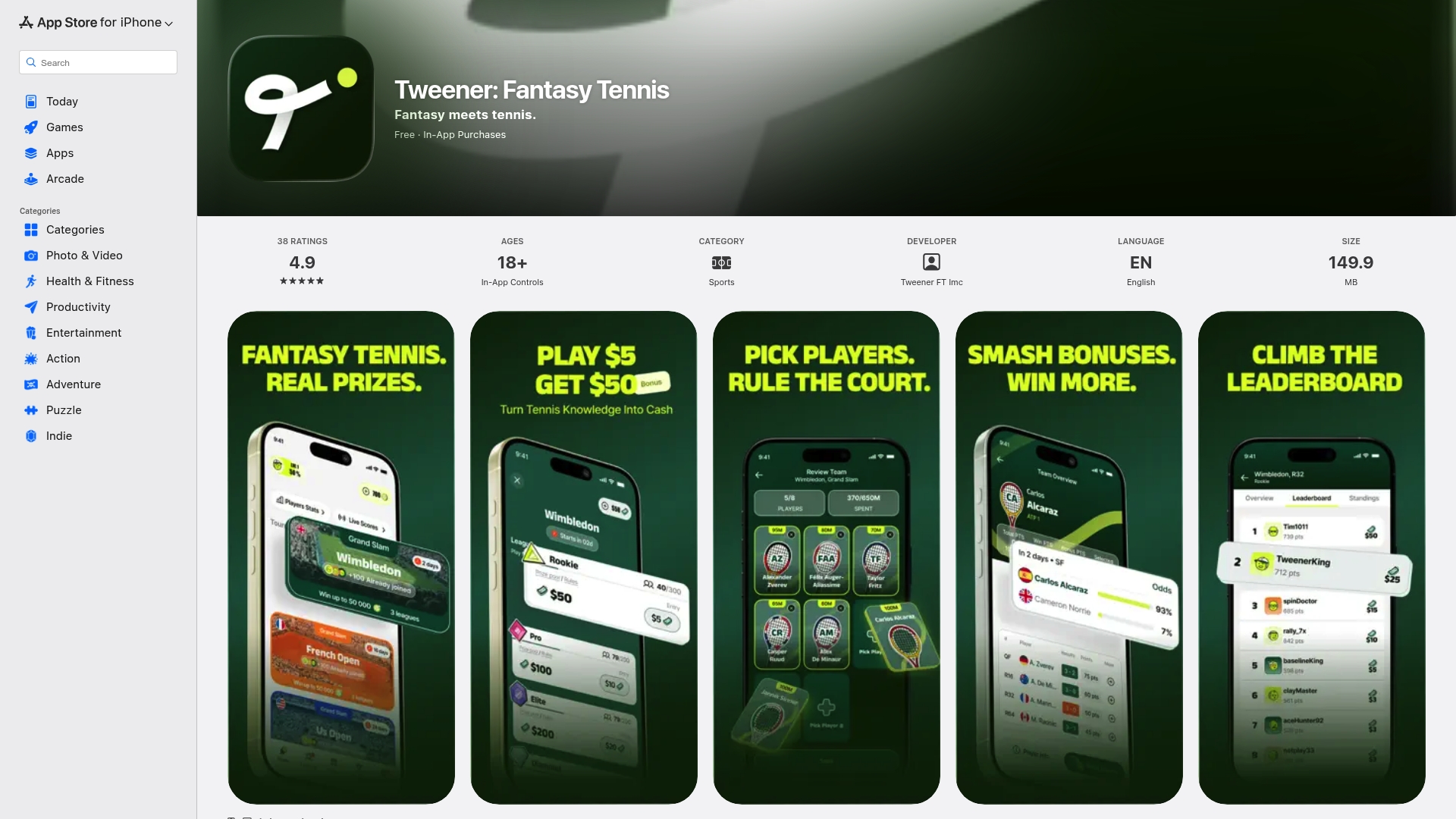
Tweener lets you build fantasy teams from real ATP and WTA players and compete in public or private leagues tied to live tournament results. The platform supports both free-to-play coin mode and real-money cash contests where legally permitted. Prize structures reward roster research and smart lineup decisions, not luck. Private leagues let up to 9 friends compete across Grand Slam tournaments, turning every match into a shared strategic contest. If you want a skill-based alternative to sports betting that rewards what you actually know about tennis, download Tweener and start competing.
FAQ
What is the core difference between poker and fantasy sports?
Poker is a card-based game with immediate, hand-by-hand outcomes determined by probability and opponent reading. Fantasy sports are roster management contests where your score accumulates based on real athletes' performances across live events.
Is fantasy sports considered gambling?
Daily fantasy sports are classified as skill-based, player-versus-player contests and are legal in approximately 45 U.S. states as of mid-2026. They are legally distinct from traditional sports betting in most jurisdictions.
How do platform fees compare between poker and DFS?
Poker rooms charge a rake per pot or a time fee per hour. DFS platforms typically charge a 10–15% rake on total prize pools before distributing winnings to contest winners.
Which game has higher variance: poker or fantasy sports?
Fantasy sports carry higher variance per season because real sports calendars limit the number of data points available. Poker allows thousands of hands per day, which means skill shows up in results faster and variance smooths out more quickly.
Can skills from poker transfer to fantasy sports?
Probability thinking and bankroll discipline transfer well. However, fantasy sports require sports-specific knowledge including injury tracking, matchup analysis, and roster strategy that poker does not develop on its own.