

TL;DR:
- Mastering real-time fantasy tennis involves using live match data to make timely and informed lineup decisions. It requires setting predefined rules, validating signals, and reviewing outcomes to build a consistent decision framework. The app Tweener helps players track matches, score points, and manage lineup swaps during live tennis events.
Real-time fantasy picks are live, in-play decisions you make during an active tennis match to adjust your roster, swap your captain, or lock in a player before the scoring window closes. Mastering this skill separates casual fans from players who consistently win in fantasy tennis leagues. The difference is not luck. It is knowing which data to trust, when to act, and how to read a match like an analyst. This guide covers the tools, the step-by-step process, and the mistakes that cost players points on platforms like Tweener during ATP and WTA tournaments.
What tools and data sources do you need for real-time fantasy tennis picks?
The right tools make live decisions faster and more accurate. Without them, you are reacting to highlights instead of leading the market.

Live scores do more than display the current game count. They reveal momentum shifts, break-point conversion rates, and second-set player patterns that signal whether a player is building toward a dominant performance or fading. Fantasy winners act on live data before the crowd catches up, which is exactly the edge you need in competitive leagues.
The table below shows the core tool categories and what each one contributes to your live decision process.
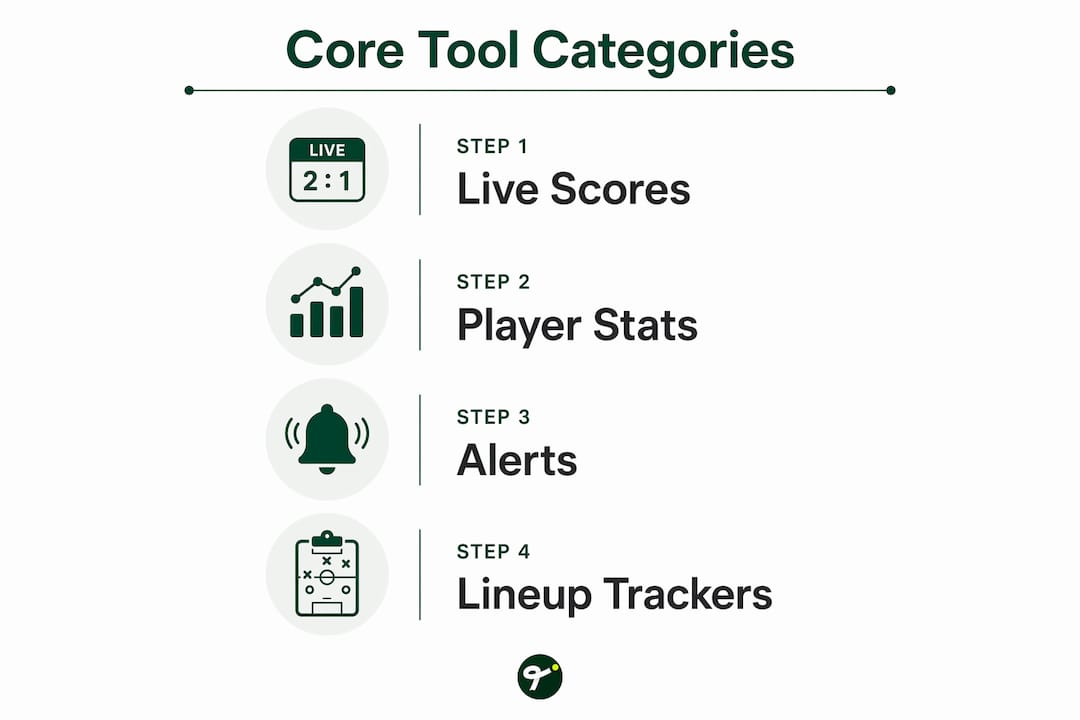
| Tool type | What it provides | Best use case |
|---|---|---|
| Live score apps (ATP, WTA apps) | Point-by-point data, serve stats, break points | Tracking momentum shifts mid-set |
| Fantasy platform (Tweener) | Real-time scoring, lineup locks, captaincy swaps | Making roster moves before deadlines |
| Injury alert feeds | Late scratches, retirement news, medical timeouts | Avoiding dead-weight picks |
| Predictive analytics tools | Shot volume trends, surface-adjusted projections | Captaincy and high-variance decisions |
| Match broadcast or stream | Visual cues, body language, tactical shifts | Validating what the numbers suggest |
Key data types to monitor during a live match:
- Serve percentage and first-serve points won: A player dropping below their season average on first serve is often heading toward a break.
- Break point conversion: A player who creates chances but does not convert is a liability for captaincy.
- Tactical shifts: A player switching from aggressive baseline play to defensive retrieval signals fatigue or a tactical problem.
- Injury news: Late injury alerts redefine player projections entirely and require immediate lineup action.
- Weather and court conditions: Wind at outdoor venues like Roland Garros or the Australian Open changes serve dynamics and rally length.
Pro Tip: Set curated alerts for scoring events, injuries, and lineup changes rather than relying on a dozen random apps. Minimal but reliable alert sets outperform notification overload every time.
How to make real-time fantasy picks during a live tennis match
The best fantasy managers treat live match flow as a decision engine, not background noise. Here is the process that works.
Step-by-step live pick process
-
Establish your baseline before the match starts. Review head-to-head records, surface win rates, and recent form for every player in your lineup. Carlos Alcaraz on clay at Roland Garros is a different proposition than Alcaraz on hard courts in windy conditions. Know the context before the first ball is struck.
-
Watch the first two games of each set. The opening games reveal serve dominance, return aggression, and energy levels. A player who holds to love in the first two service games is in rhythm. A player who faces break points immediately is under pressure.
-
Identify the first momentum shift. A break of serve is the single most important signal in live tennis fantasy. It changes the scoring trajectory for the entire set and often predicts the next 20 minutes of play.
-
Time your captain swap at the end of the first set. The first-set conclusion is the clearest decision window in live fantasy tennis. You have enough data to confirm or reject your pre-match read, and the lineup lock for many Tweener contests has not yet closed.
-
Validate with a second source before acting. Managers who observe, validate, and then act outperform those who react to raw stats alone. Cross-check a stat spike with what you see on screen or in a broadcast feed before committing to a swap.
-
Use predictive models for captaincy decisions. Predictive analytics signal changing shot volume and tactical shifts, which tells you whether to stick with a high-variance captain or pivot to a safer option. On Tweener, your captain earns double points, so this decision carries the most weight.
-
Lock your lineup before the deadline, not at it. Waiting until the last second creates unnecessary risk. A server crash, a slow connection, or a surprise retirement announcement can cost you a valid lineup entirely.
Pro Tip: In chaotic match periods, like a third-set tiebreak or a rain delay, set a personal rule before the match: "If my captain drops the first set and faces a break in the second, I swap." Predefined rules remove emotion from the equation and keep your decisions consistent.
Common mistakes when making live fantasy picks
Avoiding errors is as valuable as making great picks. Most live fantasy losses trace back to a small set of repeatable mistakes.
- Overreacting to a single highlight. One spectacular winner from Jannik Sinner does not mean he is dominating the match. Check the full point distribution before adjusting your lineup.
- Missing lineup lock deadlines. Tweener and most fantasy platforms lock lineups at a specific match time. Missing that window means your original pick stands regardless of what happens on court.
- Ignoring late injury news. Injury alerts dramatically redefine fantasy expectations and require rapid lineup adjustments. A player who retires in the second set scores zero points for the rest of the match.
- Picking based on fandom. Choosing Novak Djokovic because you are a fan, not because the data supports it, is the fastest way to lose a league week.
- Chasing yesterday's performance. A player who scored 60 points last round is not guaranteed to repeat. Surface changes, opponent quality, and fatigue all reset the projection.
"The managers who win consistently are not the ones who react fastest. They are the ones who react correctly. Speed without a system is just noise."
Fixing these mistakes requires one structural change: write down your swap rules before each tournament round. If your captain loses the first set, what do you do? If a player retires, who is your backup? Having answers ready before the chaos starts is what separates disciplined fantasy players from reactive ones.
How do you refine your real-time fantasy pick strategy over time?
Single-match decisions matter, but long-term improvement comes from reviewing your choices against outcomes and building a personal decision framework.
Post-match review as a learning tool
Post-game review of lineups, highlights, and statistics improves future decision-making and helps refine live swap rules. The review process does not need to be complex. Compare your pre-match pick against your live adjustment and note whether the change added or cost points.
The table below shows how a structured review looks in practice.
| Match scenario | Initial pick | Live adjustment | Outcome | Lesson |
|---|---|---|---|---|
| Alcaraz vs. Zverev, Roland Garros | Alcaraz captain | Kept Alcaraz after first set | +18 points | First-set read confirmed; no swap needed |
| Swiatek vs. Sabalenka, US Open | Swiatek captain | Swapped to Sabalenka after break | +12 points | Break signal was correct trigger |
| Medvedev vs. Rune, Australian Open | Medvedev captain | Kept despite second-set drop | -8 points | Should have swapped; ignored serve stats |
Tracking three to five matches per tournament gives you enough data to spot patterns in your own decision-making. Do you swap too early? Do you hold too long? The answers show up in the numbers.
Building a personal decision framework
Tracking player consistency and substitution patterns across tournaments builds a stable floor for your picks. Players like Iga Swiatek on clay or Jannik Sinner on hard courts have predictable performance ranges that make live decisions easier. When you know a player's floor, you can hold through a rough patch with confidence instead of panic-swapping.
Pro Tip: After each tournament, score your live decisions on a simple scale: correct hold, correct swap, wrong hold, wrong swap. Four categories. Over time, your ratio of correct decisions will improve because you are treating fantasy tennis as a skill, not a guess.
Key Takeaways
Real-time fantasy success in tennis requires treating live match data as a structured decision engine, not a stream of noise to react to impulsively.
| Point | Details |
|---|---|
| Use live data as a decision engine | Track momentum shifts, serve stats, and break points to drive every lineup move. |
| Time picks at set breaks | The end of the first set is the clearest window for captain swaps and roster adjustments. |
| Validate before acting | Cross-check stat spikes with visual cues or a second source before committing to a live swap. |
| Avoid emotional decisions | Predefined swap rules remove fandom and panic from live picks, keeping decisions consistent. |
| Review every match | Post-match analysis of your picks versus outcomes is the fastest way to improve your live strategy. |
Why I think most fantasy tennis players are solving the wrong problem
Most players I see in fantasy tennis leagues spend the majority of their prep time on the draft and almost none on the live phase. That is backwards. The draft sets your ceiling. Live decisions determine whether you reach it.
The real edge in fantasy tennis is not knowing that Carlos Alcaraz is good on clay. Everyone knows that. The edge is knowing that Alcaraz's first-serve percentage drops measurably when he plays in windy conditions, and that a wind advisory at Roland Garros on match day is a signal to reconsider your captaincy before the first ball is struck. That kind of detail comes from treating live tennis results as a data source, not just a scoreboard.
The second mistake I see constantly is treating a bad live decision as a failure. It is not. A wrong swap that followed a correct process is a learning event. A right outcome that came from a gut feeling is a trap. Build the process first. The results follow.
The players who improve fastest are the ones who review their decisions after every tournament round, not just their scores. They ask: did I act on the right signal? Did I wait too long? Did I let a player's reputation override what the stats were telling me? Those questions, asked consistently, build the kind of analytical instinct that wins leagues over a full Grand Slam draw.
— Nathan
Tweener puts live tennis fantasy in your hands
Tweener is built for exactly the kind of live decision-making this guide describes. The app tracks ATP and WTA matches in real time, scores your fantasy team as points accumulate on court, and gives you the tools to manage captaincy and lineup choices as matches unfold.
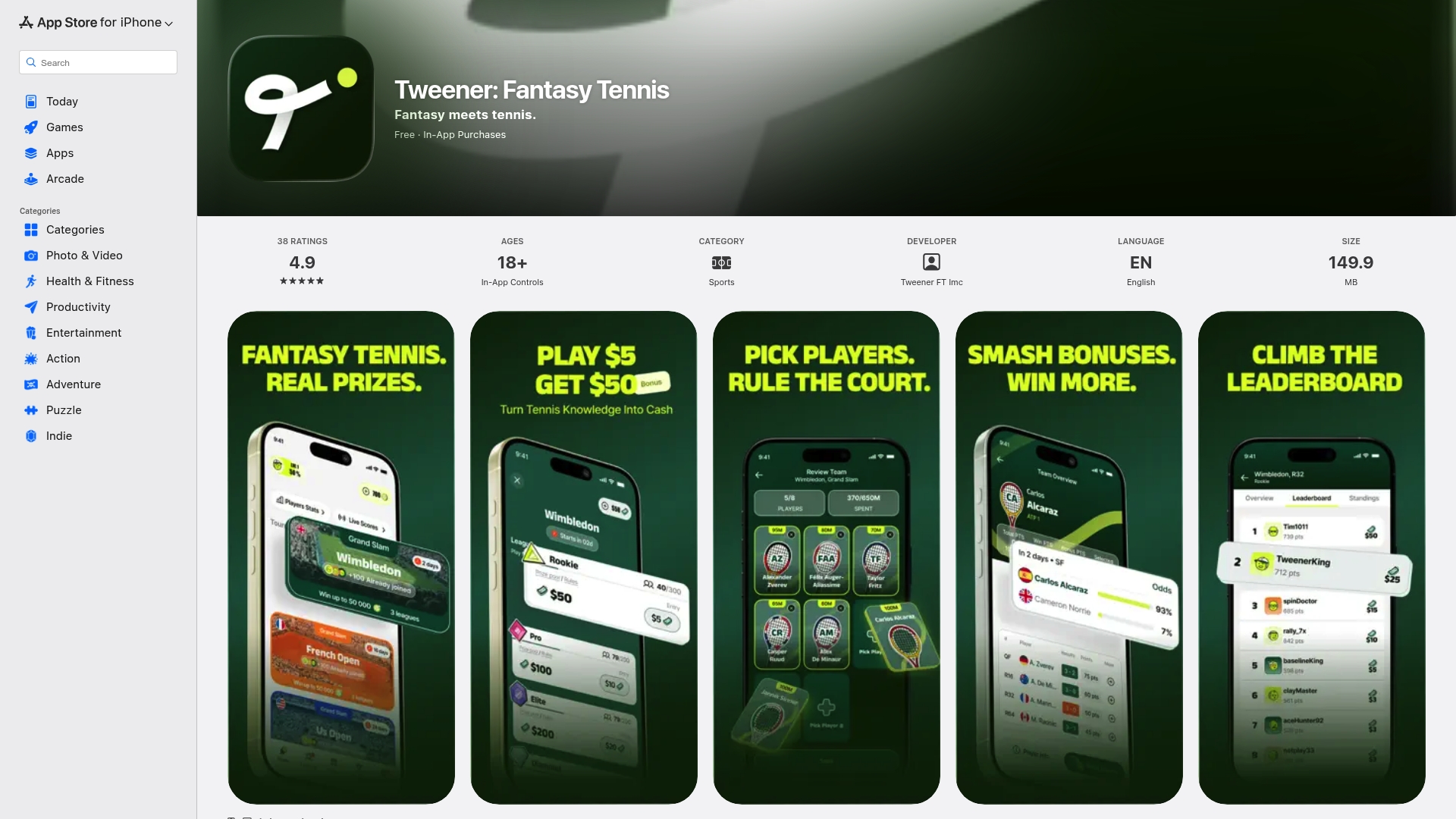
You can join public leagues or set up a private league with up to nine friends for Grand Slam tournaments, which makes every match on the draw relevant to your competition. The free mode uses virtual coins you can redeem for gift cards, so you can practice your live pick strategy without financial risk before stepping into cash contests. If you are ready to put the strategies in this guide to work, download Tweener and start competing during the next ATP or WTA event.
FAQ
What are real-time fantasy picks in tennis?
Real-time fantasy picks are live roster decisions made during an active tennis match, including captain swaps and lineup adjustments based on current match data. They differ from pre-match picks because they respond to what is actually happening on court.
When is the best time to swap your captain during a live match?
The end of the first set is the most reliable window for a captain swap. You have enough data to confirm your pre-match read without sacrificing too many scoring points.
How do I avoid missing lineup lock deadlines?
Set a personal alarm five minutes before each match's lineup lock time. Most Tweener contests lock lineups at match start, so acting early protects you from last-minute technical issues or surprise retirement news.
Does post-match review actually improve live fantasy performance?
Yes. Reviewing lineups and statistics after each match builds disciplined swap rules and prevents the same reactive mistakes from repeating across tournaments.
What is the biggest mistake in live fantasy tennis picks?
Overreacting to a single highlight or break of serve without checking the full match context is the most common error. One data point does not define a match trajectory. Always validate a signal before acting on it.