

TL;DR:
- Most casual players overlook the strategic importance of live match results, which actively influence fantasy scoring and player insights.
- Expert managers leverage real-time data to assess current form, injury, momentum, and surface performance, giving them a competitive edge before the public catches on.
Most fantasy tennis players focus almost entirely on the big names heading into a tournament, treating match results as something to glance at after the fact rather than as real-time intelligence that can swing a contest. That's a costly mistake. Live match results don't just confirm your picks were right or wrong; they actively reshape scoring, expose hidden form, and create windows for smart lineup moves that the average player never sees coming. This guide breaks down exactly how real-world tennis outcomes drive fantasy performance, so you can stop reacting and start winning.
Table of Contents
- Why live results matter in fantasy tennis
- How fantasy scoring systems use live match data
- Key differences: Season-long fantasy vs. DFS
- Smart strategies: Leveraging in-play results for a winning edge
- Our take: The real reason live results matter (and what most miss)
- Level up your fantasy tennis experience with Tweener
- Frequently asked questions
Key Takeaways
| Point | Details |
|---|---|
| Real-time results drive scoring | Live tennis outcomes instantly adjust your fantasy team's points and rank. |
| Deep scoring rewards nuance | Small match details—aces, upsets, penalties—matter as much as major wins. |
| DFS and season-long differ | Each format uses live results differently for lineup optimization and late swaps. |
| Hidden value in smaller events | Monitoring early round and minor tournament results reveals breakout fantasy options. |
| Proactive tracking wins leagues | Actively following live results enables smarter decisions and consistent fantasy success. |
Why live results matter in fantasy tennis
Let's start by tackling why live match results hold so much sway over your fantasy prospects.
Most casual players think of live results as the final word on a match. Win or lose, the points get tallied and life goes on. But experienced fantasy players treat live results as ongoing intelligence. A player dropping a bagel set before rallying for a five-set win tells you something about their stamina. A seed losing to a qualifier in a small clay-court event tells you something about surface fatigue or a nagging injury being managed quietly. These signals are pure gold for your next roster decision.
Live tournaments in fantasy don't operate in isolation. Every match feeds into a rolling picture of player form that smart managers use to get ahead of the public. Consider how predicting tennis outcomes becomes far more accurate once you layer in recent live data from events like Houston, Marrakech, or Bucharest. ATP Fantasy results from those smaller tournaments directly inform player selection strategies heading into bigger events like the Monte-Carlo Masters, because form doesn't reset just because the tournament gets more prestigious.
Here's what live results consistently reveal:
- Current form: A player stringing together dominant straight-set wins is in a completely different headspace than one scraping through five-setters.
- Injury status: Unusual service speeds, a player retiring mid-match, or visible signs of physical strain during a run tell the real story before any official announcement.
- Momentum shifts: Upsets don't happen in a vacuum. They usually follow a pattern of underdog confidence building across smaller events.
- Surface suitability: Live results on a specific surface confirm or challenge your assumptions about how a player will perform when a Masters-level clay swing begins.
"Most players look at who won. Elite fantasy managers look at how they won and what it means for the next four events." That shift in perspective is the difference between a passive fan and a competitive fantasy strategist.
How fantasy scoring systems use live match data
Understanding the fundamentals leads naturally to the next question: exactly how do live results alter your fantasy score in practice?
The scoring system is where live tennis stops being background noise and starts being money. Every ace a player hits, every double fault they fire into the net, and every shocking upset they pull off or suffer gets converted into fantasy points immediately. The fantasy tennis scoring system is designed to reward managers who follow matches closely, not just those who make educated pre-tournament guesses.
Here's a detailed look at how ATP Fantasy scoring mechanics translate real match outcomes into fantasy points:
| Event | Points |
|---|---|
| Ace | +2 |
| Straight-sets win | +10 |
| Upset win (lower seed beats higher seed) | +20 |
| Double fault | -2 |
| Bagel set loss (losing 6-0) | -10 |
| Upset loss | -20 |
This table reveals a crucial design philosophy: high-variance live events carry massive point swings. An upset win is worth ten times a single ace. That means a single surprise result in a match you weren't watching closely can flip your fantasy leaderboard position in minutes. Conversely, a trusted top seed getting bageled and then losing as the upset victim can tank your score by 30 points in one match.
The scoring structure motivates you to stay engaged with matches as they happen, not just check scores the next morning. When you know that a player firing double faults in the first set is piling up penalties in real time, you're invested in the match differently. It's no longer just entertainment; it's active fantasy management.
Pro Tip: Track your players' aces and double fault rates during live matches using the official ATP app alongside your fantasy platform. A player suddenly serving at 80% first serve and dropping double faults is often a sign of something physically wrong, even if they haven't retired yet. Catching this early lets you plan your next switch before the injury becomes official news.
Fantasy prediction games reward managers who understand this live scoring depth. The best fantasy players aren't just watching; they're running mental calculations on how each game, set, and match outcome affects their total across an entire tournament week.
Key differences: Season-long fantasy vs. DFS
With scoring principles clear, let's compare how different fantasy structures use live results to shape your game plan.
Season-long and daily fantasy sports (DFS) formats both run on live tennis data, but they use it in completely different ways. Getting the distinction right is what lets you apply the right strategy in the right context.
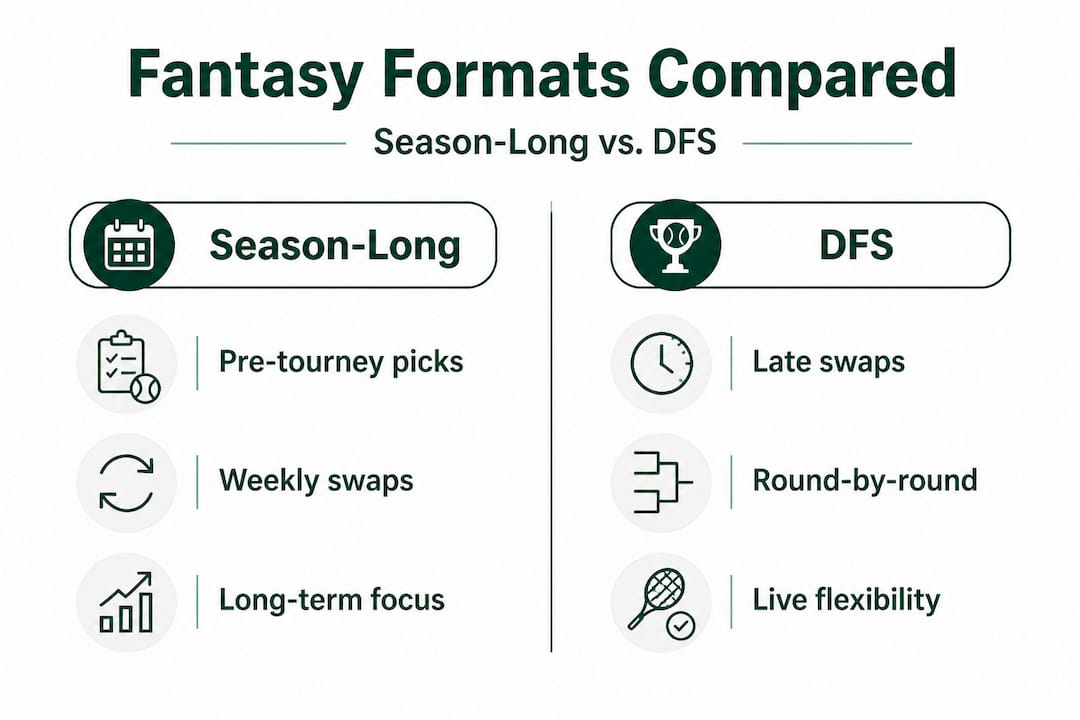
In ATP's official season-long fantasy, you set your team before a tournament and get two free switches per week after the first round, which means your reactions to live results are scheduled and deliberate rather than instant. You watch Saturday's matches, evaluate what happened, and make your two swaps count. The live results from prior weeks shape your decision making, but you're not in a position to swap players mid-round based on a single bad set.

DFS is the opposite. It's built for speed. Late swaps in DFS are one of the format's defining features, allowing you to pull an injured player from your lineup right up until lock, as long as you've been watching the live updates. A qualifier beating a top seed the day before your DFS lock should immediately trigger a lineup review. That upset tells you something about the surface conditions, the seed's physical state, and the psychological momentum of the underperdog in the draw.
| Feature | Season-long fantasy | DFS |
|---|---|---|
| Lineup lock | Before tournament begins | Before each round |
| Live result reaction | Weekly swaps (2 free per week) | Late swaps until round lock |
| Strategic focus | Long-term form and tournament runs | Single-round upsets and injuries |
| Points timeframe | Full tournament or season | Daily or single-round contests |
| Ideal for | Building a cohesive roster | Capitalizing on breaking news |
Here's a numbered breakdown of how to use live scoring strategy differently in each format:
- In season-long fantasy, use live results from each round to evaluate your two weekly swaps carefully. Don't burn them on impulse after one bad set.
- In DFS, monitor injury reports and real-time warm-up news obsessively before lineups lock. Even a player walking gingerly in pre-match hits is a signal.
- In both formats, track head-to-head records and recent surface results from smaller live events to build confidence in your picks before the big draw begins.
- Exploit the real advantages of live scoring by noting which players improve as a tournament progresses. A player who won a tight three-setter in round one often plays more freely in round two.
The biggest DFS edge comes from spotting a qualifier who just beat a seeded player on a specific surface. That result might not change the general public's picks, but it should immediately change yours.
Smart strategies: Leveraging in-play results for a winning edge
Once you know the formats and scoring, it's time to upgrade your fantasy playbook with these hands-on strategies.
The most effective fantasy players don't just react to the biggest matches. They scan the entire tour calendar for informative results that most fans scroll past. A challenger-level event result might seem irrelevant, but when a clay-court specialist wins back to back titles in Casablanca and Estoril heading into Roland Garros, that's a data point worth acting on.
Here are the core principles for building a winning lineup using live results strategically:
- Watch smaller events for form indicators. Live results from lower-tier tournaments reveal which players have found their rhythm. This is where the ATP Fantasy intelligence on hidden gems is built, by watching who is moving well before the spotlight events.
- Read surface stats in context. A player's career clay-court winning percentage means less than their clay results from the last six weeks. Fresh live data beats historical averages almost every time.
- Use the Bonus Ball feature wisely. In ATP Fantasy, the Bonus Ball doubles points from your selected player's live performance. Assigning it to a player on a hot streak going into a favorable draw can be a massive multiplier on your weekly score.
- Identify the "quiet" injury signals. A player retiring from a warm-up event, citing vague physical complaints, is a risk to avoid even if their seeding looks appealing on paper.
- Track opponent quality. A three-set win over a qualifier earns fewer implicit form points than a three-set win over a top-20 player. Live results need context to be genuinely useful.
The essential skills to win at fantasy tennis all converge here: pattern recognition, proactive research, and the discipline to act on what you see in live data before the rest of your league catches up. When you're drafting fantasy players before a major clay swing, you should already know who looked sharp on dirt two weeks prior.
Pro Tip: Create a simple notes file or spreadsheet tracking which players had notable live results each week across all active tours. After four or five weeks, patterns emerge clearly. You'll start seeing which players are genuinely building momentum versus those whose wins are fluky or against weak fields.
Our take: The real reason live results matter (and what most miss)
Here's where conventional fantasy tennis advice consistently gets it wrong. Most guides tell you to react to live results: if your player loses, swap them; if an upset happens, adjust your lineup. That's fine advice, but it's fundamentally passive.
The real edge comes from being proactive before the waves of live results arrive, and using earlier results from the full tour calendar to pre-position your roster. Most casual players ignore the weeks of live matches that precede a big event. Sharp managers treat those matches as a scouting database.
The "quiet" stories in smaller tournaments are where real money tennis fantasy contests are genuinely decided. When Dominic Thiem or another resurgent player strings together solid performances in mid-tier clay events, the public still undervalues them because the casual tennis fan only watches the major events. Meanwhile, the fantasy manager who tracked those live results owns a high-upside, low-ownership pick heading into a 500 or 1000 event.
We also think too much emphasis gets placed on the search for perfect projections and statistical models. Live tennis is chaotic. A top-five player withdraws the morning of a match. A qualifier beats two seeds riding an emotional homecoming crowd. You cannot model every variable perfectly. What you can do is stay close to the live results, build genuine intuition about player patterns, and apply consistent, disciplined decision making across a full season. That consistency outperforms any single brilliant prediction every time.
The managers who win over a full season aren't the ones who nail every upset. They're the ones who avoid catastrophic mistakes by listening to what live results are quietly telling them before the obvious story breaks into the mainstream news cycle.
Level up your fantasy tennis experience with Tweener
Ready to put these strategies to work? Tweener offers powerful tools for live scoring and fantasy tennis mastery.
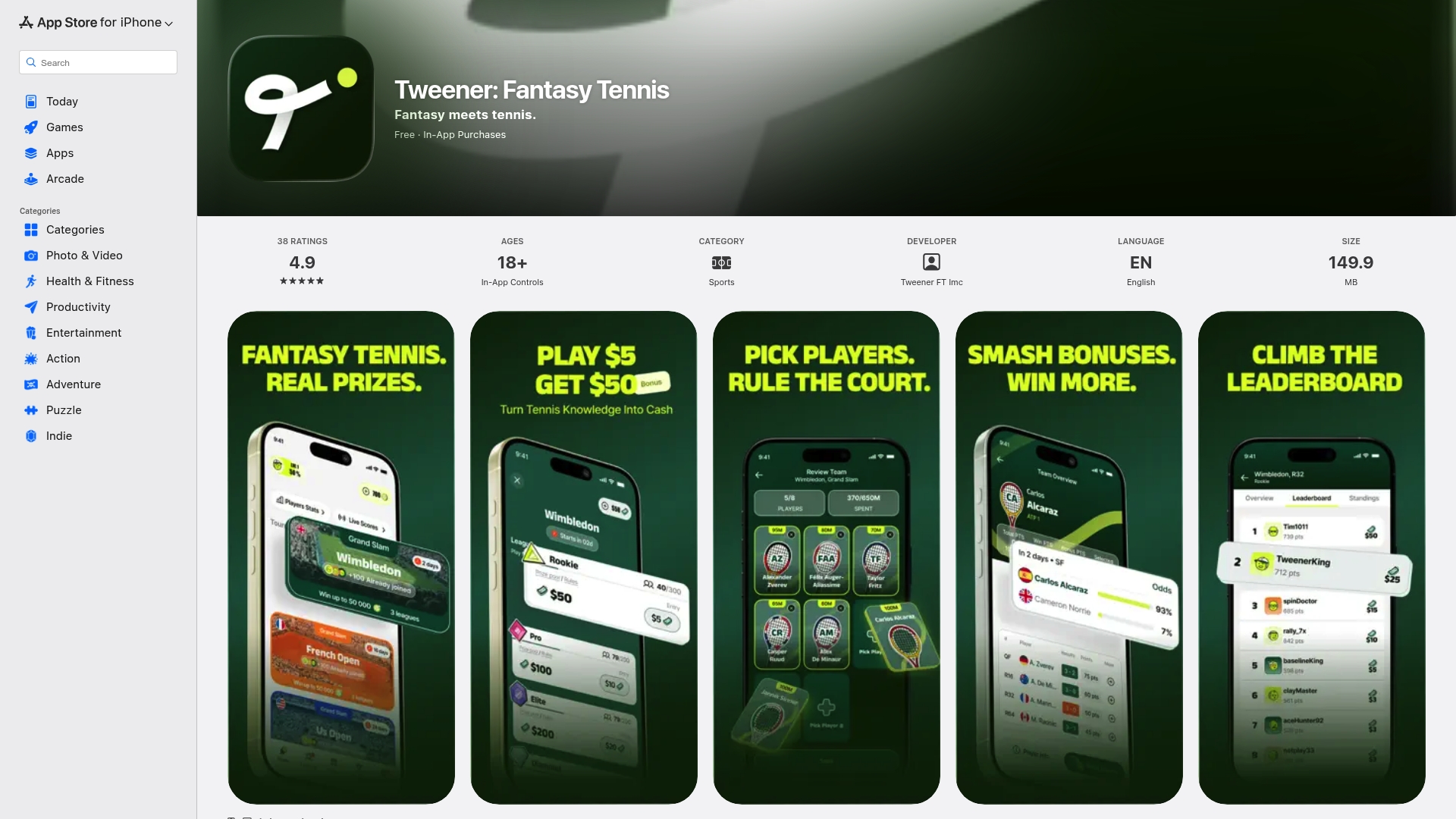
Tweener is built specifically for tennis fans who want more than just a scoreboard. The platform integrates live match data directly into your fantasy experience, so you're never making decisions blind. Whether you prefer competing with virtual coins in the free mode or entering cash contests for real-money payouts, the Tweener fantasy platform gives you the live intelligence and competitive structure to apply everything covered in this guide. You get public leagues, private leagues with friends, and a scoring engine that reflects exactly how matches unfold in real time. Download the Tweener app today and start turning your live match knowledge into a genuine fantasy advantage.
Frequently asked questions
How quickly do live tennis results impact my fantasy team?
Fantasy scores can update within minutes of a match ending, directly affecting your lineup's total and rankings. The live scoring mechanics process events like aces, double faults, and upset wins almost immediately after they occur.
What types of live data are most decisive for fantasy points?
Aces, upsets, straight-set wins, double faults, and surprise losses are the top contributors to fantasy scoring swings. An upset win or loss alone can shift your score by 20 points in a single match.
Does following smaller tournaments really give me a fantasy edge?
Yes, monitoring outcomes in lower-profile events helps you identify form and value players before others do. Live results from smaller events reveal fitness and confidence levels that don't show up in the headline results from major tournaments.
How are late withdrawals or injuries handled in fantasy scoring?
Daily formats allow late swaps for injured or withdrawn players as live information updates come in. Tracking DFS late swap windows closely is one of the highest-value habits you can build as a fantasy tennis manager.
Is there a delay between real match results and fantasy score updates?
Most major fantasy platforms process updates almost immediately, with only rare brief delays during peak tournament traffic. Staying on your platform's live feed during matches ensures you see score changes as close to real time as possible.