

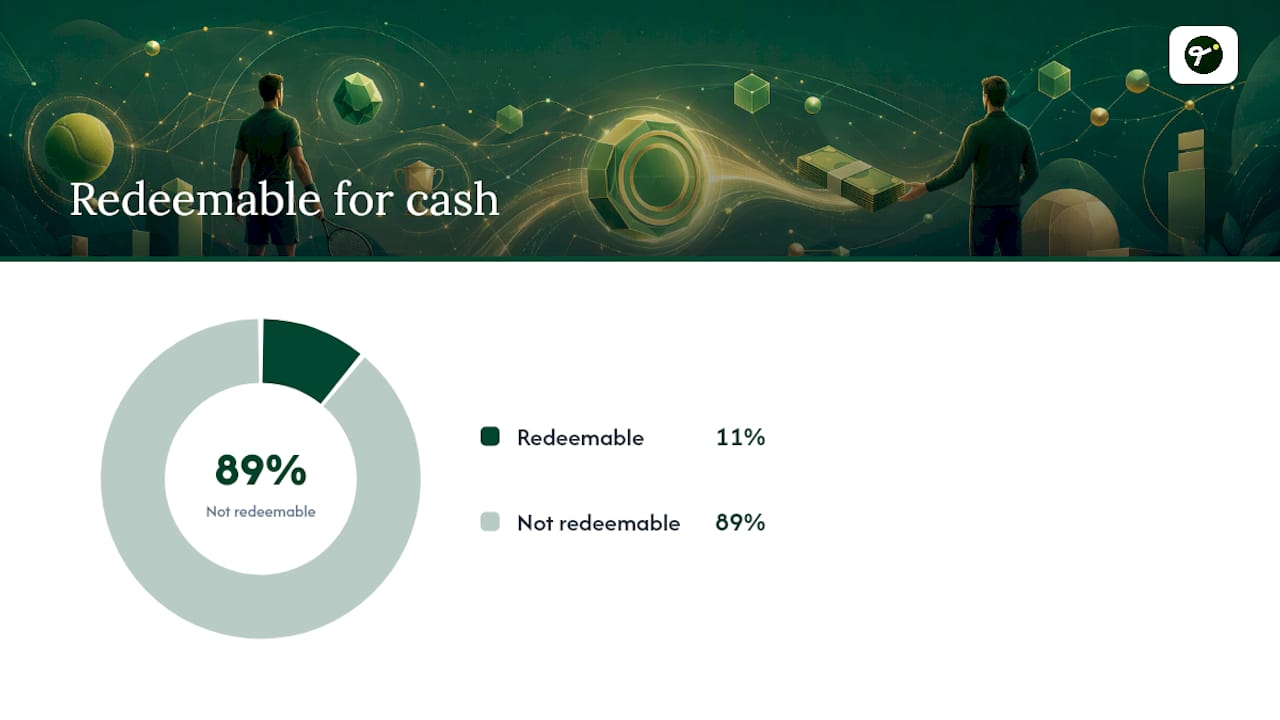
Fantasy tennis apps use seven main types of reward systems: soft and hard virtual currencies, the points/badges/leaderboards (PBL) triad, daily login bonuses and recurring challenges, event and seasonal currencies, referral and social rewards, VIP/loyalty tiers, and cash-contest payouts (cash games, GPPs, and pick'em formats). Cash-contest payouts are the only reward type that puts real money in your pocket. Everything else, from badges to daily coins, drives retention and status inside the app.
- Virtual currencies (soft, hard, event, VIP): earned or purchased; power in-app play and redemptions
- PBL triad (points, badges, leaderboards): status and competition signals, not cash
- Daily/login bonuses and weekly challenges: habit-building, low-friction coin drops
- Referral and social rewards: extra entries or coins for bringing friends in
- Event/seasonal currencies: limited-time, tied to specific tournaments (Roland Garros, Wimbledon)
- VIP/loyalty tiers: perks that scale with spend or activity
- Cash-contest payouts: real money, via cash games, GPPs, or pick'em, where permitted by local law
Key takeaways
- Cash-contest payouts (cash games, GPPs, pick'em) are the only reward type that returns real money. Every other system, coins, badges, leaderboards, operates inside the app.
- Soft currency is earned free but usually cannot be withdrawn as cash. Hard currency is purchased and is almost never refundable.
- The PBL triad (points, badges, leaderboards) drives retention and social competition, not payouts. Recognize it for what it is.
- Match your contest type to your risk tolerance: cash games for consistency, GPPs for upside, pick'em for accessibility.
- Always verify withdrawal rules and app terms before depositing real money or purchasing hard currency.
Table of Contents
- Types of reward systems in mobile sports apps: the full catalog
- How cash contests and payouts actually work
- Why apps build these reward systems the way they do
- Practical tips for maximizing rewards without overspending
- How Tweener implements these reward systems
- The reward system that actually matters most
- Tweener: fantasy tennis with real stakes
- Key Takeaways
- Sources
Types of reward systems in mobile sports apps: the full catalog
Fantasy tennis apps borrow heavily from mobile game-economy design. Game-economy research identifies at least seven distinct currency types, each with a different acquisition channel and purpose. Here is how they map to what you actually see in a tennis fantasy lobby.
Virtual currencies
Soft currency is the everyday coin you earn by playing, logging in, or completing challenges. You never buy it directly. In most apps it can be redeemed for gift cards or used to enter free contests, but it cannot be withdrawn as cash.
Hard currency is purchased with real money. It unlocks premium entries, cosmetic upgrades, or contest boosts. Per game-economy analysis, hard currency is platform-controlled and typically non-refundable, so read the terms before you buy.
Event currencies appear during specific tournaments. A Wimbledon-themed coin might unlock a limited badge or a bonus entry to a grass-court contest, then disappear when the tournament ends. VIP/prestige currencies accumulate through spending and unlock tier-based perks.
The PBL triad: points, badges, and leaderboards
Academic research on fantasy sport apps identifies points, badges, and leaderboards as the most consistently embedded motivational tools across platforms. Points track cumulative progress. Badges mark specific achievements, like a five-match win streak, and function as visible social signals of skill inside the community. Leaderboards let you compare rank against friends or the full field.
None of these pay out cash. Their value is reputation and the competitive itch to climb.
Daily login bonuses, streak rewards, and weekly challenges
Log in every day, collect coins. Miss a day, the streak resets. Weekly challenges (e.g., "enter three clay-court contests this week") layer on top with larger coin drops. These mechanics reward active, everyday players and keep casual users engaged even when they skip cash contests.
Referral and social rewards
Invite a friend, both of you get a coin bonus or a free contest entry. Some apps tie referral rewards to the friend's first deposit, which means the reward scales with real-money activity. Social gaming mechanics like these also build the private-league communities that make Grand Slam season genuinely fun.
| Reward type | How you earn it | Redeemable for cash? | Primary player benefit |
|---|---|---|---|
| Soft currency | Play, login, challenges | No (gift cards only) | Free contest access |
| Hard currency | Purchase with real money | No (platform-controlled) | Premium entries, boosts |
| Event currency | Limited-time tournament play | No | Exclusive badges, entries |
| VIP/prestige currency | Cumulative spend/activity | Perks only | Tier benefits, reduced rake |
| Points (XP) | Contest performance | No | Progress tracking |
| Badges | Achievements, streaks | No | Social signaling, reputation |
| Leaderboard rank | Contest results | No | Competitive standing |
| Cash-contest payout | Win real-money contests | Yes | Direct monetary return |
Pro Tip: Before you spend hard currency on a premium entry, check whether the same contest is available in free mode. If it is, the soft-currency version gives you identical practice at zero cost.
How cash contests and payouts actually work
Real-money payouts come in three contest shapes, and choosing the wrong one for your bankroll is the fastest way to drain it.
Daily fantasy sports distinguishes cash games from GPPs and pick'em formats clearly. Cash games (50/50s, double-ups, head-to-head) pay roughly half the field at a flat rate. You do not need to finish first; you need to beat the median. GPPs (guaranteed prize pools) are top-heavy: a small percentage of entrants take the bulk of the prize money, with first place often earning a multiple of the entry fee. Pick'em formats strip out lineup construction entirely and ask you to predict individual player stats, making them the most accessible entry point for newer players.
Entry fees fund the prize pool after the platform retains a rake, its operational fee. Understanding how entry fees flow into prize pools matters because rake is a structural cost that compounds for high-volume players.
Payout availability depends on local law and app terms. Always verify withdrawal rules in your jurisdiction before depositing.
Why apps build these reward systems the way they do
The design is not accidental. Research on gamified elements in fantasy sport shows the PBL triad drives competition, satisfaction, and, in some cases, in-app spending. Badges signal accomplishment and nudge players toward purchases that accelerate badge acquisition. Leaderboards create social pressure to stay active.
Two behavioral mechanisms do most of the work:
- Variable ratio schedules: GPP payouts and streak bonuses arrive unpredictably, which sustains engagement longer than fixed rewards do. The same principle that makes slot machines compelling applies here.
- Artificial scarcity: Event currencies and limited-time badges create urgency. A Wimbledon badge available only during the fortnight pushes daily logins that would not otherwise happen.
Interactive sports apps use these mechanics to keep fans engaged between matches, not just during them.
Pro Tip: When you see a "48-hour badge window" notification, pause before acting. Ask whether chasing the badge requires spending hard currency. If it does, the badge is a monetization nudge, not a genuine reward.
Practical tips for maximizing rewards without overspending
- Separate your bankrolls. Keep cash-contest funds in a dedicated deposit, distinct from any soft currency you earn for free. Mixing them makes it easy to underestimate real spend.
- Check redeemability before you grind. Soft currency that only converts to gift cards has a ceiling. Know what you are working toward before investing hours.
- Match contest type to your edge. Cash games reward consistency; GPPs reward variance. If you are new to fantasy tennis, free vs cash mode comparisons can help you calibrate before depositing.
- Audit VIP perks honestly. A loyalty tier that offers reduced rake is genuinely valuable for high-volume players. A tier that offers cosmetic badges is not worth chasing with real money.
- Read withdrawal terms for hard currency. Purchased currency is almost never refundable and often cannot be withdrawn as cash. Verify this before buying.
Pro Tip: Event currencies and limited-time badges create habit loops by design. Prioritize evergreen rewards (soft currency, redeemable coins) over short-lived cosmetic offers. The urgency is manufactured.
If you notice your spending escalating to chase rewards, most reputable apps include responsible-gaming tools in their settings. Use them.
How Tweener implements these reward systems
Tweener maps cleanly onto the catalog above. In free mode, you compete using virtual coins earned through gameplay and in-app activity, which can be redeemed for gift cards. In cash mode, you deposit real money to enter paid contests and compete for cash payouts where legally permitted. The Tweener blog covers the strategic case for cash contests in detail.
Private Grand Slam leagues let up to nine friends compete across a full tournament, with leaderboards tracking standings throughout. Badges and points mark progress and signal skill within your group. The platform's scoring ties directly to ATP and WTA match results, so your fantasy decisions reflect real surface stats, head-to-head records, and current form, not luck.
The reward system that actually matters most
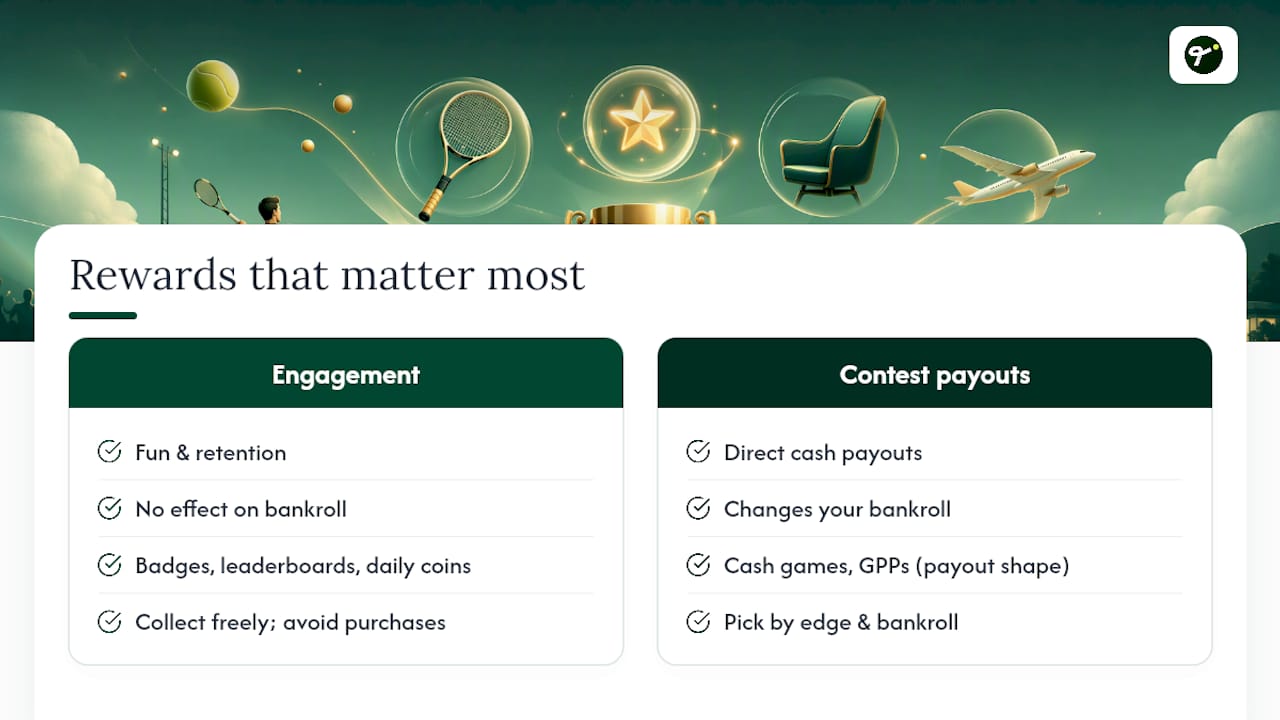
Most articles on this topic spend equal time on every reward type, which is the wrong frame. Badges are fun. Leaderboards are motivating. Daily coins keep you logging in. But none of that changes your bank balance.
The reward system worth your real attention is contest selection, specifically the payout shape of whatever contest you enter. A player who understands the difference between a cash game and a GPP, and who picks the right one for their edge and bankroll, will outperform a player who chases every badge and event currency the app throws at them. Variable ratio schedules and artificial scarcity are powerful precisely because they feel like progress when they are often just engagement mechanics.
The conventional advice says "use all the rewards available to you." The smarter move is to treat soft-currency rewards as free value worth collecting and treat every hard-currency purchase or cash deposit as a deliberate financial decision, not a response to a notification. Tweener's free mode exists for exactly this reason: you can build real strategic skill on clay or grass slates without spending a dollar, then move to cash contests when your lineup decisions are genuinely sharp.
Tweener: fantasy tennis with real stakes
Tweener is the closest thing tennis has to a dedicated DFS platform, and that gap in the market is real. You get ATP and WTA player pools, live scoring tied to actual match results, and the choice between free coin play and real-money cash contests.
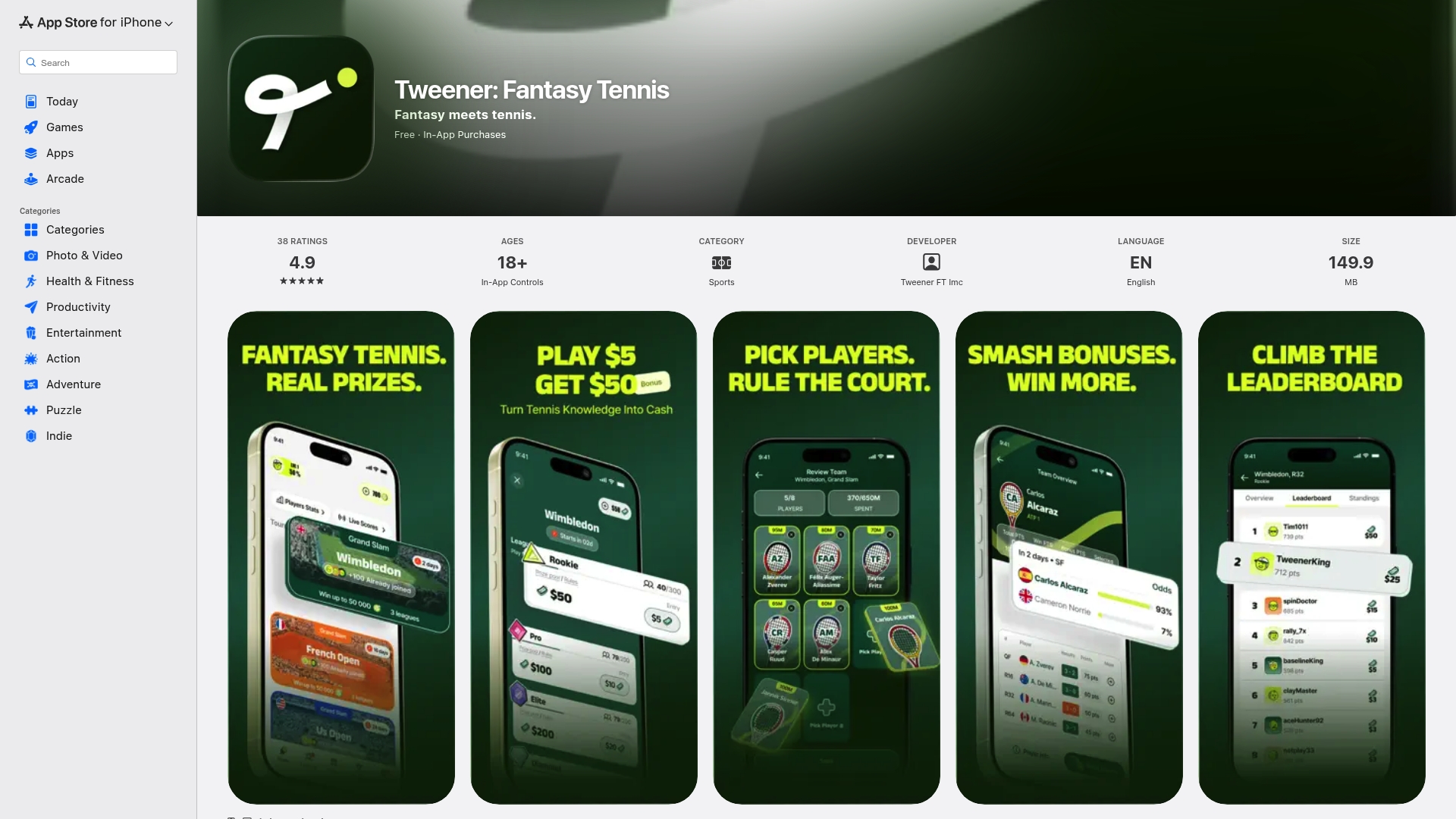
For analytical fans who track surface stats and head-to-head records, Tweener turns that knowledge into a competitive edge rather than a spectator habit. Private leagues for Grand Slams mean you can run a season-long competition with up to nine friends across Roland Garros or Wimbledon without touching a cash contest if you prefer. When you are ready for real-money play, cash contests and GPPs are available where permitted.
Download Tweener and start with free mode to get your bearings before committing a deposit.
Key Takeaways
Fantasy tennis apps offer seven reward types, and only cash-contest payouts return real money — everything else is retention and status design.
| Point | Details |
|---|---|
| Cash payouts vs in-app rewards | Only cash games, GPPs, and pick'em contests pay real money; coins, badges, and leaderboards stay inside the app. |
| Soft vs hard currency | Soft currency is earned free and redeemable for gift cards; hard currency is purchased and almost never refundable. |
| PBL triad purpose | Points, badges, and leaderboards drive retention and social competition, not financial returns. |
| Contest selection by risk | Cash games suit consistent players; GPPs suit those chasing upside; pick'em suits beginners. |
| Tweener on the platform | Tweener offers both free coin play and real-money cash contests, with private Grand Slam leagues for up to nine friends. |
Sources
- Paying while playing: examining the influence of interaction with gamified elements in fantasy sports on in-app spending
- On virtual currencies and their role in free-to-play games (game-economy taxonomy)
- Types of game currencies in mobile free-to-play
- Daily fantasy sports — Wikipedia