

TL;DR:
- Most tennis fantasy players overlook cash contests, which reward consistency over risky, high-variance plays.
- These formats pay roughly half the field for finishing above the median, making them more beginner-friendly and sustainable.
Most tennis fantasy players are chasing the wrong prize. They pour their energy into massive tournament formats, hunting for that one perfect bracket finish, while consistently overlooking the format that actually builds a sustainable edge: cash fantasy contests. If you've ever finished a tournament with a solid lineup and nothing to show for it, understanding why choose cash fantasy contests might be the single best shift you can make in how you approach tennis DFS.
Table of Contents
- Understanding cash fantasy contests in tennis
- Why cash contests suit tennis fantasy players
- Comparing cash contests and tournament formats
- Practical tips for success in cash fantasy contests
- Applying cash contest strategies to enhance your tennis experience
- Why cash fantasy contests are the future for serious tennis fans
- Discover cash fantasy contests on Tweener
- Frequently asked questions
Key Takeaways
| Point | Details |
|---|---|
| Cash fantasy contests | Require beating the median, rewarding steady, risk-managed scoring rather than rare top finishes. |
| Tennis fit | Cash contests suit tennis fans by prioritizing consistency and minimizing variance from match unpredictability. |
| Strategic bankroll | Use an 80/20 buy-in allocation with 80% toward cash contests to protect and grow your bankroll steadily. |
| Simpler lineup builds | Cash contests allow less correlation concern, enabling easier live lineup adjustments with top-value players. |
| Enhanced fan engagement | Cash contests offer frequent, skill-based competition that enriches tennis viewing and player analysis. |
Understanding cash fantasy contests in tennis
Cash fantasy contests are formats where you don't need to finish first. You just need to finish above the median. In a 50/50 or double-up contest, roughly the top half of participants gets paid, with the goal being to beat the median score rather than chase a leaderboard.
That single distinction changes everything about how you build a lineup.
In a large-field tournament (often called a GPP, or guaranteed prize pool contest), the payout structure is steep and top-heavy. Most entrants walk away with nothing, and winners are often players who made a few bold, low-percentage calls that happened to pay off. Cash contests flatten that curve. Payout ladders in cash games are designed to reward consistency, not ceiling explosions.
Here's what that means for your lineup decisions in practice:
- No need to "go contrarian." In cash, popular, reliable players are almost always the right call.
- Variance is your enemy. A boom-or-bust pick that scores 40 points or 8 points is dangerous in cash, even if it has a high ceiling.
- You're competing against the field, not a handful of sharks. Beating the average is achievable with smart, form-based decisions.
- Beginner-friendly by design. Once you master cash mode basics, the learning curve is far gentler than in GPP formats.
Tennis makes this format particularly interesting because the sport's match structure naturally creates predictable scoring floors for top-seeded players, especially at Grand Slams and Masters events.
Why cash contests suit tennis fantasy players
Now that we understand why cash contests exist, let's explore their strategic advantages for tennis players specifically.
Tennis is a sport full of upsets, but it's also a sport with patterns. Rafael Nadal on clay. Novak Djokovic on hard courts in five-set formats. Surface specialists at 250-level events who routinely advance three or four rounds without anyone flinching. These patterns are gold in cash contests. Tennis DFS beginners benefit most from cash formats because rewarding consistency beats rewarding risky volatility.
Here's a four-step approach to thinking about cash contests as a tennis fantasy player:
- Start with surface fit. A clay-court specialist entering a clay Masters event has a high probability floor before a ball is even struck. That floor is what cash contests are built on.
- Prioritize match-win probability over upside. A player expected to win 80% of their first-round matches is a cash asset. Reliable fantasy points come from players with clear paths to deep runs, not from long shots hoping to upset a top seed.
- Ignore ownership in cash. One of the biggest advantages cash contests have over GPPs is that you don't need to stress about what percentage of the field is rostering the same player. If Jannik Sinner is the best value, roster him. Everyone else probably is too, and that's fine.
- Stack your lineup with high floors, not high ceilings. Three players who reliably score 35 to 40 points beat two 20-point duds and one 60-point monster more often than you'd think.
Pro Tip: Before every cash contest, rank your potential picks by "floor score," meaning their realistic bad day output, not their best-case scenario. If a player's bad day is still 25 points, that's a cash contest asset. If their bad day is 5 points, they belong in GPPs only.
The benefits of cash fantasy contests for tennis are magnified by how the ATP and WTA calendar works. Major tournaments run for two weeks. That's multiple rounds of predictable matchups where chalk players consistently advance. You're not guessing. You're projecting form.

Comparing cash contests and tournament formats
Understanding these payout and strategy differences helps decide when to choose cash contests over tournaments.
| Feature | Cash contests | GPP tournaments |
|---|---|---|
| Who gets paid | Top 45 to 50% of field | Top 10 to 20%, heavily weighted to first |
| Payout multiplier | ~1.8x to 2x entry fee | Can be 10x to 1000x for top finishers |
| Lineup focus | High-floor, reliable players | High-ceiling, low-ownership picks |
| Variance tolerance | Low | High |
| Beginner suitability | High | Lower |
| Correlation importance | Low | Very high |
The payout difference tells the whole story. GPP tournaments reward the very top finishers with massive prizes while the majority of entrants earn nothing. Cash contests pay close to half the field, making consistent returns realistic rather than aspirational.
What this means for your actual lineup construction is significant. In a GPP, you need to think about player correlation: stacking players from the same side of the draw so their wins stack your score. You need to find the one player nobody is rostering who might shock the field. That's mentally taxing and requires a different set of analytical skills.
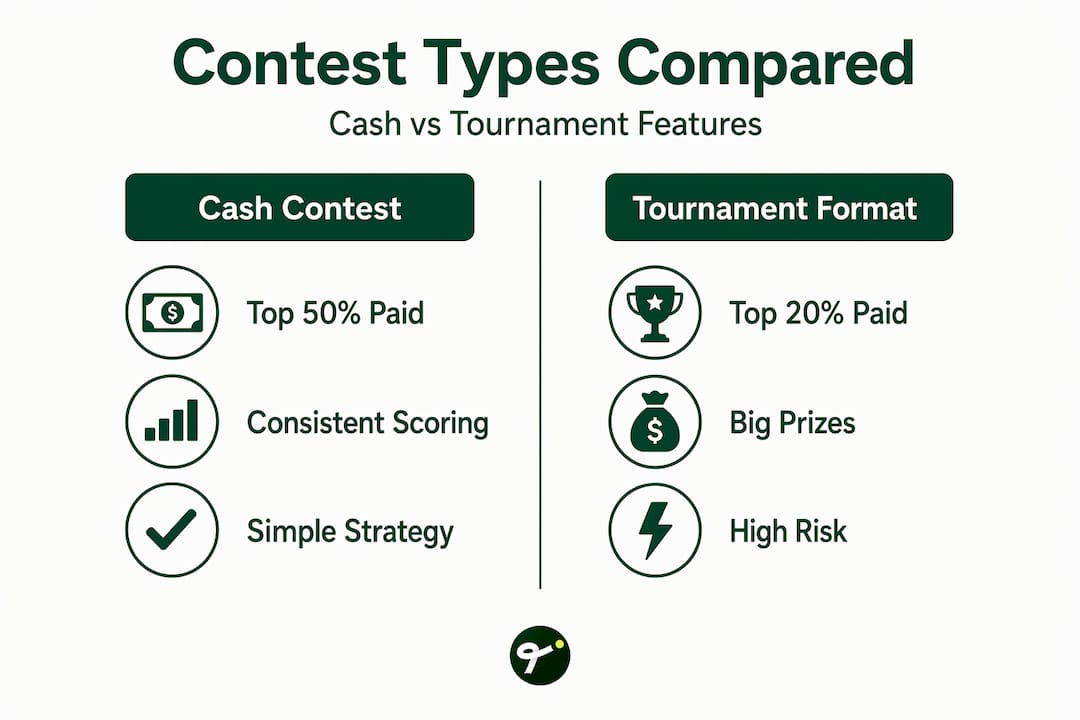
Cash contests simplify all of this. Less emphasis on correlation means you can build your lineup based purely on form, matchup quality, and surface performance. No complicated stacking decisions. This matters a lot in tennis, where live lineup adjustments sometimes need to happen quickly as match schedules shift.
Key advantages of cash contests over GPPs at a glance:
- Lower mental load during live tournament play
- More forgiving of slight projection errors
- Returns that compound over a full tournament calendar
- Better suited to a payout structure comparison approach where steady ROI matters more than lottery wins
Practical tips for success in cash fantasy contests
With strategic clarity, let's explore how to apply these insights effectively to your cash contest play.
- Follow the 80/20 bankroll rule. A solid bankroll strategy allocates about 80% of your total budget to cash games and the remaining 20% to tournaments. This protects your funds while still giving you exposure to bigger prize pools.
- Study recent form and surface data first. Before you look at anything else, check how your target players have performed in the last three to five tournaments on the same surface. Form is more predictive than ranking for fantasy scoring purposes.
- Avoid the temptation to swing big in cash. The biggest mistake cash players make is treating low buy-in contests as low-stakes sandboxes where anything goes. Floor outcomes matter equally at $1 and $25 entry fees. Bad habits formed at small stakes become expensive at larger ones.
- Track live matches and adjust when the platform allows. One underrated cash contest advantage is that you can often afford to roster the same reliable players others are rostering, then distinguish yourself by tracking which players are fresh versus fatigued mid-tournament.
- Protect your bankroll like a professional. Even at modest stakes, variance exists. A run of bad luck in cash contests stings less than in GPPs, but it stings. Set per-contest limits and stick to them.
Pro Tip: Use bankroll management insights to understand how even small, consistent edges compound over time. In cash contests, you don't need to win every contest. You need to win more than half of them over a season.
"The goal in cash is not to have the best lineup in the contest. The goal is to not have a bad one." This mental shift alone will change how you approach player selection every single week.
For tennis-specific cash strategies worth studying, the winning tennis cash strategies guide on Tweener's blog breaks down surface-specific value plays and how to identify floor players across different tournament tiers.
Applying cash contest strategies to enhance your tennis experience
Having learned how to apply cash strategies, let's reflect on their unique value from the perspective of dedicated tennis fans.
Cash contests don't just make you money more consistently. They make you a better tennis fan.
When you're competing in a cash contest during the Australian Open, you suddenly care deeply about a third-round match between the seventh and 12th seeds. You're tracking set scores, watching for injury timeouts, noting which player looks sharp on the fast hard courts and which one looks off. That level of attention transforms passive match viewing into active engagement.
The advantages of cash prize competitions for fan engagement are real and measurable:
- Steady incentives across every round. You're not eliminated from relevance after one bad pick. You stay invested from Round 1 through the final.
- Reduced emotional swings. Tournament formats punish a single bad pick catastrophically. Cash contests absorb small errors without blowing up your entire contest.
- Deeper player knowledge over time. Cash contests reward form-based analysis, so you inevitably learn more about player tendencies, surface preferences, and head-to-head dynamics.
- Lower financial commitment for ongoing play. The benefits of cash fantasy contests include continuous competition across the full tennis calendar without requiring high-variance, high-stakes entries.
- A habit that builds skill. Each contest teaches you something about roster construction. Over a full ATP or WTA season, that adds up to genuine expertise.
Pro Tip: Connect each cash contest to a specific real-world match you plan to watch. This makes your fantasy decisions feel grounded in live action and keeps the experience social and engaging, especially when competing with friends in private leagues. Check out the fantasy team benefits guide for how team formats amplify this effect.
Why cash fantasy contests are the future for serious tennis fans
Here's the take most DFS content won't give you: the reason cash contests get dismissed is not because they're less exciting. It's because the wins feel smaller. A 2x return doesn't make for a good story on social media. But over an entire Roland Garros or Wimbledon run, stacking 2x returns across multiple cash contests turns into something a single GPP top-10 finish rarely delivers: reliable income from a skill-based game.
Tennis is uniquely built for cash contest play. The sport has natural variance in individual matches, but the scoring floors for top players are unusually consistent compared to other fantasy sports. A top-five seed playing in their strongest surface specialty doesn't have a "zero-point" floor in the way an NFL running back might. They almost always score. That predictability is exactly what cash contests reward.
The mistake most players make is applying tournament risk approaches to cash contests, hunting for low-owned sleepers and stacking volatile players in a format designed to punish variance. They drain their bankroll chasing GPP instincts in the wrong arena.
Cash contests also allow ignoring correlation complexity that GPPs demand. That simplicity isn't a weakness. It's a feature. When a match gets rescheduled or a player withdraws mid-tournament, the cash roster player can adapt faster because they're not locked into a specific stacking structure.
The expert cash mode guide on Tweener walks through exactly how to build this kind of roster from scratch. Serious tennis fans who commit to cash contest fundamentals consistently outperform those who split their focus between both formats without mastering either.
Discover cash fantasy contests on Tweener
You now understand what separates cash fantasy contests from the rest of the field. The next step is finding a platform that's actually built for this level of tennis analysis.
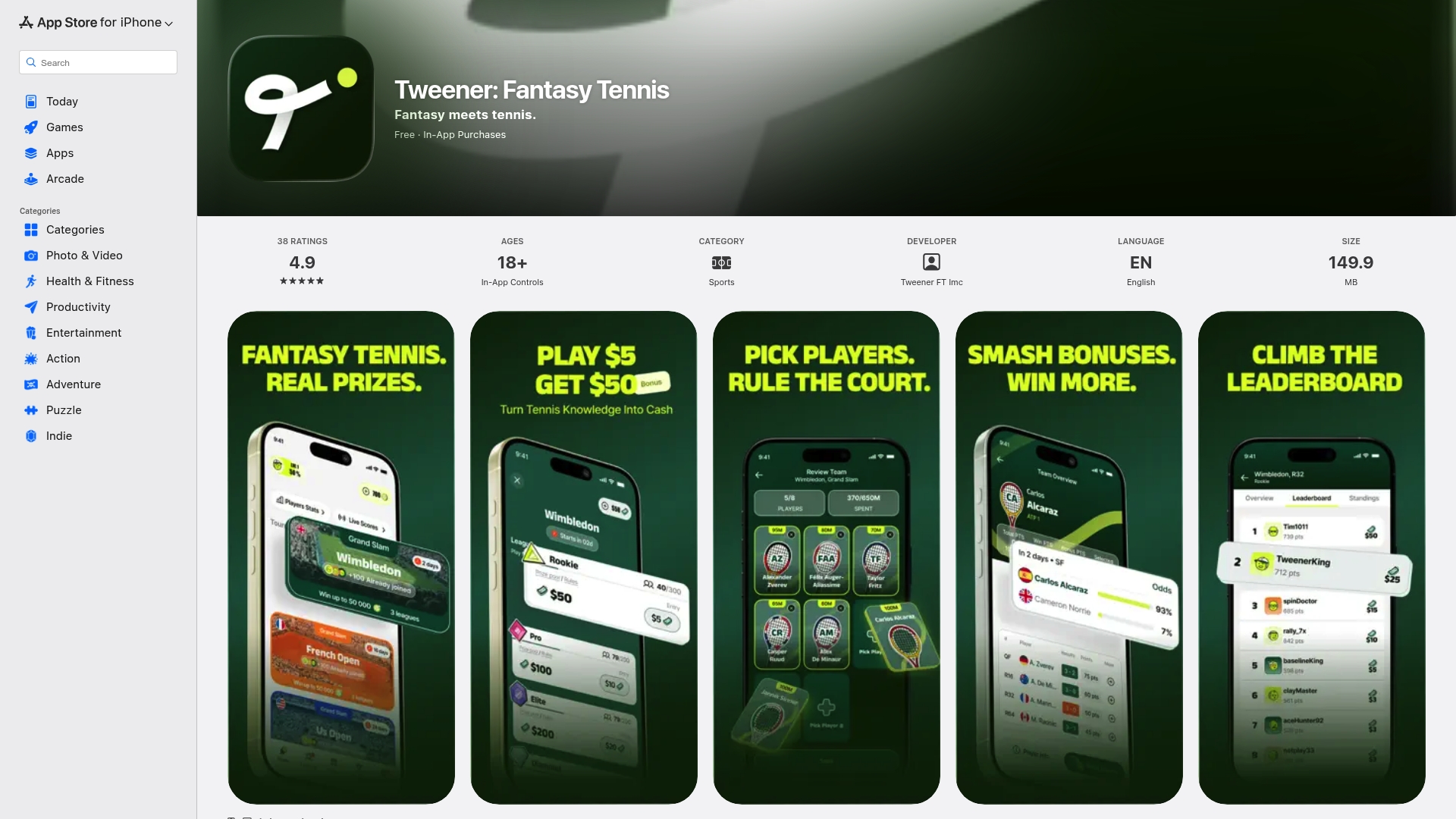
Tweener is the only fantasy sports app designed specifically around professional tennis, with real money cash contests built for fans who want to compete with skill, not luck. You can join public leagues during major ATP and WTA events or create private leagues with friends and put your cash contest strategy to work. The Tweener fantasy tennis platform gives you live match integration, flexible contest formats, and a skill-based alternative to sports betting, all focused on the sport you already love. Ready to compete? Download the Tweener app and start entering cash fantasy contests today.
Frequently asked questions
What defines a cash fantasy contest in tennis?
A cash fantasy contest requires finishing above the median (roughly the top 50% of participants) to win money, which means the goal is consistent, reliable scoring rather than chasing rare, first-place finishes.
Why are cash contests recommended for tennis DFS beginners?
Because cash contests reward consistency and reduce dangerous risk-taking early on, making them ideal for beginners who are still learning how to build effective lineups around surface specialists and match-win probability.
How does bankroll management differ for cash contests?
A smart approach follows the 80/20 rule, allocating about 80% of your buy-ins to cash games for steady returns and 20% to tournaments where the higher-variance chase for big prizes makes sense.
Can I use the same lineup strategies in cash contests as in large tournaments?
No. Tournament risk approaches applied to cash contests often drain bankroll fast. Cash lineups need to focus on reliable floor outcomes, not the risky upside and low-ownership stacks that GPP tournaments reward.
How do cash contests enhance the live tennis viewing experience?
They keep you engaged across every round of a tournament by giving you a strategic stake in multiple matches simultaneously. Continuous competition across the full tennis calendar makes every match more meaningful and encourages deeper player analysis with every contest you enter.