
TL;DR:
- Social gaming connects tennis fans through live competition and ongoing community interaction, transforming passive spectatorship into active engagement. It relies on real social graphs, persistent communication, and cross-device access, creating a competitive and social experience that deepens fandom. Platforms like Tweener exemplify this by offering tennis-specific, team-based leagues that heighten emotional investment and long-term involvement.
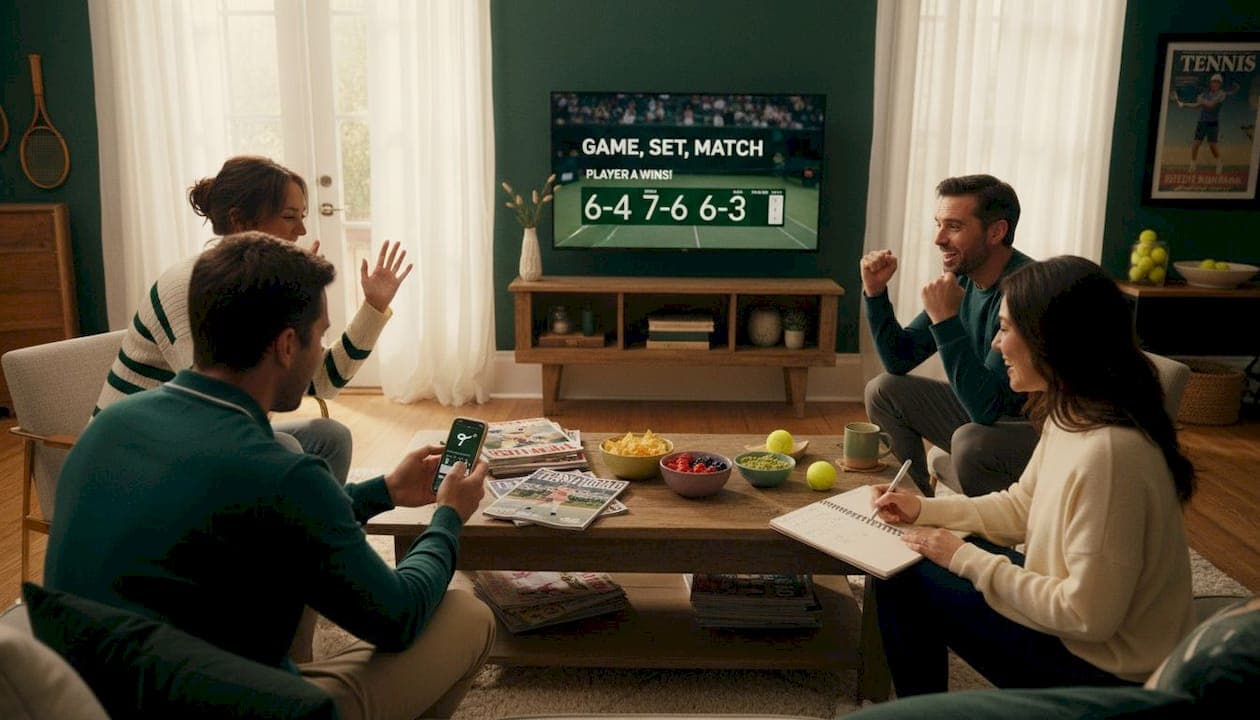
Most people picture gaming as one person alone, headphones on, staring at a screen at 2 a.m. That image is outdated. Social gaming connects players through shared experiences, live events, and real relationships, flipping the solo stereotype completely. For tennis fans, this shift is especially exciting. Instead of sitting back and watching Wimbledon or the US Open alone, you can build a fantasy team, compete in a league with your closest rivals, and talk trash in a group chat while every point unfolds in real time. Social gaming turns passive viewing into something you actively care about.
Table of Contents
- Defining social gaming: More than just playing together
- How social gaming transforms tennis fandom
- Features that make a game truly social
- The social-fantasy loop: Why it hooks fans
- Getting started: Finding the right tennis social gaming platform
- Why true social gaming wins over passive viewing: An insider's take
- Level up your tennis experience with social gaming
- Frequently asked questions
Key Takeaways
| Point | Details |
|---|---|
| Social gaming defined | It’s more than multiplayer—real social gaming is built around friend groups, leagues, and ongoing chat communities. |
| Transforms tennis viewership | Social and fantasy gaming turn match-watching into active, strategic play among friends and fans. |
| Look for true social features | Seek out platforms with persistent leagues, communication, and friend-driven competition—not just leaderboards. |
| The social-fantasy loop | Drafting, playing, chatting, and scoring create a long-lasting, engaging cycle for fans. |
| Start with recommended apps | Choose a trusted tennis-focused social gaming platform to maximize your interactive experience. |
Defining social gaming: More than just playing together
Now that we've challenged the solo-gamer myth, let's clarify exactly what social gaming means and how it's structured.
A lot of people assume social gaming just means any multiplayer game. It's actually more specific than that. The key ingredient is your social graph, which means the network of real connections you already have: friends, colleagues, and communities you belong to. A game becomes truly social when it uses those real relationships to drive how you play, compete, and communicate.
According to Gartner, "social gaming is online digital game play" that uses a player's social graph and encourages social interaction and communication about the game outside the game itself, and it can be played on PCs, consoles, and mobile and portable devices.
That last part matters. The communication happens outside the game, too. You're texting your league, posting about a result, and debating picks before the next match. That persistent conversation is what separates real social gaming from just loading into a lobby with strangers.
Here's what sets true social gaming apart from basic multiplayer:
- Social graph integration: You play against and with people you actually know, or people you've chosen to follow within a community.
- Persistent communication: Conversations carry across sessions, before and after games, in chats, leagues, and comment threads.
- Cross-device access: You can check standings, make picks, and chat whether you're on mobile, desktop, or tablet.
- Ongoing context: Your history with other players matters. Rivalries build over time.
Compare that to something like an anonymous online leaderboard, where you never interact with other players at all. Seeing your name ranked above a stranger is not social gaming. It's just a scoreboard.
How social gaming transforms tennis fandom
With a clear definition in mind, let's see how these concepts come to life for tennis fans watching live matches.
Tennis is one of the most naturally dramatic sports in the world. A five-set match has more momentum swings than almost any other contest. But unless you have money on the line or a fantasy team at stake, it's easy to drift away during a third-set tiebreak. Social gaming fixes that problem by layering a strategic game on top of the real game.
Fantasy sports apps have created a completely different way to follow tennis tournaments. Instead of watching as a neutral observer, you're suddenly invested in whether a specific player wins their second-round match. Your league position depends on it. Your banter with friends depends on it.
A typical game week for a tennis fan using social gaming looks something like this:
- Pre-tournament: Browse the draw, analyze matchups, and select your fantasy roster.
- Match days: Watch matches while tracking your players' live scores and point tallies.
- Between rounds: Check your league standings, adjust picks if the platform allows, and talk strategy with teammates or rivals.
- End of tournament: Final standings are settled, rewards are distributed, and the rivalry discussion starts for the next event.
That cycle creates engagement at every stage, not just when a match is on. Tennis prediction games extend that investment even further by letting you forecast results match by match.
Here's a quick comparison showing the difference in experience:
| Experience | Traditional viewing | Social fantasy gaming |
|---|---|---|
| Investment in match outcome | Low unless you follow a specific player | High, your team's score depends on it |
| Interaction with other fans | Limited to watching with others | Active chat, banter, and league competition |
| Engagement between matches | Passive or none | Ongoing picks, chat, and analysis |
| Emotional stakes | Moderate | Elevated, every point counts for your team |
| Community connection | Loose | Tight, especially in private leagues |
The fantasy sports model turns passive spectators into active participants, using live match data and real player stats to create a game layer on top of every tournament.

Pro Tip: Keep your first league small, between 4 and 8 friends. Smaller leagues create tighter rivalries, more banter, and a bigger sense of community. Once you're comfortable with the format, you can branch out into larger public leagues.
Features that make a game truly social
Now that you know how social gaming impacts fans, it's important to understand what separates social games from standard multiplayer experiences.
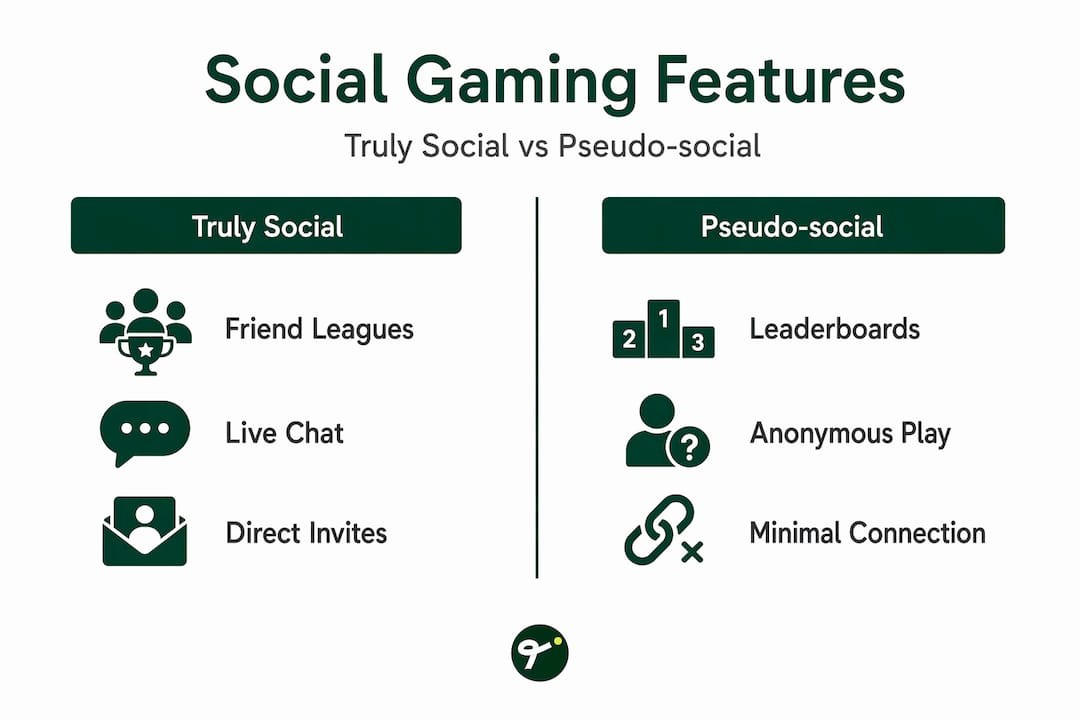
Not every game that calls itself social actually delivers real connection. Some platforms slap a leaderboard on a solo experience and call it done. Others let you share screenshots but offer no actual way to interact with other players meaningfully. Knowing what to look for saves you time and frustration.
Here's how truly social gaming features stack up against common imitations:
| Feature | Truly social | Pseudo-social |
|---|---|---|
| Friend/league system | Real invite-and-join structure | Anonymous matchmaking only |
| Communication tools | Persistent in-app chat and notifications | No messaging or only cosmetic reactions |
| Social graph use | Based on your connections and choices | Random groupings with strangers |
| Ongoing competition | Season-long leagues and rivalries | One-off matches with no follow-up |
| Community layers | Groups, clans, or leagues with history | Static leaderboard with no interaction |
The nuance here is important: a truly social game needs explicit social-graph use and ongoing communication structures like friends, groups, leagues, or clans, rather than merely having multiple players in the same mode. That distinction matters when choosing a platform.
In practice, social gaming means multiplayer experiences where players interact in real time or asynchronously and where the social layer goes well beyond a leaderboard or the ability to share cosmetics.
Things to look for in a genuinely social tennis gaming platform:
- Private leagues where you control who joins and compete across a full tournament.
- Friend lists and invites that let you find and challenge specific people.
- Real-time updates tied to live match results so your scores shift as the action happens.
- Chat and communication tools that keep your league active between matches.
- In-app rewards that give ongoing reasons to stay engaged throughout the season.
If a platform lacks most of these features, it may offer entertainment, but it isn't delivering real social gaming.
The social-fantasy loop: Why it hooks fans
Once you can spot real social games, it's time to get familiar with the persistent game loop that hooks fans all season.
The reason social fantasy gaming is so sticky comes down to a repeating cycle that reinforces engagement at every stage of a tournament. It's not one big moment. It's a series of small, connected moments that add up to something much bigger.
Here's the core loop:
- Pick: Select your players before the tournament or round begins.
- Watch: Follow live matches knowing your team's performance is tied to the results.
- Score: See your fantasy points update in real time as players win games and sets.
- Chat: React with your league, celebrate good picks, and take heat for bad ones.
- Repeat: Adjust, analyze, and start the process again for the next match or round.
Social-fantasy works well for live-tournament viewing because it creates a persistent game loop around matches, including pre-event picks, live scoring and updates, and league and banter outcomes, turning watching into an interactive, strategic contest.
That ongoing rhythm is what makes the experience so much richer than just watching. You're not a neutral viewer anymore. You're a participant with a stake in every point, and you've got a community around you sharing the same experience.
Pro Tip: Create a recurring private league that runs across multiple major tournaments throughout the year. Running the same league from the Australian Open through to the US Open builds deep rivalries and gives the season a narrative arc that makes every tournament feel like a new chapter.
Fantasy team competitions work especially well for tennis because the sport has a long season with dozens of major events. That gives you repeated opportunities to compete, improve your strategy, and settle old scores with your rivals.
Getting started: Finding the right tennis social gaming platform
After understanding the power of the social-fantasy loop, you're ready to find a platform that brings your tennis fandom to life.
Choosing the right platform matters more than most people realize. A platform that lacks real community features will feel hollow after the first tournament. You want something built for tennis fans, not just a generic sports fantasy product with some ATP data bolted on.
Fantasy sports platforms turn passive spectators into active participants by using real player statistics and live performance outcomes, with social elements like competing against friends or community leagues. The best platforms are built entirely around that principle.
When evaluating your options, prioritize these features:
- Tennis-specific design: The scoring system, player roster, and tournament calendar should all reflect how real professional tennis works, including ATP and WTA coverage.
- Private and public leagues: You need both options. Private for friends, public for broader competition.
- Mobile-first experience: You'll be checking scores courtside, on the couch, or during your commute. Mobile matters.
- Multiple play modes: Look for platforms offering both free and paid competitive modes so you can control your level of commitment and risk.
- Transparent rules: Clear scoring, fair-play standards, and straightforward prize structures are non-negotiable.
If you're exploring what's available, looking at alternatives to established fantasy platforms or tennis-specific gaming alternatives can help you identify which features matter most before committing. For fans interested in competitive play with real stakes, real money fantasy tennis options have also grown significantly in recent years.
Getting started is straightforward on most platforms: download the app, create an account, set up your first league, and invite friends. The first tournament is always the one that gets you hooked.
Why true social gaming wins over passive viewing: An insider's take
There's a moment every serious tennis fan has experienced. A match you thought would be forgettable suddenly becomes the one you remember for years. A third-set comeback, a giant-killer upsetting the world number one, a deciding tiebreak that goes to 12-12. Social gaming doesn't create those moments. But it makes sure you're paying attention when they happen.
Passive viewing fades. You remember big finals, but the quarterfinals that shaped them blur together. Social gaming changes your relationship with the entire draw. When a player on your fantasy roster is in a quarterfinal, you're watching every game. You're analyzing the weather, the surface, the opponent's recent form. You've become a better-informed fan, not just a more engaged one.
The community layer is what separates good social gaming from great social gaming. A league of friends who share picks, argue about strategy, and celebrate together across a full season creates bonds that are genuinely meaningful. These aren't just gaming connections. They're a shared language around a sport you all love.
One real caution worth mentioning: avoid pseudo-social apps that dress themselves up with community language but don't deliver real interaction. If you join a platform and feel like you're playing alone despite having a "league," something is missing. Genuine social gaming should feel like the group chat never goes quiet during a Slam. The benefits of fantasy betting extend beyond just strategy, they reshape how deeply you engage with the sport over the long term.
Casual fans who try social gaming for one tournament often become the most dedicated fans in the group by the next one. The learning curve is low, but the reward is high.
Level up your tennis experience with social gaming
Feeling inspired to try social gaming for yourself? Here's how to get started with platforms built specifically for tennis fans.
Tweener is designed exactly for this. It's a mobile fantasy sports app built around professional tennis, where you create teams from real ATP and WTA players and compete in leagues based on live tournament results. You can join public leagues to test your skills against the wider community, or set up a private league and challenge your friends directly.
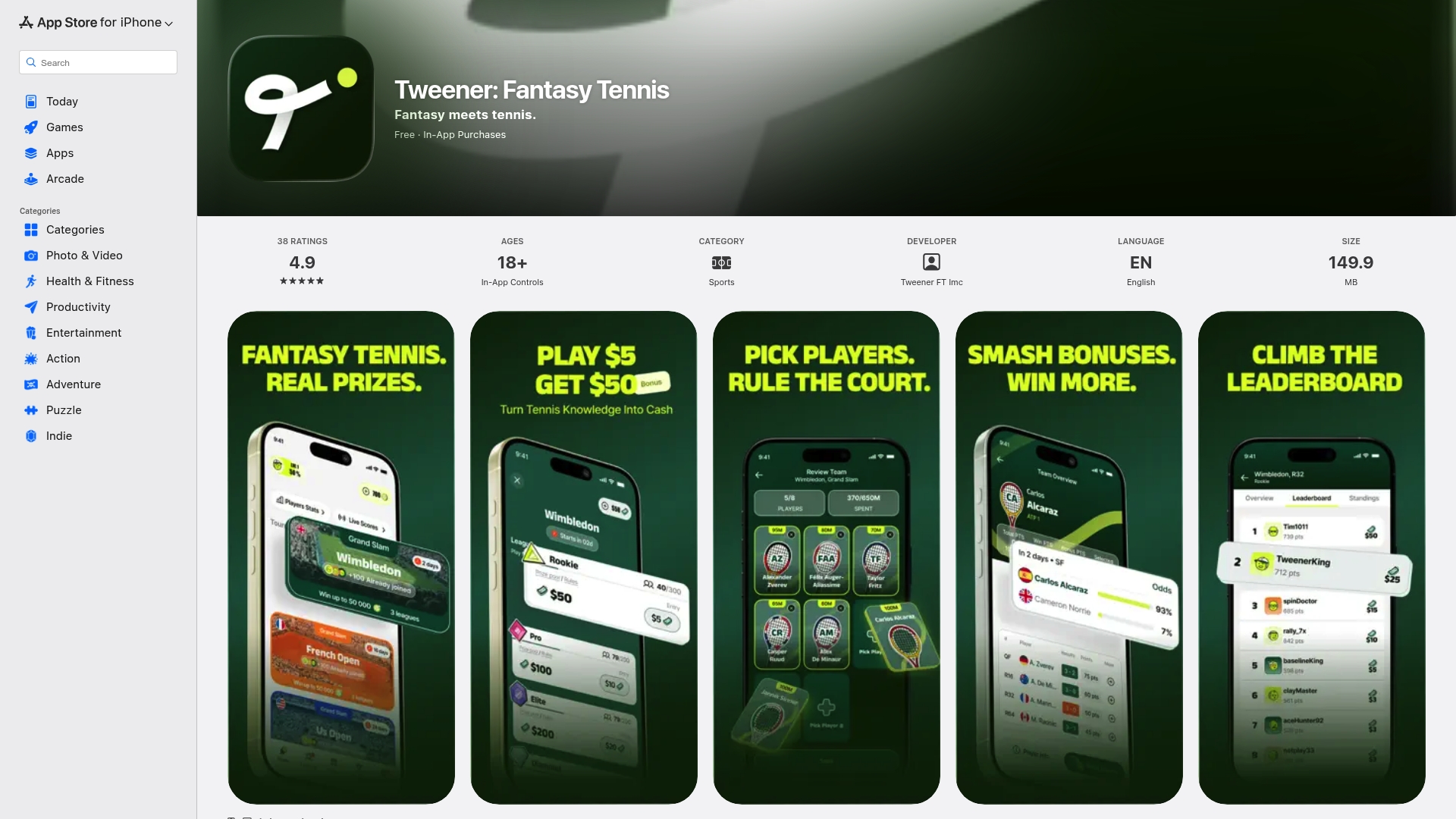
Tweener offers two ways to play. The free mode uses virtual coins you earn through gameplay, which can later be redeemed for rewards like gift cards. The cash mode lets you deposit and compete for real-money payouts where legally permitted. Both modes deliver the full social experience: live scoring, league competition, and the banter that makes every match matter more. Check out the game rules to understand exactly how scoring and leagues work, then download the app and set up your first league before the next major tournament kicks off.
Frequently asked questions
How is social gaming different from regular online gaming?
Social gaming goes beyond just playing online. It requires active connections with real friends or chosen groups, ongoing communication, and shared experiences, not just simple matchmaking with strangers. True social gaming uses your social graph and encourages communication that continues outside the game itself.
Can you play social games solo, or is a group required?
While most social games include solo modes, their full value comes from friend groups, leagues, or clans. As Gartner notes, real social gaming requires explicit social-graph use and ongoing communication structures rather than just having multiple players in the same mode.
Why does fantasy gaming make watching tennis tournaments more exciting?
Fantasy gaming gives you a personal stake in every match result. Fantasy-style play tied to live tournaments means you're drafting and managing teams based on real match outcomes while competing in leagues with friends and community members, so every rally has strategic consequences.
What features should I look for in a tennis social gaming platform?
Prioritize private and public leagues, real-time scoring tied to live match data, cross-device access, and strong in-app community tools. Fantasy sports platforms that combine real player statistics with social league competition give you the fullest experience.
Is social gaming safe and fair?
Reputable platforms include fair-play protections, transparent rules, and strong community moderation. Always choose platforms with clearly published game rules, fair scoring systems, and active support so you know the competition is legitimate and your experience is protected.