

TL;DR:
- Fantasy tennis turns passive watching into strategic, skill-based engagement with real-time scoring.
- It fosters community through private leagues, social interactions, and global leaderboards.
- Playing enhances understanding of tennis tactics, player performance, and tactical decision-making skills.
Watching tennis is thrilling, but once the final point is played, most fans are left on the sidelines until the next match. Fantasy betting changes that. It turns every serve, break point, and upset into something personal, giving you a reason to track players you'd normally scroll past and argue strategy with friends across time zones. This article breaks down the real benefits of fantasy betting for tennis fans, from sharper strategic thinking to genuine community connections, and explains why this format is reshaping how people follow the ATP and WTA tours.
Table of Contents
- What is fantasy betting in tennis?
- Enhancing your tennis viewing: Immersion, strategy, and excitement
- Building community: Social connections and friendly competition
- Rewards, prizes, and responsible play
- The real game changer: Why fantasy betting can elevate—if you play smart
- Get started with fantasy tennis—your next match could be legendary
- Frequently asked questions
Key Takeaways
| Point | Details |
|---|---|
| Immersive fan experience | Fantasy betting turns tennis watching into an interactive and strategic adventure for fans. |
| Social and community benefits | Leagues and leaderboards promote friendly competition and build lasting connections. |
| Safer engagement | Fantasy betting focuses on skill and knowledge over risky wagers, making it a healthier way to enjoy the sport. |
| Opportunities for rewards | Fans can earn prizes or simply enjoy bragging rights, adding extra motivation and fun. |
What is fantasy betting in tennis?
Fantasy betting in tennis is not the same as placing a traditional wager on a match result. Instead of picking a winner and hoping for the best, you build a roster of real ATP or WTA players and earn points based on how they perform across actual tournaments. Win a match? Your player earns points. Rack up aces or break serves? More points. Your total score competes against other users in a league, not against a sportsbook.
This distinction matters. Traditional betting puts money on a single binary outcome. Fantasy tennis rewards research, roster strategy, and tournament knowledge over multiple rounds and events. It rewards skill, not just luck.
Here is what a typical fantasy tennis setup looks like:
- Roster selection: Pick a team of players within a credit or salary budget
- Scoring system: Points are tied to real match results, sets won, and performance stats
- Leagues: Compete in public global leaderboards or set up private leagues with friends
- Season-long or tournament play: Some formats run for an entire season; others focus on a single Grand Slam
The ATP Fantasy for 2026 is a strong example of how official tours are embracing this format. It lets you select an eight-player team, including six starters, within a 100-credit budget based on player rankings. You can join private leagues, climb global leaderboards, and compete for prizes, all while staying connected to year-round tour storylines.
If you are just getting started, brushing up on fantasy tennis terms will help you get up to speed fast. And once you understand the vocabulary, learning fantasy team management gives you a real competitive edge.
Pro Tip: Set up or join a private league before the tournament draw is announced. Early roster decisions, before the bracket is set, often lead to better value picks.
Enhancing your tennis viewing: Immersion, strategy, and excitement
Passive viewing means watching a match and moving on. Fantasy tennis means watching a match and caring about every point in a way that changes how you experience the sport.
When you have players on your roster, a first-round match between two outside-the-top-50 players suddenly becomes must-watch content. You start noticing serve percentages, surface preferences, and head-to-head records because that information directly affects your score. That shift from observer to active participant is the core appeal.
The strategic benefits stack up quickly:
- Player analysis: You learn which players perform well on clay versus hard courts
- Matchup reading: Understanding draw brackets becomes a skill you actually use
- Budget management: Balancing star players against value picks sharpens decision-making
- Real-time tracking: Live scoring updates keep you glued to matches you might have skipped
The fantasy sports market underscores why this format works psychologically. Unlike traditional betting, where outcomes are binary and losses feel punishing, fantasy sports create a longer arc of involvement. You stay engaged across an entire tournament rather than spiking and crashing on single results.
"Fantasy sports are projected to grow to $114.7 billion globally by 2033, driven by fans seeking deeper, skill-based engagement with the sports they love."
Platforms like Game Set Match, FanSlam, and LetsSmashIt offer private leagues where you and your group can predict upsets, debate player momentum, and build social rivalries around every ATP and WTA event.
These fantasy team competition advantages go beyond entertainment. The strategic layer trains you to think like a coach, not just a fan. And if you want to take it further, predicting tennis outcomes with real precision becomes a skill you keep refining match after match.
Building community: Social connections and friendly competition
Beyond the personal thrill of building teams and predicting outcomes, fantasy tennis unlocks a powerful social experience. It gives tennis fans a shared language and a reason to check in with each other throughout a tournament, not just after a high-profile final.

Private leagues are especially good for this. You invite friends, family, or coworkers, and suddenly you have a running group chat about player form, injuries, and bold picks. Public leaderboards extend that experience globally, connecting you with serious tennis fans who track every match as closely as you do.
| Feature | Private leagues | Public leaderboards |
|---|---|---|
| Who you compete with | Friends, family, invited members | Global community of fans |
| Social interaction | High, with direct chat and rivalry | Moderate, community forums |
| Stakes | Bragging rights, custom prizes | Global rankings, platform rewards |
| Strategy focus | Personal matchups and trash talk | Broad competitive performance |
| Best for | Casual fun and group bonding | Competitive players seeking scale |
Key social benefits of fantasy tennis include:
- League chat: Discuss picks, mock bad decisions, and celebrate upsets together
- Leaderboard tracking: Watching your rank climb in real time creates natural momentum
- Shared investment: Everyone cares more about matches when something is on the line
- Cross-tournament continuity: Season-long formats keep the group connected between events
The growth of official ATP/WTA integrations shows strong demand for this participatory style of viewing. Fans no longer want to just watch. They want to compete.
Interactive tennis apps have made this easier than ever. And with tennis fantasy rewards added to the mix, the motivation to stay active in your league goes well beyond pride.
Pro Tip: Schedule a weekly league check-in, even a quick five-minute group message, to keep everyone engaged between tournament rounds. Rivalries that stay active between events are the most fun.
Rewards, prizes, and responsible play
Sharing scores and strategies is only half the fun. Fantasy tennis also offers real incentives for competitive play, ranging from cash prizes in paid contests to merchandise, gift cards, and bragging rights that carry serious weight in a tight friend group.
Common reward types you will find across platforms:
| Prize type | How common | Where found |
|---|---|---|
| Virtual coins or credits | Very common | Free-to-play platforms |
| Gift cards | Common | Coin redemption programs |
| Cash payouts | Available in paid modes | Licensed cash contest apps |
| Merchandise | Occasional | Platform promos, Grand Slam events |
| Leaderboard status | Universal | All competitive platforms |
To stay in the game long term, responsible play matters. Here is a simple framework:
- Set a session limit. Decide in advance how much time you will spend managing your roster each week.
- Treat free modes first. Build your skills with virtual coins before entering any cash contests.
- Focus on learning, not just winning. Improving your tennis knowledge is a reward in itself.
- Separate emotion from decisions. Picking your favorite player over a better option hurts your score.
- Review your results. After each tournament, look at what worked and what did not.
The psychology of fantasy engagement is worth understanding. Even skill-based games can create patterns of overconfidence or an illusion of control, especially after a strong run. Recognizing those tendencies keeps the experience fun rather than stressful.
"Non-monetary fantasy formats emphasize skill and knowledge over financial risk, making them a healthier alternative to traditional betting for most players."
For fans ready to explore paid formats, real money fantasy tennis gives a clear breakdown of what to expect. And understanding fantasy prize structures helps you choose the right contests for your skill level and goals.
The real game changer: Why fantasy betting can elevate—if you play smart
Here is something most fantasy tennis content will not tell you: the biggest benefit is not the prizes or even the community. It is the shift in how you see the sport.
Fans who play fantasy tennis consistently start watching matches differently. They notice tactical patterns, surface-specific tendencies, and player stamina across long tournaments. That knowledge does not disappear when the league ends. It becomes part of how you follow tennis forever.
But there is a real risk of tipping from engaged to obsessed. When managing your roster starts feeling like a second job or when a bad week wrecks your mood, that is the signal to step back. The best fantasy players we have seen treat it like a long game, focusing on tennis prediction games for skill-building and using live fantasy data to sharpen decisions without letting outcomes define their experience.
Fantasy tennis works best when it amplifies your love of the sport rather than replacing it. Play for the growth, the community, and the strategy. The rewards will follow.
Get started with fantasy tennis—your next match could be legendary
Ready to put your strategic skills to the test and go beyond passive viewing? Tweener was built exactly for this moment. It brings together everything covered in this article: private leagues, live scoring, ATP and WTA tournament coverage, and both free and cash contest modes on one platform.
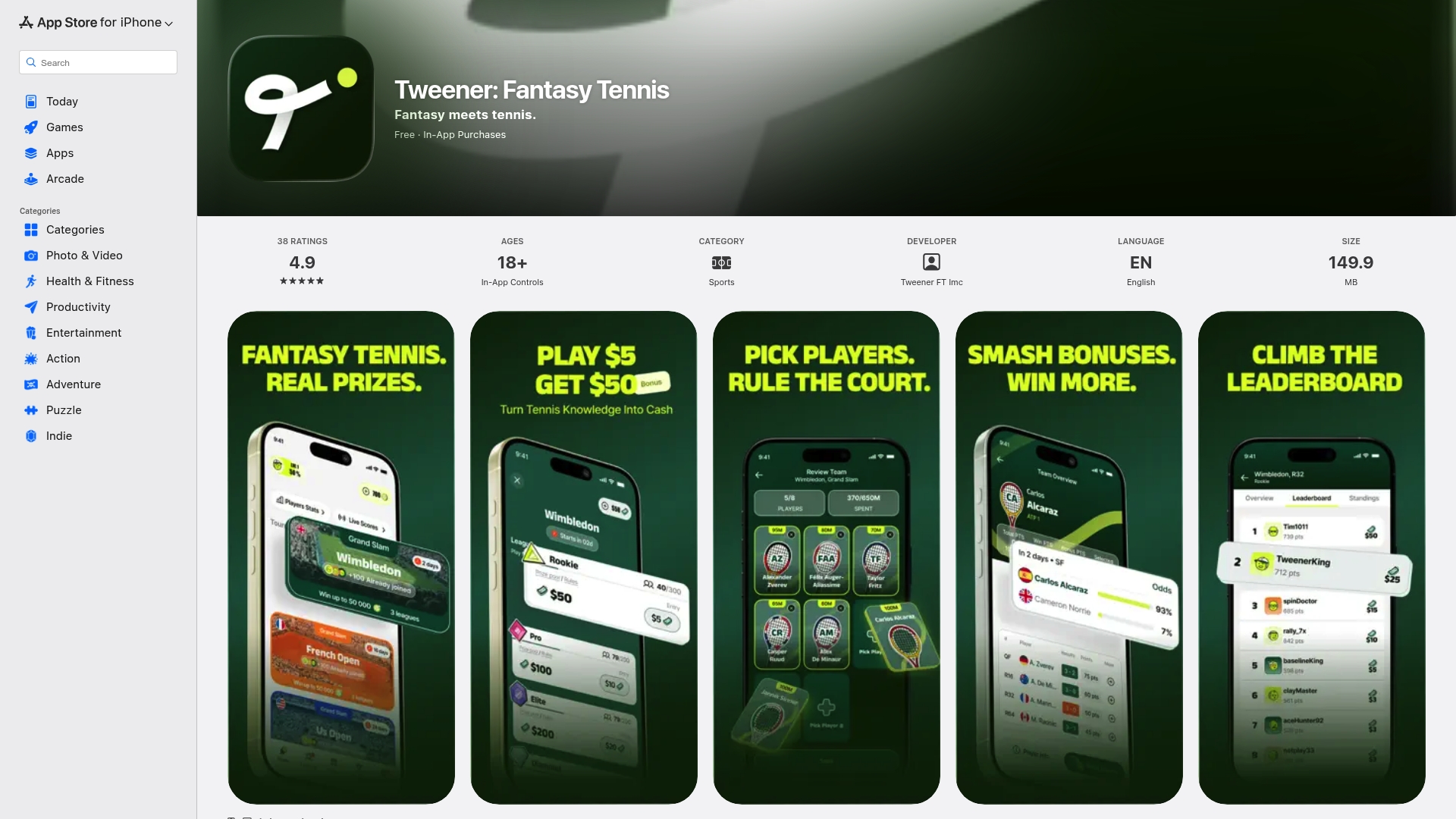
Whether you are brand new to fantasy tennis or already scouting player stats before every Grand Slam, Tweener gives you the tools to compete, connect, and win. Download the Tweener app today, set up your first league, and see why fans who play fantasy tennis can never go back to watching passively.
Frequently asked questions
Is fantasy betting legal for tennis?
Fantasy betting is legal in most regions because it is skill-based and non-monetary options are widely available. Always check your local laws before entering any cash contests.
How does fantasy betting differ from regular sports betting?
Fantasy betting relies on team selection and strategic skill over multiple rounds, earning points or prizes rather than placing direct wagers on match outcomes. Unlike traditional betting, it avoids the binary loss structure that makes sports gambling psychologically riskier.
What are the most popular fantasy tennis platforms?
Top choices include ATP Fantasy, Game Set Match, FanSlam, and LetsSmashIt, each offering private leagues, unique scoring systems, and different tournament coverage options.
Can fantasy betting improve my understanding of tennis?
Absolutely. Managing a fantasy roster forces you to study player form, surface preferences, and draw brackets in real time. ATP Fantasy specifically promotes year-round engagement with tour storylines, which deepens your knowledge naturally over time.