

TL;DR:
- Multi-day fantasy tennis contests favor skillful players who leverage deeper research, roster management, and patience over multiple match days. They reduce variance, allow strategic substitutions, and reward understanding of surface, draw, and player workload patterns. These formats present a complex, longer-term challenge that separates analytical players from luck-driven lineups.
Multi-day fantasy tennis contests are where skill separates from luck. Single-day slates reward whoever gets hot on a Tuesday. Multi-day formats on Tweener, built around real ATP Tour and WTA schedules, reward the player who reads surface form, manages a roster across rounds, and stays ahead of the injury wire. The advantages stack up fast:
- Lower variance across 7–12 match days vs. a single slate
- Deeper roster leverage as draws expand to 96 players
- Better edge from surface and H2H data applied over multiple rounds
- More time to react to withdrawals, retirements, and schedule shifts
- Larger payout structures tied to longer, higher-revenue events
TL;DR: Multi-day contests give analytical players more decisions, more data, and more time to be right.
Table of Contents
- How multi-day fantasy tennis contests are structured
- 1. Lower variance rewards your research
- 2. Deeper roster construction becomes a weapon
- 3. Surface and H2H data pays off over multiple rounds
- 4. You have time to react to withdrawals and injuries
- 5. Larger payout structures follow longer events
- 6. Emerging players create exploitable narratives
- 7. Psychological steadiness improves your decisions
- Practical strategy shifts for multi-day contests
- Risks of multi-day contests and how to manage them
- Your pre-entry checklist for multi-day contests
- Key Takeaways
- Why multi-day formats are the most interesting puzzle in fantasy tennis
- Try multi-day fantasy tennis contests on Tweener
- Sources and further reading
How multi-day fantasy tennis contests are structured
Three formats show up most often on apps like Tweener. Cumulative-points contests run the full length of a tournament, one to two weeks, and your roster accumulates points from every match your players win. Draft-over-tournament formats let you pick players round by round, adjusting as the draw opens up. Multi-tournament leagues span a stretch of events, like a Masters 1000 followed by a Grand Slam, and reward consistent roster management across the whole run.
The ATP Tour's push toward 96-player, 12-day Masters formats is the structural reason these contests exist at scale. More match days mean more scoring opportunities and a bigger pool of fantasy-relevant players. In 2025, WTA 1000 events in Canada and Cincinnati expanded to 96-player main draws as well, matching the larger Masters model. Understanding tournament schedules and draw structures is now a genuine competitive edge.
| Format | Duration | Key feature |
|---|---|---|
| Cumulative-points | 7–14 days | Points from every match; rewards depth picks |
| Draft-over-tournament | 7–14 days | Round-by-round selection; adapts to draw results |
| Multi-tournament league | 2–5 weeks | Spans multiple events; tests long-run consistency |
1. Lower variance rewards your research
Single-day slates are a coin flip dressed up as strategy. One retirement wrecks your lineup. Multi-day formats spread that risk across dozens of matches, so one bad day doesn't end your contest. The player who correctly identifies a clay-court specialist's draw path in round one still benefits on day nine when that pick reaches the quarterfinal.

Pro Tip: Track rest-day patterns early. Players coming off a deep run at the previous event often withdraw or underperform in the first two rounds of the next tournament. Knowing this before lineup lock is a real edge.
2. Deeper roster construction becomes a weapon
When draws expand from 56 to 96 players, direct entries increase by about 76–77%, meaning more ranked players get main-draw spots without qualifying. That's more fantasy-relevant names, more exploitable matchups, and more room to differentiate your roster from the field. Seeds 3–16 and consistent players ranked 50–100 become the highest expected-value picks in extended draws, because they routinely advance deep without the chalk ownership of the top two seeds.
3. Surface and H2H data pays off over multiple rounds
A single-day contest gives you one match to be right. A 12-day Masters gives you five or six rounds to extract value from the same research. If you know Carlos Alcaraz's clay H2H record against left-handers, that insight compounds across the draw. The ATP and WTA league structures make surface-specific data especially valuable at events like Roland Garros or the US Open, where conditions stay consistent for two full weeks.
4. You have time to react to withdrawals and injuries
Top players have publicly criticized expanded 12-day Masters for replicating Grand Slam strain across the calendar. That's bad for player health but useful information for fantasy players: withdrawal risk is real and predictable. Multi-day formats with substitution windows let you replace a retired player before the damage compounds. Single-day contests offer no such recovery.
5. Larger payout structures follow longer events
Tournament organizers favor extended formats because they unlock ticket, hospitality, and broadcast revenue. That commercial upside flows downstream: expanded events have been accompanied by larger prize distributions, and fantasy platforms mirror that structure with bigger prize pools for longer contests. More match days, more entry fees collected, more money at the top of the payout ladder.
6. Emerging players create exploitable narratives
Extended draws give lower-ranked and local players more main-draw spots, producing deeper storylines across many match days. For fantasy players, that means more underowned picks with real upside. A 90-ranked player who draws a tired top-10 seed in round two is a gift in cumulative formats, where the points from that upset carry forward.
7. Psychological steadiness improves your decisions
Multi-day formats give you time to think. After a bad day one, you can review the draw, check injury reports, and adjust without panic. Single-day contests punish reactive decision-making because there's no tomorrow. The extended timeline also lets you study live scoring patterns and spot which players are grinding through matches versus cruising, information that shapes your substitution calls.
Practical strategy shifts for multi-day contests
The tactical adjustments aren't complicated, but they're specific.
- Prioritize consistency over ceiling. A player who reaches the quarterfinal every Masters event scores more cumulative points than a boom-or-bust pick who wins once and loses in round two the next time.
- Check the draw path before locking. A seed landing in a soft quarter of the draw has a clear route to the final. Use tournament bracket knowledge to identify those paths before the field does.
- Stack across rounds. If you're in a cumulative format, pick two or three players likely to meet in the semifinals. When both advance deep, your points compound.
- Set substitution reminders. Know exactly when your contest's substitution window opens. Missing it after a key withdrawal is the most avoidable mistake in multi-day play.
- Size entries conservatively. Multi-day contests carry more exposure per entry than single-day slates. Use smaller individual entries and spread across a few lineups rather than going heavy on one roster.
For contest setup, confirm these before you lock: roster size limits, substitution rules, roster lock windows per round, and how payouts scale by contest length. Tweener's multi-tournament fantasy modes map directly to these decisions.
Risks of multi-day contests and how to manage them
The same calendar expansion that creates opportunity also creates problems.
- Withdrawals and retirements spike in compressed schedules. The National Bank Open's 12-day format sits close to Wimbledon and Cincinnati, limiting rest time and raising withdrawal risk for top players.
- Schedule congestion means players carry fatigue from previous events. A deep Wimbledon run followed by a hard-court Masters is a red flag for early-round exits.
- Emotional fatigue causes reactive lineup changes. Decide your substitution criteria before the contest starts, not after a bad day three.
Mitigation is straightforward:
- Diversify your roster across seeding tiers, not just top-five picks.
- Reserve substitution slots for the final third of the event, when fatigue and injury risk peak.
- Monitor official ATP/WTA updates for practice session reports and withdrawal announcements.
- Reduce single-entry exposure in multi-day contests; spread the same bankroll across two or three smaller lineups.
Your pre-entry checklist for multi-day contests
Before you commit to a multi-day contest, run through this list:
- Contest format confirmed — cumulative, draft, or multi-tournament league?
- Roster rules reviewed — how many players, position limits, salary cap if applicable?
- Substitution windows noted — when can you swap, and how many times?
- Withdrawal policy checked — does the platform replace retired players automatically or do you act?
- Surface and recent form reviewed — who's hot on this surface in the last four weeks?
- Draw path mapped — which seeds landed in soft quarters?
- Entry size set — are you within your multi-day bankroll limit?
- Schedule conflicts flagged — any back-to-back events that could trigger fatigue withdrawals?
Pro Tip: The best time to enter a two-week event contest is after the draw is released but before round one begins. You have full draw information and maximum substitution flexibility. Avoid entering mid-tournament, after heavy upsets have already reshuffled the field.
Use Tweener's private-league mode to practice multi-day strategy with up to nine friends before entering public cash contests.
Key Takeaways
Multi-day fantasy tennis contests deliver a measurable skill edge because they reward consistent roster construction, surface-form research, and disciplined substitution management over 7–14 match days.
| Point | Details |
|---|---|
| Lower variance over time | Spreading risk across 7–14 match days reduces the impact of any single retirement or upset. |
| 96-player draws expand opportunity | Direct entries increase by about 76–77% when draws grow from 56 to 96 players, creating more exploitable picks. |
| Substitution windows are critical | Knowing when and how to use substitution slots is the most impactful tactical lever in multi-day formats. |
| Conservative entry sizing matters | Spread your bankroll across multiple smaller lineups rather than concentrating on one roster. |
| Tweener for multi-day practice | Tweener's private-league and multi-tournament modes let you test strategy in controlled settings before entering cash contests. |
Why multi-day formats are the most interesting puzzle in fantasy tennis
The conventional take on multi-day contests is that they're just longer versions of single-day slates. They're not. The strategic logic is fundamentally different. Single-day play rewards whoever gets lucky with a hot pick on a given afternoon. Multi-day play rewards the person who understands draw construction, surface splits, and player workload patterns well enough to stay ahead across two weeks.
What excites me about Tweener's multi-tournament and private-league modes is that they make this complexity accessible. You can test a two-week Masters strategy with friends before risking real money in a public contest. The ATP and WTA calendar debates about player wellness and schedule congestion are real, and they matter for fantasy. A player grinding through a 12-day Masters after a deep Slam run is a liability, not an asset, regardless of ranking. Recognizing that distinction, and acting on it before lineup lock, is exactly the kind of edge that separates analytical players from the field.
Try multi-day fantasy tennis contests on Tweener
Tweener is the only high-quality fantasy tennis app built specifically for analytical fans who want to compete across full ATP and WTA tournaments, not just single-day slates.
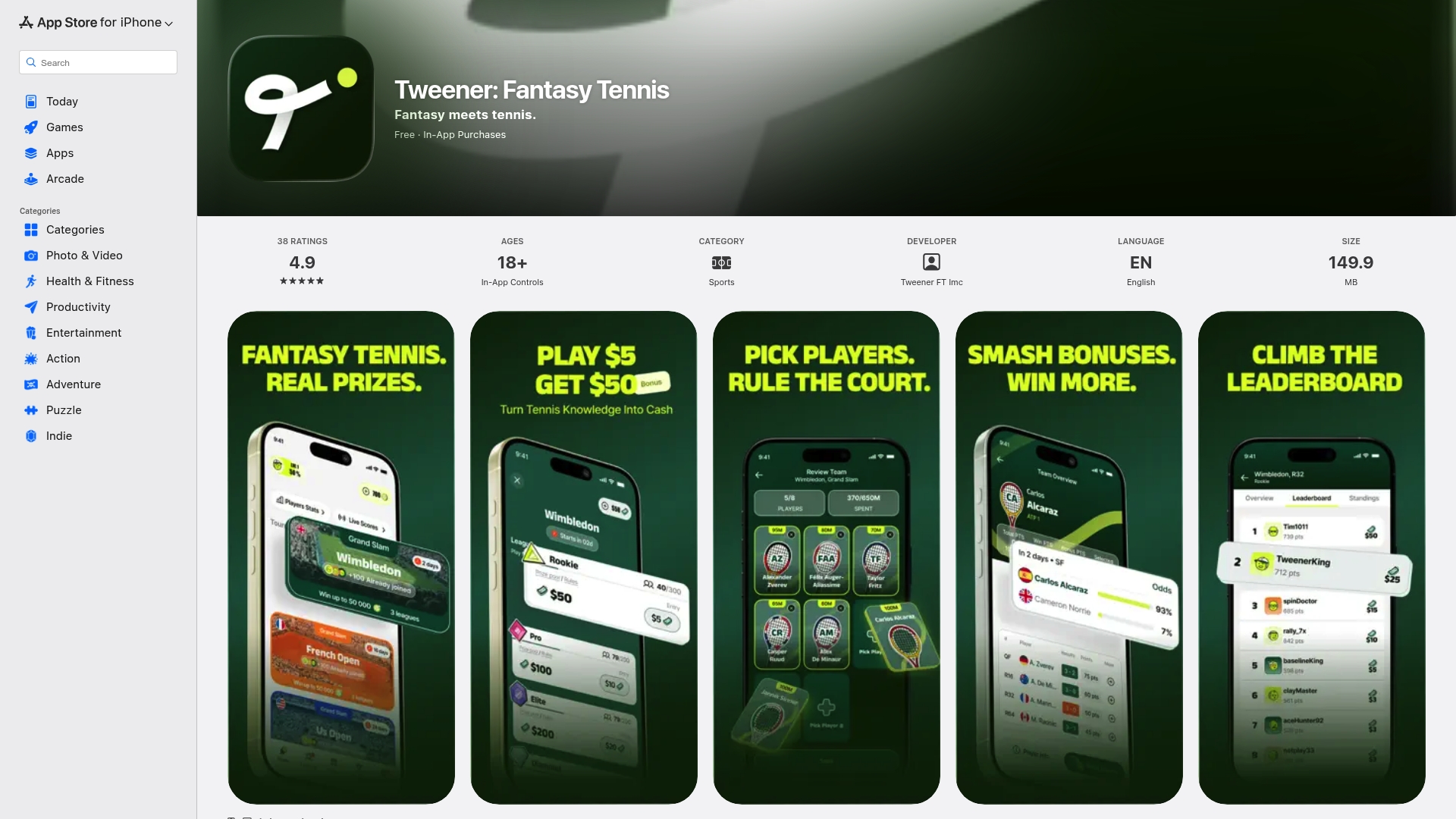
The platform's multi-tournament modes let you run cumulative-point rosters across two-week Masters events and Grand Slams. Private leagues support up to nine players, so you can compete with friends through the US Open or Roland Garros with full control over scoring rules. Live scoring updates feed directly into your substitution decisions, and the app's surface and form filters give you the data layer that makes multi-day strategy actually executable.
Start in free mode to practice multi-day roster management with virtual coins before entering cash contests. When you're ready to compete for real payouts, download Tweener and enter your first multi-day contest during the next Masters event.
Sources and further reading
| Source | Topic |
|---|---|
| Gaudenzi's ATP roadmap to 2028 | 12-day Masters expansion, revenue rationale |
| ATP elite player feud over Masters 1000 | Player health concerns, withdrawal risk |
| Two-week WTA 1000 analysis | WTA Canada and Cincinnati 96-draw expansion |
| National Bank Open format impact | Calendar congestion, withdrawal patterns |
| True impact of two-week Masters | Direct-entry increases, fantasy roster implications |
| Tweener fantasy tennis blog | Format-specific strategy guides |