
TL;DR:
- Important tennis tournaments are ranked by points, prize money, and tradition, with Grand Slams leading. Masters 1000 events and national team competitions play crucial roles in shaping seasons and player motivation. The 2026 season's prize money growth highlights the importance and prestige of top-tier events.
Important tennis tournaments are defined by three factors: ranking points awarded, prize money offered, and the tradition that makes players and fans treat them as career-defining events. The professional tennis calendar runs from January through November, anchored by four Grand Slams, nine ATP/WTA Masters 1000 events, and national team competitions like the Davis Cup and Billie Jean King Cup. Whether you follow the ATP or WTA tour, understanding which events matter most helps you watch smarter, plan your season, and build better fantasy teams on platforms like Tweener.
1. The Grand Slam tournaments: the top of every important tennis tournaments list
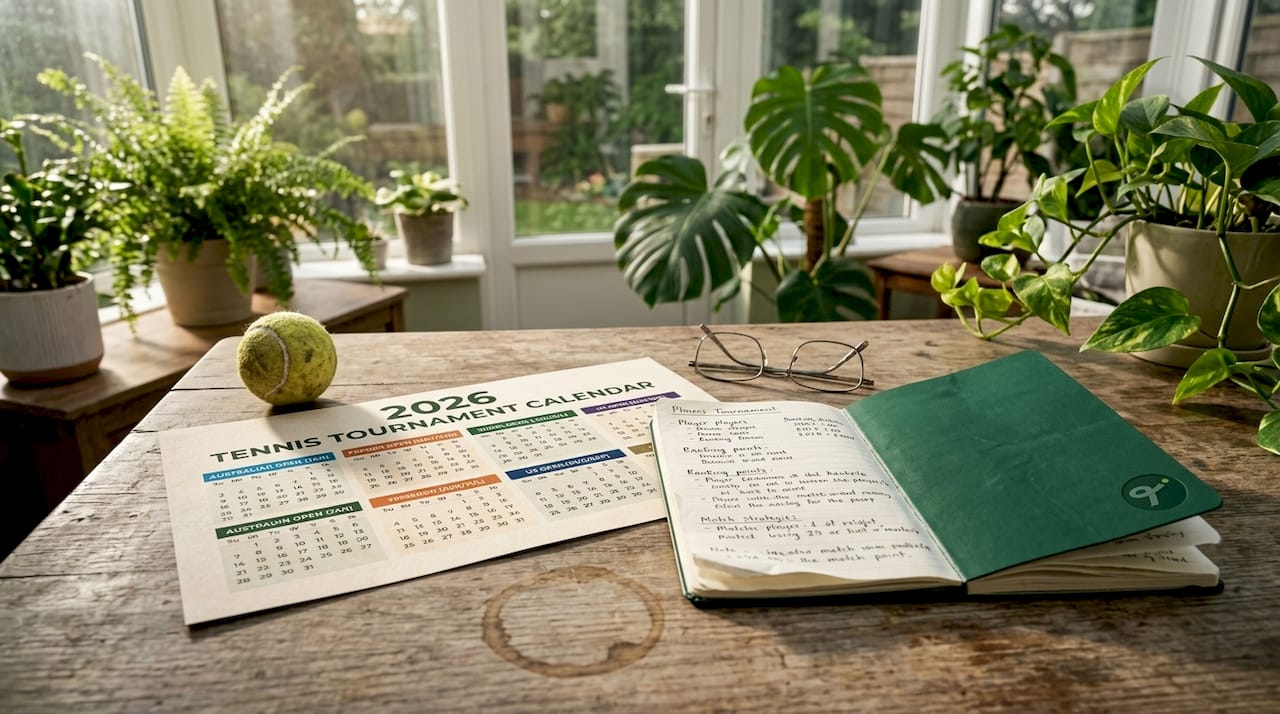
The four Grand Slams are the Australian Open, Roland Garros (French Open), Wimbledon, and the US Open. They sit at the top of every ranking because they award 2,000 ATP points to singles champions, feature 128-player draws, and carry a tradition no other events can match. Winning one Grand Slam changes a player's legacy. Winning all four is the sport's ultimate achievement.
Each Slam plays on a different surface, which is what makes the grand slam tournaments list genuinely diverse rather than repetitive. The Australian Open uses hard courts in January heat. Roland Garros runs on clay from late May through early June, with the 2026 French Open scheduled from May 24 to June 7. Wimbledon is the only major played on grass, in late June and July. The US Open closes the Slam season on hard courts in late August and September.
Prize money at these events is staggering and growing. The 2026 Australian Open announced a record AUD $111.5 million prize pool, a 16% increase over 2025, with singles champions earning AUD $4.15 million each. That figure signals how seriously the sport's governing bodies treat these events as financial and cultural centerpieces.
| Grand Slam | Surface | Approx. Date | Ranking Points (Winner) |
|---|---|---|---|
| Australian Open | Hard | January | 2,000 |
| Roland Garros | Clay | May to June | 2,000 |
| Wimbledon | Grass | June to July | 2,000 |
| US Open | Hard | August to September | 2,000 |
Pro Tip: Grand Slams include a qualifying week before the main draw begins. If you're planning your viewing schedule or fantasy picks on Tweener, factor in that the first week of main draw play often produces upsets that reshape the bracket entirely.
2. ATP and WTA Masters 1000 events: the second tier that defines seasons
ATP Masters 1000 events are the tier directly below Grand Slams, awarding 1,000 ranking points to champions and mandatory for all top-ranked players except at Monte-Carlo. These tournaments are where seasons are built or broken. A player who dominates the Masters circuit without a Slam title still finishes the year in the top five. That is how much weight these events carry.
The eight mandatory Masters 1000 tournaments in 2026 are Indian Wells, Miami, Madrid, Rome, Canada, Cincinnati, Shanghai, and Paris. Monte-Carlo retains its prestige and awards full points but remains optional, which makes it a fascinating strategic choice for players managing their schedules. Each event plays on a surface that ties directly into Slam preparation: clay events in Madrid and Rome lead into Roland Garros, while Cincinnati on hard courts primes players for the US Open.
Masters 1000 results reshape seedings and qualification for the ATP Finals, which means every result carries downstream consequences. A player who skips Indian Wells and Miami loses 2,000 potential points, a gap that can cost them a top-eight finish and a spot at the year-end event in Turin. For fantasy tennis players, these are the tournaments where form, surface preference, and scheduling decisions create the most exploitable edges.
Pro Tip: When building your Tweener roster for a Masters 1000 event, check each player's historical win rate on that specific surface. Clay specialists like Carlos Alcaraz and Casper Ruud consistently outperform their hard-court rankings at Madrid and Rome.
3. Davis Cup and Billie Jean King Cup: national pride on the line
The Davis Cup and Billie Jean King Cup are the sport's premier national team competitions, and they operate on a completely different logic from the ATP and WTA tours. Instead of individual glory, these events are about representing your country. That shift in motivation produces some of the most emotionally charged tennis of the year.
Both competitions use a best-of-five rubbers format that includes singles and doubles matches, with a captain making tactical decisions about lineup and order. That captain-driven strategy creates a dimension you never see in standard tour events. A captain might rest a top singles player to deploy them in a crucial doubles rubber, or choose a clay specialist for a tie played on that surface even if they rank lower than a teammate.
The team format creates a fan experience that draws in national sports audiences who might not follow tennis week to week. Nations like Spain, Serbia, and the United States have built Davis Cup legacies that rival their Grand Slam records. For casual fans, these events are an excellent entry point because the national identity angle makes it easy to pick a side and invest emotionally.
- Davis Cup: Men's national team competition, reformed in 2019 to a Finals format held in November
- Billie Jean King Cup: Women's equivalent, formerly known as the Fed Cup, also using a Finals format
- Format: Best-of-five rubbers per tie, including four singles and one doubles match
- Significance: No ATP or WTA ranking points awarded, but enormous prestige and player motivation
4. ATP Finals: the season's most exclusive event
The ATP Finals are a prestigious season-ending tournament featuring only the top eight singles players and top eight doubles teams from the year's rankings. Held in Turin, Italy, the event uses a round-robin group stage before knockout semifinals and a final. Every match matters because a single loss in the group stage can end a player's campaign.
What makes the ATP Finals genuinely different from every other top tennis competition is the exclusivity. You cannot buy your way in with a wild card. You earn your spot through a full season of results across Grand Slams and Masters 1000 events. That makes the field the most concentrated collection of elite talent in tennis, and it means every match is a high-stakes contest between players who have already proven themselves across the entire year.
The WTA equivalent is the WTA Finals, held in Riyadh, Saudi Arabia, following the same format. Both year-end events serve as the final chapter of the tennis tournament schedule, resolving ranking questions and providing the last major storylines before the off-season.
5. ATP 500 and ATP 250 events: the building blocks of the tour
ATP 500 events award 500 ranking points to champions and sit directly below the Masters 1000 tier. Tournaments like the Dubai Duty Free Tennis Championships, the Barcelona Open, and the Halle Open fall into this category. These events attract strong fields because top players use them to build ranking points between the bigger mandatory stops. For fans, they often feature more accessible tickets and a more intimate atmosphere than the massive Masters events.
ATP 250 events form the base of the tour, running almost every week of the season. They award 250 points to champions and serve as the primary proving ground for younger players and those rebuilding their rankings. Many future Grand Slam champions spent years grinding through ATP 250 draws before breaking through at higher levels.
The WTA tour uses a parallel structure with WTA 1000, WTA 500, and WTA 250 categories. Understanding this hierarchy helps you read the tennis tournament schedule strategically, knowing which weeks feature the deepest fields and which offer opportunities for lower-ranked players to make noise.
| Tournament Level | Points (Winner) | Example Events |
|---|---|---|
| Grand Slam | 2,000 | Australian Open, Wimbledon |
| Masters 1000 / WTA 1000 | 1,000 | Indian Wells, Madrid |
| ATP 500 / WTA 500 | 500 | Dubai, Barcelona |
| ATP 250 / WTA 250 | 250 | Various weekly events |
6. How the tennis calendar and prize money shape the entire season
Grand Slams anchor the ATP and WTA calendars as the four fixed pillars around which everything else is organized. The season opens in Australia in January, moves through the clay swing in spring, hits the grass season in summer, and closes with the hard-court US Open swing in late summer. That rhythm is predictable, which is exactly what makes it useful for fans planning their viewing year.
Prize money increases in 2026 directly affect which tournaments players prioritize and how deep they push through draws. When a Slam raises its first-round prize money significantly, even players who lose early still earn meaningful income, which encourages full participation from top names rather than strategic withdrawals. That benefits fans and fantasy players alike because the best fields produce the most competitive tennis.
For fantasy tennis on Tweener, the calendar creates a natural strategic rhythm. Understanding how prize structures affect player motivation helps you predict who will compete at full intensity versus who might be managing fitness ahead of a bigger event. A player sitting comfortably in the ATP Finals race has different incentives than one fighting to qualify.
- The clay swing from Monte-Carlo through Roland Garros runs approximately eight weeks
- The grass season from Halle and Queen's Club through Wimbledon lasts about three weeks
- The North American hard-court swing from Canada through Cincinnati to the US Open covers six weeks
- The Asian swing in October features Shanghai and other Masters events before the year-end Finals
Key takeaways
The most important tennis tournaments are ranked by ranking points, prize money, and tradition, with Grand Slams at the top, followed by Masters 1000 events, national team competitions, and year-end Finals.
| Point | Details |
|---|---|
| Grand Slams lead every list | Four majors award 2,000 points each and offer the sport's largest prize pools. |
| Masters 1000 events define seasons | Nine events award 1,000 points and directly determine ATP Finals qualification. |
| National team events offer something different | Davis Cup and Billie Jean King Cup use team formats that no standard tour event replicates. |
| The calendar creates strategic patterns | Seasonal surface swings let fans and fantasy players predict player performance and motivation. |
| Prize money growth signals event importance | Record prize pools at events like the 2026 Australian Open confirm which tournaments the sport values most. |
Why the prestige hierarchy matters more than most fans realize
The points table tells you what tournaments matter on paper. What it does not tell you is how differently players experience these events emotionally, and how that changes the tennis you actually watch.
I have followed the ATP and WTA tours closely for years, and the most consistent pattern I notice is this: players who have never won a Grand Slam play differently at Slams than they do at Masters 1000 events. The weight of the occasion compresses some players and liberates others. Carlos Alcaraz at Roland Garros 2024 was a different competitor than Alcaraz at any Masters event that year. That gap between points-on-paper and actual competitive intensity is what makes the Grand Slams genuinely irreplaceable.
My honest take on the Masters 1000 tier is that it is underrated by casual fans and overrated by fantasy players who chase points without watching the tennis. Monte-Carlo, despite being non-mandatory, consistently produces some of the most beautiful clay-court tennis of the year because players who show up there genuinely want to be there. That motivation shows in the quality of play.
For anyone building a fantasy tennis strategy, I would prioritize the four Slams and the clay and hard-court Masters events above everything else. Those are the tournaments where form, surface history, and head-to-head records create real predictive value. The ATP Finals are spectacular television but the round-robin format introduces enough variance that pure form analysis becomes less reliable.
The 2026 season has already shown that prize money growth is accelerating. That trend rewards fans who pay attention to the full important tennis events calendar rather than just tuning in for Wimbledon fortnight.
— Nathan
Turn your tournament knowledge into fantasy wins with Tweener
You now know which tournaments carry the most weight in professional tennis. Tweener lets you put that knowledge to work.
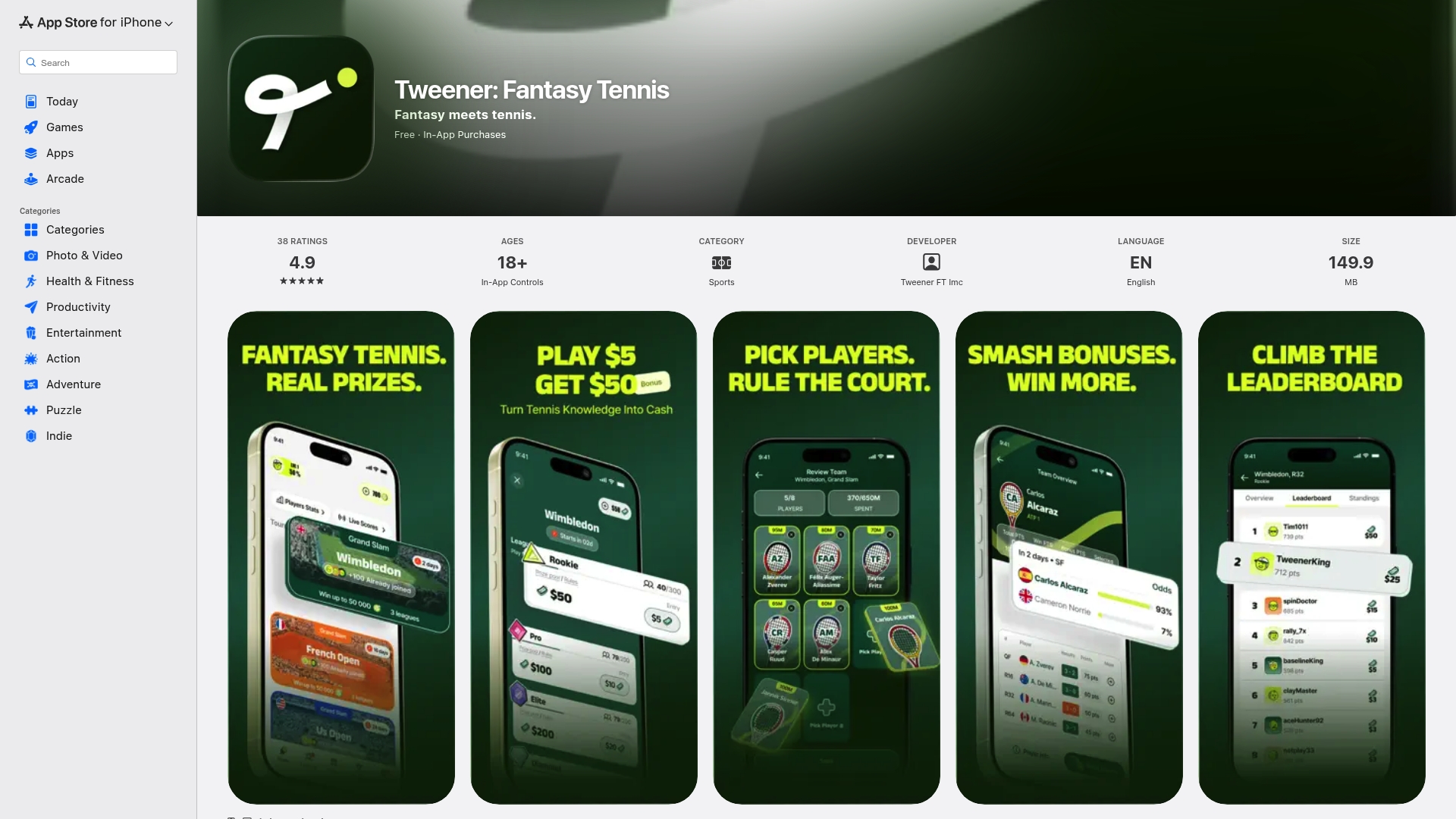
Tweener is the premier fantasy tennis app built specifically for fans who want more than passive viewing. You pick real ATP and WTA players, build your team around the tournament schedule, and compete in public leagues or private leagues with up to nine friends during Grand Slams and Masters events. The platform rewards the kind of surface analysis, form tracking, and scheduling awareness you just read about. Download Tweener and compete in the 2026 season's biggest events, or get the app now to start building your roster before the next major tournament begins.
FAQ
What are the four Grand Slam tournaments?
The four Grand Slams are the Australian Open, Roland Garros (French Open), Wimbledon, and the US Open. Each awards 2,000 ranking points to singles champions and features a 128-player main draw.
How many Masters 1000 tournaments are there in 2026?
There are nine Masters 1000 events in 2026, with eight being mandatory for top players: Indian Wells, Miami, Madrid, Rome, Canada, Cincinnati, Shanghai, and Paris. Monte-Carlo is non-mandatory but still awards full points.
What makes the Davis Cup different from ATP tour events?
The Davis Cup is a national team competition using a best-of-five rubbers format that includes singles and doubles matches. It awards no ATP ranking points but carries significant national prestige and a unique team dynamic.
Which tennis tournament has the biggest prize money in 2026?
The 2026 Australian Open announced a record AUD $111.5 million prize pool, a 16% increase over 2025, making it the largest prize pool in tennis history at the time of its announcement.
How does the ATP Finals qualify players?
The ATP Finals feature only the top eight singles players by ranking points accumulated across the full season. There are no wild cards, so qualification is determined entirely by results at Grand Slams and Masters 1000 events throughout the year.