

TL;DR:
- Tournament mode is a large-field, high-reward contest focusing on top-heavy prize payouts.
- Successful play requires draw analysis, ownership leverage, and contrarian strategies.
- Beginners can excel by avoiding popular picks, identifying underowned players, and embracing variance.
Most fantasy tennis players assume tournament mode is reserved for seasoned pros who've memorized every ATP ranking and surface stat. That assumption costs you money and missed opportunities. Tournament mode is actually one of the most accessible and exciting contest types available, and once you understand how it works, it becomes a genuine path to outsized rewards. This article breaks down the mechanics, the strategic mindset, and the practical tools you need to compete from day one, regardless of your experience level.
Table of Contents
- Defining tournament mode in fantasy tennis
- How tournament mode works: Mechanics and scoring explained
- Cash games vs tournament mode: High variance, big rewards
- Power strategies for tournament mode success
- Why most fantasy tennis beginners miss out in tournament mode
- Enhance your fantasy tennis tournament experience with Tweener
- Frequently asked questions
Key Takeaways
| Point | Details |
|---|---|
| Tournament mode basics | It’s a large-field contest format where bold, unique lineups compete for top-heavy prizes in fantasy tennis. |
| Winning strategies | Success depends on creative lineup construction, ownership leverage, and draw-based analysis. |
| Scoring dynamics | Grand Slam matches enable massive point hauls because of best-of-five formats. |
| Mindset matters | Embracing variance and moving beyond safe picks is key to tournament mode victories. |
Defining tournament mode in fantasy tennis
Tournament mode in fantasy tennis refers to what the industry calls a GPP, or Guaranteed Prize Pool, contest. These are large-field GPP contests where you build a salary-cap lineup and compete against hundreds or thousands of other users for top-heavy prizes. The key word there is "top-heavy." Unlike other formats, the bulk of the prize money flows to the top finishers, which means the difference between first and tenth place is enormous.
Understanding fantasy tournament formats is essential before you enter your first GPP. You are not just picking good players. You are building a lineup that can finish above nearly everyone else in the field. That is a fundamentally different goal than, say, winning a coin flip against one other player.
Here is what separates tournament mode from other contest formats in fantasy tennis:
- Prize structure: Only the top 15-25% of the field cashes, and the majority of the prize pool goes to a small percentage of top finishers.
- Field size: You are not competing against 1 or 10 people. You may be competing against thousands.
- Salary cap lineup: You select 4 to 6 real ATP or WTA players within a fixed budget, balancing stars and value picks.
- High variance: You will not win consistently, but when you do cash at the top, the return on your entry fee can be massive.
- Bold picks required: Playing it safe almost never wins a GPP because everyone playing safe ends up with the same lineup.
Getting comfortable with the core fantasy tennis terms like "ownership percentage," "leverage," and "chalk" will help you talk and think about tournament mode like someone who has been playing for years.
How tournament mode works: Mechanics and scoring explained
Once you know the core idea, it is crucial to understand how the structure and numbers actually play out. The mechanics are straightforward on the surface, but the math underneath them rewards careful thinking.
You draft 4 to 6 players within a salary cap, earning fantasy points from aces, winners, breaks of serve, games won, and rounds advanced through a real tournament. Grand Slam events played in best-of-five sets create scoring ceilings above 60 points per player, compared to the lower totals typical in best-of-three events. That difference matters enormously for lineup construction.
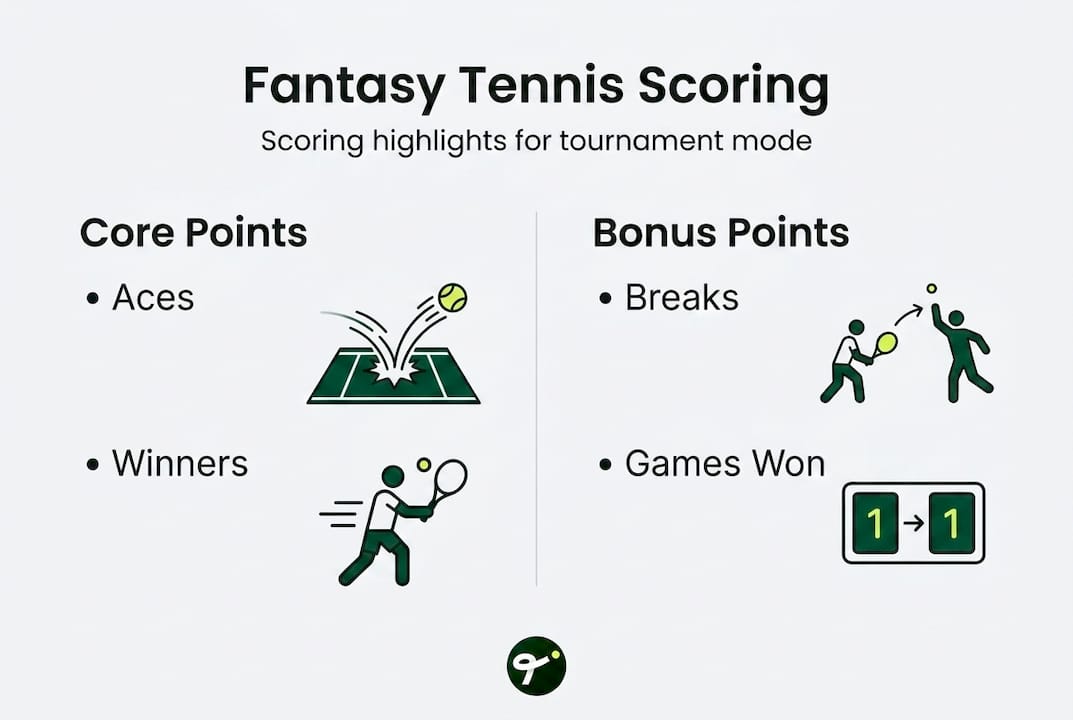
Here is a quick look at how scoring categories typically stack up across tournament types:
| Scoring category | Best-of-3 (ATP 250/500) | Best-of-5 (Grand Slam) |
|---|---|---|
| Ace | 0.5 pts | 0.5 pts |
| Winner | 0.3 pts | 0.3 pts |
| Break of serve | 2 pts | 2 pts |
| Round advanced | 3 pts | 5 pts |
| Average ceiling | 35 to 45 pts | 60 to 70+ pts |
The higher ceiling during Grand Slams means more fantasy scoring volatility, which is exactly what tournament mode rewards. A player who goes on a deep Wimbledon run scoring 70+ points can single-handedly carry a lineup from the middle of the pack to the top.
Here is how entry structures typically work in tournament mode:
- Single entry: One lineup per contest, which levels the playing field for everyone.
- Multi entry: You may submit 50 to 150 different lineups, letting experienced players maximize their coverage of outcomes.
- Qualifying rounds: Some platforms run satellite tournaments where you earn entry to a larger event.
- Guaranteed prize pools: The prize pool is paid out regardless of how many users enter, giving you confidence that the prize is real.
- Late swap: Certain contests allow lineup changes after the draw is released, letting you respond to late news about injuries or scheduling.
Pro Tip: In Grand Slam tournaments, target players who have demonstrated late-round stamina on that specific surface. A clay court grinder at Roland Garros who historically improves in week two is a different animal than a serve-and-volley player whose legs fade in the fifth set.
Understanding how match formats impact scoring will save you from making lineup decisions based on player reputation alone.
Cash games vs tournament mode: High variance, big rewards
This leads naturally to the biggest practical question: how does the mindset and gameplay change in tournament mode compared to more familiar contest types?
DFS tournament contests are high-variance by design, requiring differentiation and an acceptance that your lineup will sometimes miss badly. Cash games, by contrast, reward consistency and favor chalk (the most popular, highest-projected players). Season-long fantasy formats reward sustained management over weeks and months, not single-slate risk. These are genuinely different games wearing the same tennis jersey.
| Factor | Tournament mode (GPP) | Cash game (50/50 or H2H) | Season-long |
|---|---|---|---|
| Field size | Hundreds to thousands | 2 to 10 players | Fixed league |
| Prize structure | Top-heavy | Flat (top 50% cash) | League standings |
| Risk level | High | Low to medium | Low |
| Key skill | Differentiation | Consistency | Sustained management |
| Best pick type | Low-ownership upside | High-floor favorites | All-around value |
"Ownership leverage beats raw projections. In tournament mode, being right about an unpopular pick is worth more than being right about the obvious one."
Here is how the strategic priorities shift depending on which format you are playing:
- In cash games: Take the top-ranked server on a fast surface. Take the player most likely to advance two rounds without drama.
- In tournament mode: Ask who everyone else is ignoring, and why. Is there a #35 seed who just beat the defending champion in practice? Is there a qualifier with a favorable draw section?
- In season-long formats: Think about who will stay healthy and consistent across a full Slam or Masters series, not who pops in round two.
You can explore cash mode strategies separately if you want to understand the safer side of the game. But make no mistake: those skills do not automatically transfer to tournament mode. Players who try to run cash game logic inside a GPP almost always find themselves in the middle of the pack, which is the worst place to be when only the top few percent win.
Power strategies for tournament mode success
With the basic strategic differences clear, it is time to move into the most effective ways to outcompete the field in tournament mode. These are not theories. They are the actual levers that experienced fantasy tennis players pull to generate consistent upside.
1. Analyze the draw before anything else
The tournament draw is released days before the event begins. Study it like a scout. Which top-10 player has an unusually soft path to the quarterfinals? Which qualifier landed in a section without a top-3 seed? Draw and matchup analysis for GPPs means finding low-owned players with genuine upside, not just the best player in the field.

2. Target qualifiers and lower-owned seeds
Qualifiers who survive three rounds before the main draw even starts are battle-tested and physically ready. They are also almost always underowned because casual players overlook them. A qualifier who reaches the third round of a Grand Slam at 2% ownership is a massive tournament mode advantage if you have them and your opponents do not.
3. Exploit fatigue angles
Tennis schedules compress brutally, especially in Masters 1000 events. Track which players are playing their third match in four days. Avoid them in your lineup, or target their opponents who have had extra rest. This edge disappears quickly as more people catch on, so act early after the draw is released.
4. Stack correlated draw sections
Correlation is a concept borrowed from other fantasy sports but applies directly to tennis. If you believe Player A wins their quarterfinal and Player B wins the other side of their section, you can pair them because neither competes against the other until later rounds. Both scoring big means your lineup ceiling rises dramatically.
5. Use optimizers for multi-entry
If the contest allows multi-entry, use lineup optimization tools to generate 50 to 150 varied lineups that cover multiple outcome scenarios without all defaulting to the same chalk stack. The goal is enough diversity to catch the surprise results that win tournaments.
Pro Tip: Track surface win rates and late-round performance over the past two years, not just the current season. A player peaking in form right now on hard courts is one data point. A player with a three-year record of deep clay runs is a structural advantage at Roland Garros.
To build a winning lineup from scratch, combine your draw analysis with surface data and filter through the lens of ownership. The lineup building guide walks through this process in detail. And if you want to sharpen your decisions on a per-match basis, the pick optimization tips resource covers exactly that.
Why most fantasy tennis beginners miss out in tournament mode
Here is the uncomfortable truth that most beginner guides skip over: the biggest reason newcomers fail in tournament mode is not because they pick bad players. It is because they pick the same players as everyone else.
First-time tournament mode players almost universally load up on the top three seeds, pick the most recognizable name at each budget tier, and then wonder why their well-researched lineup finishes in the middle of a thousand-person field. The answer is simple. If 40% of the field has Novak Djokovic in their lineup and he wins easily, you gain nothing on the competition. You need him to do something special and you need your opponents not to have him at all.
There are no established benchmarks for guaranteed win rates or ROI in tennis DFS tournaments. Any source claiming a specific return percentage is selling something. What the data does support is that ownership leverage, not raw projection accuracy, separates the players who cash at the top from those who consistently land just outside the money.
The other mindset trap is treating variance as the enemy. It is not. Variance is the feature that makes tournament mode worth playing. High variance means a well-reasoned long shot can beat a field full of safe chalk lineups. It means the first-time player who spots a draw upset before the market does can beat someone who has been playing fantasy tennis for five years. Embracing tournament mode lingo like "leverage," "chalk avoidance," and "ceiling plays" reframes variance from a threat into an opportunity.
The mindset shift comes down to this: you are not trying to be right. You are trying to be differently right than everyone else in the contest. That requires creative thinking, genuine knowledge of the sport, and the willingness to lose a few entries chasing the top prize rather than grinding for mediocre finishes.
Pro Tip: Lean into volatility intentionally. Enter one lineup that is almost all chalk (safe anchor) and one that is heavily contrarian. This covers both ends of the outcome spectrum without betting everything on a single strategy.
Enhance your fantasy tennis tournament experience with Tweener
Ready to put these strategies into action? Here is where you take your next swing.
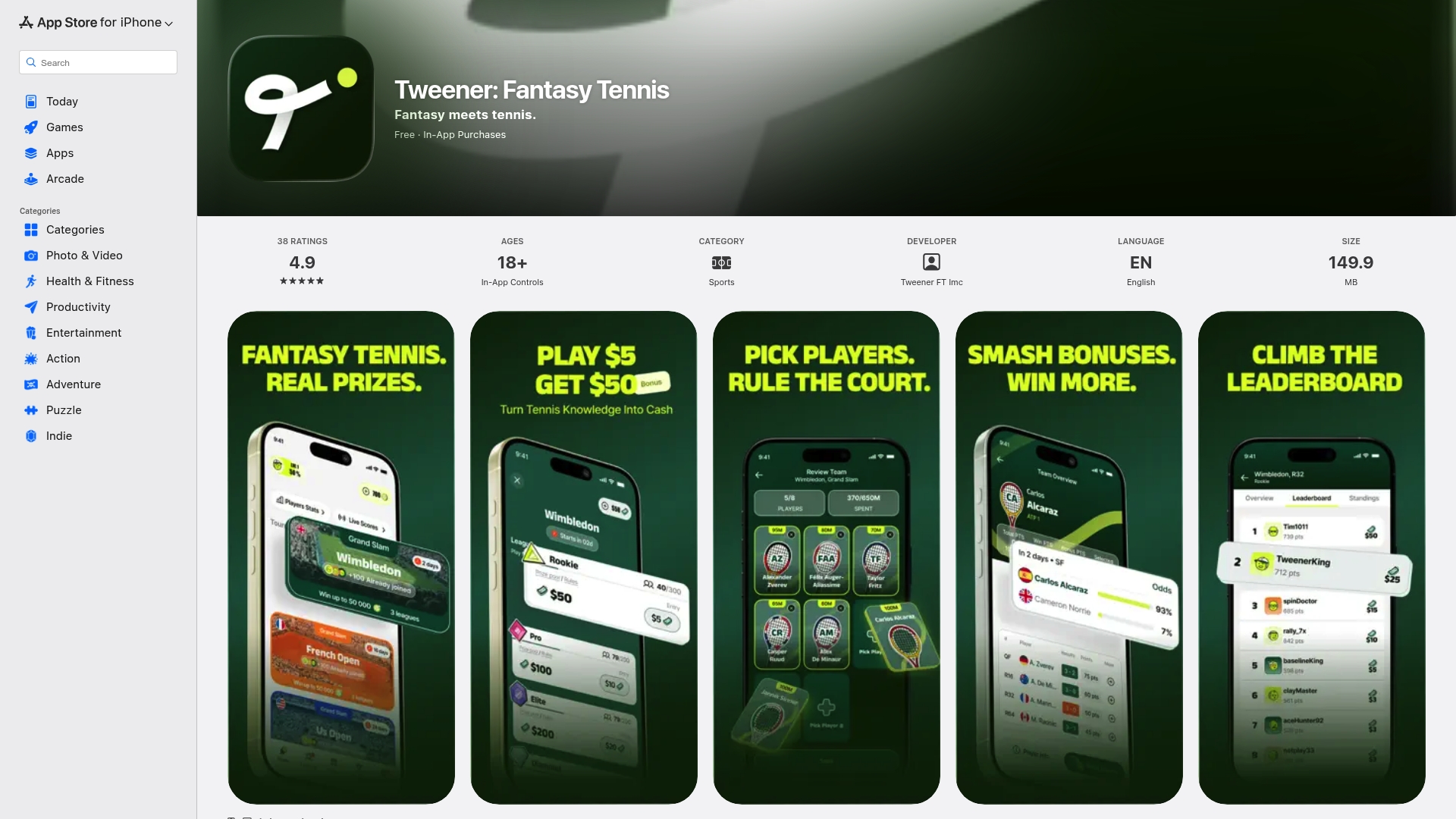
The Tweener platform is built specifically for fantasy tennis fans who want to compete using real ATP and WTA player results from live tournaments. You can join public leagues, create private contests with friends, and choose between free coin-based play or cash mode contests where legally available. The structure is designed to support exactly the kind of strategic thinking this article covers, from draw analysis to lineup differentiation to competing across multiple contest types. Whether you are testing a new contrarian stack or going all-in on a Grand Slam deep run, Tweener gives you the tools to make it count. Download the app and step into your first tournament mode contest today. Your next bold lineup decision could be the one that separates you from the field.
Frequently asked questions
How is tournament mode different from standard fantasy tennis formats?
Tournament mode places you in large contests with top-heavy prizes that reward bold, unique picks, while standard cash games and head-to-head formats favor safer, consistent strategies focused on favorites and minimizing misses.
What skills matter most for success in tournament mode?
Ownership leverage, draw analysis, and the willingness to take calculated risks are the core skills, and optimizers for multi-entry with surface matchup awareness can sharpen every decision you make.
Why are Grand Slam matches special in tournament mode?
Grand Slams use a best-of-five format that pushes top player scoring above 60 points per match, creating significantly higher fantasy ceilings than standard best-of-three events and making deep-run picks far more valuable.
Is tournament mode only for advanced fantasy players?
Not at all. Tournament mode is open to beginners, and the learning curve flattens quickly once you understand lineup building and salary-cap GPP structures because the core strategies are learnable rather than requiring years of experience.