
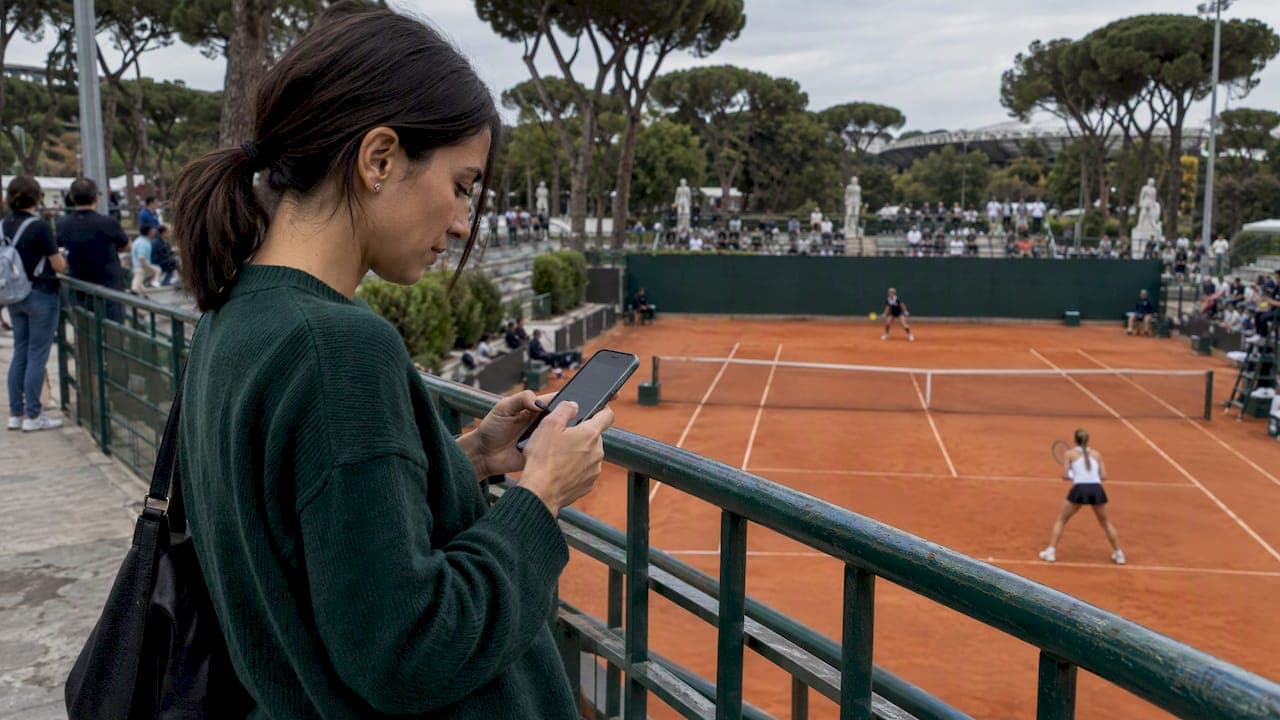
Rome Masters fantasy means picking real ATP or WTA players for the Italian Open at the Foro Italico and scoring points from what they do in real matches. The edge comes from three things: surface form on slow clay, the draw, and how you handle withdrawals. In the US, you can play free with virtual coins or, where it is legal, in paid contests on Tweener.
The Italian Open is a two-week event in May. It is the last big stop before Roland Garros, so fields are strong and the late-scratch risk is real. The 2026 edition ran 5 to 17 May as an ATP 1000 and WTA 1000 event with a 96-player singles draw. This guide covers how to read that format and turn it into lineup decisions, using the 2026 tournament as the worked example.
TL;DR
- "Rome Masters fantasy" is a game where your team of real players earns points from real Italian Open results. Rome is a Masters 1000 on clay, played in May over roughly two weeks.
- Slow red clay rewards return games, patience and fitness. Weight clay-court form over hard-court ranking.
- Check draw position, recent workload and withdrawal news before the lock. Alcaraz's 2026 wrist injury is a reminder that stars can drop out before the first ball.
- Free play with virtual coins is open to fans. Paid contests depend on your state, so check local rules first.
- Tweener is built only for tennis: Draft Mode, Pick'em Mode, public leagues, and private leagues for friends.
Table of Contents
- What "Rome Masters fantasy" actually means
- How the Rome format shapes your picks
- A five-step process for your Rome lineup
- Reading clay stats like a tennis nerd
- How withdrawals, byes and retirements usually work
- Lessons from the 2026 Rome draw
- Our perspective on Rome fantasy
- Play Rome-style fantasy on Tweener
- Free play, paid contests and your state
- After Rome: where the strategy carries
- FAQ
- Sources
What "Rome Masters fantasy" actually means
Fans type "Rome Masters" for the Italian Open, or Internazionali BNL d'Italia in Italy. It is a Masters 1000 on the men's side and a WTA 1000 on the women's side. Both tours play the same venue, the Foro Italico, on outdoor clay.
Fantasy versions all share one idea: you do not bet on a single match. You assemble a team, and the team earns points as your players win rounds. In Italy, the official men's-circuit game works this way: users compose teams and earn points based on tournament performance and event category, with bonuses and penalties. The category matters because a 1000-level event is worth more than a smaller tournament.
That is a different problem from a pick of the winner. One winner pick leaves you dead by the quarterfinals. A team spreads your risk across a 96-player draw and rewards you for knowing who goes deep and who stumbles in round two.
How the Rome format shapes your picks
A big draw with a bye structure
Singles are a 96-player draw. Top seeds start with byes, so they begin in round two. In fantasy terms, a seed with a bye has played zero matches while an unseeded qualifier-level player already has a match on the board. Always check how your game treats a bye before you compare players. Whether a bye scores anything differs by game, and the rules page of your contest is the only authority.

On Tweener, we walk through the general mechanics in how fantasy tennis points are calculated for ATP and WTA. Read that before your first Masters lineup.
Two weeks, not one
Rome stretches over a long fortnight. A player who survives deep runs plays many matches, and the draw rewards depth. The first week is about avoiding upsets. The second week is about stamina and head-to-head matchups against fewer, better opponents.
That means two different skills. For early rounds, you want players who rarely lose to lower-ranked opponents on clay. For late rounds, you want players who can win three-set matches on consecutive days without breaking down.
Slow clay changes who wins
Rome plays as slow, high-bouncing clay for many players, which compresses the serve advantage. Big servers who dominate on indoor hard courts lose a lot of their free points. The final in 2026 showed it: Jannik Sinner beat Casper Ruud 6-4, 6-4, with serving and returning both doing the work, and a 1h 44m match.

Use that as a template. The best clay players here win through a combination of first-serve points and returning pressure. A player with only a big serve is a risk.
A five-step process for your Rome lineup
- Start from clay form, not ranking. Look at results on clay over the previous 12 months and the Monte-Carlo, Madrid and Barcelona swing that leads into Rome. Rankings include a lot of hard-court points that do not travel.
- Read the draw in quarters. Identify which quarter contains the most seeds on collision courses by round three. If two of your picks must meet in the round of 16, one of them is guaranteed to stop.
- Check workload. Rome follows Madrid by a week. A player who went deep in Madrid and then started Rome with a day off is a different bet from someone who lost early and arrived fresh.
- Watch withdrawals until the lock. Injuries and fatigue cause late scratches. The 2026 event showed it: Carlos Alcaraz withdrew with a wrist injury before the tournament began, and Jasmine Paolini, the defending women's champion, lost in the round of sixteen to Elise Mertens.
- Balance stars with value. If your format has a budget or draft limit, spend on two or three stable top players and fill the rest with clay specialists who sit just outside the seeds.
For more on the general approach, our guide to picking ATP fantasy teams like a pro covers the logic that applies to every Masters.
Reading clay stats like a tennis nerd
Fantasy tennis rewards people who can separate noise from signal. Five stats do most of the work on Rome clay.
| Stat | Why it matters in Rome | What to look for |
|---|---|---|
| Clay win percentage, last 12 months | Shows who is comfortable on the surface | Compare to hard-court record. A big gap is a flag. |
| Return points won | Slow clay turns returns into breaks | High return numbers beat high serve numbers here |
| Three-set record | Long matches in the second week | Players who win more than they lose in deciders |
| Head-to-head on clay | Style matchups repeat | Prefer players who hold clay H2H edges over a likely round-of-16 opponent |
| Recent match load | Fatigue after Madrid | Count matches in the previous 14 days |
No single stat decides a pick. Combine them. A player with a strong return rate, a positive three-set record and a favorable quarter of the draw is a better fantasy asset than a bigger name with a weak early draw.
If you want the full clay calendar context, our 2026 clay swing guide covering Madrid and Rome lays out how the eleven clay events connect and how Rome fits the lead-in to Paris.
How withdrawals, byes and retirements usually work
This is where casual players lose points. Rules differ from game to game, so read yours, but these are the questions to ask before you lock a lineup:
- What if a player withdraws before the tournament? Many games let you swap until the first match starts. Some do not. Check the lock time.
- What if a player gets a walkover? An opponent who withdraws after the draw hands your player a free round. Some games score it, some do not.
- What about a retirement mid-match? A player who retires usually loses the match, and the opponent may be credited with a win. Check how your game treats partial matches.
- Do byes count? A seed's bye is not a win. Games that reward each round reached treat it differently from games that reward each match won.
The sensible rule is to avoid picks whose value depends on a loophole you have not read. If a rule is ambiguous, treat it as zero.
Lessons from the 2026 Rome draw
The draw preview that led into the tournament framed it as Sinner seeking his sixth consecutive ATP 1000 title, with Djokovic returning and Musetti looking for a statement run in different quarters. Sinner did win it. Alcaraz was out. Paolini fell early. That is a typical Rome: one favorite holds, others fall, and some quarter always produces a surprise.
Three practical lessons for your next entry:
- Do not build around a single star. Even a dominant player can be one illness away from zero. Spread your risk.
- Favor players in weak quarters. A mid-level seed in an open quarter often outscores a higher seed in a loaded one.
- Keep a swap plan. If your format allows changes, know the deadline and have a replacement ready.
We also keep a broader strategy piece, 3 chip rules that win Masters 1000 fantasy, tested inside Tweener.
Our perspective on Rome fantasy
Tennis fans have spent years with no real equivalent of the daily fantasy games other sports take for granted. You could bet on a match, or you could pick a bracket and watch it fall apart by Tuesday. Neither rewards the person who has actually studied clay-court return stats for a month.
That is why we built Tweener only for tennis. Rome is the event we think shows the format best. It is long enough for strategy to matter, big enough to include most of the top players, and slow enough that surface knowledge is a real edge. A fan who knows that a specific player wins long rallies on clay has an advantage over someone who just clicks the top seeds.
We also think the skill-versus-luck question should be answered by the game design. A good fantasy game makes it hard to win by guessing and easy to win by preparation: drafts, matchups, form, and a plan for the draw. Our two modes reflect that. Draft Mode asks you to build and manage a team. Pick'em Mode asks you to commit to outcomes. Both pull from real ATP and WTA results.
One more point: tennis is more fun when people argue about it. Private leagues of up to nine friends for Grand Slams are our favorite way to do that, because the trash talk gets better when everyone has their own team on the line.
— Nathan
Play Rome-style fantasy on Tweener
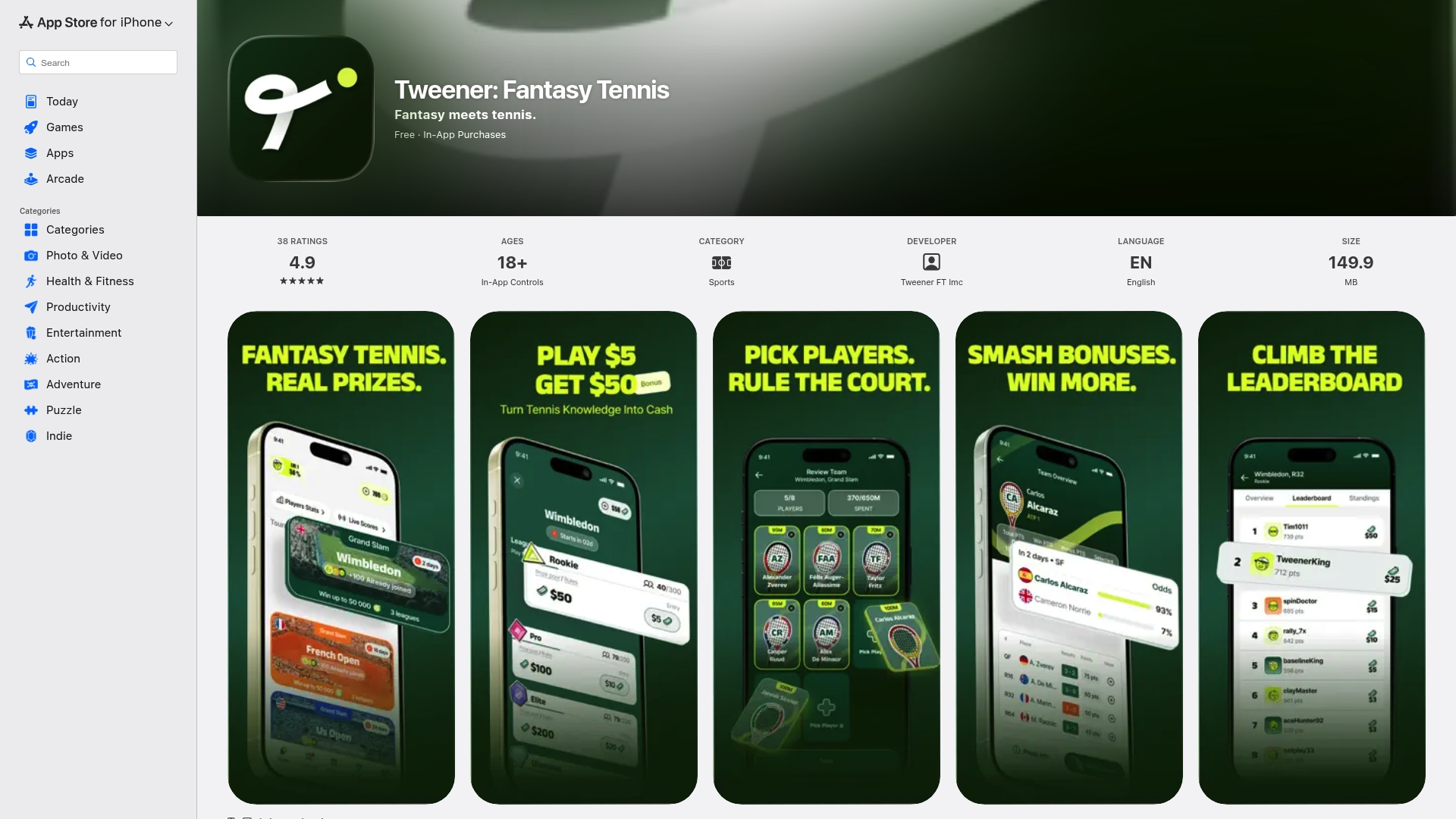
Tweener is a mobile fantasy app built around ATP and WTA tournaments. You can join public leagues or start a private league with friends, pick your players, and earn points from real match results. There is a free mode that uses virtual coins you earn through play and can redeem for rewards such as gift cards. There is also a cash mode for paid contests with real-money payouts, where legally permitted.
You can see how both formats work on the Tweener home page, or get the app and try a free league before you put anything on the line.
Free play, paid contests and your state
Before you enter any paid contest, check where you live. Fantasy contests with entry fees and pooled prizes are regulated at the state level, and the rules often turn on the distinction between skill and chance. That means a contest available in one state can be closed in another.
Tweener's cash play is available only in select US states, so confirm eligibility in the app before depositing. If you are unsure whether paid contests are allowed where you live, a local attorney or your state gaming regulator is the right person to ask. The free mode is a good way to learn Rome-style strategy with no deposit at all.
If you think about tennis the way a bettor does, the same discipline applies. Look for situations where your read on a player is better than the field's, and ignore bets that rely on hope. Our guide to tennis fantasy prediction games explains how to frame that kind of thinking.
After Rome: where the strategy carries
The habits you build here carry over. Roland Garros follows Rome and rewards the same clay profiles, though best-of-five matches add a stamina layer. Later in the season, indoor events reward a different type of player. Our Paris Masters fantasy guide shows how the approach changes on fast indoor hard courts, and our ATP Finals playbook covers the eight-player format at season's end. For a look at why ranking points matter to scoring, see ATP points distribution and why 1,500 at the Finals matters.
The Miami swing is the hard-court opposite. Our Miami Open fantasy roster guide is a good comparison if you want to see how the same method adapts. And if you want a general checklist before any tournament, read our fantasy tennis tips for building a winning lineup in 2026.
FAQ
When is the Rome Masters played?
The Italian Open is held in May at the Foro Italico in Rome, over about two weeks, right before Roland Garros. The 2026 edition ran 5 to 17 May. Check the official tournament page for the exact dates of the next edition.
How many players are in the Rome Masters singles draw?
The 2026 singles draw had 96 players, with a 32-team doubles draw. Top seeds receive byes into the second round. That is why round-two entries matter so much in fantasy lineups.
Can I play Rome Masters fantasy for free?
Yes. Tweener has a free mode where you compete using virtual coins. You can earn coins through gameplay and other in-app activities, and redeem them for rewards such as gift cards. No deposit is needed.
Is paid fantasy tennis legal in my state?
It depends on the state. Paid contests with entry fees and prize pools are subject to varying state rules. Tweener's cash mode is available in select US states only, so confirm in the app, and ask a local attorney if you are unsure.
What happens if my player withdraws from Rome?
It depends on the contest rules and the lock time. Before the lock, most formats let you swap a player. After the lock, a withdrawn player usually scores nothing. Always read the rules and check withdrawal news before the deadline.
Sources
- 2026 Italian Open, Wikipedia
- Jannik Sinner wins Rome Masters final vs Ruud 6-4, 6-4, Sofascore
- Fantatennis: consigli per gli Internazionali d'Italia, Tennis Magazine Italia
- Skill Gaming, Pooled Prize Money, and Minor League, UNLV Gaming Law Journal
- Tennis World USA