
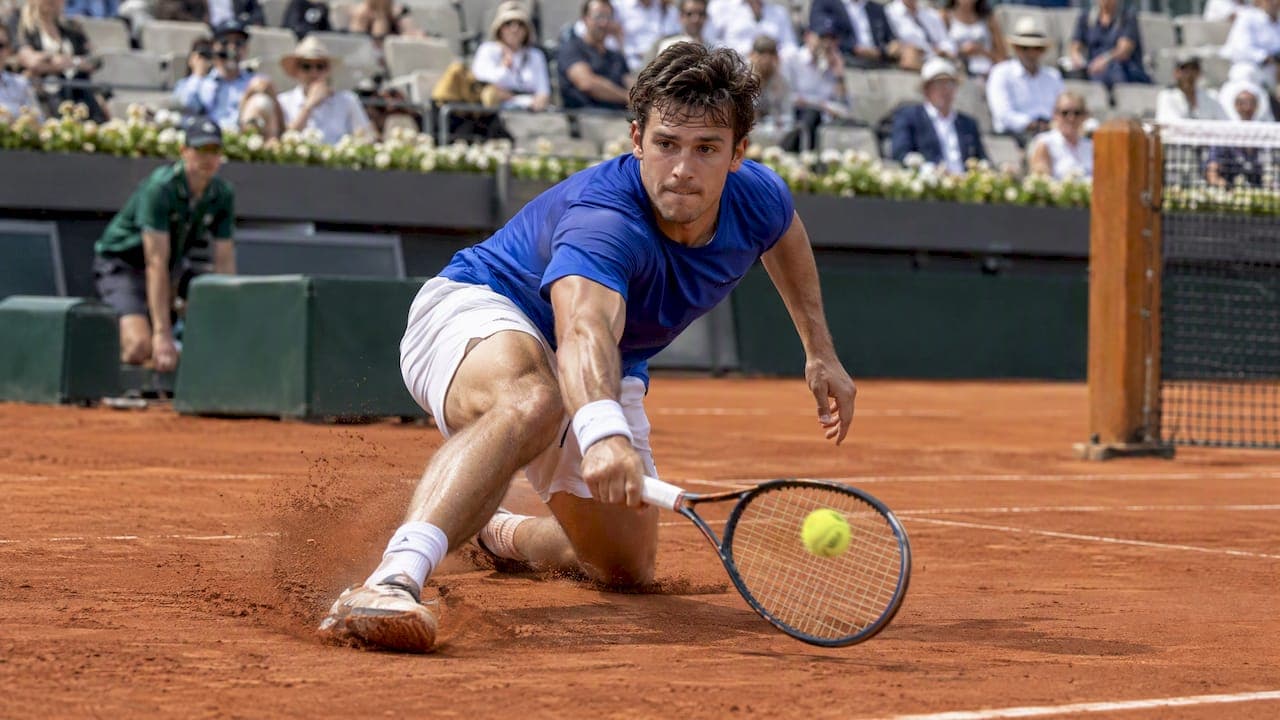
The 2026 clay swing runs from late March through Roland-Garros, moving from Monte-Carlo to Barcelona and Munich, then Madrid, then Rome before the Paris fortnight. Carlos Alcaraz has committed to the full calendar while Jannik Sinner is picking spots, and on the WTA side Mirra Andreeva's Roland-Garros title and Iga Swiatek's form headline the threads. For fantasy purposes, the Masters 1000 weeks carry the most weight for predicting who peaks in Paris.
TL;DR:
- Madrid's altitude speeds up play, favoring big servers, while Rome's heavier courts favor grinders, making results less comparable across the swing.
- Alcaraz aims to play all clay events but may skip some based on his physical condition due to the demanding schedule and points defense.
- Masters 1000 results, especially at Madrid and Rome, are roughly three times more predictive of Roland-Garros success than earlier tournaments.
- Watching late withdrawals and surface-specific form during Madrid and Rome is crucial for accurate fantasy lineup adjustments.
- Young players like Learner Tien and Mirra Andreeva may break through this swing, offering high value for fantasy bettors before broader public recognition.
Table of Contents
- Calendar at a Glance: Tournaments, Dates, and Level
- Player Plans and Who to Watch
- Why Masters, Sequencing and Fatigue Matter
- How to Use the Clay Swing to Win Fantasy Leagues
- Historical Clay Trends That Explain This Year's Favorites
- Emerging Names to Watch This Swing
- Weather and Court Conditions Vary More Than Fans Expect
- Injury Management During the Clay Grind
- My Read on This Year's Clay Swing
- Play the Clay Swing on Tweener: Draft Mode and Pick'em Mode
- FAQ
- Sources
Calendar at a Glance: Tournaments, Dates, and Level
Eleven clay events make up the 2026 ATP swing, stretching from late March through early June and ending at Roland-Garros, according to the official ATP clay-court calendar. Here is the rundown fans need to track for scheduling and fantasy purposes.
| Tournament | Approximate timing | Level | Why it matters |
|---|---|---|---|
| Houston (US men's clay) | Late March | ATP 250 | Optional warm-up, mostly American players |
| Monte-Carlo | Early April | ATP Masters 1000 | Opens the European swing, sets early form |
| Barcelona | Mid-April | ATP 500 | Regional lead-up, clay specialists cluster here |
| Munich | Mid-April | ATP 250 | Alternative lead-up for players skipping Barcelona |
| Madrid | Late April / early May | Masters 1000 (ATP and WTA) | Played at altitude, ball flies faster and bounces higher |
| Rome | Mid-May | Masters 1000 (ATP and WTA) | Heavier, slower courts closer to Roland-Garros conditions |
| Roland-Garros | Late May through early June | Grand Slam | The target event for the entire swing |
Madrid's altitude changes the physics of the surface: shots travel quicker and bounce higher than at sea level, which can flatter big servers and hurt grinders who rely on heavy topspin. Rome, by contrast, plays slower and heavier, making it a closer proxy for how a player will move and construct points in Paris. That gap is one reason fantasy managers treat Rome results as more predictive than Madrid's.
Player Plans and Who to Watch
Carlos Alcaraz said after losing the Monte-Carlo Masters final to Jannik Sinner that his main goal for the swing is to play every clay event, though he added he will listen to his body and could skip a stop if needed. That stance is not just competitive instinct. Scheduling analysis after the Monte-Carlo final points out that Alcaraz is defending a heavy points load from his 2025 clay results, which pushes him toward playing more rather than less. Sinner, who has fewer points to defend this swing, has more room to be selective about which events he enters and how much he plays before Paris.
On the WTA side, Mirra Andreeva enters the swing as the reigning Roland-Garros champion, a status confirmed on the official WTA tournament page, and her results through Madrid and Rome will be watched closely as a test of whether last year's run was a breakthrough or a peak. Iga Swiatek, long the standard-bearer on clay, is working to rediscover the dominant form that once made her close to unbeatable on the surface, and her early Madrid and Rome results will tell fantasy managers whether she is back to her best or still finding rhythm.
Several other players merit attention during the swing:
- Casper Ruud, known for strong clay-court performances and reliable results at Masters tournaments.
- Arthur Fils, an aggressive player whose confidence levels can greatly affect his outcomes.
- Frances Tiafoe, who tends to perform better on faster clay surfaces like Madrid but less so on heavier courts such as Rome.
- Americans Tommy Paul and Learner Tien, with Paul bringing experience and Tien showing potential as a younger player adapting to clay.
Why Masters, Sequencing and Fatigue Matter
Ranking points explain a lot of the scheduling logic fans see play out each spring. Top players are defending points earned the previous year at the same events, and skipping a tournament where they went deep means an automatic points loss with nothing to replace it. That dynamic is why some players who would otherwise rest choose to play through fatigue: the ranking math leaves them little choice.
It also explains why Madrid and Rome carry more predictive weight than the earlier 250 and 500 events. Analysis of the swing suggests Masters 1000 results are roughly three times more useful than earlier tournament results for forecasting how a player will perform at Roland-Garros, since the fields are deeper and the surfaces at Rome especially mirror Paris conditions.
Recovery windows factor in too. A player grinding through three-set matches in Madrid and Rome back to back has a fraction of the recovery time pros get between other events, which is part of why some contenders skip a tournament entirely rather than risk burning out before the Grand Slam that actually matters most.
How to Use the Clay Swing to Win Fantasy Leagues
The clay swing rewards fantasy managers who treat Masters 1000 weeks, Madrid and Rome, as the core of their model and the smaller events as lower-confidence noise. Recent clay win percentage, topspin-heavy playing styles, and match load all shift value more on clay than on hard courts, and tracking late withdrawals matters more here than anywhere else in the calendar, a point echoed in season preview coverage of the swing.
For Draft Mode, lean toward proven clay specialists during Masters weeks since the deeper fields reward consistency. Pick'em works well for the smaller 250 and 500 events, where a single standout performance can influence a lineup. If you are running a private league for Roland-Garros itself, Tweener's scoring rules are worth a careful read before the draft, since clay matches often run longer and scoring can swing late.
Pro Tip: Check withdrawal news the morning of each match day during Madrid and Rome; clay fatigue causes more late scratches than any other part of the season.
For deeper picks, our guide to fantasy tennis lineups for 2026 and our Masters prediction workflow both build directly on this Masters-first approach.
Historical Clay Trends That Explain This Year's Favorites
Clay rewards patience and physical endurance more than any other surface, which is why the same names tend to resurface each spring. Players who generate heavy topspin and move well laterally have historically outperformed flatter hitters on clay, since the surface slows the ball and gives defenders extra time to retrieve. That pattern is part of why Rafael Nadal's era-defining dominance on the surface rarely translated into the same edge on hard courts, and it is also why today's heavy topspin players tend to get more favorable fantasy projections once the calendar shifts to clay.
The surface also tends to level the field between big servers and grinders more than hard courts do, since the extra bounce and reduced pace take some sting out of a huge first serve. That is one reason players who struggle against aggressive returners on faster surfaces often find more success on clay, where rallies run longer and physical conditioning matters as much as raw power.
For fantasy purposes, this history is a useful filter: a player's hard-court ranking is not a reliable stand-in for how they will perform once the tour moves to clay. Looking specifically at a player's clay-court win rate and movement profile, rather than their overall ranking, tends to produce sharper picks during this stretch of the season.
Emerging Names to Watch This Swing
Beyond the established favorites, the clay swing is often where younger players make their first real statement on tour, since the slower surface can mask gaps in raw power while rewarding movement and shot tolerance. Learner Tien fits that mold on the ATP side this year, a player still building his hard-court résumé but with the kind of defensive game that tends to translate well to clay.
On the WTA side, Mirra Andreeva's run to the Roland-Garros title last year is itself the clearest recent example of a young player breaking through on this surface before fully arriving elsewhere. Watching how other young WTA players perform in Madrid and Rome this year, particularly whether any backs into the second week with the kind of depth Andreeva showed, is one of the more interesting threads of the swing.
For fantasy managers, these breakout candidates tend to offer the best value relative to their price or draft position, since public perception usually lags a week or two behind actual form. Keeping an eye on who is winning extended rallies and forcing errors during the Barcelona and Munich week, before the Masters events start, can flag a name worth drafting before the wider field catches on.
Weather and Court Conditions Vary More Than Fans Expect
Clay courts are not uniform from one city to the next, and the differences matter for both play and fantasy projections. Madrid's altitude speeds up the ball and increases bounce height, favoring aggressive hitters, while Rome's heavier, slower courts closer to sea level reward grinders and favor longer rallies. Weather adds another layer: wind and heat can dry out the clay and make it play faster, while rain delays and dampness slow it down further and can extend a tournament's schedule, compressing recovery time between rounds.

Court maintenance between matches, watering, rolling and sweeping the lines, also affects how the surface plays as a tournament progresses, with later rounds sometimes playing differently than early ones on the same court. None of this is unique to one event, but it means a player's results at one clay tournament do not always predict their results at the next, especially when conditions differ sharply between, say, Madrid's altitude and Rome's heavier air.

For fantasy strategy, this is a reason to weight recent clay-specific form over a player's overall season narrative, and to watch forecasts for the week ahead when a tournament sits in a region prone to rain delays or heat spikes.
Injury Management During the Clay Grind
The clay swing is a demanding stretch physically, with matches that run longer on average than hard-court equivalents because the surface slows the ball and extends rallies. That toll shows up most in players' knees, hips and shoulders, the joints that absorb repeated sliding and extended points, and it is part of why some contenders skip a tournament outright rather than push through discomfort.
Alcaraz's own comment that he will monitor his body through the swing, rather than committing unconditionally to every event, reflects how top players now treat the clay calendar: a long test of durability rather than a fixed obligation. Shorter recovery windows between Masters events compound the risk, since a player grinding through three sets in Madrid has only days before Rome begins.
For fantasy managers, in-season injury news is one of the most actionable signals available. A player nursing a minor issue is far more likely to go out in straight sets or withdraw mid-match than their ranking alone would suggest, which is exactly why tracking withdrawal and fitness news close to match time, rather than relying on preseason assumptions, tends to separate strong fantasy weeks from weak ones.
My Read on This Year's Clay Swing
Tracking this swing means watching Masters week schedules, clay win rates and withdrawal news more closely than overall rankings. The Alcaraz versus Sinner scheduling split is the storyline that will shape rankings heading into Paris, but the deeper edge for fans comes from Madrid and Rome results, which tend to predict Roland-Garros form better than anything earlier in the calendar. Test your own reads in a private league before the Slam starts.
— Nathan
Play the Clay Swing on Tweener: Draft Mode and Pick'em Mode
Draft Mode rewards the kind of clay-specific research this swing demands, letting you build a full roster around form, surface fit and schedule rather than guessing. Pick'em Mode fits the smaller 250 and 500 weeks, where a single standout run can carry a lineup without a full draft commitment.
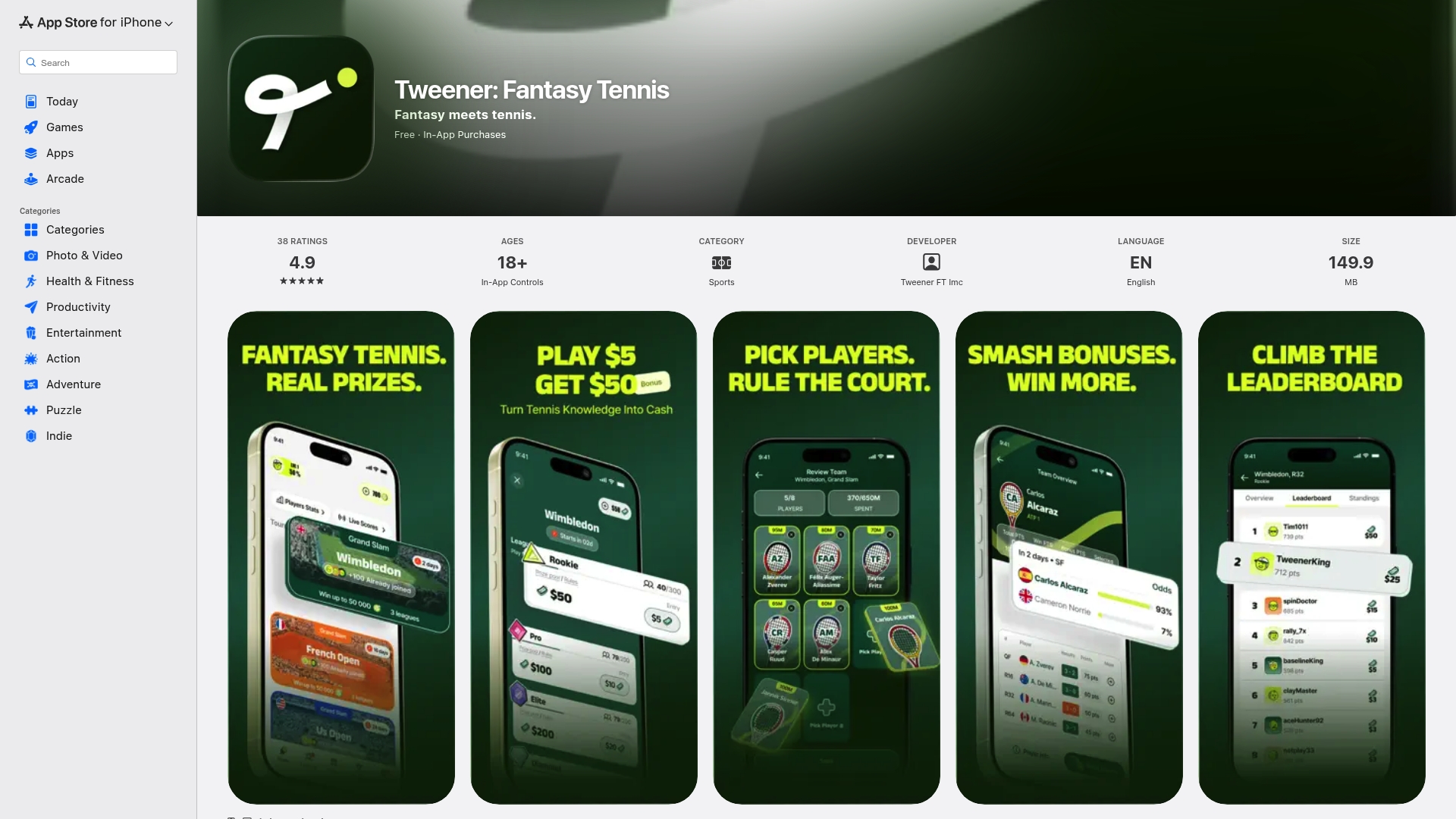
Both modes run through Roland-Garros, and you can set up a private league for the Grand Slam with up to nine friends to put this season preview to the test. Check the game rules before your first draft, and get the Tweener app to follow the swing match by match.
FAQ
What clay court tennis tournaments are scheduled for 2026?
The 2026 ATP clay swing includes eleven tournaments running from late March through Roland-Garros, with Monte-Carlo, Madrid and Rome as the Masters 1000 stops, according to the ATP Tour's official calendar. Barcelona, Munich and Houston serve as the main lead-up events before the Masters weeks begin.
Who is the queen of clay court in tennis?
There is no single reigning "queen of clay" title, but Mirra Andreeva enters the 2026 swing as the defending Roland-Garros champion, a status confirmed on the official WTA tournament page. Iga Swiatek's past dominance on the surface still makes her a central storyline as she looks to rediscover that form.
Why is the French Open played on clay?
Roland-Garros has used clay courts since the tournament's early history, giving it a surface identity distinct from the three other Grand Slams. The slower, higher-bouncing surface rewards endurance and movement, which shapes the playing styles associated with clay-court specialists.
Where is Carlos Alcaraz playing next?
Alcaraz has said his goal is to play the full 2026 clay calendar, though he has noted he will adjust his schedule based on how his body responds, according to his comments after the Monte-Carlo Masters final. His points defense from 2025 clay results makes skipping events costly for his ranking.
Which clay events matter most for fantasy tennis strategy?
Masters 1000 events, especially Madrid and Rome, carry the most predictive weight for Roland-Garros form and are the weeks to prioritize for fantasy research. Tracking clay-specific metrics like recent surface win rate and late withdrawal news, as covered in our fantasy selection guide, sharpens picks during these weeks.
Sources
- What is the 2026 clay season calendar on the ATP Tour?
- Carlos Alcaraz reveals clay swing plans ahead of 2026 French Open after Monte‑Carlo Masters final defeat to Jannik Sinner - TNT Sports
- Carlos Alcaraz moves past Monte Carlo setback with a different plan than Jannik Sinner for clay season - EssentiallySports
- European Clay Swing 2026 - Best tournaments and players to watch - TennisNerd
- Roland Garros 2026 Past Winners | WTA Official