
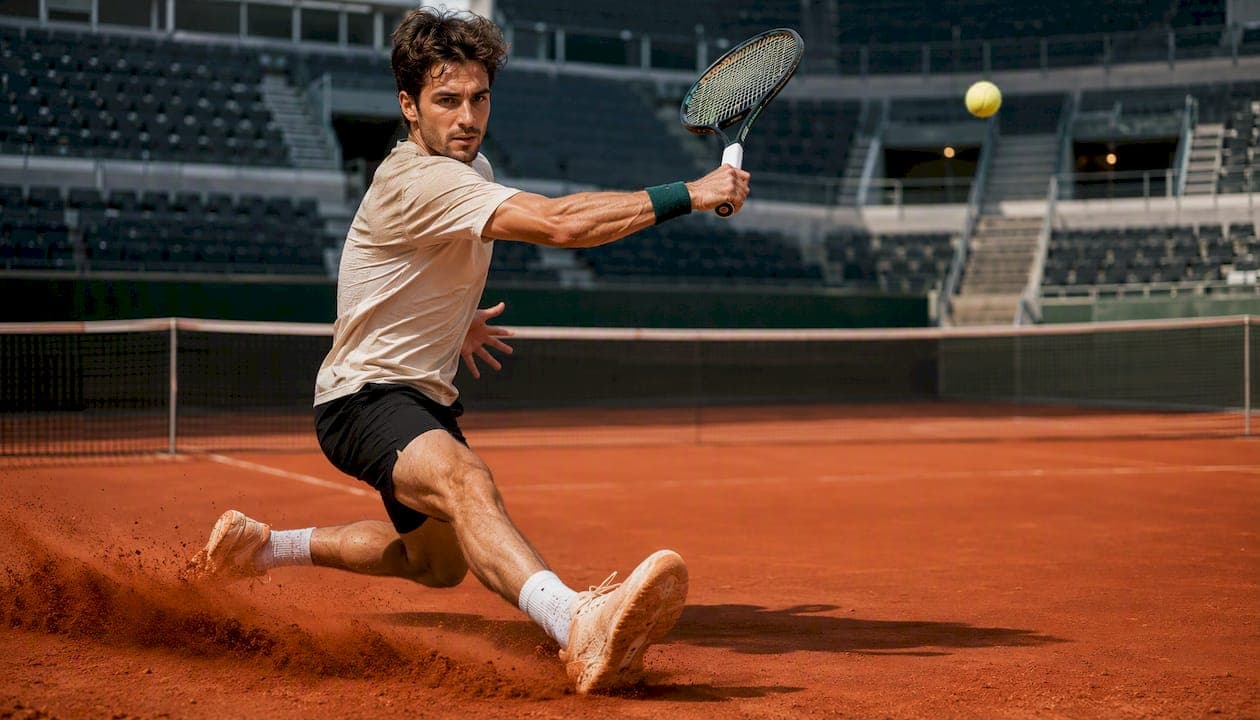
A clay-court specialist is a player whose game, built around heavy topspin, sliding footwork, and relentless point construction, produces significantly better results on clay than on hard courts or grass. Rafael Nadal is the defining example, with 14 French Open titles and a career built almost entirely on that red dirt. This piece traces the trait profile, the historical greats, the modern names carrying that torch, and how to turn surface bias into a real fantasy edge.
TL;DR:
- Clay surface amplifies the effectiveness of heavy topspin and sliding footwork, favoring players with strong endurance and tactical patience.
- Successful clay players typically hold a high win-rate gap on clay versus other surfaces, supported by multiple titles and specific head-to-head advantages.
- Recent clay results and surface-specific stats are more reliable indicators of current form than overall rankings or career achievements.
- Players transitioning from clay to faster surfaces need to modify their swing paths, footwork, and mental approach to adapt to quicker points and different movement demands.
- Clay specialists are often undervalued in fantasy picks, providing opportunities for surface-aware managers to select underrated players with strong recent clay form.
Table of Contents
- What Makes a Clay Court Specialist?
- The Historical Greats Who Defined the Term
- Who Are Today's Top Clay Court Performers?
- The Clay Swing: Tournaments and Records That Matter
- How Do Analysts Measure a Real Clay Specialist?
- Turning Clay Knowledge Into Fantasy Wins
- Training and Practice Techniques Specific to Clay Courts
- Common Challenges and Injury Risks for Clay Court Specialists
- Adaptations in Equipment for Clay Surfaces
- Strategies for Transitioning Between Clay and Other Surfaces
- Nathan's Perspective: Why Clay Specialists Make Great Fantasy Differentials
- Play the Clay Swing Smarter With Tweener
- Primary Sources and Further Reading
- Sources
What Makes a Clay Court Specialist?
Clay slows everything down. The surface absorbs pace on contact and kicks the ball up higher than hard courts or grass, which stretches out rallies and rewards patience over pure firepower. That single physical fact, confirmed by the mechanics of the surface itself, explains almost everything about why certain players thrive there and others struggle.
Heavy topspin becomes a weapon rather than a liability on clay, since the extra bounce pushes returns above an opponent's comfortable strike zone. Players using a full western or semi-western grip, the kind that generates severe topspin, get rewarded far more on clay than on faster surfaces where flatter, lower-bouncing shots dominate.
Sliding is the other non-negotiable skill. Watch any clay match closely and you will see the elite specialists gliding into shots rather than planting and stopping, which saves energy over a five-set match and keeps them balanced for the next ball. Players who grew up on clay, like most of the South American contingent, develop this almost instinctively. Players who did not, often look stiff and reactive when they first face it.
Tactically, clay rewards a different mindset entirely:
- Patience over aggression. Winners come from constructed points, not first-strike tennis.
- Drop shots as a real weapon. The slow surface makes them lethal when disguised well.
- Defensive counterpunching. Getting one more ball back than your opponent wins more points on clay than anywhere else.
- Superior stamina. Longer rallies and best-of-five matches at Roland Garros punish players who fade physically.
Guillermo Coria's game in the early 2000s showed the drop-shot tactic at its most extreme. Nadal's game showed the topspin and stamina combination at its most complete.
Pro Tip: When evaluating a player's clay potential, watch their backhand slice usage more than their forehand. Players who can slide into a low, defensive slice under pressure almost always have the footwork foundation to eventually become clay threats.
The Historical Greats Who Defined the Term
The word "specialist" gets thrown around loosely in tennis media, but a handful of careers actually earned it through decades of dominance. Here is how the record books justify the label for each name that comes up whenever fans debate the greatest clay players ever.
-
Rafael Nadal. No player has ever separated himself from a single surface the way Nadal has from clay. His 14 French Open titles and 116 match wins at Roland Garros against only three losses make him, statistically and historically, the benchmark for what "specialist" means. Journalists have called him the "King of Clay" for good reason: his lefty topspin forehand, generated from a grip and swing path built specifically to exploit high bounces, turned Roland Garros into something closer to a coronation than a tournament for most of two decades.
-
Björn Borg. Before Nadal, Borg was the standard. He won six French Open titles between 1974 and 1981, doing it with a two-handed backhand and baseline consistency that felt alien in an era of serve-and-volley tennis. His stamina was legendary. Opponents talked about the psychological toll of simply knowing Borg would outlast them physically.
-
Chris Evert. On the women's side, Evert's clay résumé is almost as staggering as Nadal's. She won seven French Open titles and built her career on a flat, precise groundstroke game that relied on placement and consistency rather than raw power. Evert rarely made unforced errors, and on clay, where extra shots per rally punish impatience, that discipline became nearly unbeatable.
-
Justine Henin. Henin's one-handed backhand was a rarity in the modern women's game, and it became one of the most effective clay weapons of her era. She won four French Open titles between 2003 and 2010, mixing aggressive shot-making with the kind of movement that let her defend and attack in the same point.
-
Gustavo Kuerten. "Guga" won three French Open titles and became a folk hero in Brazil for the way he played, loose, joyful, and dangerous with a single-handed backhand that produced some of the most spectacular winners of his generation. His 1997 title, won as an unseeded 20-year-old, remains one of the great surprise runs in clay history.
-
Guillermo Vilas. Vilas won the French Open once, in 1977, but his broader clay résumé, dozens of clay titles across a career built almost entirely around South American and European dirt-court events, cemented him as one of the most durable clay competitors of the 1970s and 1980s.
-
Thomas Muster. Muster's story includes a career-threatening car accident in 1989 that nearly ended his career before it peaked. He came back to win the French Open in 1995 and briefly reached world number one, all built on a physical, grinding clay game that matched his personal resilience.
-
Ivan Lendl. Lendl won three French Open titles and represents an interesting case: a player whose overall game translated across surfaces, yet whose clay results specifically helped define the modern power-baseline template that later specialists would refine.
-
Monica Seles. Seles won three French Open titles with a two-handed grip on both sides, generating early, flat pace that was unusual for the surface at the time. Her aggressive return game exploited the fact that most clay players expected more time to set up, and she simply took that time away from them.
Each of these careers reinforces the same underlying truth: clay dominance requires a specific blend of physical tools and mental patience that does not automatically transfer from success on other surfaces.
Who Are Today's Top Clay Court Performers?
Modern tennis has blurred the old lines between "clay specialist" and "all-surface player," mostly because racket technology and training methods now let players generate heavy topspin on any surface. Still, a handful of active names consistently separate themselves once the tour shifts to dirt.
Carlos Alcaraz has become the most complete clay threat of his generation, combining explosive power with the sliding footwork and drop-shot touch that used to be exclusive to pure clay specialists. His French Open titles show that modern athleticism can replicate old-school clay skills without sacrificing the aggression that wins on hard courts.
Casper Ruud built his entire ranking rise on clay results before adding hard-court consistency later. His two-handed backhand and heavy topspin forehand were built for European clay, and his multiple French Open finals appearances reflect a game still closer to the Borg or Muster archetype than to the flat-hitting power players dominating hard courts.
Novak Djokovic, despite being widely considered the greatest hard-court returner of his era, has proven he can win on clay through sheer tactical adaptability rather than surface-native instincts. His French Open title run shows that elite defense and shot tolerance can override the traditional specialist advantage.
Francisco Cerúndolo represents the purest modern example of surface-skewed value. His clay win rate sits at 60.4% compared to 50.0% on hard courts across a large enough sample to matter for prediction purposes, not just narrative purposes.
Watching for clay form in real time comes down to a few reliable signals:
- Recent clay titles or finals, which show current form rather than career reputation.
- Match stats on unforced errors and rally length, which reveal whether a player is actually adjusting tactically to the slower surface.
- Head-to-head results specifically on clay, since general H2H records get diluted by surface mismatches.
- Physical freshness, since the clay swing's grinding style punishes players carrying fatigue from earlier tournaments.
The Clay Swing: Tournaments and Records That Matter
The clay season runs on a rhythm most casual fans underestimate. It typically opens with South American events in February, shifts to the European clay swing through April and May, and builds toward Roland Garros as its unmistakable climax. That structure matters because it gives players weeks to find rhythm on the surface before the sport's biggest clay prize is on the line.
Roland Garros remains the defining clay event, both because of its Grand Slam status and because its best-of-five format for men rewards exactly the stamina and patience that separate true specialists from pretenders. A player can win a best-of-three clay title in Monte Carlo and still get exposed over five sets in Paris if their conditioning or tactical discipline slips.
The records fans cite most when calling someone a specialist tend to cluster around a few marquee events:
- Nadal's Roland Garros run, 14 titles, stands alone as the single most dominant record in tennis history on any surface.
- Multiple Monte Carlo Masters titles, a tournament Nadal won eleven times, showing sustained dominance rather than a single peak season.
- Rome and Barcelona title counts, both events where repeat champions signal genuine surface mastery rather than one good week.
- Consecutive clay-match win streaks, which measure whether a player's dominance is consistent across an entire season rather than isolated to one tournament.
How Do Analysts Measure a Real Clay Specialist?
Analysts lean on a metric called the surface win-rate gap, the difference between a player's win percentage on clay versus other surfaces, as the clearest quantitative signal of specialization. A large, sustained gap across a meaningful number of matches tends to indicate real surface skew rather than a lucky stretch of results.
Sample size matters more than most fans assume. A handful of great clay results can look impressive in isolation but mean little without volume behind them. Analysts generally want to see the gap hold up across multiple seasons and dozens of matches before treating it as predictive rather than coincidental.
Cerúndolo again offers the cleanest current example: his 60.4% clay win rate against a 50.0% hard-court rate comes from a large enough match sample that the split reads as a genuine skill profile, not statistical noise.
The gap that matters: A player's clay-versus-hard win rate difference, tracked across a large enough sample, is the single clearest indicator analysts use to separate true surface specialists from players who simply had a good clay season.
Smart evaluation never relies on one number alone. Combining win-rate splits with title counts and head-to-head results on the specific surface gives a far more reliable read than any single stat in isolation.
- Win-rate gap shows the baseline skew.
- Title counts confirm the gap translates into results under pressure.
- Surface-specific H2H reveals how a player's style matches up against a particular opponent's weaknesses.
Turning Clay Knowledge Into Fantasy Wins
Knowing who thrives on clay is only useful if you apply it before lineups lock. Three rules separate fans who exploit surface bias from those who ignore it and lose value every clay swing.
- Weight surface history heavily during the clay swing. A player's hard-court ranking becomes far less predictive once the calendar shifts to dirt, so recent clay-specific results deserve more weight than overall season form.
- Prioritize favorable clay matchups over name recognition. A lower-ranked clay grinder can outproduce a bigger name who struggles with movement or topspin on slow courts.
- Budget for specialists appropriately. Clay specialists often carry lower salaries in daily lineups than their surface-adjusted output deserves, since casual fans price players off overall ranking rather than surface splits.
Before locking any clay-slate lineup, run through this checklist: recent clay form over the last month, career clay titles or deep runs, head-to-head results specifically on clay against that day's likely opponents, and fitness or match load heading into the event. Tweener's guide on building clay slates with surface-aware filters walks through exactly how to apply these factors when setting a live lineup.
Pro Tip: Cross-reference a player's clay win rate with their opponent's specific weakness against heavy topspin. The matchup-level detail often matters more than either player's overall surface stats.
Training and Practice Techniques Specific to Clay Courts
Clay training looks nothing like hard-court preparation. Players spend disproportionate time on slide drills, practicing controlled slides into both forehand and backhand corners until the movement becomes automatic rather than a conscious adjustment mid-point.
Extended rally drills matter more on clay than on any other surface. Coaches often run cross-court rally sequences of twenty or more shots specifically to build the shot tolerance and patience the surface demands, since bailing out early on points is the fastest way to lose on clay.
Footwork conditioning gets built around small, adjustable steps rather than the explosive first-step training common on hard courts, because clay rewards balance and recovery position over raw acceleration. Many clay-focused academies in Spain and South America still emphasize this footwork foundation before technical stroke work, on the theory that movement determines everything else on the surface.
Drop shot and net-approach practice also gets more attention in clay training blocks, since the surface makes these shots far more effective than on faster courts, but only when disguised properly. Players drill the same swing motion for both topspin groundstrokes and drop shots so opponents cannot read the shot before it lands short.
Common Challenges and Injury Risks for Clay Court Specialists
The sliding motion that makes clay specialists so effective also creates unique physical strain, particularly on the hips, knees, and adductor muscles, which absorb repeated lateral loading that hard courts simply do not demand in the same way.
Longer rallies and matches add up over a season. Clay's slower pace means points last longer, sets run deeper, and best-of-five matches at Roland Garros can stretch past four hours, all of which compounds fatigue and raises injury risk across a demanding clay swing that runs for roughly two months straight.
Overuse injuries tend to cluster around the shoulder and elbow too, since generating heavy topspin repeatedly, match after match, places more torque on the arm than flatter, lower-effort shots common on faster surfaces. Nadal's own knee problems throughout his career are frequently linked to years of sliding and grinding on exactly the surface that made him legendary.
Heat is an underrated risk factor as well. Much of the European clay swing runs through warm spring weather, and the physical demands of clay tennis under direct sun raise dehydration and cramping risks that fans rarely factor into fitness assessments when picking players for late-tournament rounds.
Adaptations in Equipment for Clay Surfaces
Racket setups shift subtly for clay, even among players who use the same frame across all surfaces. Many players add a touch more string tension on clay to compensate for the extra dwell time the ball spends on the strings during high-bouncing, heavily spun shots, though the adjustment varies by player and stringer preference.
Footwear makes the biggest visible difference. Clay-specific shoes use a herringbone tread pattern instead of the more aggressive traction patterns found on hard-court shoes, since a smoother, wider tread lets players slide predictably rather than catching and risking ankle injuries. Hard-court shoes simply grip too much on clay, which turns a controlled slide into a dangerous stop.
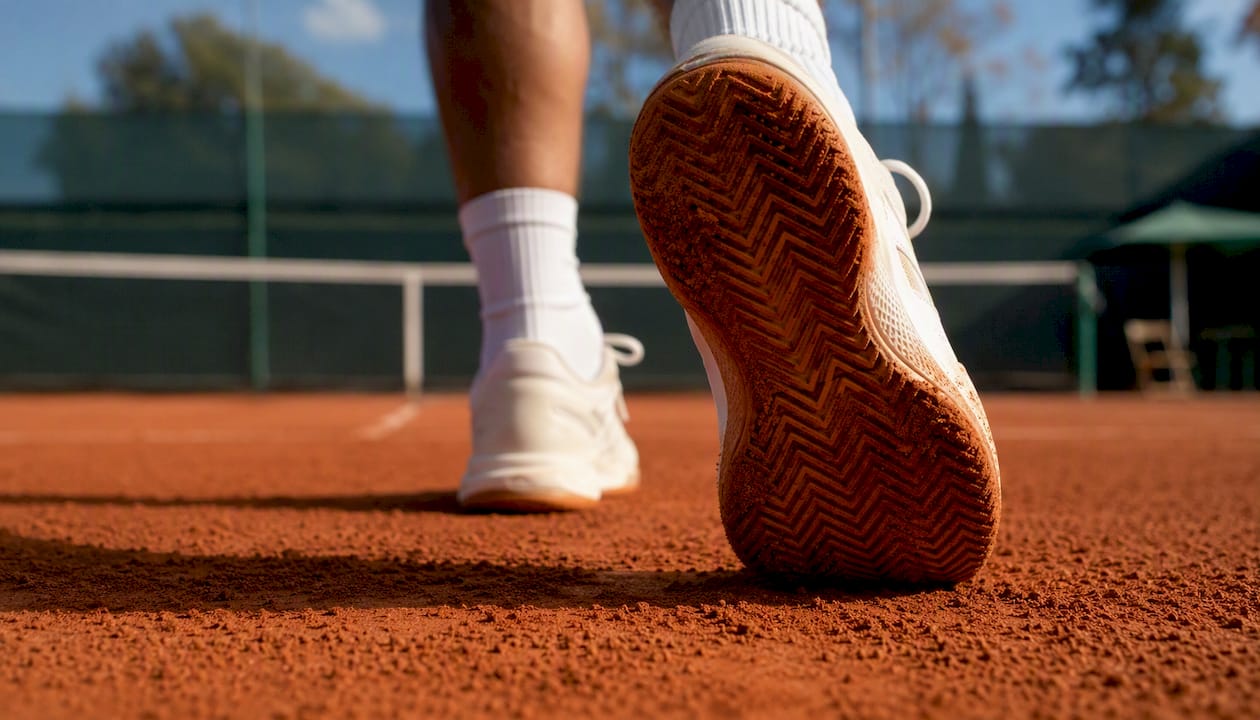
String choice also tilts toward more durable, spin-friendly setups. Clay's abrasive surface chews through strings faster than grass or hard courts, and players who rely heavily on topspin often go through more frequent restrings during a clay tournament than they would on other surfaces.
Grip size and racket weight rarely change dramatically, but some players add slightly more lead tape to the racket head on clay to generate a bit more mass through contact, helping push heavy, high-bouncing balls back with pace rather than simply absorbing the shot defensively.
Strategies for Transitioning Between Clay and Other Surfaces
The jump from clay to grass is the single hardest surface transition in tennis, and the calendar makes it worse by giving players only a few weeks between Roland Garros and Wimbledon. Players adjust by shortening their swing paths and prioritizing first-strike tennis, since grass rewards quick points far more than the patient rallies clay demands.
Moving from clay to hard courts requires a different adjustment. Players need to trust flatter, lower-bouncing shots again and rediscover the aggressive court positioning that clay's slower pace naturally discourages. Many players use the North American hard-court summer swing specifically to rebuild that timing before the US Open.
Footwork retraining matters just as much as stroke adjustment. The wide sliding steps that work on clay become liabilities on faster surfaces where players need quicker, more explosive first steps and better balance on firmer footing. Coaches often schedule dedicated transition practice blocks, sometimes just three or four days, purely to reset movement patterns before a new surface swing begins.
Mental adjustment deserves attention too. Players used to constructing 10 and 12-shot rallies on clay have to recalibrate their patience thresholds, since impatience that gets punished on clay often becomes a necessary weapon on faster courts where points end much sooner.
Nathan's Perspective: Why Clay Specialists Make Great Fantasy Differentials
Clay specialists get undervalued in fantasy lineups more than any other player category, because casual drafters price players off overall ranking instead of surface-specific output. That gap is exactly where analytical fans find an edge every spring. I broke down how to exploit it in Tweener's clay slate strategy guide, and the pattern holds every season: the players everyone forgets about in March become the differentials that win private leagues in May.
— Nathan
Play the Clay Swing Smarter With Tweener
Tweener is the fantasy platform built for exactly the surface-aware thinking this article just walked through, not generic season-long rosters that ignore whether your player is stepping onto clay, grass, or hard courts. It is the closest thing tennis has to a Fanduel or DraftKings, purpose-built for analytical fans who want their stats knowledge to actually count for something.
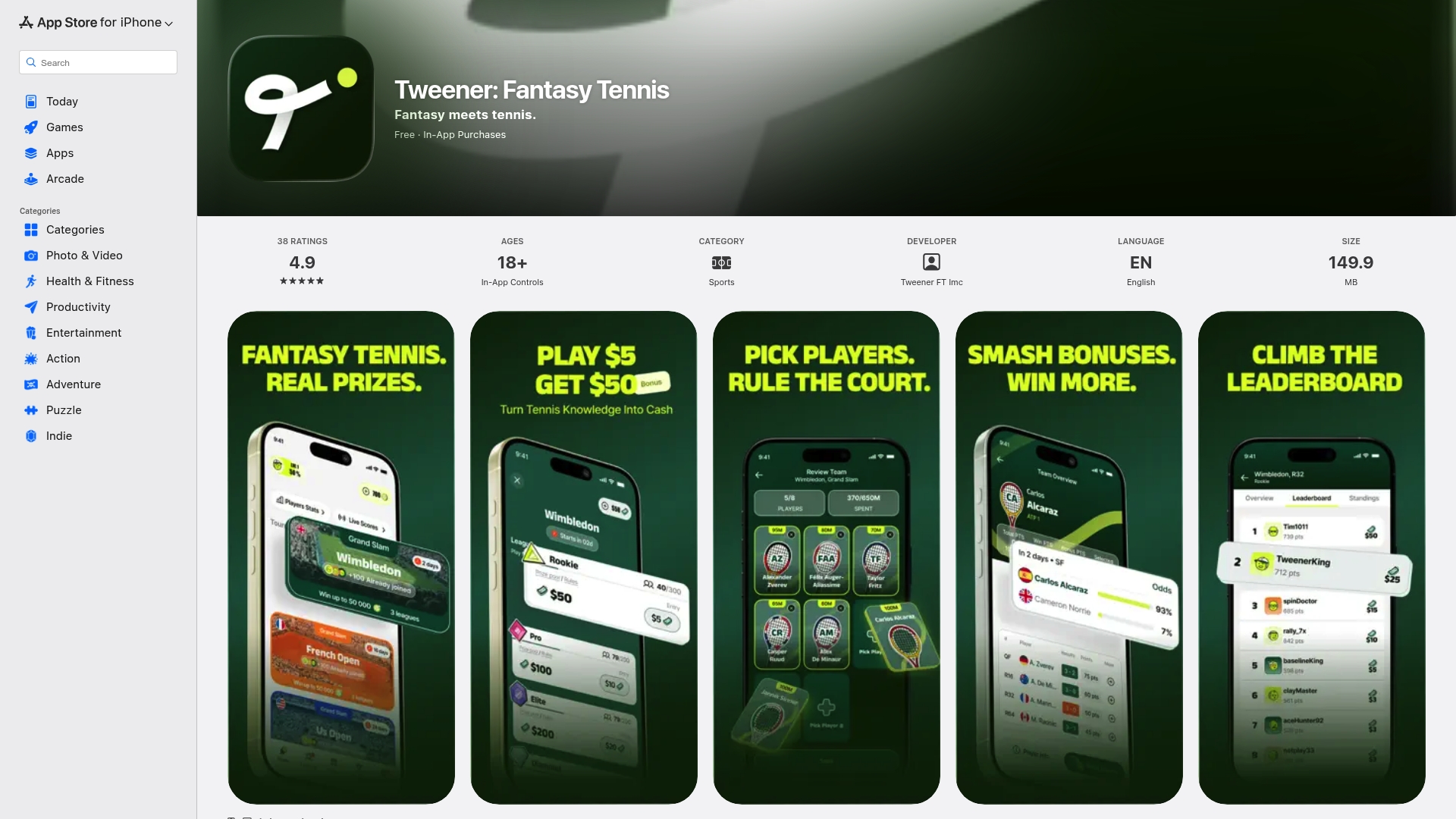
During the clay swing, that means surface-specific filters that surface exactly the kind of win-rate splits and clay-form indicators covered above, so you are not manually digging through stats before every slate. It also means private leagues where you can go head-to-head with up to nine friends through an entire Grand Slam, turning Roland Garros into a running competition instead of something you just watch. Whether you play free contests with virtual coins or step into paid cash contests for real payouts, the format rewards the same thing this whole article has been about: knowing who actually shows up when the surface changes. Head to Tweener or grab the Tweener app before the next clay swing kicks off and build a lineup around the players this article just named.
Primary Sources and Further Reading
Career records and match statistics for Nadal came from his Wikipedia career statistics page, while surface mechanics and clay-specific tactical context drew on the Wikipedia clay court entry. Cerúndolo's surface split numbers came from TennisPredictor's analysis, and historical framing on Nadal's clay legacy referenced The Spectator's profile. For deeper fantasy strategy built around these same surface principles, Tweener's guides on choosing players for fantasy leagues and match prediction strategies offer practical next steps.
Sources
- Rafael Nadal career statistics — Wikipedia
- Francisco Cerundolo ATP analysis: clay specialist & Khachanov domination — TennisPredictor
- Rafael Nadal: king of the orange brick court — The Spectator