

ATP Fantasy is the official fantasy game of the ATP Tour, and it puts the Race to the Nitto ATP Finals directly in your hands. Build an eight-player roster (six starters, two alternates) within a budget set by the official platform, then track how those picks perform across the swing leading into the season finale. Play through the official ATP Fantasy platform, watch the swing leaderboards update in real time, and you're competing for actual prizes off actual match data.
TL;DR:
- During the ATP Finals swing, only the top 8 players qualify, making upset bonuses less predictable but more impactful.
- Fewer matches and higher-ranked competitors mean consistent top performers are more valuable than volatile underdogs.
- Building a roster requires choosing anchors with solid recent form, mid-priced attackers, and pairing players with potential deep runs to maximize points.
- Late withdrawals, injuries, or schedule clashes can quickly negate your strategy if not monitored closely before lock.
- Diversifying your picks across overlapping tournaments maximizes active point earners and reduces risk of monochromatic failure.
Table of Contents
- Where Can You Play ATP Finals Fantasy?
- How Does the ATP Fantasy Scoring System Work?
- What Is the Race to the Nitto ATP Finals Swing?
- How Do You Build a Winning Finals Swing Lineup?
- What's the Lock-Day Checklist Before Your Lineup Locks?
- Why Fantasy Tennis Makes the ATP Finals Worth Watching Closer
- Practice Your Strategy Year-Round With Tweener
- Sources
- FAQ
Where Can You Play ATP Finals Fantasy?
You play directly on the official ATP Fantasy platform, built in partnership with Deltatre and accessible from both desktop and mobile browsers. There's no separate app download required. You create an account, build your roster, and you're in.
Once you're set up, you can join a few different contest types:
- Private leagues — invite friends and compete head-to-head, tournament by tournament
- Swing leaderboards — points accumulate across an entire swing, like the Race to the Nitto ATP Finals stretch
- Global leaderboards — every registered player worldwide, ranked by season-long points
Swing prizes tend to run bigger than single-week payouts, reflecting the sample size: performing well across multiple weeks and tournament levels is a different challenge than nailing one bracket. If you want a parallel model for how tournament-length competition changes strategy, Tweener's own breakdown of how fantasy tennis points are calculated covers similar ground for club-level and DFS-style formats.
How Does the ATP Fantasy Scoring System Work?

Your roster runs on math you can actually plan around. Every player costs credits based on the Official Live PIF ATP Rankings, so a top-4 seed eats far more of your 100-credit budget than a floater ranked outside the top 20.
Roster rules break down like this:
- 6 starters score points every round they're active
- 2 alternates sit in reserve and can be swapped in before lock
- Total spend across all 8 picks cannot exceed the set credit budget
Dominic Thiem serves as the ATP's Official Fantasy Coach, lending credibility to a scoring system that rewards genuinely reading a draw, not just picking favorites.
Points tie to tournament progress and match category, with bonuses and penalties stacked on top: aces add points, double faults subtract them, straight-set wins and bagels swing the total further, and upsets pay out extra for backing the player nobody expected to win.
One mechanic separates casual entries from serious ones: the Bonus Ball, which doubles a selected player's points for that round. Save it for a match where your analysis says the favorite blows through in straight sets, not a coin-flip.
What Is the Race to the Nitto ATP Finals Swing?
The 2026 ATP Fantasy season runs 23 tournament weeks from April through November, split into four swings: Clay, Grass, North American Hard Court, and the Race to the Nitto ATP Finals. That last swing is the one that matters most if you care about the season's climax.
The Nitto ATP Finals field itself is tiny by design. Only the top 8 qualified players make the cut, determined by the PIF ATP Rankings, with the top seven qualifying outright and spots eight through slots reserved for potential Grand Slam winners ranked as low as 20th. That scarcity changes how you should value picks.
Here's what shifts during this swing:
- Fewer, higher-quality matchups — every match features a ranked contender, so upset bonuses get harder to predict but carry real weight when they land
- Swing-specific leaderboards — separate from the season-long global board, rewarding managers who peak for this stretch
- Prizes tied to the swing — tickets and merchandise tend to scale with the swing's prestige, and the Finals swing carries the richest pool of the four
Swings compress the field and reduce mid-field variance compared to open weekly events, which is exactly why consistent top performers become more valuable here than volatile breakout candidates.
How Do You Build a Winning Finals Swing Lineup?
Strategically compose your roster with a balance of consistent performers, high-upside picks, and players with complementary draws.
- Lock two or three anchors first. These are top-8 seeds with strong recent form and a track record of winning straight sets against ranked opponents. Their price will hurt, but they're your point floor.
- Add two or three attackers. Mid-priced players riding a hot streak or holding a favorable head-to-head against likely early opponents. This is where surface history pays off. A hard-court specialist entering an indoor swing is a different bet than a clay grinder out of season.
- Build one small game-stack. Pick two players from the same bracket half whose paths could both go deep, so a single strong round pays out twice.
- Reserve your alternates for volatility. Reserve alternates for players who may withdraw or show fatigue, allowing last-minute swaps efficiently.
Ownership matters too. If your private league rewards total points, low-owned attackers with real upside separate you from the pack. If you're playing a single-elimination format against friends, lean toward anchors. Consistency wins more often than a boom-or-bust swing under pressure.
Pro Tip: If tournaments overlap, diversify your roster picks across events to maximize active players earning points. More active players earning points beats concentrating your budget on a single bracket that could go cold.

Tweener's own tips for picking ATP fantasy teams walks through similar role-based drafting for club and cash formats, if you want a second framework to cross-check against.
What's the Lock-Day Checklist Before Your Lineup Locks?
Most fantasy managers lose points to preventable mistakes, not bad predictions. Run this before every lock deadline:
- Check for scratches and withdrawals. Late-tournament pullouts happen constantly, and a benched anchor scores zero if you haven't swapped in an alternate.
- Scan for late injury news. A player listed as "probable" the night before can turn into a walkover by morning. Check reports within a few hours of lock, not the day before.
- Confirm your alternates are ready to slot in. Know exactly which alternate replaces which starter before you need to make the swap in a hurry.
- Watch for schedule clashes. If two of your picks play in overlapping windows during a combined swing week, make sure you understand how the platform handles simultaneous matches.
- Save chips for a clear opportunity, not a guess. Don't burn a Bonus Ball on a coin-flip match just because lock is approaching.
Get this rhythm down once, and it becomes muscle memory for every swing after the Finals.
Why Fantasy Tennis Makes the ATP Finals Worth Watching Closer
Tennis never had a real analytics-driven fantasy scene the way football and basketball have had FanDuel and DraftKings for years. ATP Fantasy finally gives stats-obsessed fans a reason to track head-to-heads, surface splits, and form curves with actual stakes attached. Every match in a tight eight-man field becomes a data problem worth solving, not just a score to check. That's a skill-based alternative to betting on a hunch, and it rewards the fans who did their homework.
— Nathan
Practice Your Strategy Year-Round With Tweener
Tweener offers fantasy tennis play modes designed for fans who want an analytical edge during Finals week. You can run the same anchor, attacker, and game-stack framework covered above using Draft Mode or Pick'em Mode, both available through the Tweener app, and test it against friends in private leagues capped at 9 players per tournament rather than waiting for one swing a year.
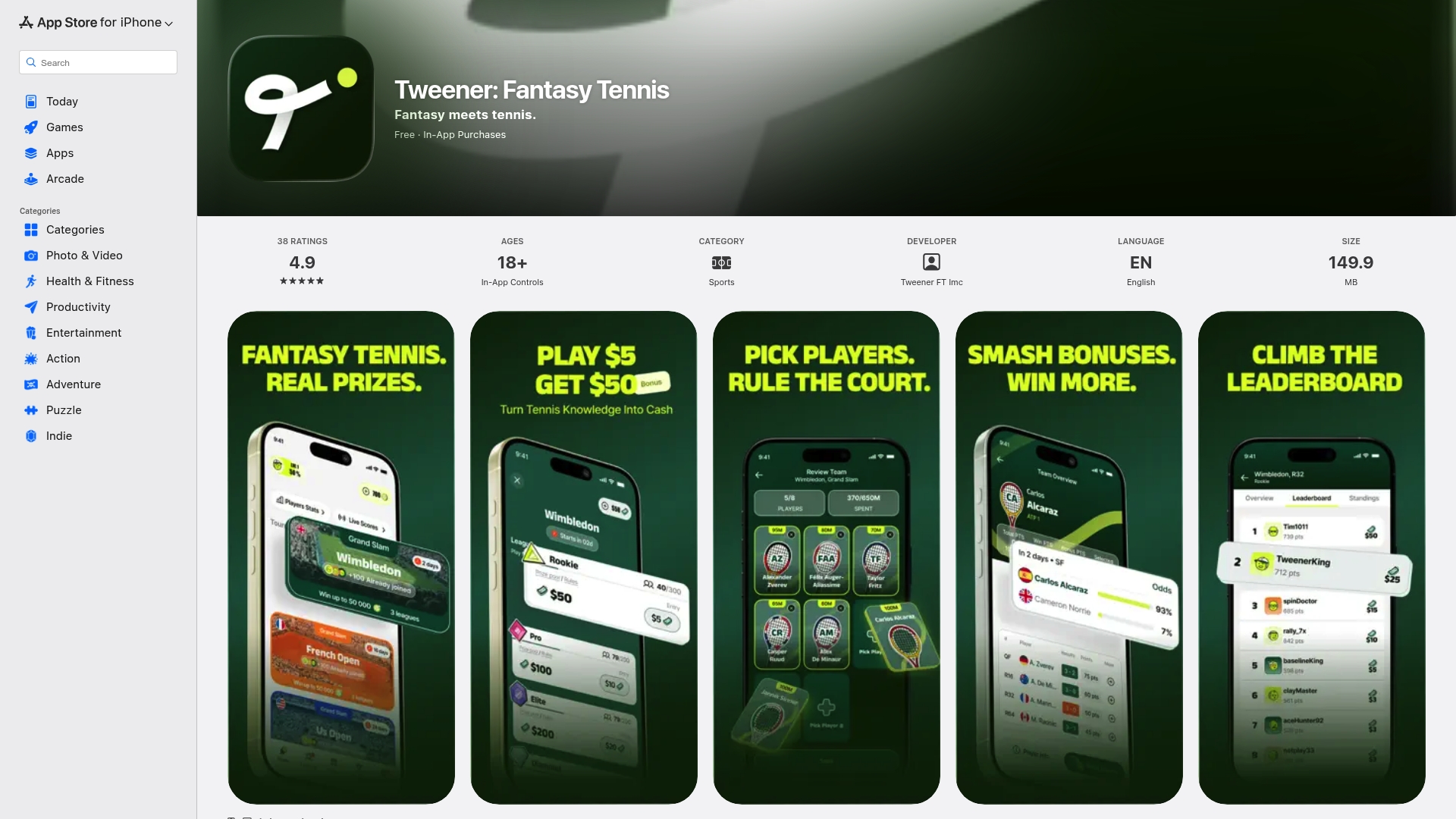
Free play uses virtual coins redeemable for rewards, letting you improve your skills and matchup instincts with zero risk before participating in paid contests. Tweener also offers a cash mode where users can enter paid contests for real payouts where legally permitted. Check local rules on real-money fantasy sports for your state before entering a paid league. Ready to build your first roster? Download the Tweener app and start drafting.
Sources
- ATP launches official fantasy game press release
- ATP launches official fantasy game in collaboration with Deltatre
- ATP Fantasy: Everything You Need to Know About the New Tennis Game - TennisNerd
FAQ
Where Can I Play ATP Fantasy?
You play through the official ATP Fantasy platform, accessible on desktop and mobile browsers without a separate app download. It's run in partnership with Deltatre and tied directly to live ATP Tour results.
Who Qualifies for the ATP Finals?
The top 8 ranked players qualify for the Nitto ATP Finals based on the PIF ATP Rankings. The top seven qualify directly, while the eighth spot can go to a Grand Slam winner ranked as low as 20th if one hasn't otherwise qualified.
How Does ATP Fantasy Tennis Scoring Work?
Points come from tournament progress and match category, plus bonuses and penalties for aces, double faults, straight-set wins, bagels, and upsets. The Bonus Ball chip doubles a chosen player's points for a given round, adding a layer of timing strategy.
Is There a Fantasy League for Tennis I Can Join With Friends?
Yes. ATP Fantasy offers private leagues where you compete directly against people you invite, alongside swing and global leaderboards. Tweener also runs private leagues capped at 9 players per Grand Slam tournament through Draft Mode and Pick'em Mode, giving you a year-round option beyond the official Finals swing.
What Is the Roster Budget in ATP Fantasy?
Every roster gets a 100-credit budget to fill 8 total slots: 6 starters and 2 alternates. Player prices are set by the Official Live PIF ATP Rankings, so top seeds consume a much larger share of your budget than lower-ranked picks.