

TL;DR:
- Fantasy contest finals are the decisive playoff phase where top teams compete under structured scoring rules to crown a champion.
- They operate mainly through bracket elimination or total points formats, each favoring different skills and strategies.
Fantasy contest finals are the decisive playoff phase where top-ranked teams compete under structured scoring rules to crown the champion. Understanding how finals work in fantasy contests separates players who reach the championship from those who win it. The format varies by sport and platform, but the core mechanics follow two main structures: bracket-style elimination and total points accumulation. Tennis fantasy contests add a third layer of complexity, because real tournament rounds move fast, roster rules shift, and a single player retirement can reshape your entire week. This guide breaks down every format, rule, and strategy you need to compete at the highest level.
How do fantasy contest finals formats work?
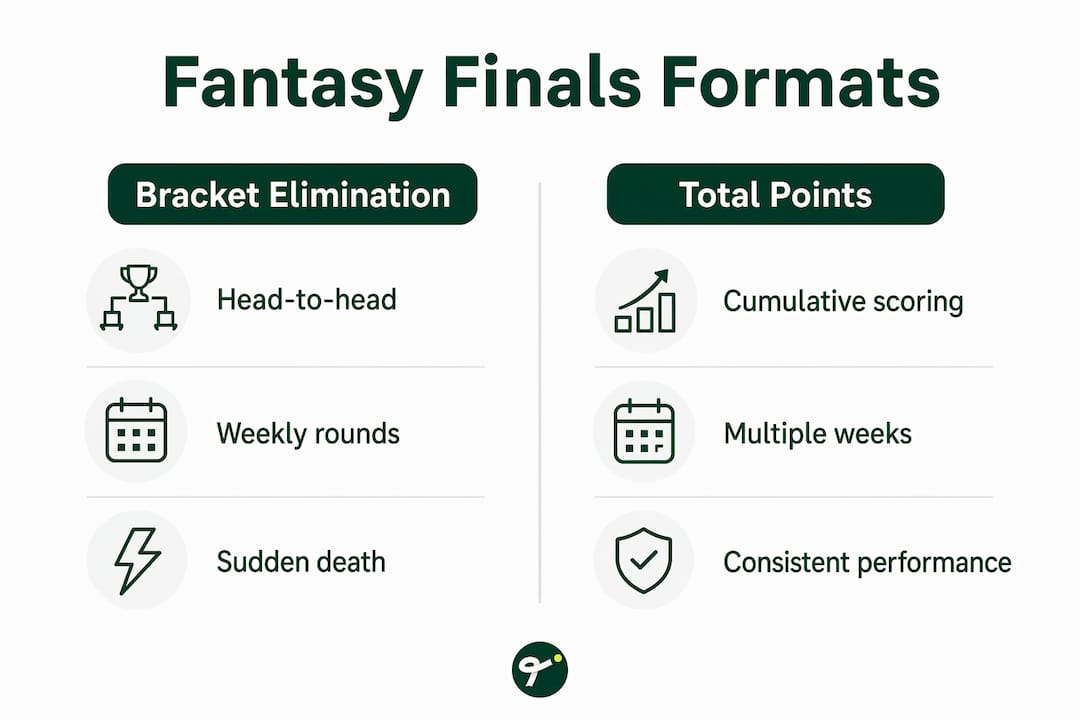
Fantasy contest finals operate under one of two primary structures, and the format you play in changes everything about how you prepare.
Bracket-style playoffs advance the top 4–6 teams from the regular season into head-to-head elimination rounds. Most fantasy leagues use a bracket format, with the championship typically held in the final week of the contest calendar. Seeding determines matchups, so finishing higher in the regular season earns you a favorable draw. One bad week ends your run, regardless of how dominant your season was.
Total points formats take a different approach. Teams compete by accumulating fantasy points over multiple weeks, with the highest cumulative total winning the championship. This format rewards roster consistency and reduces the luck factor that bracket play introduces. A team that scores steadily across three weeks beats a team that explodes in one week and collapses in another.
Which format rewards skill more?
Neither format is inherently more legitimate. Bracket play tests week-by-week adaptability, while total points tests sustained roster strength over a period. Bracket formats create drama and upsets. Total points formats produce more predictable outcomes, which is why analytically minded players often prefer them. Your preparation strategy must match the format your contest uses.
| Format | Structure | Key advantage | Main risk |
|---|---|---|---|
| Bracket elimination | Head-to-head rounds, single loss ends run | High drama, rewards peak performance | One bad week eliminates a dominant team |
| Total points | Cumulative score across all finals weeks | Rewards consistency, reduces luck | Less exciting, strong teams can coast |
The format also affects how aggressively you should manage your roster. In bracket play, you need to win this week, full stop. In total points, you can absorb a slow start and recover with a strong finish.
How do fantasy tennis finals work specifically?
Tennis fantasy contests adapt finals formats to the pace of real ATP and WTA tournaments, and the differences from football or basketball are significant.

Real tennis tournaments run on a daily schedule, with top players potentially competing every one to two days. Fantasy tennis finals mirror this pace. Scoring periods are shorter, often covering just one or two rounds of a Grand Slam or Masters event. Roster limits frequently double during playoff rounds to reflect the increased match frequency. A platform that allows three players per team in the regular season may expand that limit to six during finals. That expansion matters because more players means more scoring opportunities, but also more decisions to get right.
Fresh starts and transfer windows
One of the most interesting mechanics in tennis fantasy finals is the ability to start fresh from a specific tournament round. Fantasy knockout competitions allow players to build entirely new teams from a designated round, with unlimited transfers permitted until the first fixture of that round begins. In tennis terms, this means you could enter a contest at the Round of 32 with a clean slate, selecting the eight players you believe will advance deepest into the draw.
Key rules that typically apply during tennis fantasy finals:
- Roster expansion: Player limits increase to match the volume of daily matches.
- Transfer windows: Unlimited transfers are allowed before each round's deadline, then locked.
- Scoring resets: Some contests reset points at each new round, while others accumulate totals across the entire tournament.
- Retirement risk: A player who retires mid-match scores only for completed games, which can devastate a finals lineup built around one star.
Pro Tip: In tennis fantasy finals, always check the draw before finalizing your roster. A player in the "easy" half of the bracket has a higher floor than a top seed facing three consecutive top-10 opponents.
Understanding fantasy tournament formats before you enter a contest is the single fastest way to improve your results.
What strategies maximize success in fantasy finals?
Finals strategy requires a complete mindset shift from regular-season thinking. Every decision you made in weeks one through ten was evaluated partly on future value. In the finals, every decision is evaluated solely by championship week potential. A player you've held all season because of long-term upside gets dropped the moment a higher-floor option becomes available.
Here are the core strategic principles that separate finals winners from early exits:
-
Prioritize guaranteed matches. In tennis, players who have already qualified for the next round are confirmed starters. Advanced managers select players with guaranteed matches and high appearance counts during scoring periods. A player who appears in three matches scores more total points than a player who appears in one, even if that one performance is exceptional.
-
Focus on controllable variables. Lineup decisions and waiver pickups are within your control. Injuries, weather delays, and opponent form are not. Build your roster around what you can predict, then accept the rest.
-
Avoid panic rotation. The most common failure mode in finals is over-rotating the roster after one bad day. The lineup that got you to the championship is probably still good. Small, targeted adjustments beat wholesale changes.
-
Balance floor and ceiling. A player with a high floor scores reliably across every match. A player with a high ceiling might score big once and disappear. In bracket play, you sometimes need the ceiling. In total points, the floor wins more often.
-
Use probabilistic thinking. Favoring rosters that maximize match opportunities while accepting uncontrollable variables is the defining trait of championship-level managers. Think in terms of expected value, not best-case scenarios.
Pro Tip: In tennis fantasy finals, target players in the bottom half of the draw if the top half is loaded with elite matchups. A player who reaches the semifinals through a softer path still scores the same points as one who survives a brutal bracket.
Building a winning fantasy tennis lineup for finals week starts with the draw sheet, not the rankings.
How are ties resolved in fantasy finals?
Ties in fantasy finals are rarer than most players expect, but they happen, and the resolution method can feel arbitrary if you don't know the rules in advance.
In bracket-style playoffs, tiebreakers commonly use bench points, seed advantage, or cumulative scores to resolve a deadlocked matchup. Bench points are the most widely used tiebreaker. If your starting lineup ties your opponent's, the platform adds up the points scored by your bench players and awards the win to whoever has the higher bench total. This makes bench management a real strategic consideration, not an afterthought.
In total points formats, ties are resolved by comparing scores from a specific week, usually the final week of the contest. If that is still tied, most platforms fall back to regular-season record or head-to-head results.
Common tiebreaker methods across fantasy finals formats:
- Bench points: Total points scored by non-starting players during the finals period.
- Seed advantage: The higher-seeded team wins if scores are equal, rewarding regular-season performance.
- Head-to-head record: Used in total points formats when cumulative scores are identical.
- Cumulative season score: Some platforms use total points scored across the entire season, not just the finals.
For tennis fantasy specifically, tie-breaker rules in fantasy leagues often account for the compressed timeline of a tournament. A two-day scoring window leaves little room for recovery, so knowing your platform's tiebreaker before the round begins is not optional. Check the rules section before you lock your roster.
Key Takeaways
Fantasy contest finals reward players who understand the format, manage controllable variables, and prioritize match volume over star power, especially in fast-paced tennis tournaments.
| Point | Details |
|---|---|
| Two core formats | Bracket elimination rewards peak performance; total points rewards sustained consistency. |
| Tennis finals move fast | Scoring periods are short, roster limits expand, and draw position shapes your entire strategy. |
| Prioritize match volume | Players with guaranteed appearances score more total points than one-match stars. |
| Avoid panic changes | Over-rotating a finals roster is the most common reason strong teams lose the championship. |
| Know your tiebreaker | Bench points and seed advantage resolve most ties; check the rules before locking your lineup. |
Why tennis fantasy finals test you differently
The first time I played through a Grand Slam fantasy finals, I treated it like a regular-season week. I held my top-ranked players, ignored the draw, and got eliminated because two of my picks retired in the second round. That loss taught me something no strategy guide had spelled out clearly: tennis fantasy finals are not just a harder version of the regular season. They are a different game entirely.
The compressed schedule forces decisions that football or basketball fantasy never demands. You might need to replace a player between the morning and afternoon sessions of the same day. The draw matters more than the ranking. A player seeded 12th who faces three qualifiers in a row is more valuable than a top-5 seed in a brutal quarter of the bracket.
The mental shift I had to make was from "who is the best player?" to "who plays the most matches against the weakest opponents?" That is probabilistic thinking applied to a sport where a single retirement can end your championship run before the quarterfinals. The players who win tennis fantasy finals consistently are not the ones who pick Novak Djokovic or Iga Swiatek every week. They are the ones who read the draw, understand surface matchups, and build rosters that survive the chaos of a real tournament.
The prize structures in fantasy tennis also reward this kind of thinking. Platforms that pay out based on final standings, not just the champion, give you more reason to build a resilient roster than a volatile one.
— Nathan
Tweener brings fantasy tennis finals to life
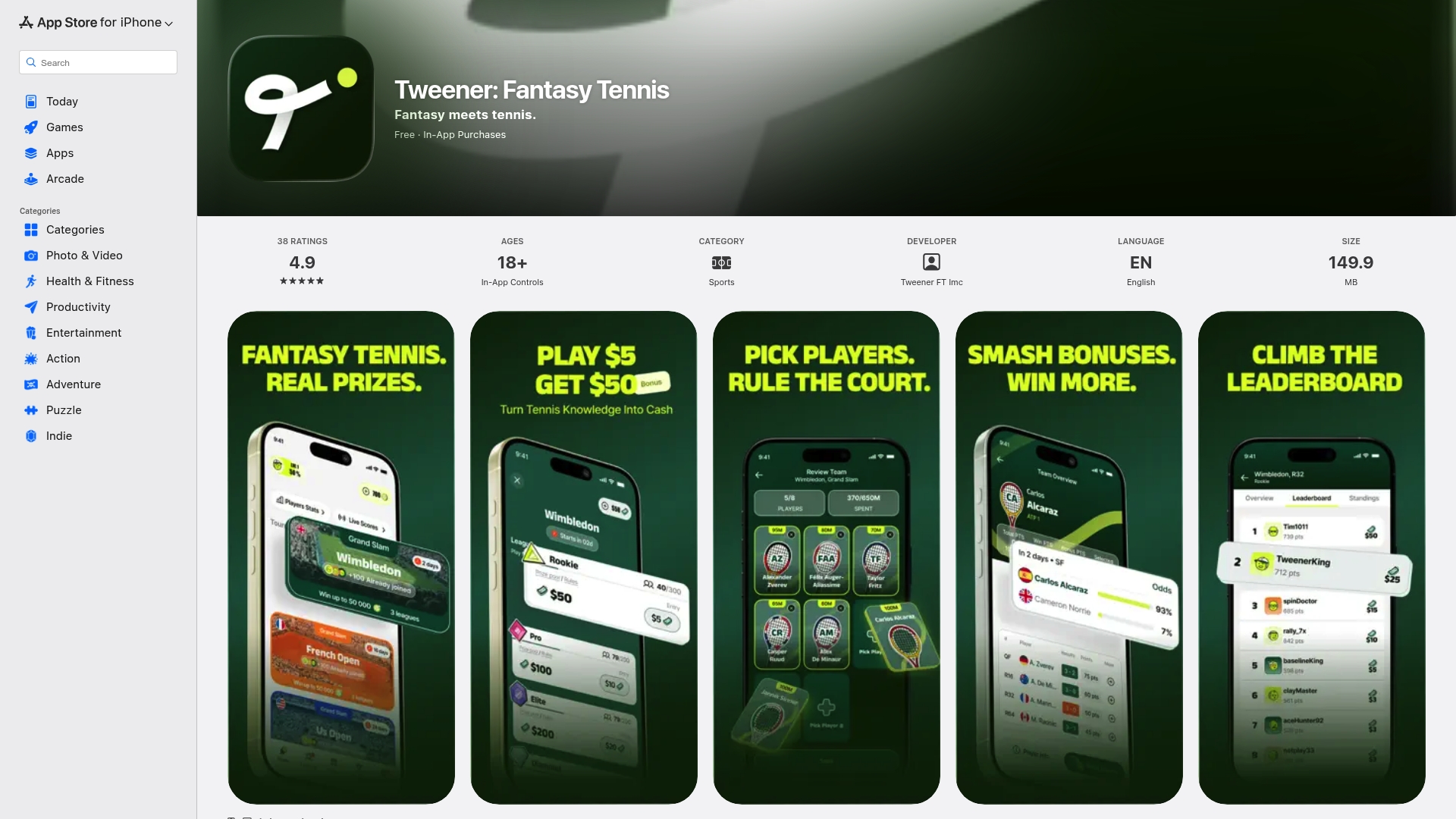
Tweener is built specifically for the kind of analytical, draw-aware fantasy tennis play this article describes. The platform lets you compete in public leagues or private leagues with up to 9 friends across real ATP and WTA tournaments, including Grand Slams and Masters events. You pick real players, earn points from live match results, and compete through every round of the tournament. The contest formats on Tweener are designed around the actual pace of tennis, so the finals mechanics you just read about apply directly to how the app works. Free-to-play with virtual coins or real-money contests where permitted. If you want to put your finals strategy to the test, download Tweener and enter your next tournament.
FAQ
What is the most common fantasy finals format?
Bracket-style elimination is the most widely used format, advancing the top 4–6 teams from the regular season into head-to-head championship rounds.
How do tennis fantasy finals differ from football fantasy finals?
Tennis fantasy finals use shorter scoring periods tied to real tournament rounds, expanded roster limits, and draw-based strategy rather than weekly matchup scheduling.
What happens if two teams tie in a fantasy finals matchup?
Most platforms resolve ties using bench points as the primary tiebreaker, with seed advantage or cumulative season score as secondary methods.
How many players can you use in tennis fantasy finals?
Roster limits typically double during tennis fantasy playoff rounds, often expanding from three players to six, to reflect the increased frequency of daily matches.
What is the biggest strategic mistake in fantasy finals?
Over-rotating the roster after one bad day is the most common failure. The lineup that reached the finals is usually still strong enough to win with targeted adjustments, not wholesale changes.