

TL;DR:
- Understanding tie-breaker rules is crucial for fantasy tennis success, as they determine playoff outcomes in close finishes. Different platforms like Yahoo and ESPN use varying criteria, such as total season points or head-to-head results, which influence strategic lineup decisions. Mastering your league's specific tie-breaker rules allows you to optimize roster management and increase your chances of winning titles.
You've played a full tournament's worth of matches, your fantasy roster has delivered, and then you glance at the standings and see it: a dead tie. Understanding how tie-breakers work in fantasy leagues is not just helpful at that moment — it's the difference between advancing to the fantasy playoffs and watching from the outside. Most tennis fantasy players spend all their energy on player selection and zero time on the rules that actually decide close finishes. That's a gap you can close right now.
Table of Contents
- What are tie-breakers in fantasy leagues and why do they matter?
- How major fantasy leagues handle tie-breakers: key examples and lessons
- Strategic implications of tie-breakers for fantasy tennis players
- Common tie-breaker criteria used in tennis fantasy leagues compared
- How to check and use your fantasy league's specific tie-breaker rules
- Why tie-breaker mastery is the untapped edge for fantasy tennis champions
- How Tweener helps you win with tie-breakers in fantasy tennis
- Frequently asked questions
Key Takeaways
| Point | Details |
|---|---|
| Tie-breaker basics | Tie-breakers resolve ties by comparing scores or records using specific criteria to rank teams. |
| Rule variations matter | Different platforms and leagues use varied tie-break rules, so always check your league’s settings. |
| Consistency counts | Tie-breakers often reward steady weekly scoring and head-to-head wins over one-time big scores. |
| Strategic advantage | Leveraging tie-break knowledge can be a crucial edge in fantasy tennis leagues. |
| Use Tweener tools | Tweener’s advanced stats and private leagues help you optimize strategy around tie-breakers. |
What are tie-breakers in fantasy leagues and why do they matter?
A tiebreaker is any method used to determine a winner or rank participants when scores are equal. In fantasy leagues, that means a predetermined set of rules kicks in automatically the moment two or more teams finish with the same record or point total. There's no coin flip, no gut feeling — just the criteria your league established at the start of the season.
Ties happen more often than you'd think, especially in shorter formats. In tennis fantasy specifically, a Grand Slam tournament might span two weeks with a limited player pool. If two managers draft similarly ranked ATP or WTA players and those players perform at similar levels, the final scores can land very close together. Without a clear resolution method, the system breaks down and disputes follow.
Good fantasy team management basics start with knowing not just how to score points, but how your league resolves the moments when scoring isn't enough. Here are the most common scenarios where ties surface:
- End-of-season standings: Two teams finish with identical win-loss records, competing for the final playoff spot.
- Weekly matchup deadlocks: Head-to-head formats where both managers score the exact same points in a given week.
- Playoff seeding ties: Teams with equal records need to be ranked before brackets are set.
- Elimination round ties: Two teams post identical scores in a playoff match, and advancement must be determined.
Resolving ties fairly protects league integrity. If the rules are vague or unknown to participants, a disputed outcome poisons the entire league experience. Understanding the method before it applies is what separates informed players from frustrated ones.
How major fantasy leagues handle tie-breakers: key examples and lessons
Different platforms take genuinely different approaches, and knowing the logic behind each one gives you a real advantage when you're managing a fantasy tennis team.
Yahoo's approach runs on a total fantasy points first model — comparing cumulative season points when two teams have identical records. If that doesn't break the tie, Yahoo works backward week by week, comparing the most recent matchup, then the one before that, and so on until one team pulls ahead. This system specifically rewards teams that scored well late in the season.
ESPN's approach leans more heavily on head-to-head results. When teams are tied in the standings, the platform first looks at how those two specific teams performed against each other during the season. If one team beat the other in their direct matchup, that game becomes the deciding factor. This makes every individual matchup feel meaningful, even mid-season.
Here's a side-by-side look at how these approaches compare:
| Platform | Primary tie-breaker | Secondary tie-breaker | Commissioner override? |
|---|---|---|---|
| Yahoo | Total season points | Most recent week, backward | Yes |
| ESPN | Head-to-head record | Total points | Yes |
| Custom leagues | Varies by setup | Varies by setup | Always |
One detail that catches players off guard: commissioners can override default settings, replacing platform defaults with entirely custom rules. Your private Grand Slam league may have been set up years ago with a completely non-standard hierarchy that nobody remembered to mention.
A few key facts to keep in mind as you review fantasy league management tips:
- Regular season tie-breakers and playoff tie-breakers are often different rules entirely.
- Some leagues add a "fewest losses" step before comparing points.
- Certain tennis-focused formats use sets won or games won as secondary criteria, pulling directly from match statistics.
- Head-to-head comparisons only matter if those two tied teams actually played each other during the season.
Brushing up on fantasy tennis terminology before your season starts means you'll recognize these criteria when you see them in league settings rather than scrambling to decode them in Week 12.
Pro Tip: Log into your league settings right now, before you need to know this information. Screenshot the tie-breaker rules and save them somewhere accessible. You'll thank yourself later.
Strategic implications of tie-breakers for fantasy tennis players
Once you understand how tie-breakers function, they stop being a passive threat and start being something you can actually plan around. The rules don't just resolve close games — they shape how smart managers build rosters and set lineups all season long.

Under Yahoo's backward week model, late-season performance carries disproportionate weight. If your tie-breaker compares the most recent week first, then Week 11 matters more than Week 3 for resolution purposes. This is a genuine structural incentive to stay aggressive late in the season even when your playoff spot feels locked up.
The most common strategic mistake is roster-building for peaks. A fantasy manager who loads up on volatile, high-ceiling players might rack up impressive single-week totals but score near zero in others. Under any points-based tie-breaker system, those zeros are devastating. A player like a mid-ranked WTA competitor who consistently reaches third rounds at multiple Grand Slams can outscore an inconsistent Top 5 player across a full season when tie-breakers are counted.
The following bullet points outline the strategic moves that tie-break awareness makes possible:
- Prioritize consistent scorers. Players who reliably reach the second and third rounds of every tournament are more valuable than boom-or-bust selections when your tie-breaker compares weekly points.
- Win the direct matchup. If your league uses head-to-head as the primary tie-breaker, the match against your closest rival in the standings deserves extra lineup attention. This is when you start your safest, most reliable players instead of taking risks.
- Don't coast in final weeks. Under backward-looking models, finishing the season strongly has a compounding effect on your tie-break position.
- Track your opponent's scoring patterns. If you know a rival consistently scores big in certain weeks, you can anticipate when a tie-break comparison might work against you.
Studying advanced fantasy strategies shows how real match results directly affect your standing under tie-break rules. It's not abstract theory — every Wimbledon quarterfinal run from a player on your roster is building your tie-break cushion in real time.
Pro Tip: Track opponent scoring trends weekly using your platform's scoring history. If you're near a tie-break situation, you'll know exactly how much your lineup needs to deliver before the week ends.
Common tie-breaker criteria used in tennis fantasy leagues compared
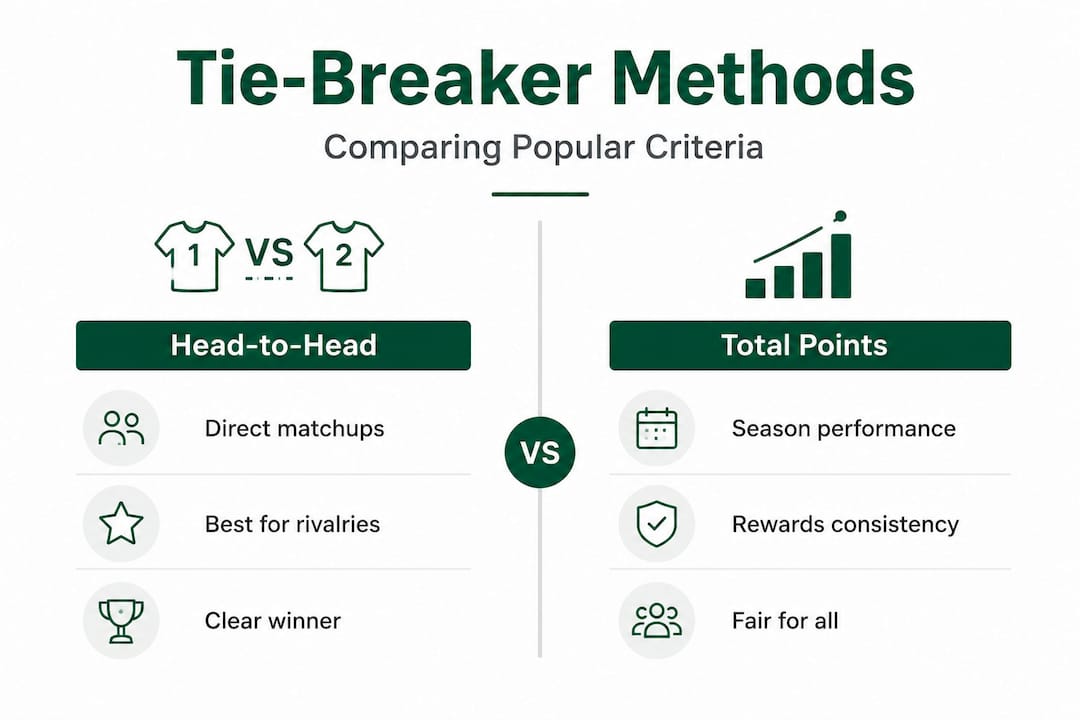
Most fantasy platforms choose from the same core set of criteria. The order in which they're applied makes all the difference. Tie-breakers often include head-to-head records, total wins, and total points to rank tied teams, but the hierarchy varies by platform and league setup.
Here's the typical order of criteria used in tennis-focused fantasy formats:
- Head-to-head record. Did one tied team beat the other during the season? If yes, they advance. This is the most common first step.
- Total points scored. The team that accumulated more points across the full season wins the tie.
- Most recent week comparison. Points from the last played week are compared, then the week before, and so on.
- Fewest losses. Sometimes used when teams have identical wins but one has a loss that doesn't show in the win column due to format structure.
- Opponent's average score. A less common but increasingly used method that rewards beating stronger competition.
Here's how those criteria stack up in practice:
| Tie-breaker criterion | Strength | Weakness | Best for |
|---|---|---|---|
| Head-to-head record | Rewards direct competition | Irrelevant if teams never met | Head-to-head formats |
| Total season points | Simple, transparent | Ignores scheduling differences | Points-based leagues |
| Week-by-week backward | Rewards late-season form | Ignores strong early starts | Season-long formats |
| Fewest losses | Punishes bad weeks clearly | Duplicates win-loss info | Mixed-format leagues |
| Opponent strength | Accounts for schedule difficulty | Complex to calculate | Advanced leagues |
Understanding tennis leagues explained helps you see why head-to-head tends to dominate as a primary step in tennis formats. Tennis is inherently a sport of direct competition — one player versus another — and that logic transfers naturally into how fantasy managers settle disputes.
How to check and use your fantasy league's specific tie-breaker rules
Knowing the theory is one thing. Finding the actual rules that govern your league is where many players drop the ball. Most platforms bury tie-breaker settings inside league administration menus rather than surfacing them prominently during setup or gameplay.
Always verify your league-specific rules because commissioners frequently override platform defaults, sometimes years into the league's history without notifying all members.
Here's exactly how to locate and apply your rules:
- Find the league constitution or settings page. Most platforms have a "League Settings" or "Scoring and Rules" section accessible from your league's main menu. The tie-breaker hierarchy is usually listed there.
- Ask your commissioner directly. If the settings page is unclear or seems generic, message the league manager. Custom rules are often documented in a private message thread or group chat from the league's founding.
- Distinguish between regular season and playoff rules. These are frequently different. A total points tie-breaker during the regular season may become a head-to-head comparison during playoffs. Do not assume one applies to the other.
- Look for multi-step criteria. If your league lists three or four tie-breaker criteria in order, know all of them. The second and third steps only come into play if the first one doesn't resolve the tie, but they matter.
- Prepare before playoffs. Two weeks before your playoff bracket sets, review the current standings and calculate who you could be tied with. Know the scenario before it becomes urgent.
Reviewing the fantasy tennis game rules on your platform before the season advances is the most practical step you can take right now. A five-minute check at the start of a tournament could save you a playoff spot at the end of it.
Why tie-breaker mastery is the untapped edge for fantasy tennis champions
Most fantasy tennis players study matchups, track ATP and WTA rankings, and analyze surface statistics. Very few of them study tie-breaker rules with the same seriousness. That gap is a real competitive advantage for the ones who do.
Here's the uncomfortable truth: you can build a genuinely impressive fantasy roster, win the majority of your weekly matchups, and still lose a playoff spot because you didn't understand how the final tie-break comparison worked. It's not unfair — it's the rules. But losing that way, when the information was available all along, is entirely preventable.
Yahoo's tiebreaker system rewards consistent weekly production over occasional spikes, and that design philosophy reflects something deeper about what good fantasy management looks like. It's not about the one week your roster exploded for a tournament high. It's about being reliably good week after week, across the whole run. That aligns precisely with how real tennis champions operate — Novak Djokovic didn't build his career on one unbelievable Wimbledon run. He built it on relentless consistency across every surface, every year.
The players who tend to dominate private fantasy leagues — especially the serious Grand Slam leagues where the competition is tight — are the ones who treat tie-breaker awareness as a core skill, not a footnote. They're tracking not just their own score but their rival's score, the head-to-head history between their teams, and the late-season trajectory of their roster's weekly output.
This is where Tweener's model resonates with us. We built a platform for people who take tennis seriously enough to compete, not just watch. Skill matters more than luck on Tweener, and knowing your rewards for tie-break strategy makes that skill tangible. The players who study these mechanics are the ones still competing when the final matches matter most.
How Tweener helps you win with tie-breakers in fantasy tennis
If you're playing fantasy tennis seriously, you need a platform built to match that level of commitment. Tweener is designed specifically for tennis fans who want more than a casual pick-and-forget experience.
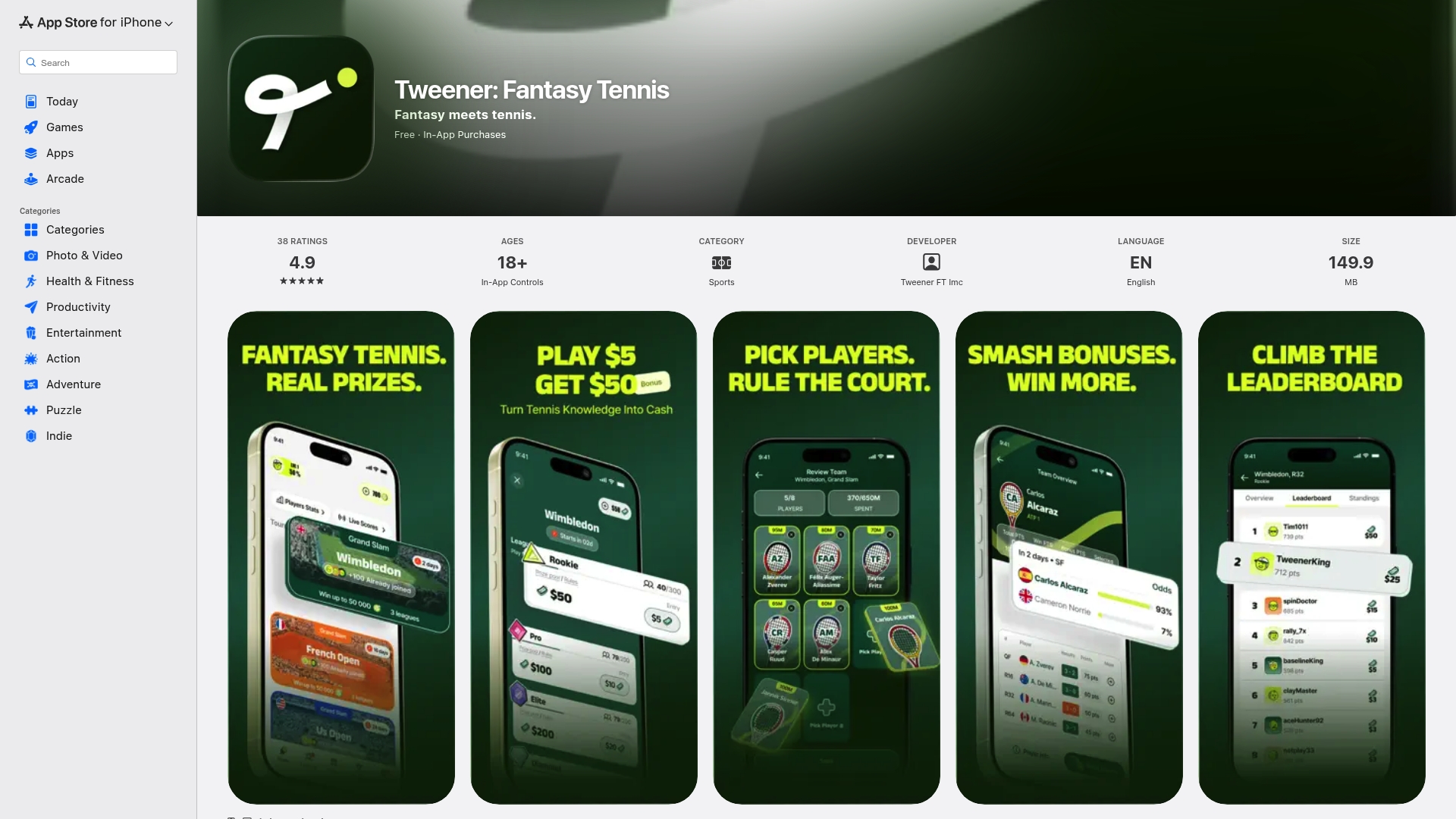
On Tweener, you can create private leagues for specific Grand Slam tournaments, where head-to-head matchups and consistent weekly scoring are exactly the kind of strategic elements that decide champions. The platform tracks real ATP and WTA match results in real time, giving you the scoring data you need to monitor tie-break scenarios as they develop. You can manage your lineup on the go through the Tweener mobile app, so you're never caught flat-footed when a key player withdrawal or upset changes your weekly standing. Whether you're competing in free coin leagues or cash contests, Tweener gives you the tools to turn tie-break knowledge into actual wins.
Frequently asked questions
What is a tie-breaker in fantasy tennis leagues?
A tie-breaker is a rule used to decide a winner when two or more fantasy teams finish with the same score or record. Any method that determines a winner when participants are tied qualifies as a tiebreaker.
Do tie-breaker rules vary between fantasy tennis platforms?
Yes, rules differ significantly by platform and can be further customized by league commissioners. Always check your league's settings to know the exact criteria that apply to your competition.
How does Yahoo's fantasy football tie-breaker system work and is it relevant for tennis?
Yahoo compares total season points first, then works backward week by week comparing most recent scores until the tie breaks. This logic rewards consistent weekly scoring and is increasingly adopted in fantasy tennis formats.
What strategies help me avoid losing in tie-breaker situations?
Focus on consistent weekly scoring and winning key head-to-head matchups directly against teams you're likely to tie with, while knowing your league's specific criteria before you need them.
Where can I find the tie-breaker rules for my fantasy tennis league?
Check your platform's league settings or constitution page, and ask your commissioner if anything is unclear. Commissioners often override defaults, so never assume the platform's standard rules apply to your specific league.