

For Masters 1000 weeks, load your roster with one or two elite surface specialists, drop your bonus ball on your highest-priced starter, and keep your biggest chips in reserve for the Slams. These events pay out bigger points than any 250 or 500 on the calendar, so the winning move is concentrating value, not spreading it thin. Lock your top two picks tonight, set your alternates, and treat everything else as adjustment.
TL;DR:
- Focusing on two elite surface specialists and the highest-priced starter maximizes points at Masters 1000 events, as they reward deep runs more than smaller tournaments.
- Recent surface-specific form and venue conditions, such as altitude or slow courts, should heavily influence player selection over overall rankings.
- Building your roster with a majority of the budget on top players, complemented by value picks with favorable draws, aligns with the high reward for deep runs in Masters events.
- Placing your bonus ball on the player with the best surface form and draw quality, rather than the most expensive, increases overall ceiling potential.
- Testing roster strategies in private leagues using free virtual coins helps validate whether a top-heavy or balanced approach yields better results before risking cash.
Table of Contents
- Why Masters 1000 Fantasy Strategy Needs a Different Playbook
- Building Your Masters 1000 Roster: Budget, Top-Heavy Rules, and Bonus Ball
- Which Players Should You Actually Pick?
- When Should You Use Your Chips at a Masters 1000?
- What Testing These Rules in Tweener Actually Taught Us
- The Editorial Take: Skip the Generic Advice
- Try Tweener for Your Next Masters 1000 Lineup
- Sources
- FAQ
Why Masters 1000 Fantasy Strategy Needs a Different Playbook
A 250-level event and a Masters 1000 look similar on a bracket sheet. They are not similar in fantasy terms, and treating them the same is the single most common mistake players make.
The field strength alone changes the math. Masters 1000 draws pack in nearly every top-20 player, which means the ceiling on points goes way up when you nail a pick, but so does the downside when your ace crashes out to a floater in round two. ATP Fantasy's scoring structure rewards deep runs at Masters events far more heavily than at smaller tournaments, which is exactly why a top-heavy build makes sense here, unlike during a random March 250.
Surface matters more than most managers give it credit for. A player who dominated on the fast hard courts of Indian Wells can look completely different two months later on European clay, and vice versa. Build your roster around recent surface-specific form, not season-long ranking.
Venue transitions inside the same swing trip people up constantly. Dominic Thiem flagged this exact trap heading into the Madrid to Rome turn: Madrid sits at altitude and plays fast, while Rome sits at sea level and plays noticeably slower. A player who torched the field in Madrid can look pedestrian a week later in Rome, and Thiem's own column warns against assuming that form simply carries over.
That altitude effect isn't cosmetic. Thinner air at elevation lets the ball travel faster and bounce lower, which favors big servers and flat hitters. Drop back to sea level and the same players lose some of that free advantage, while grinders and heavy topspin players who struggled in Madrid often bounce back in Rome.
All of this changes how much risk you should be taking on any given week.
- Chase upside when the draw is loaded with in-form specialists on their best surface and your budget allows two elite picks.
- Secure your floor in weeks with unpredictable surface transitions, injury news, or a shallow field where one bad round wrecks your total.
- Split the difference by pairing one proven elite with one lower-priced surface specialist who has a favorable early draw.
Get this surface and venue read wrong and you're not just picking a weaker player. You're misreading the entire risk profile of the week.
Building Your Masters 1000 Roster: Budget, Top-Heavy Rules, and Bonus Ball
Roster construction at a Masters 1000 comes down to three decisions: how you split your budget, when to go top-heavy, and where you place your bonus ball.
Start with the budget split. A workable baseline is putting a majority of your cap into your top two picks, with the remainder spread across three or four value plays who have a realistic path to the quarterfinals. That's a meaningfully heavier top-end allocation than you'd run in a 500-level event, because Masters 1000 scoring rewards deep runs from elite players at a rate the smaller events simply can't match.
- Check the draw before locking your top pick. A number one seed with a brutal quarter is a different asset than the same player with a soft path to the semis.
- Go double-elite only when both have clean draws and current-surface form. If either shows shaky recent results, pair one elite with a cheaper, in-form specialist instead.
- Place your bonus ball on your highest-conviction starter, not your most expensive one. Price and true form don't always match, and the bonus multiplier should go where the ceiling actually is.
- Set a fallback bonus target before the draw locks. If your first choice withdraws or loses early, you want your second option already decided, not chosen in a panic.
- Order your alternates by draw quality, not name recognition. A lower-ranked player with a favorable path outscores a bigger name walking into a murderer's row.
Pro Tip: Build your alternates list the night before the draw, not after. Once seedings and bracket positions are public, you're reacting under time pressure, and rushed swaps are where most rosters lose their edge.
During dual-event weeks, when two tournaments run simultaneously, resist the urge to load every starter from a single draw. A single early upset in that bracket can wreck your whole week. Splitting your bench across both events gives you a hedge if one tournament runs hot with upsets, which lines up with what fantasy strategy discussions around the
.If you want a deeper walkthrough on translating a budget split into an actual lineup, this guide to building winning tennis lineups breaks the process down round by round.
Which Players Should You Actually Pick?
Ranking alone tells you almost nothing about who's going to score points this week. What matters is recent form on this specific surface, the shape of the draw, and a handful of underlying stats most casual managers ignore.
Prioritize surface specialists over generalists whenever the calendar shifts. A player ranked 15 with a strong clay résumé is often a better Masters 1000 clay-swing pick than a top-5 hard-court specialist who's never found his footing on the red dirt. Cross-check recent match results against the surface, not just the last four weeks overall.
Serve and return numbers separate the pretenders from the real threats. Look specifically at the ace-to-double-fault ratio rather than raw ace counts, since that differential is a more reliable signal of net serve value in fantasy scoring than a player who racks up aces but hands back just as many free points on double faults.
A few additional checks separate a sharp pick from a lucky guess:
- Head-to-head history against likely early-round opponents, especially if there's a recurring stylistic matchup problem.
- Recent match load, since a player who just played three-set battles in back-to-back weeks may be running on fumes by round three.
- Draw quality, weighing not just the seed number but who's actually sitting in that quarter.
- Upset exposure, watching for seeded players drawn against a dangerous qualifier or a local wild card riding home crowd energy.
That upset mechanic deserves its own attention. Masters 1000 qualifying rounds are stacked with players who barely missed direct entry, and a hot qualifier facing a seed in round one or two is exactly the spot where fantasy scoring swings hardest. A cheap, in-form qualifier who wins two matches can outscore a stagnant top-10 seed at a fraction of the roster cost.
Sleepers hide in predictable places if you know where to look. Scout players returning from injury who are cheap because the system hasn't caught up to their form yet, and watch qualifying rounds closely rather than only checking the main draw once it's set. For a structured way to build that watchlist before the field locks, these tennis prediction strategies walk through the exact signals worth tracking.
When Should You Use Your Chips at a Masters 1000?
Chips are where good roster planning either pays off or gets wasted, and the timing matters as much as the pick itself.
Three chips do most of the heavy lifting across a season. Triple Bounce multiplies a starter's points, usually for a single match or round, and works best when you're highly confident in a deep run. Alternates let you swap out an underperforming or eliminated player mid-event without burning a full transfer, which is exactly what you want during a chaotic dual-event week. Swing Switch lets you pivot your roster shape as the tour moves between surfaces, which matters enormously given how differently players perform from Madrid to Rome to Roland Garros.
- Save Triple Bounce for the Slams whenever possible. The point ceiling at a Grand Slam is high enough that the multiplier effect dwarfs what you'd gain using it mid-Masters, a principle backed by ATP Fantasy strategy guidance around saving your biggest multiplier for the biggest stage.
- Deploy Alternates the moment a starter's draw sours, whether through injury news, a brutal seed, or an early three-set slog that signals fatigue.
- Use Swing Switch at the exact surface turn, not two weeks late once everyone else has already adjusted their roster.
Pro Tip: If you're torn between spending a chip now or holding it, ask whether the same chip would do more damage in your opponent's roster at a Slam. If yes, hold it.
A good chip week looks like swapping out an early-round loser through Alternates before the next round locks. A poor one looks like burning Triple Bounce on a solid but unspectacular round-of-16 win, only to have nothing left when that same player makes a Slam final two months later. For more on how the calendar itself should shape these calls, see this breakdown of tournament scheduling as a fantasy weapon.

What Testing These Rules in Tweener Actually Taught Us
Reading strategy is one thing. Watching it hold up, or fall apart, across a live tournament is another.
Running similar rosters through private leagues turned a lot of theory into something testable. You can set up a private league for a single Masters 1000, build two different roster shapes side by side using virtual coins in free mode, and see within a single tournament which approach actually scores.
A few things stood out:
- Top-heavy elite plus a careful bonus-ball placement consistently outscored balanced five-player spreads across clay-swing testing, echoing the point-ceiling logic Masters 1000 scoring is built around.
- The surprise wasn't the winner, it was the margin. A single well-timed bonus ball on the right starter, rather than the priciest one, often made the difference between a mid-pack finish and a league win.
- Dual-event weeks punished concentrated rosters harder than expected, reinforcing the case for splitting starters across simultaneous draws rather than stacking one bracket.
- Cash mode is worth trying only after a free-mode dry run, since testing a top-heavy build against friends first costs nothing but confirms whether the strategy fits your read on the field.
None of this replaces watching the draw yourself. But running the numbers in a live league, instead of just theorizing about them, is what separates a plan that sounds right from one that actually scores.
The Editorial Take: Skip the Generic Advice
Most fantasy tennis content treats every event the same, which is exactly backwards. A Masters 1000 rewards concentrated conviction, not the balanced-roster caution that works fine at a 250. That's the single biggest thing conventional advice gets wrong.
The overrated piece of the puzzle is ranking. Managers lean on it because it's easy, but a ranking number can't tell you that a player just switched from hard courts to clay, or that Madrid's altitude flattered a serve that Rome will expose. Thiem's surface warning matters more than any seed number.
What should you prioritize first? Draw quality and surface form, in that order, before you even glance at price. Lock your bonus ball on conviction, not cost. And build the discipline to hold your biggest chip for the moment it actually pays off, which is almost never mid-Masters.
— Nathan
Try Tweener for Your Next Masters 1000 Lineup
There are platforms that give you a live testing ground for every rule in this guide, without waiting for a Slam to find out if your read on a surface swing actually holds up.
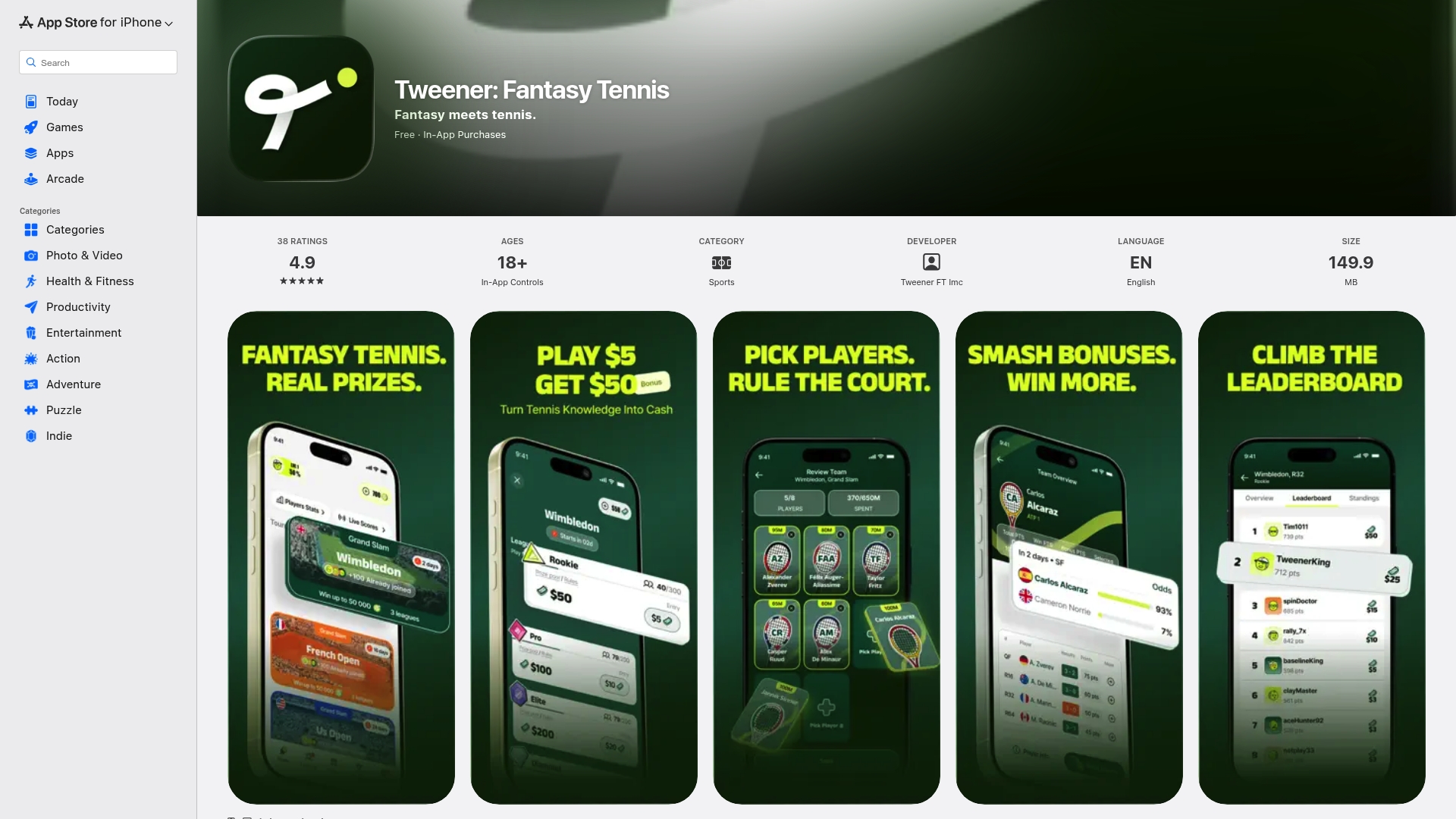
The features map directly onto the strategy: live scoring shows you in real time whether your bonus-ball call was right, chip modes let you practice Alternates and Swing Switch timing without real consequences, and private leagues let you run a head-to-head test against up to nine friends across a single tournament. Set up a private league for the next Masters 1000, build two roster shapes side by side using free-mode coins, and compare results before you ever touch cash mode. It's the fastest way to find out whether a top-heavy elite build actually beats a balanced one on the surface you're watching. Once you've validated a shape you trust, head to Tweener and set your first league before the draw locks.
Sources
- Dominic Thiem’s Tips: Jodar's rise, why keep Tsitsipas in ATP Fantasy | ATP Tour | Tennis
- Tennisnerd
FAQ
What Makes Masters 1000 Fantasy Strategy Different From Regular Weeks?
Masters 1000 events pack stronger fields and pay out higher points for deep runs, which justifies a top-heavy roster instead of the balanced approach that works at smaller tournaments.
Should I Trust a Player's Form From the Previous Tournament?
Only if the surface and venue match closely. Thiem's own warning about Madrid's altitude versus Rome's slower, sea-level courts shows how quickly form can fail to carry over between back-to-back events.
When Should I Use My Biggest Fantasy Chip?
Save your highest-impact chip, like Triple Bounce, for the Grand Slams whenever possible, since the point ceiling there makes the multiplier far more valuable than using it mid-Masters.
How Do I Test a Masters 1000 Strategy Without Risking Money?
Set up a private league in Tweener using free-mode virtual coins, run two different roster builds against friends, and compare results before committing to cash mode.
Where Should I Place My Bonus Ball?
Place it on your highest-conviction starter based on draw quality and surface form, not automatically on your most expensive player, since price and true scoring ceiling don't always match.