

Six repeatable tactics win WTA fantasy contests: lock your picks with real intent instead of habit, spread selections across draw quarters, filter by recent surface form rather than ranking, mix safe anchors with high-upside attackers, manage your starters and alternates like a roster, and track field-wide ownership to find contrarian value. Each one targets a specific weakness in how casual players build lineups.
Lock timing matters because points only start accumulating once a player is locked, so locking too early or too late costs real production. Quarter spread matters because it protects your semifinal exposure if one section of the draw implodes. Surface-form filters matter because WTA results swing harder on recent form than career rankings do. Anchors versus attackers balances a lineup so one upset doesn't sink your week. Alternate management matters because withdrawals happen constantly in a physical sport. And ownership awareness matters because beating a crowded field requires picks the crowd isn't making.
- Lock with intent, not habit
- Spread picks across draw quarters
- Filter by recent surface form
- Balance anchors with attackers
- Manage starters and alternates actively
- Track field ownership for contrarian value
Pro Tip: Before you finalize a Tournament Challenge lineup, spend two minutes checking which players are highly owned in public leagues. A field heavily concentrated on one favorite means the alternate seed in her quarter can offer value if she catches a break.
Key Takeaways
Winning WTA fantasy contests consistently requires disciplined lock timing, quarter-based risk spreading, surface-form filtering, and active ownership tracking rather than one-off lucky picks.
| Point | Details |
|---|---|
| Lock with intent | Confirm the exact lock window per tournament so you capture full point accumulation. |
| Spread across quarters | Pick no more than one core player per draw quarter to protect semifinal exposure. |
| Weight recent surface form | Favor the last five to ten matches on the current surface over season-long rankings. |
| Manage alternates actively | Set a backup for every starter before the draw locks, not after a withdrawal hits. |
| Practice on Tweener | Use private leagues and free coin mode to test quarter-spread and contrarian tactics risk-free. |
Table of Contents
- How WTA Fantasy Scoring and Formats Shape Your Strategy
- Core WTA Fantasy Strategies That Actually Win
- Adjusting Strategy by Tournament Level
- The Stats That Actually Predict WTA Fantasy Points
- Running These Tactics Inside Tweener
- Does Weather Actually Change WTA Fantasy Outcomes
- What Winners Actually Obsess Over
- Put Your WTA Fantasy Strategy to Work on Tweener
- Frequently Asked Questions
- Sources
How WTA Fantasy Scoring and Formats Shape Your Strategy
WTA fantasy tennis generally runs on two structures, and the one you're playing determines almost everything about how you should draft. The Season Challenge has you pick a fixed roster, often eight players, that you carry across the calendar, while the Tournament Challenge resets each event with fresh starters and alternates. Points in both formats are typically tied to the WTA ranking points a player earns from her tournament results once she's locked into your roster, and some platforms layer in daily questions and streak bonuses on top of that base scoring.
The lock is the mechanic that trips up more players than anything else. Once a player is locked, her subsequent results start feeding your score, so locking a name the moment the draw drops means you capture her entire run. Wait too long and you can miss early-round points entirely, or worse, get stuck when your intended pick already lost. The official WTA Fantasy rules also spell out withdrawal replacement policies, streak mechanics, and tie-break procedures that decide prize outcomes in close finishes, and none of that is optional reading if real money or a season-long bragging-rights title is on the line.
Before you commit a single pick this week, run this checklist:
- Confirm the exact lock window for the tournament, not the general rule
- Check the withdrawal and alternate substitution policy
- Verify which in-match actions score points, since scoring categories vary by platform
- Note whether daily questions or streaks add bonus points worth planning around
Season Challenge rewards patience and depth. Tournament Challenge rewards speed and willingness to pivot late when a draw breaks in your favor.
Core WTA Fantasy Strategies That Actually Win
Winning consistently isn't about finding one brilliant pick. It's about running the same disciplined process every single tournament until it becomes automatic. Here's the sequence worth following, in order.
1. Establish your anchors first. Start with two or three players who have a realistic path to the semifinals based on ranking, draw position, and current form. These are your floor. In a cash-style or head-to-head format, anchors carry your score even when your riskier picks fizzle. Think of the top seed in a weak quarter, someone who should win three rounds almost by default.

2. Hunt for value before you round out the roster. Value players are ranked lower than their current form suggests, often because they're coming off a strong hard-court stretch that hasn't shown up in their ranking yet, or because they drew a favorable section. This is where a structured player-evaluation process pays off, since ranking alone hides these players from casual entrants.
3. Spread across draw quarters. Never load three of your eight picks into the same quarter. One retirement or one upset in that section wipes out a third of your roster's ceiling in a single afternoon. A past WTA Fantasy Grand Prize winner built her entire winning strategy around picking one player per quarter specifically to protect her semifinal exposure, and it worked because it turned one bad round into a manageable loss instead of a catastrophic one.
4. Filter by surface and recent form, not season-long stats. A player's clay results from March tell you little about her prospects on a fast hard court in October. Weight the last five to ten matches on the current surface heavily.
5. Manage starters and alternates like a real roster, not a set-and-forget list. Withdrawals happen constantly in tennis, more than fans realize until they're tracking a lineup closely. Have a alternate mapped for every starter before the draw even locks, not after a scratch is announced.
6. Layer in ownership and contrarian plays late. Once your core roster is set, check how the field is trending. If everyone's on the same three favorites, a slightly riskier pick in an open section can separate you from hundreds of identical lineups.
A quick pre-lock process that takes fifteen minutes: pull the draw, mark quarters, check each anchor's last five surface matches, confirm alternate availability, then scan public ownership trends before you hit lock. Run it the same way every week and the guesswork disappears.
Pro Tip: When you're short on time, skip the deep dive and check three things only: recent surface form, whether the player's quarter has a dangerous floater, and her current injury status. Those three filters catch most of the disasters before they happen.
Adjusting Strategy by Tournament Level
Grand Slams and regular tour events don't play the same fantasy game, even though the scoring rules look identical on paper. Best-of-three still applies across the WTA, but Slam draws run 128 deep with tougher physical attrition over two weeks, which rewards fitness and depth over raw upside.
- Grand Slams: Favor proven anchors who handle the grind; upsets happen but stamina and experience separate contenders from one-week wonders.
- WTA 1000 events: Field depth is high and top seeds face real early-round tests, so a mix of anchors and one or two attackers works best.
- WTA 500 and 250 events: Shallower fields mean top seeds often cruise further, making these better spots for cash-style, anchor-heavy lineups.
- Watch for local wild cards: A home player riding crowd energy at a smaller event can outperform her ranking significantly.
The general rule: lean safer at Slams where variance compounds over two weeks, and take more swings at smaller events where a hot streak can carry a lower seed deep. A quarter-heavy draw, where several dangerous players land in one section, is worth flagging at any level since it changes which quarter deserves your anchor.
The Stats That Actually Predict WTA Fantasy Points
Rankings lag reality. A player's current form on the specific surface she's playing tells you far more than where she sits in the standings. The strongest predictive metrics, in order of impact, are recent surface form over the last five to ten matches, service hold percentage, break points converted, and return games won. Injury or withdrawal flags override everything else, since a player pulling out mid-tournament tanks your score regardless of how good her underlying numbers look.

WTA matches behave differently than ATP matches, with higher break rates and more volatility from set to set, so return stats and break conversion deserve more weight than they would on the men's tour. A recommended weighting is roughly 60% on the last five surface matches and 40% on career surface performance, which balances recency against a larger sample size.
Three filters you can run in minutes, ranked by impact:
- Sort available players by hold percentage and break conversion on the current surface
- Cross-reference against your salary cap to flag anyone underpriced relative to that surface form
- Check injury reports and withdrawal news from the last 48 hours before locking
Combining these filters with your salary constraints is how you find the value pick that costs less than her production justifies, the exact edge that separates a top-ten finish from a middling one.
Running These Tactics Inside Tweener
Tweener builds these exact tactics into the app instead of leaving you to track them across spreadsheets and browser tabs. Private leagues let you set up a Grand Slam contest with up to nine friends, so quarter-spread strategy and trash talk happen in the same place. Surface and head-to-head filters sit right in the player pool, and live locks and alternate management mean you can react the moment a withdrawal hits without scrambling.
To put the playbook into practice:
- Build your private league before the draw drops so everyone's locked in on the same start
- Use the surface filter to shortlist anchors and value plays before you touch the roster screen
- Set your alternates the same session you set your starters, not after news breaks
- Check ownership projections right before lock to spot contrarian openings
The free coin mode is the place to test a quarter-spread or contrarian-heavy roster without risking cash, which matters if you're still building confidence in a new tactic before you take it into a paid contest.
Does Weather Actually Change WTA Fantasy Outcomes
Wind, heat, and altitude all shift how matches play out, and that shift shows up in your fantasy score whether you accounted for it or not. Heavy heat tends to favor players with strong conditioning and can produce more retirements and medical timeouts, which is exactly the scenario your alternate plan needs to cover. Wind disrupts service games and ball toss timing, often dragging down hold percentage for players who rely on a big first serve, while rewarding grinders who win points through rallies rather than free points.
Altitude events, though rare on the WTA calendar, speed up the ball and inflate ace counts, changing which metrics matter for that single week. Indoor hard courts strip out weather variables entirely and tend to produce more predictable, serve-driven results, which is often a better spot to lean on anchors than an outdoor event with a forecast full of afternoon thunderstorms.
None of this means you need a meteorology degree before you set a lineup. It means checking the forecast for outdoor events the same way you check a draw, because a hot, windy afternoon can turn a reliable service-based player into a liability and hand an edge to whoever's grinding from the baseline.
What Winners Actually Obsess Over
I've noticed the players who win consistently aren't the ones with the flashiest picks. They're the ones who reread the rules before every tournament, track who else in their league is loading up on the same favorites, and adjust the moment a draw drops rather than sticking to a plan made a week earlier. That obsession with small details lines up with what past Grand Prize winners describe as their edge. Build a process, trust it, and let it beat gut instinct.
Put Your WTA Fantasy Strategy to Work on Tweener
Tennis has never had its own version of the daily fantasy games that football and basketball fans take for granted, and that gap is exactly what Tweener fills. If you've been running these tactics on a spreadsheet or a bare-bones platform, Tweener gives you the filters, private leagues, and live lock tools to execute them without the manual busywork.
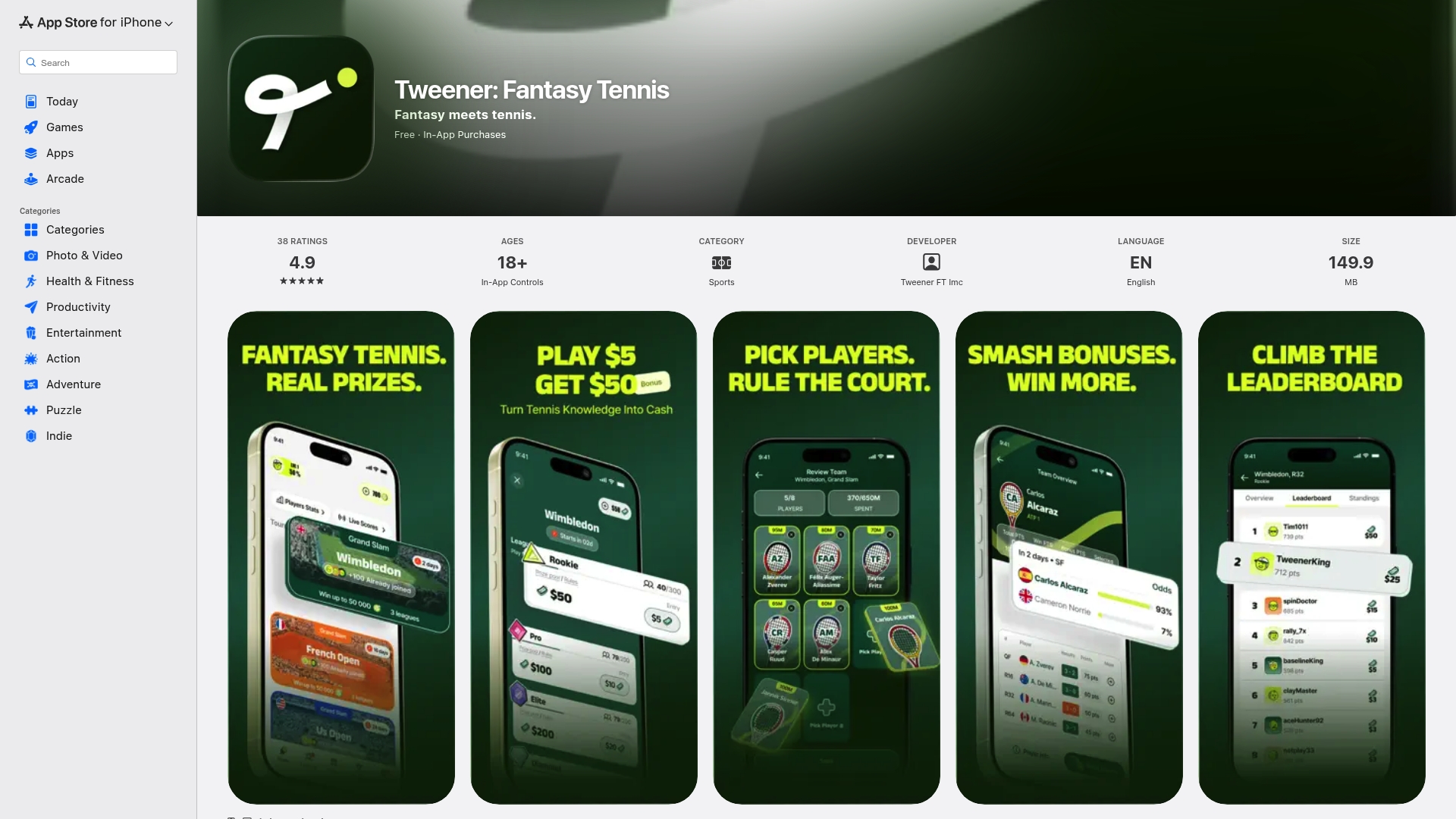
Set up a private league with up to nine friends for the next Grand Slam, use the built-in surface and head-to-head filters to shortlist your anchors and value plays, and practice quarter-spread strategy risk-free in the free coin mode before you ever put cash on the line. When you're ready to compete for real payouts, cash contests are there too, wherever they're legally available. Download Tweener and build your first lineup before the next draw drops.
Frequently Asked Questions
What's the single biggest mistake new WTA fantasy players make? Locking picks out of habit instead of checking the draw and surface form first. A late scratch or an unfavorable quarter can wreck a roster that looked fine on paper.
Should I prioritize rankings or recent form when picking WTA players? Recent surface form. WTA results swing more from tournament to tournament than the men's tour, so a player's last five matches on the current surface tell you more than her ranking does.
How many players should I pick from the same draw quarter? One, as a rule. Spreading picks across quarters protects your semifinal chances if one section of the draw collapses unexpectedly.
Does weather really affect fantasy scoring? Yes, indirectly. Heat and wind can disrupt service games and increase retirement risk, which is exactly why a solid alternate plan matters for outdoor events.
Is WTA fantasy more volatile than ATP fantasy? Generally, yes. Higher break rates on the WTA tour mean more upsets and swingier scoring, which rewards return-game stats more heavily than they matter in ATP contests.
Sources
- How to play WTA fantasy tennis