
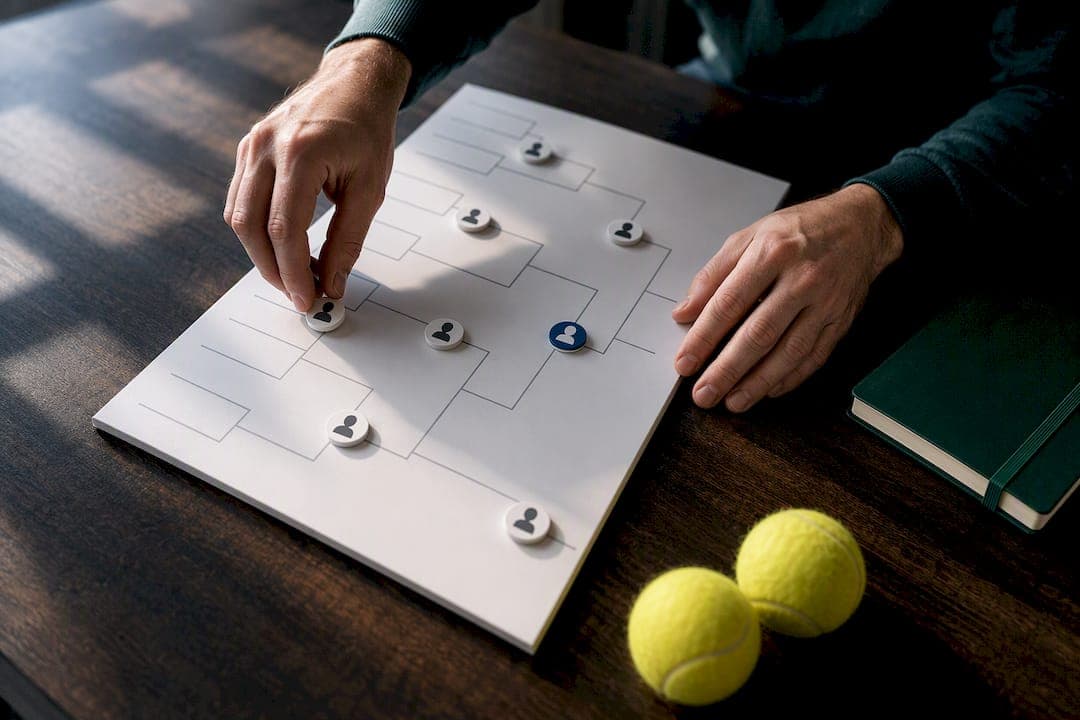
Tournament-long fantasy tennis tracks your players through an entire event, or across a whole season, rather than resetting each day. The single biggest lever for winning is round-progression value: whoever survives deep into the draw earns the bulk of the points, so protect your Major starters and let cheaper picks absorb the risk at smaller events. One option built around exactly this format is available.
TL;DR:
- Round-progression bonuses are the main driver of fantasy points, making players with easier paths to later rounds much more valuable than higher-ranked opponents in early rounds.
- Prioritizing schedule management, surface-specific form, and fatigue levels can significantly improve success, especially by focusing on tournament size and surface transitions.
- Experts recommend drafting or selecting mid-tier players with softer draws for better value in salary-cap formats, rather than always choosing the top seed.
- Building a disciplined pre-tournament plan by analyzing draws, recent form, and injury risks helps turn guesses into consistent, testable decisions.
- Private leagues and skill-based contests provided by Tweener cater to analytical fans, emphasizing strategy over simple ranking-based picks.
Table of Contents
- What tournament-long fantasy tennis formats look like
- How scoring grids work and what actually moves the needle
- Tournament-long strategy: allocation, fatigue, and surface reads
- A repeatable pre-tournament workflow
- Author perspective and how Tweener supports tournament-long play
- What most fantasy tennis advice gets wrong
- Try tournament-long leagues built for analytical fans
- Where to check the raw data yourself
- Sources
- FAQ
What tournament-long fantasy tennis formats look like
Two structures dominate the category. Season-long formats accumulate points across many tournaments, rewarding players who stay healthy and consistent over months. Single-tournament formats lock a roster for one event, usually a Grand Slam or ATP/WTA 1000, and score purely on what happens inside that draw.
Within either structure, the mechanics vary:
- Draft formats assign each player to one roster, so once picked, a player cannot be used by anyone else in your league.
- Salary-cap or pick'em formats let everyone select the same pool of players under a budget, with no exclusivity.
- Rosters typically lock at the start of the tournament or round, so late scouting reports matter more than early ones.
Private leagues let small groups compete head to head for a single Slam. Public contests pool larger fields and usually run salary-cap scoring instead of draft exclusivity.
How scoring grids work and what actually moves the needle
Most tournament-long grids reward a combination of match outcomes and in-match production:
- Points for match wins and set wins, often stacked so a straight-sets win scores more than a grinding three-setter.
- Round-progression bonuses that multiply as a player advances (quarterfinal, semifinal, final tiers usually pay more than the sum of earlier rounds).
- Small bonuses for aces and break points won, with deductions for double faults or a retirement.
Round progression usually drives the majority of fantasy points in a tournament, according to an analysis of fantasy tennis projections, which means a player with an easy path to the quarterfinal can outscore a higher-ranked player who loses in round two. That single fact should reorder your draft board more than any ranking list.
Format changes your priorities too. In a draft league, you want exclusive access to a deep run. In salary-cap pick'em, you want the best points-per-dollar, which often favors a mid-tier player with a soft draw over a top seed carrying a tough quarter.
Tournament-long strategy: allocation, fatigue, and surface reads
Tournament-long success comes down to resource allocation more than gut picks.
- Spend more on Majors, less on 250s and 500s. Grand Slam round bonuses pay out over seven rounds instead of three or four, so a costly ace at Wimbledon is worth more than the same player at a smaller tour stop.
- Discount players carrying heavy schedules. Serve metrics measurably decline after multiple consecutive events, and marathon matches in the prior three weeks are a warning sign worth tracking, per scheduling and fatigue data.
- Weight surface history over general ranking. A player's clay-court winning percentage matters more entering Roland Garros than their overall ranking does, and the same logic applies to grass and hard-court transitions.
- Bench, don't cut, your riskiest starters. If a player is nursing an injury flag or coming off a long transition from an opposite surface, keep a healthy insurance pick ready rather than committing a full roster spot to hope.
Pro Tip: Keep a running fatigue log, consecutive events played, sets contested in the last 21 days, and any three-set slogs, then apply a small win-probability discount to anyone showing two or more red flags.
Extreme surface transitions carry the same predictable dip, so a player who just finished a grass swing and jumps straight into a clay event is a candidate for a discount rather than a top pick. For deeper roster-management mechanics between rounds, a step-by-step roster update guide walks through swapping in bench players once withdrawals are confirmed.

A repeatable pre-tournament workflow
Run this checklist before every lock, whether it is a Slam or a mid-season 500.
- Pull the official draw and note surface, conditions, and the match schedule for the first three rounds.
- Check recent form and surface splits, focusing on serve and return numbers from the last few events on the same surface rather than season-long averages.
- Estimate match-win probability for each contender, then convert those probabilities into projected fantasy points using your league's scoring grid.
- Adjust for fatigue and travel, cross-check injury reports, then lock your lineup and jot down why you made each call.
That last step matters more than it sounds. A short written rationale, even one line per pick, turns a guess into a testable decision you can audit after the tournament ends. Over a season, that habit is what separates players who improve from players who keep repeating the same mistakes. For a longer breakdown of turning draws into projections, see this guide to lineup construction.
Author perspective and how Tweener supports tournament-long play
Tournament-long fantasy tennis rewards the same instincts that make someone good at reading a draw sheet: patience, surface literacy, and a willingness to fade a big name with a bad matchup. One platform builds around that instinct directly, offering private leagues sized for small groups per Grand Slam, a Draft Mode for exclusivity-based leagues, and a Pick'em Mode for salary-cap style play. Free contests use virtual coins, while cash contests may be available where legally permitted. For more tactical reading, Tweener's blog covers draft strategy and prediction-style games in more depth.
What most fantasy tennis advice gets wrong

Most advice defaults to "pick the best player available," which ignores how tournament-long scoring actually pays out. Round-progression bonuses mean a top-ten player stuck in a loaded quarter is often a worse pick than a streaky mid-ranked player with a soft draw to the semifinal. The other common mistake is treating rankings as static: a player's clay results from two years ago tell you less than their serve numbers from the last month on that surface.
The reader who wins consistently is the one who treats each tournament as a fresh probability problem instead of a popularity contest. Build the habit of writing down why you picked someone before the draw even starts. That single discipline, more than any stat database, is what turns tournament-long fantasy tennis from a guessing game into a skill you can actually improve.
— Nathan
Try tournament-long leagues built for analytical fans
Tennis has never had a true Fanduel or DraftKings equivalent, and that gap is exactly what Tweener fills for fans who want a skill-based alternative to sports betting.
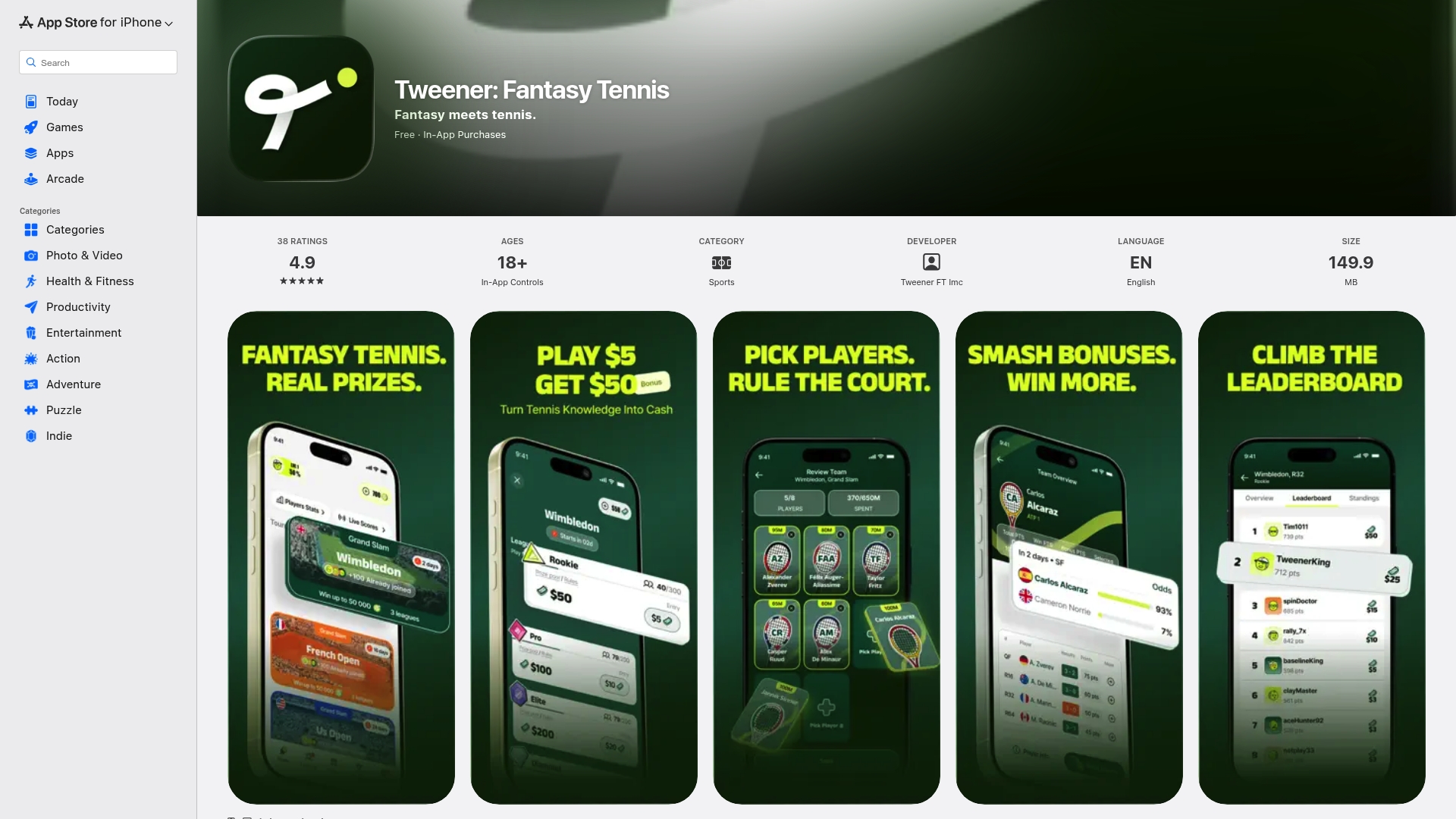
- Draft Mode gives you exclusive player rights for a tournament, rewarding the same round-progression thinking covered above.
- Pick'em Mode lets you build a salary-cap lineup when you want flexibility instead of exclusivity.
- Private leagues let you compete directly against up to nine friends for each Grand Slam.
Free contests run on virtual coins redeemable for rewards, while cash contests are available for players who want real stakes where legally permitted. Full scoring and lock-time details are listed in the Tweener game rules, and you can start building a roster at Tweener.
Where to check the raw data yourself
For draws, schedules, and event context, official pages like the Nitto ATP Finals site are a reliable starting point. Pair those with ATP and WTA stat leaderboards for serve and return splits, and cross-check court conditions with resources like this court-booking overview when surface familiarity is in question.
Sources
- Fantasy Tennis Stats & Data: Results to Projections
- Tennis Scheduling & Fatigue Data 2026: Betting Impacts
FAQ
What is the difference between season-long and single-tournament fantasy tennis?
Season-long formats accumulate points across many events over months, rewarding consistency and health. Single-tournament formats lock a roster for one event, usually a Slam, and score based only on that draw.
How do round-progression bonuses change who I should pick?
Round-progression bonuses multiply as a player advances, so a favorable draw to the quarterfinal or semifinal often outscores a tougher path for a higher-ranked player, according to fantasy tennis stats analysis. Prioritize path difficulty over raw ranking when the bonuses stack heavily by round.
What happens to my fantasy points if a player retires mid-match?
Most scoring grids apply a penalty or point stoppage for a retirement rather than awarding the win's full value, though exact rules vary by platform. Check your league's scoring grid before the tournament starts, and keep a bench pick ready as insurance.
Should I bench a player coming off a long schedule stretch?
Serve performance tends to decline after a fourth consecutive event, based on scheduling and fatigue research, so a modest discount or bench swap is reasonable for players showing multiple fatigue flags. This matters most heading into Majors, where the round bonuses are largest.
Does Tweener offer private leagues for Grand Slams?
Yes, private leagues allow competition among small groups for each Grand Slam. Draft Mode and Pick'em Mode formats are available, along with free coin-based play and cash contests where legally permitted.