

TL;DR:
- Professional tennis strictly prohibits singles substitutions, requiring injured players to retire without replacement.
- In contrast, emerging formats and fantasy tennis leverage flexible substitution strategies, allowing tactical player rotations.
A tennis player substitution workflow is the structured process governing when, how, and under what conditions you can swap players during a tennis event. In professional tennis, those rules are strict and largely prohibit substitutions in singles. In fantasy tennis and emerging formats, the same concept becomes your most powerful tactical tool. Understanding both sides of this divide separates casual fans from players who consistently win in fantasy leagues. Platforms like Tweener are built precisely for fans who want to turn that knowledge into a competitive edge.
What is the official tennis player substitution workflow in professional matches?
Professional tennis draws a hard line on substitutions. Singles substitutions are prohibited; an injured player must retire from the match entirely. Medical timeouts run approximately three minutes, and if a player cannot continue after that window, the match is forfeited. There is no "swap in a fresh player" option in singles, regardless of the circumstances.
Doubles play operates under a different, though still restrictive, framework. Substitutions in doubles are permitted when a player suffers a verified injury during the warm-up or the match itself, but the replacement must already be pre-registered before the event begins. That requirement alone eliminates most last-minute tactical swaps.
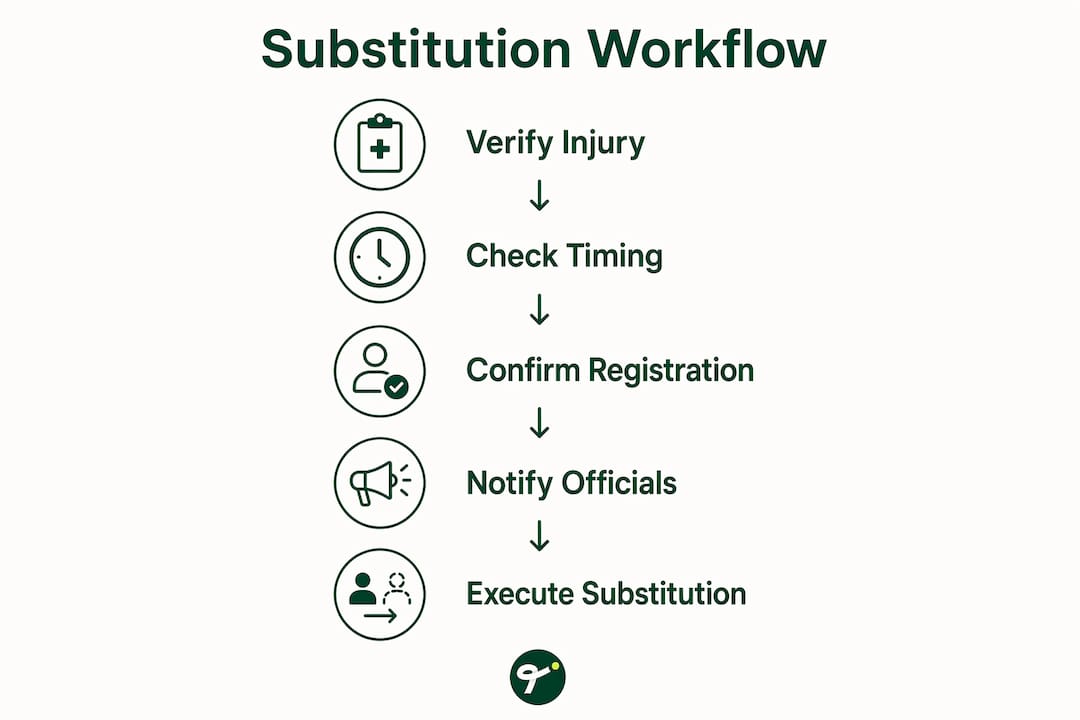
The procedural steps for a legitimate doubles substitution follow a clear sequence:
- Medical staff must verify and document the injury before any substitution request is approved
- The incoming player must be confirmed as pre-registered with the tournament referee
- The substitution can only occur at a changeover or set break, never mid-game
- Tournament officials update the official draw and notify both teams before play resumes
Substitutions in professional tennis are not a tactical option. They are a medical accommodation with strict procedural gates. Any workflow that treats them as flexible is working outside the rules.
Timing restrictions carry real consequences. A substitution attempted outside a changeover window results in a penalty or disqualification. This is why the procedural verification step exists before the clock starts on the changeover. Smart tournament software now assists officials by flagging eligibility in real time, reducing human error at this critical gate.
How do emerging formats and fantasy platforms adapt substitution rules?
The most significant shift in tennis substitution strategy comes from formats built outside the ATP/WTA rulebook. INTENNSE allows unlimited roll-on substitutions and incorporates live coaching, a direct contrast to the rigid medical-only model in standard professional play. The design goal is higher game speed and tactical engagement, which means substitutions become a genuine strategic tool rather than an emergency measure.

This flexibility changes how you think about player rotation methods entirely. In INTENNSE-style formats, a captain can substitute a player to exploit a specific matchup, protect a tired athlete, or disrupt an opponent's rhythm mid-match. Tactical substitutions in doubles serve exactly this purpose, influencing momentum at pivotal moments. That principle scales directly into fantasy tennis.
Fantasy tennis platforms adapt these concepts through lineup management systems that mirror the logic of emerging formats:
- Live match data feeds update player performance scores in real time
- Roster locks and unlock windows define when you can make lineup changes
- Injury alerts trigger substitution prompts before a player's match begins
- Head-to-head and surface data inform which swap produces the highest expected score
Pro Tip: Set alerts for ATP and WTA withdrawal announcements the night before each round. Early substitutions in fantasy leagues consistently outperform reactive swaps made after a match has already started.
The fantasy tennis substitution workflow borrows the spirit of INTENNSE while operating within the structure of real tournament schedules. Knowing when a player faces a difficult draw on a surface they struggle with is the equivalent of a coach reading a matchup and making a tactical swap. Smart team selection in fantasy tennis is substitution strategy applied before the match even starts.
What tools and best practices manage live substitution workflows?
The gap between manual and automated substitution management is significant. Manual scheduling for a 64-player event can take 3–5 hours, while automated software completes the same task in minutes with simultaneous constraint checking. That speed difference matters most when a withdrawal or injury forces a last-minute change.
Automated tournament platforms handle four core functions that manual processes cannot match at scale:
- Real-time score sync: Bracket standings update instantly when a result is confirmed
- Auto-rebracketing: Withdrawals trigger automatic draw adjustments without stopping the event
- Rest period validation: Software checks that substitutes meet minimum rest requirements before assignment
- Player notifications: Captains and players receive immediate alerts when a substitution is approved
Withdrawal handling is where automation proves its value most clearly. Roughly 8–12% of tournament entries face day-of changes. Without automated rebracketing, each withdrawal creates a manual cascade of schedule edits, court reassignments, and player communications. Automation collapses that cascade into a single system action.
For fantasy players, the equivalent tools are the lineup management and alert systems built into platforms like Tweener. The principle is identical: reduce the lag between new information and your roster decision.
Pro Tip: Treat your fantasy roster like a live bracket. Check the order of play each morning and cross-reference it against your active lineup. Players scheduled for back-to-back matches on the same day are substitution candidates regardless of their ranking.
What is the step-by-step workflow for executing a player substitution?
A clean substitution workflow follows a fixed sequence whether you are managing a professional doubles team or a fantasy roster. Skipping steps is where most errors occur.
Prerequisites before any substitution:
- Confirm the substitute player is pre-registered and eligible under the relevant ruleset
- Verify the reason for substitution meets the format's criteria (injury, tactical, or lineup window)
- Check the timing window. Professional play requires a changeover or set break. Fantasy platforms have roster lock deadlines
Execution steps:
- Submit the substitution request to the tournament referee or platform system
- Provide medical documentation if required (professional doubles) or confirm the lineup change within the platform window (fantasy)
- Receive official confirmation before the substitute warms up or the lineup locks
- Update all public-facing rosters and notify affected parties
- Brief the substitute on match conditions, opponent tendencies, and any tactical instructions
The most common substitution error is assuming confirmation equals completion. Always verify the updated roster appears in the official draw or platform interface before the next match begins.
Rotation drills that change players every 60–90 seconds during warm-up serve a dual purpose: they keep all players match-ready and reduce idle time when a substitution is called. This practice directly improves substitution readiness in team formats.
For round-robin formats, the circle method for player rotation provides a reliable scheduling backbone. Each player rotates through opponents in a fixed sequence, and a bye slot handles odd-numbered groups. This structure makes substitutions predictable and reduces scheduling conflicts when a player withdraws.
| Scenario | Key action | Timing window |
|---|---|---|
| Doubles injury substitution | Verify pre-registration, get medical sign-off | Changeover or set break only |
| Fantasy roster swap | Check injury alerts, confirm lock deadline | Before match start |
| Round-robin withdrawal | Apply circle method with bye slot | Before next round draw |
| Emerging format tactical swap | Captain decision, no medical requirement | Any substitution window |
Which rotation strategies maximize fantasy tennis scoring?
Effective player rotation methods in fantasy tennis combine surface analysis, draw difficulty, and fatigue management into a single decision framework. Picking the highest-ranked player is not the strategy. Picking the right player for the right round on the right surface is.
Rotational strategies in doubles rely on role-switching within the team rather than formal substitutions. Teams use formations like the "I" formation or the Australian formation and switch roles based on point-winning potential. Fantasy players can apply the same logic: rotate your lineup based on who holds the structural advantage in each round, not just who has the better ranking.
Four rotation principles that consistently produce higher fantasy scores:
- Surface matching: Clay specialists like Carlos Alcaraz at Roland Garros outperform their ranking on hard courts. Rotate them in during clay events and rotate them out when the tour moves indoors.
- Draw analysis: A top-10 player in the easy quarter of a Grand Slam draw is worth more than a top-5 player facing three seeded opponents in the first three rounds.
- Fatigue tracking: Players coming off a five-set match the previous day carry injury risk. Rotating them out before a quick turnaround protects your score from a retirement.
- H2H exploitation: Some players consistently underperform against specific opponents regardless of ranking. Use head-to-head records to time your substitutions around those matchups.
Tournament schedule awareness is the single most underused substitution tool in fantasy tennis. Knowing which players have night matches, back-to-back court assignments, or favorable scheduling gaps gives you a timing edge that pure stat analysis misses.
Pro Tip: Build a two-tier roster. Keep your core players locked in for the full tournament, and treat your flex spots as active substitution slots where you rotate based on each round's specific conditions.
Key Takeaways
The most effective tennis player substitution workflow combines strict rule compliance in professional formats with data-driven rotation decisions in fantasy and emerging formats.
| Point | Details |
|---|---|
| Singles substitutions are banned | Injured singles players must retire; no swap is permitted under ATP/WTA rules. |
| Doubles swaps require pre-registration | The incoming player must be registered before the event and can only enter at a changeover. |
| Automation reduces substitution errors | Software handles rebracketing, rest validation, and notifications faster than any manual process. |
| Fantasy rotation beats static lineups | Rotating players by surface, draw difficulty, and fatigue consistently outperforms set-and-forget rosters. |
| Timing is the decisive variable | Whether professional or fantasy, the substitution window determines whether a swap is legal and effective. |
Why most fantasy players get substitutions wrong
Most fantasy tennis players treat substitutions as a reaction, not a plan. They swap a player after a loss or a retirement notice, which is almost always too late to recover points. The players who win leagues consistently build their substitution calendar at the start of each tournament, not in the middle of it.
The professional rules reveal something useful here. The fact that substitutions in singles are completely prohibited tells you how much the sport values continuity and commitment. When you carry that discipline into fantasy tennis, it sharpens your decision-making. You stop making impulsive swaps and start making calculated ones based on draw analysis and surface data.
The rise of automated tournament tools also changes the standard. Real-time withdrawal management and instant bracket updates mean the information gap between you and the field is shrinking. The edge now comes from how quickly and accurately you act on that information, not from having access to it first.
Emerging formats like INTENNSE point to where competitive tennis is heading: more substitutions, more tactical flexibility, and more decisions per match. Fantasy platforms are already there. The players who study how to swap fantasy tennis players with discipline and data will have a structural advantage over those who rely on gut feel.
— Nathan
Tweener puts your substitution strategy into practice
Tweener is built for the kind of analytical tennis fan who reads draw brackets the way a chess player reads a board.
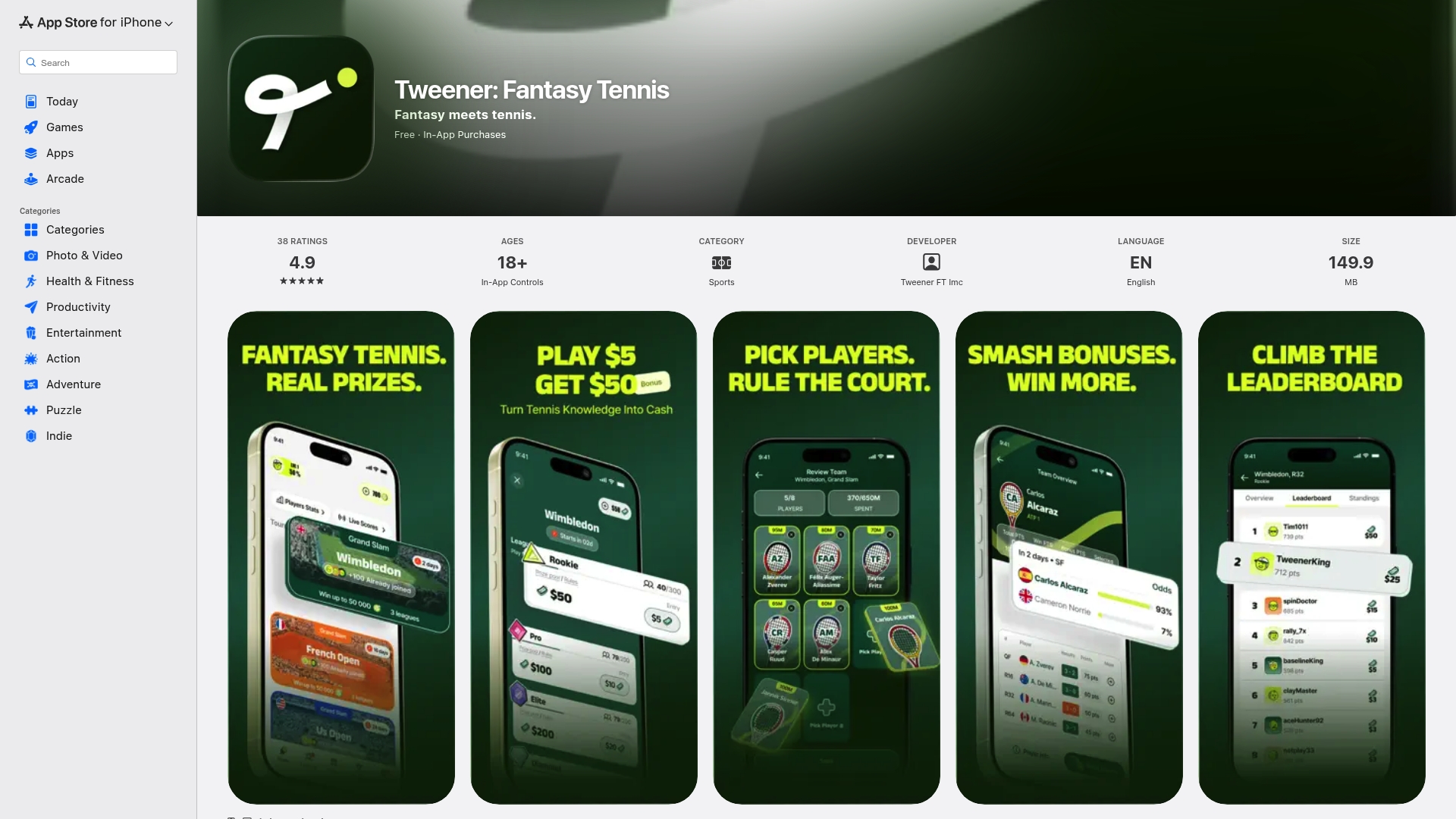
The platform gives you real-time roster management, live match alerts, and lineup flexibility across ATP and WTA tournaments. When a player retires or a withdrawal hits the draw, Tweener surfaces the information immediately so your substitution decision is based on current data, not yesterday's rankings. Private leagues let you compete against up to nine friends across a full Grand Slam, where every rotation call and lineup management decision directly affects your standing. Whether you play in free mode with virtual coins or enter cash contests for real-money payouts, the strategic depth is the same. Join Tweener and put a real substitution workflow behind your fantasy tennis season.
FAQ
Can you substitute a player in a singles tennis match?
No. Singles substitutions are prohibited under standard ATP and WTA rules. An injured player must retire from the match entirely.
When is a doubles substitution allowed in professional tennis?
A doubles substitution is permitted when a player suffers a verified injury, provided the replacement is pre-registered and the swap occurs at a changeover or set break.
How does fantasy tennis handle player substitutions?
Fantasy platforms use roster lock windows and live injury alerts to define when you can swap players. Changes must be made before a player's match begins, making early information the key advantage.
What is the circle method in tennis rotation?
The circle method is a round-robin scheduling system where players rotate through opponents in a fixed sequence. A bye slot is added for odd-numbered groups to maintain rotation integrity.
How does automation improve substitution workflows in tournaments?
Automated tournament software handles withdrawals, rebracketing, rest period validation, and player notifications instantly, eliminating the manual errors that disrupt substitution timing and tournament flow.