

TL;DR:
- Mastering player swaps is crucial for consistent success in ATP Fantasy tennis.
- Proper planning and understanding of swap rules, schedule, and bench strength prevent costly mistakes.
- Fewer, well-timed swaps focused on surface and form outperform frequent, reactionary moves.
You're one round away from climbing the leaderboard when you realize your top pick withdrew from the tournament two days ago, and you never made the swap. The points you could have banked are gone. It's a gut punch that every fantasy tennis manager has felt at least once, and it's almost always avoidable. Mastering the player swap process, especially under the new 2026 ATP Fantasy rules, is the single biggest skill gap separating mid-table managers from consistent weekly contenders.
Table of Contents
- What you need before making a swap
- Step-by-step process for swapping fantasy tennis players
- Common mistakes and troubleshooting in fantasy player swaps
- How to verify your swaps and what success looks like
- Why focusing on surface and form beats maximizing swap counts
- Take your fantasy tennis swaps to the next level
- Frequently asked questions
Key Takeaways
| Point | Details |
|---|---|
| Know the swap rules | You have 2 free switches per tournament week, with up to 8 banked for fantasy tennis swaps. |
| Leverage special chips | Use Swing Switch and Alternates chips strategically for unlimited swaps or bench points when needed. |
| Prioritize surface and form | Focus on picking and swapping players who excel on the current tournament's surface and are in strong form. |
| Avoid swap penalties | Plan ahead to prevent running out of free swaps and facing costly 50-point deductions. |
| Verify your results | Always confirm swaps before lock deadlines and monitor your fantasy points to refine your strategy. |
What you need before making a swap
Now that you know what mastering swaps can mean for your end-of-season standing, let's start with the rules and essential info you need before your first move.
Before you touch your lineup, you need a solid grip on how the swap system actually works. The rules are more nuanced than most new players realize, and going in blind will cost you points fast.
Understanding the swap allowance
ATP Fantasy swap rules are structured as follows: you get unlimited switches before the season starts, then 2 free per tournament week once play begins. Any unused free switches roll over and can be banked, up to a maximum of 8. Once you exceed your banked total, each additional switch costs you 50 points. That penalty adds up fast if you're not disciplined.
Here's a quick reference table for the core swap rules:
| Swap type | Availability | Cost |
|---|---|---|
| Pre-season switches | Unlimited | Free |
| Weekly free switches | 2 per tournament week | Free |
| Banked switches | Roll over (max 8) | Free |
| Extra switches | Unlimited | 50 points each |
| Swing Switch chip | Unlimited for 1 week | 1 chip |
Tournament schedule awareness
Fantasy tennis is tied directly to the live ATP and WTA calendar, which means the schedule shapes every swap decision you make. Grand Slams run for two weeks and carry the biggest point multipliers. Dual-event weeks, where both ATP and WTA tournaments run simultaneously, create both opportunity and chaos. Knowing when these high-value events land means you can plan your swap budget months in advance rather than scrambling the night before a draw.
Check a few key things before every tournament week:
- Which players have confirmed their entry versus those on the withdrawal list
- Surface type for the upcoming tournament (clay, hard, grass)
- Whether any top seeds are carrying injuries from recent matches
- How many banked switches you currently have available
Bench strength matters more than you think
One of the most overlooked aspects of swap readiness is your bench. If your starting five all hit form at the same time, you're golden. But if two players withdraw and your bench is full of journeymen, your swap options are limited. Keeping at least one high-value backup on your bench gives you flexibility without needing to use a switch at all. Pair strong bench management with the fantasy tennis tips that pros use and you'll rarely be caught off guard.

Step-by-step process for swapping fantasy tennis players
With the fundamentals set, here's how to actually swap your fantasy tennis players step by step, and which tools in the game can make the process smoother.
Step 1: Open your team management screen
Navigate to your team page in the fantasy platform or app you're using. Most platforms show your current lineup, bench, and available switch count clearly at the top. If you're playing on Tweener, the interface highlights players with injury flags and form arrows directly on the lineup screen.
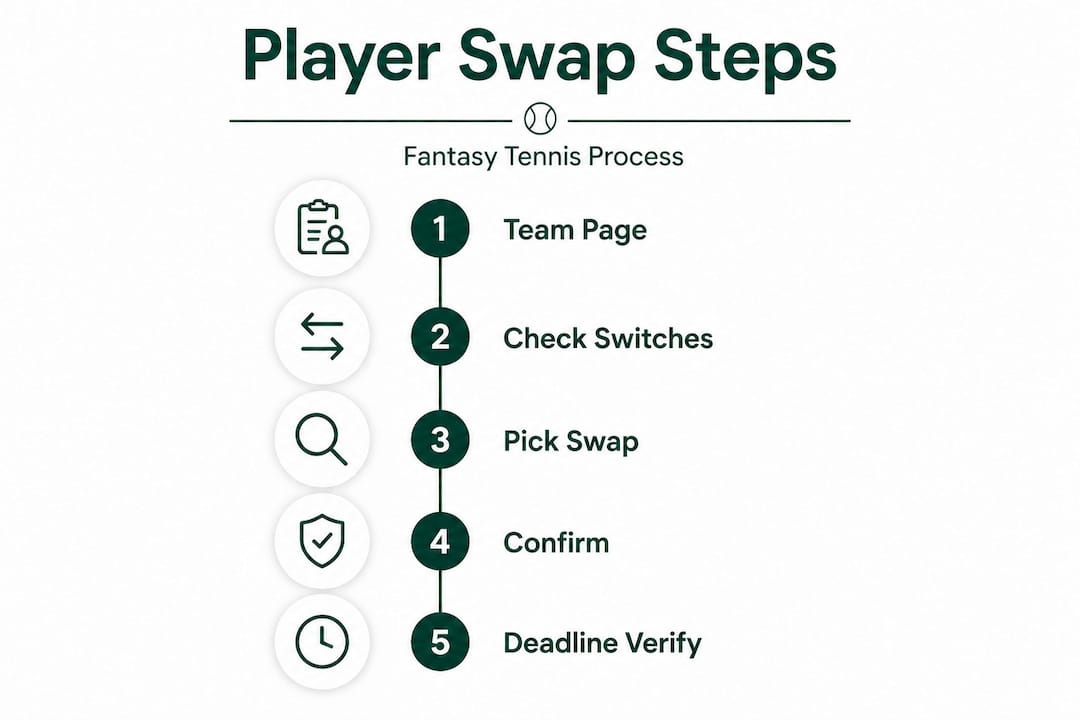
Step 2: Check your available switches and chips
Before doing anything else, count your free and banked switches. If you're sitting at 6 banked switches heading into Roland Garros, that's a strong position. If you're already at 0 and facing a clay-court specialist who's been struggling, you'll need to decide if a 50-point penalty is worth the upgrade.
Also check which chips you currently have available. The Swing Switch chip gives you unlimited switches for an entire week without any penalty, resetting each swing period. The Alternates chip makes your bench players' points count alongside your starters, which is a game-changer during unpredictable early rounds when upsets run wild. You receive one of each chip per week, and timing them correctly is everything.
Step 3: Identify which players need to be swapped
Use form data, injury reports, and surface stats to decide who stays and who goes. A player ranked inside the top 10 is not automatically worth keeping if he's recovering from a wrist issue heading into a fast hard-court event. Cross-reference recent match results with the upcoming draw. Check who they're likely to face in rounds one and two before committing to a swap.
Step 4: Select your replacement and confirm
Pick your replacement from the available player pool, keeping budget and tier rules in mind. Many platforms cap total team value, so upgrading in one spot may require a downgrade elsewhere. Once you've selected your swap, review the change carefully before confirming. A misclick on a similar player name is an easy mistake that wastes a free switch.
Step 5: Verify the swap is reflected before the deadline
Each tournament day has a lock time, usually tied to when the first match of the day begins. Swaps made after that lock won't apply until the next eligible session. Set a reminder 30 minutes before the lock for every active tournament day.
Here's a comparison of when to use chips versus free switches:
| Scenario | Recommended tool | Why |
|---|---|---|
| Grand Slam week with 3+ key withdrawals | Swing Switch chip | Maximize coverage risk-free |
| Dual-event week with bench uncertainty | Alternates chip | Make bench points count |
| Single withdrawal, banked switches available | 1 banked switch | Preserve chips for bigger moments |
| Small 250-level tournament, no injuries | Hold switches | Save budget for future weeks |
Pro Tip: When optimizing tennis picks, think about swaps in clusters. If you're making one change, quickly scan whether a second change would also be net positive before you close the screen. You're already in the decision-making mindset, so use it.
The practice of drafting fantasy tennis players strategically at the season's start directly reduces how many panic swaps you'll need mid-season. A thoughtful draft means fewer emergency moves and more banked switches when it counts.
Common mistakes and troubleshooting in fantasy player swaps
Having covered the ideal process, it's just as important to steer clear of common errors that trip up even experienced fantasy players.
Missing the daily lock deadline
This is the number one frustration for fantasy tennis managers worldwide. You wake up planning to swap out a struggling player, check the app during lunch, and realize the first match locked two hours ago. Build a habit around checking lock times the evening before each tournament day, not the morning of.
Burning chips on small events
Saving Swing Switch and Triple Bounce chips for Grand Slams or dual-event weeks, while banking free switches for injury flexibility up to the maximum of 8, is the hallmark of elite strategy in ATP Fantasy.
Too many managers deploy their Swing Switch during a 250-level event in Marrakech and then watch helplessly as three players withdraw during Roland Garros week with zero flexibility left. Grand Slams are worth two to three times the points of smaller events. Your best chips belong there.
Burning free switches too early in the season
Spending all your weekly switches in January when stakes are lower leaves you exposed in March when Indian Wells and Miami run back to back. Bank your switches during quieter weeks so you're loaded up for the stretch of big events.
Common mistakes to avoid every week:
- Swapping players based on ranking alone without checking surface win rates
- Ignoring injury news from press conferences and social media in favor of only app notifications
- Overreacting to one bad match and ditching a player who's actually in strong overall form
- Failing to check the draw before committing to a swap (a tough first-round opponent changes everything)
- Letting chips expire unused because you forgot to check availability
Not checking surface specialization
Clay courts favor high-topspin baseliners. Grass rewards big servers and net rushers. Hard courts are more neutral but still reward certain playing styles. A player ranked 15th in the world might be a top-5 fantasy pick on clay and a liability on grass. The skills every fantasy tennis player needs include reading surface matchups as instinctively as reading a scoreboard.
Pro Tip: Build a short personal database of surface specialists. Note which players consistently overperform their ranking on clay, grass, or hard courts. When a relevant tournament comes up, you'll know exactly who to target without starting from scratch.
How to verify your swaps and what success looks like
After executing and troubleshooting your swaps, consistently verifying the outcome is key to improving tournament results throughout the season.
Step 1: Review your confirmed lineup immediately after swapping
Don't assume the change went through. Open your team screen and confirm that the correct player now appears in your starting lineup. Check the player's name, tournament status, and any flags indicating withdrawal or injury risk. One extra minute of verification saves a week of regret.
Step 2: Track points earned against points available
After each tournament week closes, compare your actual score against the maximum possible score your team could have earned. This "efficiency rate" is one of the clearest measures of swap quality. A manager who earns 85% of their available points consistently through disciplined swapping will outperform one who hits 100% one week and 40% the next.
Step 3: Analyze the week and document your logic
Write down, even in a simple notes app, why you made each swap and what outcome you expected. Then review after the tournament ends. Did the surface matchup play out as you predicted? Was the injury concern valid? This habit accelerates learning faster than any guide.
Step 4: Adjust for the next tournament immediately
Don't wait until Monday morning of the next event week to start thinking about your lineup. Start scanning injury reports and draw releases the day the current tournament ends. The managers who consistently finish at the top of their leagues are rarely surprised because they're always one step ahead of the schedule.
A key strategic insight: surface and form optimization drives better results than simply maximizing the number of swaps made each week. Unlike games such as FPL where player pricing changes based on ownership trends, ATP Fantasy does not use variable pricing. That means there's no competitive pressure to move fast because a player's cost is going up. The only pressure is performance, which keeps the focus exactly where it should be: on who is actually playing well and on what surface.
Track your smart captain picks alongside your swap decisions, since the two strategies reinforce each other when your best-form player is also your captain.
Why focusing on surface and form beats maximizing swap counts
Here's the perspective most guides won't give you: the best fantasy tennis managers we've watched use fewer swaps than average, not more.
That sounds counterintuitive. More flexibility should mean better results, right? But chasing big names with every available switch is how managers end up with an inconsistent roster that performs brilliantly one week and collapses the next. The compulsion to move on a player after one bad loss is one of the most expensive habits in fantasy tennis.
ATP Fantasy's lack of variable pricing is actually a gift that most managers squander. In ownership-based games like FPL, you sometimes have to move quickly because a player's transfer price is rising. In ATP Fantasy, that pressure doesn't exist. You can be patient. You can wait for the right surface, the right draw, the right form run.
Long-term league winners treat their switch budget like cash reserves. They don't spend unnecessarily just because they have it. They hold switches through quiet 250-level weeks, let their banked total approach 8, and then deploy strategically when a Grand Slam draw opens up a week of easy routes for their surface specialists.
The managers who finish in the top 5% of their leagues aren't the ones who made 30 swaps over the season. They're the ones who made 12 targeted, well-researched moves that maximized point-scoring potential at precisely the right moments. Read the advanced lineup tips through this lens and the advice lands differently. Every swap is a decision, not just an action.
Take your fantasy tennis swaps to the next level
You now have a clear, rules-savvy process for making smarter player swaps across every ATP and WTA tournament on the calendar. The next step is putting it into practice with tools built specifically for fantasy tennis strategy.
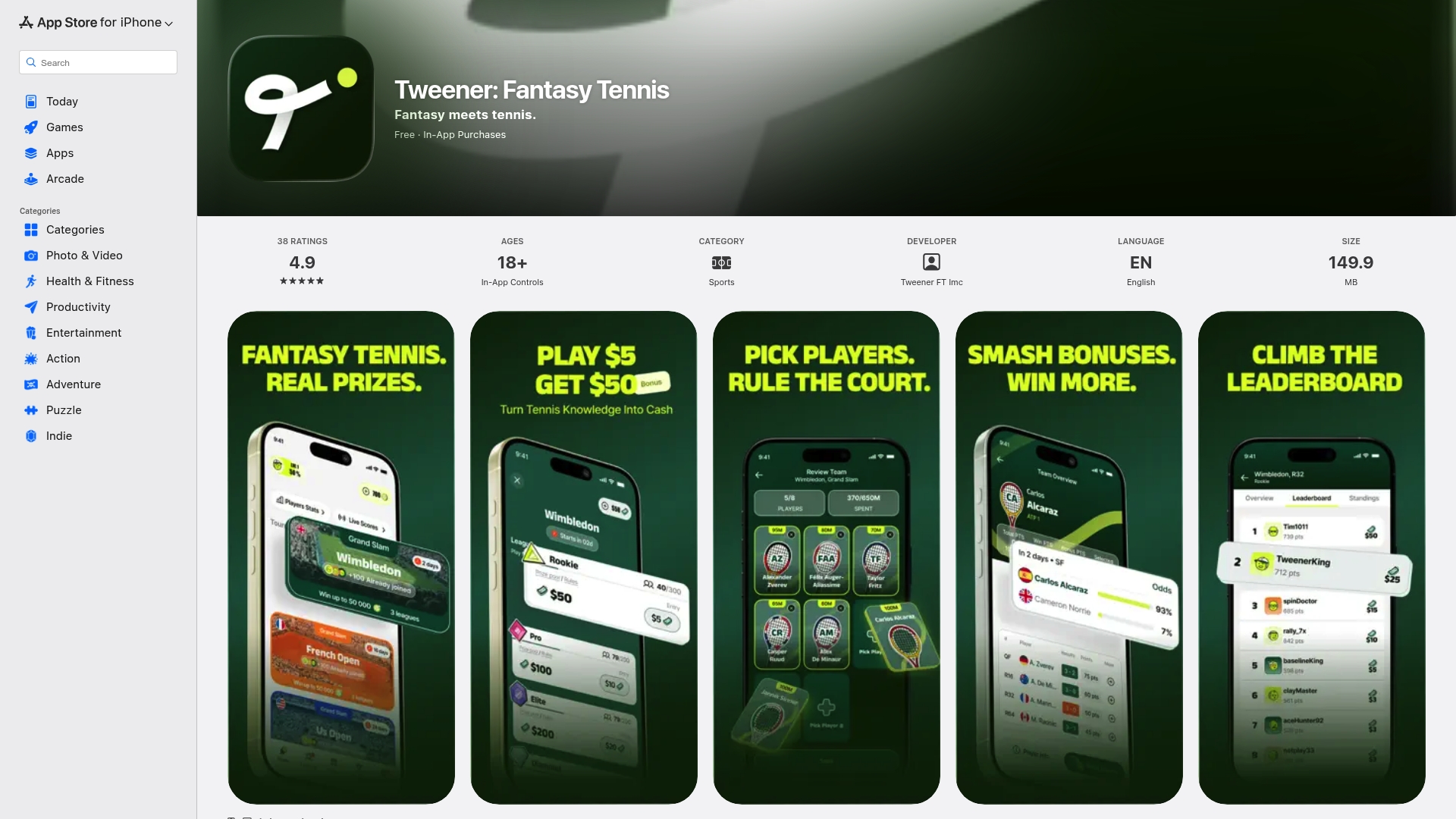
Tweener is built for fans who want to go beyond watching and actually compete through the entire tennis season. Whether you're playing in free leagues with virtual coins or entering cash contests for real payouts, the platform gives you everything you need to build, manage, and optimize your fantasy team week by week. From live tournament scoring to league competitions with friends, Tweener makes every match count. Start competing and put your swap strategy to the test where it matters most.
Frequently asked questions
How many free swaps do I get each week in ATP Fantasy?
You get 2 free switches per tournament week, with unused ones rolling over up to a maximum of 8 banked at any time.
What happens if I run out of free swaps in fantasy tennis?
Each extra swap beyond your free and banked total costs 50 points for that week, which is why managing your switch budget carefully matters so much.
How do Switch Chips work in ATP Fantasy?
A Swing Switch chip gives you unlimited free swaps for one full week without any point penalty, with one chip available per swing period.
Should I use all my free swaps right away or save them?
Experts strongly recommend banking free switches for injury flexibility and saving special chips like Swing Switch for Grand Slams or dual-event weeks.
Are WTA fantasy leagues different in swap rules?
Swap rules and chip mechanics in WTA fantasy competitions closely mirror ATP Fantasy structure, but you should always check your specific league's official rules before making moves.